
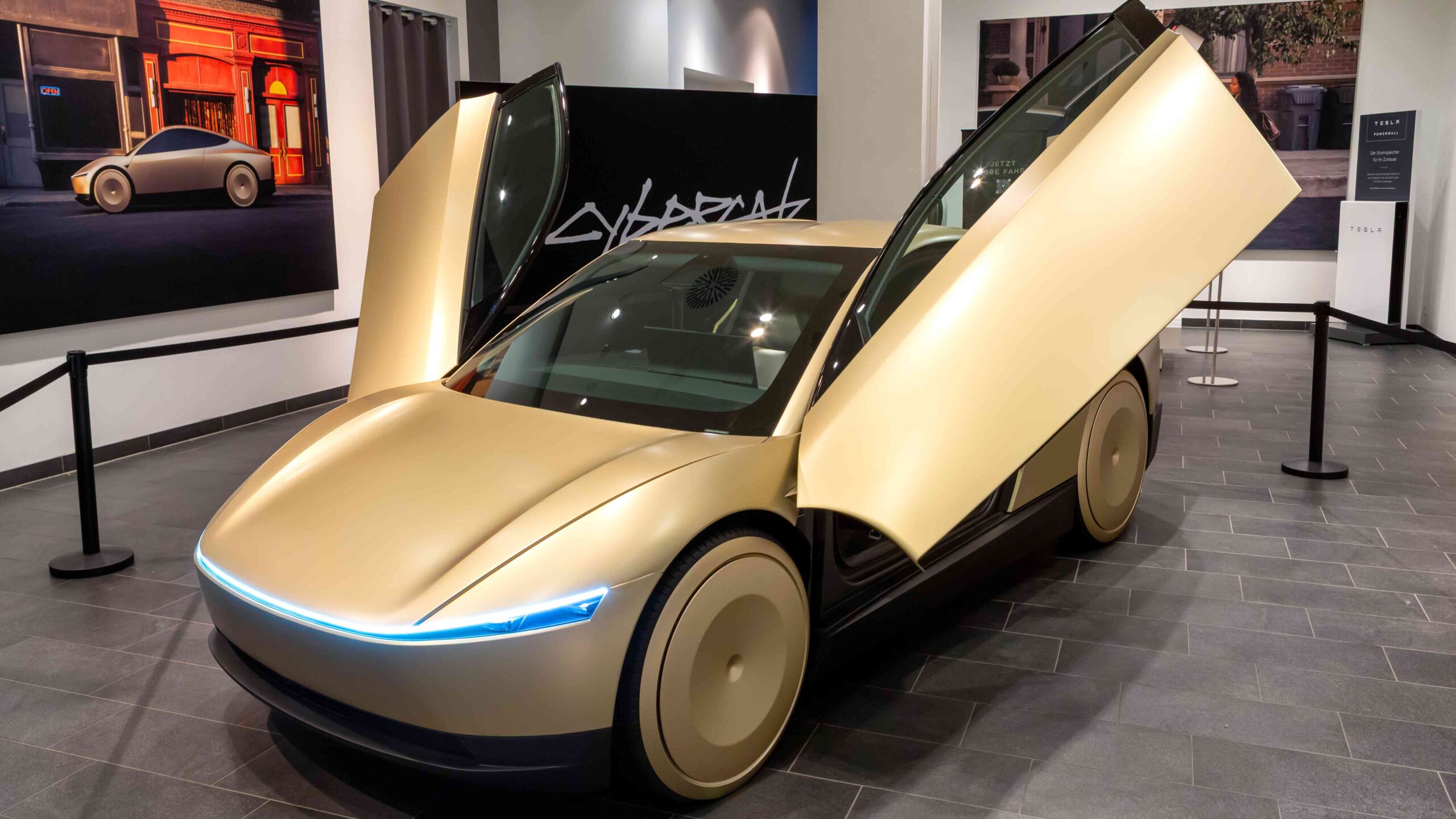
The global automotive industry is entering a new era of disruption, and at the center of this transformation stands Tesla. The company’s latest autonomous vehicle initiative, the Cybercab Robotaxi, is redefining how people think about transportation, artificial intelligence, and mobility infrastructure.
Unlike traditional automakers and competing autonomous driving firms that rely heavily on LiDAR, radar systems, and detailed HD mapping, Tesla has embraced an entirely different philosophy known as Pure Vision. This radical approach removes expensive hardware and instead depends almost entirely on AI-powered neural networks and camera-based perception systems.
The result is one of the most ambitious and controversial technological bets in automotive history.
In this in-depth guide, we will explore how Tesla’s Cybercab robotaxi technology works, why the company abandoned LiDAR, how its Full Self-Driving (FSD) system evolves through machine learning, and why experts believe this technology could completely reshape urban transportation by 2030.
The Rise of Tesla’s Autonomous Revolution
For decades, the automotive industry evolved through improvements in horsepower, safety systems, and fuel efficiency. But Tesla shifted the conversation toward software-defined vehicles.
The company believes the future of transportation will not be determined by mechanical engineering alone. Instead, artificial intelligence, data collection, and neural network training will define the next generation of mobility.
Tesla’s Cybercab represents the purest version of that vision.
Unlike a traditional vehicle, the Cybercab is designed primarily for autonomous ride-hailing, not manual driving. This means the vehicle architecture, cabin layout, steering systems, and even passenger experience are being rebuilt from the ground up.
What Is Tesla’s Pure Vision System?
Understanding the Pure Vision Philosophy
Tesla’s Pure Vision system is based on one fundamental idea:
Humans drive using vision and intelligence, not laser sensors.
Most autonomous vehicle companies use a combination of:
- LiDAR sensors
- Radar systems
- Ultrasonic sensors
- High-definition maps
- GPS-based localization
Companies like Waymo rely heavily on sensor redundancy to ensure vehicles understand their surroundings with extreme precision.
Tesla, however, eliminated radar and LiDAR entirely.
Instead, Tesla vehicles use:
- Multiple external cameras
- AI inference computers
- Deep neural networks
- Real-world driving data
The goal is to replicate the way the human brain processes visual information.
Why Tesla Removed LiDAR and Radar
One of the biggest reasons behind Tesla’s strategy is cost scalability.
LiDAR systems are expensive. A high-end automotive LiDAR setup can cost thousands of dollars per vehicle. When combined with advanced radar systems and mapping infrastructure, the production cost becomes extremely high.
Tesla wants to deploy millions of robotaxis worldwide.
To achieve that scale, the company needs affordable hardware.
By using low-cost CMOS cameras and centralized AI computing instead of expensive sensor arrays, Tesla dramatically reduces manufacturing expenses.
This strategy could make autonomous transportation accessible to the mass market rather than remaining a luxury technology reserved for premium fleets.
How Tesla Full Self-Driving (FSD) Actually Works
AI-Powered Neural Networks
Tesla’s Full Self-Driving system operates using advanced end-to-end neural networks.
Traditional autonomous driving software depended heavily on hard-coded rules like:
- If a pedestrian appears, apply brakes.
- If lane markings disappear, reduce speed.
- If an obstacle is detected, stop the vehicle.
But real-world driving environments are unpredictable.
Road conditions constantly change due to:
- Construction zones
- Weather conditions
- Pedestrian behavior
- Traffic congestion
- Accidents
- Temporary lane changes
Tesla’s AI system learns from real-world driving behavior rather than relying solely on manually programmed instructions.
End-to-End AI Learning
The company’s neural network architecture processes:
Input:
- Raw video feeds from cameras
Output:
- Steering commands
- Braking actions
- Acceleration decisions
This creates a more fluid and human-like driving style.
Instead of rigid robotic behavior, Tesla’s FSD system increasingly demonstrates:
- Smooth lane changes
- Predictive braking
- Natural turning behavior
- Adaptive speed control
- Safer cyclist interactions
This is why many Tesla owners describe the system as feeling almost “alive.”
Tesla’s Biggest Competitive Advantage: Fleet Data
Millions of Cars Feeding AI Training
Tesla’s greatest advantage is not hardware.
It is data.
Unlike competitors that test autonomous systems in limited geofenced cities, Tesla has millions of customer vehicles operating globally every day.
Every Tesla vehicle acts as a rolling data collection platform.
These vehicles continuously gather information about:
- Traffic patterns
- Weather conditions
- Road hazards
- Human driving behavior
- Edge-case driving scenarios
That data is then used to improve Tesla’s AI models.
Why Edge Cases Matter
The biggest challenge in autonomous driving is handling rare events known as edge cases.
Examples include:
- A pedestrian suddenly running into traffic
- Confusing construction detours
- Blinding sunlight reflections
- Heavy rain or snow
- Unusual vehicle behavior
Traditional rule-based systems struggle with these situations because engineers cannot manually code every possible scenario.
Tesla’s neural networks learn by exposure.
The more data Tesla collects, the smarter the system becomes.
Tesla Cortex and Dojo Supercomputers
The Need for Massive Computing Power
Training autonomous driving AI requires enormous computational infrastructure.
Tesla processes billions of miles of driving footage collected from its global fleet.
To handle this workload, Tesla built two major systems:
- Cortex
- Dojo
Tesla Cortex AI Cluster
The Cortex cluster uses thousands of high-performance GPUs to train large-scale AI models.
Its primary functions include:
- Video analysis
- Neural network optimization
- Object recognition training
- Behavioral prediction modeling
Cortex processes huge datasets gathered from Tesla vehicles worldwide.
This allows Tesla to rapidly improve FSD software updates.
Tesla Dojo Supercomputer
Tesla also created its own custom-built AI supercomputer called Dojo.
Unlike traditional data centers optimized for text or scientific simulations, Dojo is specifically designed for:
- Multi-camera video processing
- Neural network training
- High-bandwidth AI workloads
Dojo uses custom ASIC chips developed internally by Tesla engineers.
The purpose is simple:
Train autonomous driving models faster and more efficiently.
This gives Tesla tighter control over its AI development pipeline.
Tesla Cybercab Hardware Is Completely Different
The Elimination of Mechanical Steering
One of the most revolutionary changes in the Cybercab is the removal of traditional steering mechanics.
Most vehicles use:
- Steering columns
- Rack-and-pinion systems
- Mechanical steering shafts
Even modern electric vehicles maintain physical steering backups.
Tesla’s Cybercab changes everything.
What Is Steer-by-Wire Technology?
The Cybercab uses fully electronic steer-by-wire systems.
Instead of mechanical connections:
- Software controls steering inputs
- Electronic actuators handle wheel movement
- Digital signals determine steering response
This technology is similar to systems used in advanced aircraft.
Advantages of Steer-by-Wire
1. Dynamic Steering Ratios
The vehicle can automatically adjust steering sensitivity depending on:
- Speed
- Road conditions
- Traction
- Driving environments
2. Faster Maneuverability
Tesla reduces lock-to-lock steering angles, making urban driving smoother.
3. Fewer Mechanical Components
Removing physical steering assemblies lowers weight and simplifies manufacturing.
4. More Interior Space
Without steering columns and pedal assemblies, Tesla can redesign the cabin entirely.
The Cybercab Interior Is Designed Like a Digital Lounge
Redefining Vehicle Architecture
Traditional vehicles are designed around human drivers.
That means manufacturers must accommodate:
- Steering wheels
- Pedals
- Dashboards
- Driver visibility requirements
The Cybercab removes many of these constraints.
Flat Floor Design
Without bulky mechanical systems, the Cybercab gains:
- Flat flooring
- More passenger legroom
- Flexible seating layouts
- Enhanced cabin openness
This transforms the vehicle into something closer to a mobile digital lounge.
Passenger Experience Becomes the Priority
Tesla’s autonomous ride-hailing model prioritizes:
- Comfort
- Entertainment
- Productivity
- Relaxation
Future robotaxi interiors may include:
- Streaming displays
- Gaming systems
- Workspace configurations
- Personalized climate settings
The vehicle becomes a transportation platform rather than a traditional car.
Tesla’s Robotaxi Fleet Management System
Remote Operations Infrastructure
Managing autonomous vehicles without human drivers requires advanced backend systems.
Recent software teardowns revealed Tesla is building a highly sophisticated fleet management platform.
Voice Communication Systems
Passengers will be able to communicate directly with Tesla support centers through:
- Cabin microphones
- Integrated speakers
- Real-time assistance systems
Support teams can provide:
- Route adjustments
- Trip assistance
- Emergency support
- Comfort modifications
Proactive Monitoring Systems
Tesla’s backend infrastructure continuously monitors:
- Vehicle telemetry
- Camera feeds
- Traffic conditions
- System health
If the AI detects unusual conditions, Tesla can proactively intervene before problems escalate.
Remote Vehicle Control
One of the most surprising discoveries is Tesla’s low-speed remote control capability.
Remote operators can:
- Move vehicles in tight parking areas
- Assist during unusual situations
- Reposition robotaxis remotely
This system operates at very low speeds for safety reasons.
Advanced Robotaxi Features
Multi-Stop Navigation
Passengers will be able to:
- Add multiple destinations
- Change routes dynamically
- Receive real-time traffic updates
The system continuously adapts based on road conditions.
Personalized Ride Settings
Tesla plans to allow users to customize trips before entering the vehicle.
Passengers may control:
- Seat positions
- Cabin temperatures
- Lighting preferences
- Entertainment settings
This creates a highly personalized transportation experience.
Emergency Fleet Kill Switch
Tesla also developed a high-security emergency kill switch.
This system allows Tesla to remotely disable a vehicle in situations involving:
- Security threats
- Hardware failures
- Software anomalies
- Unauthorized access attempts
For a fully autonomous fleet, this feature is critical for risk management.
Regulatory Challenges Facing Tesla
Current Deployment Is Still Limited
Despite the hype surrounding robotaxis, Tesla’s fully unsupervised deployments remain relatively small.
Testing operations currently involve limited fleets operating under regulatory restrictions.
Government agencies continue evaluating:
- Safety performance
- AI reliability
- Liability frameworks
- Public safety concerns
Why Regulations Matter
Autonomous driving is not purely a technological challenge.
It is also:
- A legal challenge
- A political challenge
- A public trust challenge
Even if Tesla perfects its AI systems, regulators must still approve widespread deployment.
Can Pure Vision Really Work?
The Biggest Debate in Autonomous Driving
Tesla’s camera-only approach remains one of the most controversial decisions in the automotive world.
Critics argue that:
- Cameras struggle in poor weather
- Fog and snow reduce visibility
- LiDAR provides more precise depth data
- Radar improves object detection reliability
Supporters counter that:
- Humans drive using vision alone
- Neural networks improve exponentially
- Software scalability matters more than sensor redundancy
- Lower hardware costs enable mass adoption
Why Tesla’s Strategy Could Change Transportation Forever
If Tesla succeeds, the implications are enormous.
Lower Transportation Costs
Robotaxis could dramatically reduce the cost of urban mobility.
Users may eventually pay:
- Per mile
- Per trip
- Through subscription services
Without human drivers, operating costs decrease significantly.
Reduced Vehicle Ownership
Many experts believe autonomous ride-hailing could reduce personal car ownership.
Instead of owning vehicles, consumers may rely on on-demand autonomous transportation networks.
Smarter Urban Infrastructure
Autonomous fleets could improve:
- Traffic efficiency
- Parking optimization
- Energy consumption
- Road safety
Cities may eventually redesign infrastructure around self-driving mobility systems.
The Future of Tesla Cybercab and Robotaxi Networks
Tesla’s Cybercab project is more than just another electric vehicle launch.
It represents a direct challenge to:
- Traditional automotive manufacturing
- Transportation economics
- Human-operated mobility systems
By betting entirely on AI, neural networks, and camera-based perception, Tesla is pursuing one of the boldest engineering strategies in modern technology.
The company’s success or failure will likely shape the future direction of the entire autonomous vehicle industry.
If Tesla proves that Pure Vision autonomous driving can safely scale worldwide, it could unlock a transportation revolution unlike anything seen since the invention of the automobile itself.
However, if the system struggles with edge cases, weather conditions, or regulatory barriers, the company may face significant obstacles before achieving mass robotaxi deployment.
One thing is certain:
The race toward fully autonomous transportation has officially entered a new phase, and Tesla’s Cybercab is at the center of it.
FAQs
1. What is the Tesla Cybercab?
The Tesla Cybercab is Tesla’s upcoming fully autonomous robotaxi vehicle designed specifically for ride-hailing services without a human driver. It focuses on AI-driven transportation, passenger comfort, and low-cost autonomous mobility.
2. How does Tesla’s Full Self-Driving (FSD) system work?
Tesla’s Full Self-Driving (FSD) system uses AI neural networks, multiple cameras, and real-world driving data to make driving decisions such as steering, braking, and acceleration without relying on LiDAR sensors.
3. What is Tesla Pure Vision technology?
Tesla Pure Vision is Tesla’s camera-based autonomous driving approach that eliminates radar and LiDAR systems. The company believes AI-powered vision systems can replicate how humans drive using only visual input.
4. Why did Tesla remove LiDAR and radar?
Tesla removed LiDAR and radar to reduce hardware costs, simplify manufacturing, and improve scalability for mass-market robotaxi deployment. Elon Musk believes camera-based AI systems are sufficient for autonomous driving.
5. What makes Tesla different from Waymo?
Unlike Waymo, which uses LiDAR, radar, and detailed HD maps, Tesla relies primarily on cameras and neural networks for autonomous driving.
6. What is Tesla Dojo?
Tesla Dojo is Tesla’s custom-built AI supercomputer designed specifically for training autonomous driving neural networks using massive amounts of video data collected from Tesla vehicles.
7. What is Tesla Cortex?
Tesla Cortex is Tesla’s large-scale AI training cluster powered by thousands of GPUs. It processes billions of miles of driving data to improve Tesla’s Full Self-Driving software.
8. Does the Tesla Cybercab have a steering wheel?
The Cybercab is expected to use fully autonomous technology and may eliminate traditional steering wheels and pedals entirely in some configurations.
9. What is steer-by-wire technology?
Steer-by-wire technology replaces mechanical steering systems with electronic controls and software-driven actuators, allowing vehicles to steer digitally without physical steering columns.
10. How does Tesla collect driving data?
Tesla collects data from millions of customer vehicles worldwide. These cars continuously send anonymized driving information, road conditions, and edge-case scenarios back to Tesla for AI training.
11. What are edge cases in autonomous driving?
Edge cases are rare or unpredictable driving situations such as unusual construction zones, sudden pedestrian movements, severe weather conditions, or unexpected traffic behavior that challenge autonomous systems.
12. Can Tesla robotaxis operate without human supervision?
Tesla aims to achieve fully unsupervised autonomous driving, but current deployments are still limited and operate under regulatory testing restrictions in selected areas.
13. How will Tesla robotaxis improve transportation?
Tesla robotaxis could reduce transportation costs, lower traffic congestion, improve road safety, and provide affordable on-demand mobility without requiring personal car ownership.
14. What safety features does Tesla’s robotaxi system include?
Tesla’s robotaxi platform includes:
- Remote monitoring systems
- Emergency fleet kill switches
- Real-time passenger support
- AI-based risk detection
- Remote low-speed maneuvering controls
15. What are the biggest challenges facing Tesla Cybercab?
Major challenges include:
- Regulatory approval
- Public trust
- Weather performance
- AI reliability
- Handling rare driving edge cases
- Competition from other autonomous vehicle companies
16. When will Tesla Cybercab launch publicly?
Tesla has projected broader autonomous robotaxi expansion by the end of 2026, although timelines depend heavily on technology development and regulatory approvals.
Read More:
- Tesla Cybertruck’s newest trim is nearing its first deliveries
- SpaceX Starlink gets its latest airline adoptee, grabbing three of the ‘Big Four’
- SpaceX’s Solution to Prevent Starship Booster V3 from Brutal Explosion is Actually Genius
- Tesla Bot V2.5 Stunning Upgrade & Tesla’s 1M Line Finally Here
- NASA just gave SpaceX more crew missions because Boeing can’t certify
1 thought on “Tesla Cybercab Robotaxi Tech Just Changed… INSANE!”