
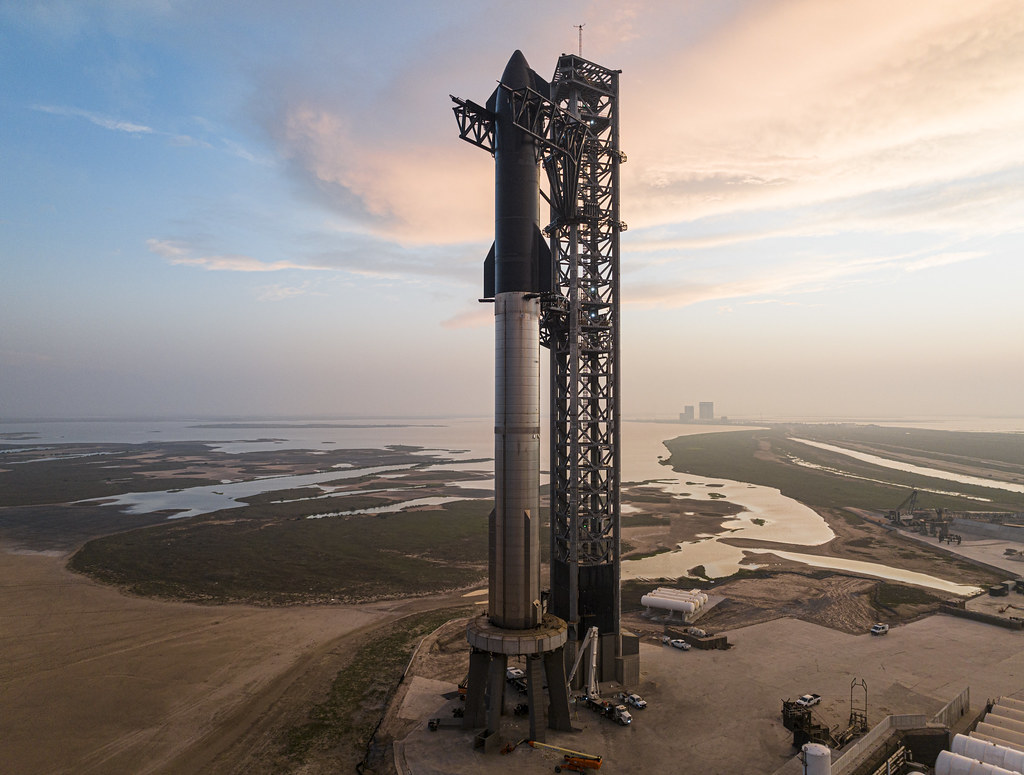
Elon Musk revealed SpaceX Just Turned the Starship Program Up a Notch: The global aerospace industry is witnessing a historic transformation, and at the center of it stands Elon Musk and SpaceX. For decades, traditional aerospace engineering revolved around slow development cycles, extreme caution, and mission assurance at all costs. Rockets were handcrafted masterpieces built over many years, and even a single failure could halt an entire program indefinitely.
But SpaceX has completely rewritten the rules.
Instead of fearing failure, the company embraced a revolutionary philosophy: fail fast, learn faster, and iterate continuously. This strategy transformed rocket manufacturing from an elite handcrafted process into a scalable industrial operation. Yet as the Starship program evolves into a high-frequency launch system designed for Moon and Mars missions, SpaceX now faces its biggest engineering challenge yet.
The challenge is no longer just about building rockets. It is about protecting the massive infrastructure required to launch them repeatedly at unprecedented speed.
In this deep dive, we explore how SpaceX is reshaping the future of aerospace through launchpad redundancy, massive manufacturing expansion, ground-system engineering, and the industrialization of interplanetary transportation.
The End of Traditional Aerospace Thinking
For most of aerospace history, rockets were treated as delicate machines that had to succeed perfectly on every mission. Governments and contractors invested billions into creating highly customized launch systems with minimal room for failure.
This traditional approach followed a simple formula:
- Build slowly
- Test cautiously
- Avoid failure at all costs
- Maintain low launch frequency
SpaceX disrupted that model completely.
Under Elon Musk’s leadership, the company adopted a radically different mindset. Instead of treating rockets as irreplaceable, SpaceX treated them as rapidly evolving prototypes. Explosions during testing were not considered disasters; they were viewed as valuable engineering data.
This strategy accelerated innovation at a pace the aerospace industry had never seen before.
However, as Starship scaled into the most powerful rocket system ever created, the stakes became dramatically higher.
Why Launchpad Infrastructure Is the Real Weakness
Rockets Are Replaceable — Launchpads Are Not
One of the most important realizations inside SpaceX is that modern rocket manufacturing has become fast enough that losing a vehicle is no longer catastrophic.
Losing the launch infrastructure, however, is a completely different story.
A destroyed Starship or Super Heavy booster can be replaced relatively quickly through SpaceX’s expanding production pipeline. But rebuilding the launchpad infrastructure can take months or even years.
This includes:
- The Orbital Launch Mount (OLM)
- Tower systems
- Propellant storage tanks
- Fueling systems
- Quick disconnect arms
- Communication arrays
- Water deluge systems
These structures are incredibly complex and expensive.
Elon Musk’s Key Statement
Before Flight 12, Elon Musk made a revealing statement that summarized SpaceX’s current strategy perfectly:
“The Starship production pipeline is full and will complete roughly 10 more ships and about half that number of boosters this year. So if something goes wrong, it will not be a major setback unless the launch stand is destroyed.”
This single statement highlights the company’s new operational philosophy:
| Failure Type | Impact on Program |
|---|---|
| Vehicle destroyed in flight | Minimal delay |
| Booster lost during testing | Recoverable |
| Launchpad destroyed | Major operational crisis |
The launchpad has become the most valuable asset in the entire Starship ecosystem.
The Five-Pad Strategy That Could Change Spaceflight Forever
To eliminate dependence on a single launch location, SpaceX is aggressively building a multi-pad redundancy network across the United States.
This strategy is unprecedented in modern aerospace history.
Starbase, Texas: The Core of Starship Operations
Starbase remains the heart of Starship development.
Pad 1 – The Original Workhorse
Pad 1 supported the earliest Starship flights and endured enormous stress during testing.
After multiple launches, SpaceX upgraded the pad with:
- Improved flame trench systems
- Reinforced structural supports
- Modified Orbital Quick Disconnect systems
- Better thermal protection
These upgrades came directly from lessons learned during early launches.
Pad 2 – The Next-Generation Launch Platform
Pad 2 represents a more advanced evolution of the Starship launch system.
Enhancements include:
- Reinforced steel water-deluge systems
- Better acoustic suppression
- Improved utility layouts
- Enhanced debris resistance
This pad is designed specifically for higher launch cadence and improved survivability.
Cape Canaveral: Expanding Beyond Texas
SpaceX is also rapidly expanding in Florida.
LC-39A at Kennedy Space Center
Kennedy Space Center is one of the most historic launch sites in spaceflight history.
SpaceX is rebuilding Launch Complex 39A to support Starship operations after structural problems appeared during early testing.
The company is redesigning:
- Launch mount structures
- Tower foundations
- Fuel systems
- Load-bearing supports
SLC-37 Expansion
At Space Launch Complex 37, SpaceX is constructing two additional Starship launch pads.
This means the company could eventually operate:
- Two pads in Texas
- Three pads in Florida
That creates a total of five independent Starship launch systems.
Why Five Launchpads Matter
This infrastructure strategy provides massive operational advantages.
1. Reduced Risk
If one launchpad suffers damage, missions can continue elsewhere.
2. Faster Launch Frequency
Multiple pads allow simultaneous preparation for launches.
3. Higher Reliability
Engineers can rotate launches between sites for maintenance and upgrades.
4. Long-Term Mars Ambitions
A future Mars transport system requires hundreds of launches annually. One or two launchpads would never be enough.
This redundancy model resembles global airline infrastructure more than traditional aerospace operations.
SpaceX’s Massive Ocean Logistics Network
One of the least discussed parts of the Starship revolution is SpaceX’s growing maritime logistics system.
The company has repurposed the vessel “You’ll Thank Me Later” into a dedicated Starship transport ship.
This floating logistics network allows SpaceX to move:
- Booster sections
- Starship hulls
- Vacuum Raptors
- Hot-staging rings
- Heavy structural hardware
between Texas and Florida efficiently.
Why Water Transport Matters
Starship components are enormous.
Transporting them by road or rail creates severe limitations due to:
- Size restrictions
- Bridge clearances
- Highway regulations
- Weight limits
Water transport solves these problems while supporting mass production.
Offshore Launch Platforms Are the Future
SpaceX also appears to be preparing for future ocean-based launch platforms.
Potential advantages include:
- Safer launch zones
- Fewer population risks
- Flexible global deployment
- Reduced environmental constraints
Eventually, SpaceX may deploy floating launch systems across:
- The Atlantic Ocean
- The Pacific Ocean
- The Indian Ocean
This would create a truly global launch network.
The Brutal Engineering Challenge of Ground Systems
33 Raptor Engines Create Extreme Conditions
The Starship Super Heavy booster generates over 16 million pounds of thrust, making it the most powerful rocket booster ever built.
This creates extraordinary stress on launch infrastructure.
Acoustic Shockwaves
The sound generated during ignition is powerful enough to:
- Damage steel
- Crack concrete
- Destroy sensors
- Launch debris at high velocity
Thermal Pressure
The launch mount experiences intense heat from:
- Methane combustion
- Exhaust reflection
- Pressure waves
- Flame recirculation
Even tiny design flaws can become major hazards.
Static Fire Testing Revealed Serious Vulnerabilities
During a recent 33-engine static fire test, engineers discovered that extreme vibration sheared off a flame bucket pipe sensor.
The detached debris struck part of the booster’s gas generator system.
To outside observers, repetitive testing might seem unnecessary.
In reality, these tests are critical stress simulations designed to prevent catastrophic failures later.
The Chopsticks: One of the Wildest Engineering Systems Ever Built
The Starship launch tower includes enormous mechanical arms nicknamed the “Chopsticks.”
These arms are designed to:
- Lift Starship vehicles
- Stack boosters
- Catch returning Super Heavy boosters mid-air
This booster-catching system has never been attempted at such scale.
Why Booster Catching Matters
Traditional rocket recovery requires landing legs.
SpaceX wants to eliminate them because landing legs:
- Add mass
- Reduce payload capacity
- Increase complexity
Catching boosters directly with the tower could dramatically improve reusability and turnaround time.
Tower Communication Systems Face Extreme Risks
The launch tower also contains highly advanced communication arrays.
These systems handle:
- Telemetry
- Guidance
- Tracking
- Flight synchronization
During Flight 6, communication issues forced the booster to abandon its return-to-launch-site attempt and instead perform a safer splashdown.
This demonstrates how even minor technical issues can affect mission outcomes.
Inside the Starfactory Revolution
SpaceX Is Manufacturing Rockets Like Cars
Perhaps the most revolutionary aspect of Starship is the Starfactory manufacturing system.
Traditional aerospace production follows this pattern:
| Traditional Aerospace | Starfactory Model |
|---|---|
| Handcrafted assembly | Automated assembly |
| Low production rate | High production rate |
| Extremely high costs | Commodity-style scaling |
The Starfactory applies manufacturing principles inspired by Tesla Gigafactories.
Key Features of Starfactory
Automated Ring Welding
Massive steel rings are welded using advanced automation systems.
Linear Production Flow
Instead of custom assembly, Starship production resembles an industrial assembly line.
Parallel Vehicle Construction
Multiple Starships and boosters are assembled simultaneously.
Specialized Integration Zones
Different sections of the factory focus on:
- Engine installation
- Tank integration
- Structural inspection
- Avionics assembly
This allows unprecedented production speed.
Production Targets Are Astonishing
SpaceX is now targeting:
- Around 10 upper-stage Ships annually
- Approximately 5 Super Heavy boosters annually
For comparison, traditional aerospace companies often take years to produce a single heavy-lift rocket.
Gigabays: The Giant Buildings Powering Starship
To support mass production, SpaceX is building massive Gigabays.
These giant structures allow engineers to:
- Stack full-scale rockets indoors
- Conduct simultaneous inspections
- Protect hardware from weather
- Reduce manufacturing bottlenecks
Gigabays exist at both Texas and Florida facilities.
These structures symbolize SpaceX’s transition from experimental development into industrial-scale aerospace manufacturing.
Raptor Engines Push Physics to the Limit
The Raptor engine is among the most advanced rocket engines ever created.
It operates at combustion chamber pressures so extreme that many engineers once considered them impractical.
Why Raptor Is Revolutionary
The engine supports:
- Full-flow staged combustion
- Methane fuel systems
- Deep throttling capability
- Rapid engine relights
These capabilities are essential for:
- Orbital refueling
- Lunar missions
- Mars landings
- Full reusability
The Biggest Problem: Reliability
Raptor engines must survive:
- Violent startup sequences
- Aerodynamic stress
- High G-forces
- Landing maneuvers
- Multiple reignitions
Balancing extreme performance with long-term reliability remains one of SpaceX’s toughest challenges.
The Heat Shield Problem That Could Define Starship’s Future
Thousands of Ceramic Tiles Protect the Vehicle
The Starship thermal protection system may be the single hardest engineering problem in the entire program.
The spacecraft is covered in thousands of hexagonal ceramic heat-shield tiles.
These tiles protect the stainless-steel hull from temperatures approaching 3,000°F during atmospheric re-entry.
Why Heat Shield Tiles Are So Difficult
The TPS system must endure:
- Extreme plasma exposure
- Aerodynamic vibration
- Structural flexing
- Rapid thermal changes
Even a single missing tile can expose the underlying steel structure to catastrophic heating.
The “Flying Jigsaw Puzzle” Problem
Engineers often describe Starship’s TPS as a giant flying puzzle.
Every tile must:
- Fit perfectly
- Maintain tight tolerances
- Resist cracking
- Survive repeated flights
Achieving airline-style reusability depends heavily on solving this challenge.
SpaceX Is Building an Interplanetary Transportation Machine
The most important takeaway from SpaceX’s recent strategy shift is this:
Starship is no longer just a rocket.
It is becoming an entire industrial ecosystem.
This ecosystem includes:
- Launchpads
- Manufacturing facilities
- Logistics systems
- Ocean transport
- Ground support hardware
- Automated production lines
- Reusable spacecraft
- Booster recovery systems
All these components now function as one integrated machine.
Why This Matters for the Future of Humanity
SpaceX’s ultimate goal extends far beyond launching satellites.
The company is building infrastructure for:
- Lunar colonization
- Mars settlement
- Global cargo transport
- High-frequency orbital travel
To accomplish this, rockets must become:
- Cheap
- Reusable
- Rapidly producible
- Operationally resilient
That is exactly what SpaceX is attempting to achieve with Starship.
Final Thoughts
SpaceX has fundamentally transformed modern aerospace engineering by treating rockets as scalable industrial products rather than fragile masterpieces.
But the company’s newest evolution goes even deeper.
By constructing a five-pad launch network, expanding water-based logistics, industrializing rocket manufacturing, and reinforcing launch infrastructure, SpaceX is creating a resilient operational framework capable of surviving failures without stopping progress.
The Starship era is no longer about experimental launches alone.
It is about building the world’s first truly industrialized interplanetary transportation system.
And if Elon Musk’s vision succeeds, the future of spaceflight may soon look less like traditional aerospace — and more like a global transportation network connecting Earth, the Moon, and eventually Mars.
FAQs
1. What is the main goal of the Starship program?
The primary goal of the Starship program is to create a fully reusable spacecraft system capable of carrying humans and cargo to the Moon, Mars, and beyond while dramatically reducing the cost of space travel.
2. Why is Starship considered revolutionary?
Starship is revolutionary because it combines:
- Full reusability
- Massive payload capacity
- Rapid launch capability
- Industrial-scale production
This approach could completely transform the economics of space exploration.
3. Why are SpaceX launchpads so important?
Launchpads are critical because they are far more difficult and time-consuming to rebuild than rockets themselves. A destroyed launchpad could halt operations for months, while replacement vehicles can be manufactured relatively quickly.
4. How many Starship launchpads is SpaceX building?
SpaceX is developing a network of five Starship launchpads across Texas and Florida to improve launch redundancy and prevent a single infrastructure failure from stopping the entire program.
5. What is the purpose of the Starfactory?
The Starfactory is SpaceX’s massive manufacturing facility designed to produce Starship vehicles at high speed using automated assembly-line techniques similar to Tesla Gigafactories.
6. What makes the Raptor engine special?
The Raptor engine uses full-flow staged combustion technology, operates at extremely high chamber pressures, and is fueled by methane, making it one of the most advanced rocket engines ever developed.
7. Why does SpaceX perform so many static fire tests?
Static fire tests help engineers identify:
- Structural weaknesses
- Vibration problems
- Fuel system issues
- Thermal stress points
These tests reduce the risk of catastrophic failures during actual launches.
8. What are the “Chopsticks” on the launch tower?
The “Chopsticks” are giant mechanical arms designed to:
- Lift and stack Starship vehicles
- Catch returning Super Heavy boosters mid-air
This system could eliminate the need for traditional landing legs.
9. Why is the Starship heat shield so challenging?
Starship’s thermal protection system contains thousands of ceramic tiles that must survive:
- Extreme plasma heat
- Aerodynamic vibrations
- Structural flexing during re-entry
Even a single missing tile could cause vehicle failure.
10. Why is SpaceX building launchpads in both Texas and Florida?
Multiple launch sites provide:
- Better operational flexibility
- Faster launch cadence
- Backup infrastructure in case one pad is damaged
- Easier support for future high-frequency missions
11. What is the biggest engineering challenge for Starship?
Many experts believe the biggest challenge is achieving rapid reusability, especially ensuring the heat shield and engines can survive repeated flights with minimal maintenance.
12. How powerful is the Starship Super Heavy booster?
The Super Heavy booster generates over 16 million pounds of thrust, making it the most powerful rocket booster ever built.
13. Why does SpaceX use water transport for Starship hardware?
Starship components are extremely large, making road and rail transport difficult. Water transport allows SpaceX to move massive hardware more efficiently between Texas and Florida.
14. What is SpaceX’s long-term vision for Starship?
SpaceX aims to use Starship for:
- Mars colonization
- Lunar missions
- Satellite deployment
- Space tourism
- Global point-to-point transportation
15. How is SpaceX different from traditional aerospace companies?
Traditional aerospace companies prioritize slow, highly cautious development. SpaceX focuses on:
- Rapid iteration
- Continuous testing
- Fast manufacturing
- Learning through real-world failures
This approach dramatically accelerates innovation.
16. Could Starship really make humans a multi-planetary species?
If Starship achieves reliable full reusability and high launch frequency, it could significantly reduce the cost of transporting people and cargo to Mars, making long-term human settlement more realistic than ever before.
Read More:
- Tesla Cybercab Robotaxi Tech Just Changed… INSANE!
- Tesla Cybertruck’s newest trim is nearing its first deliveries
- SpaceX Starlink gets its latest airline adoptee, grabbing three of the ‘Big Four’
- SpaceX’s Solution to Prevent Starship Booster V3 from Brutal Explosion is Actually Genius
- Tesla Bot V2.5 Stunning Upgrade & Tesla’s 1M Line Finally Here
1 thought on “Elon Musk revealed SpaceX Just Turned the Starship Program Up a Notch”