
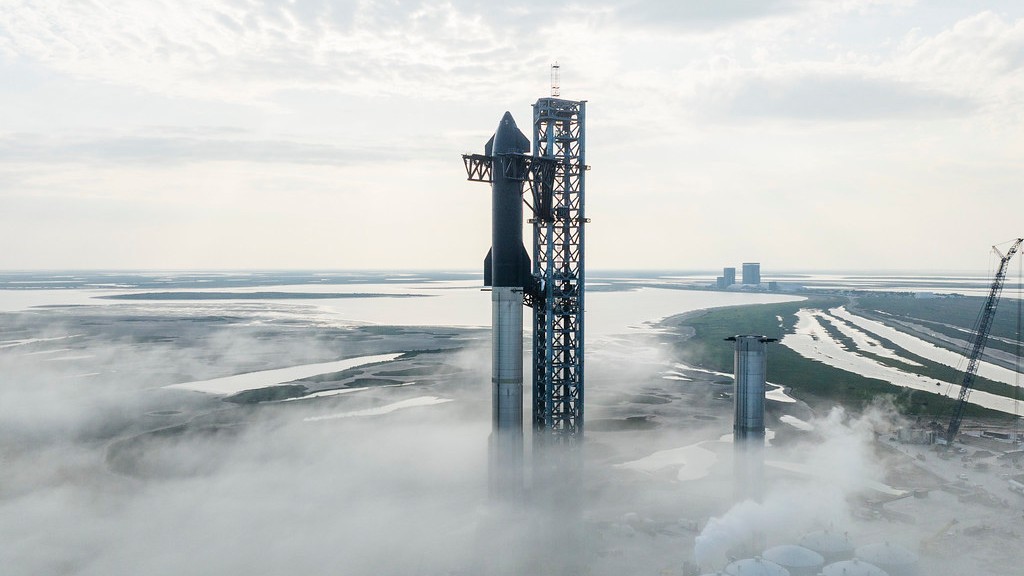
SpaceX’s New Upgrades to Fix Starship Booster V3 Problem, Get Ready for Flight 13: The journey toward building a fully reusable interplanetary transportation system is one of the most ambitious engineering projects in human history. At the center of this mission is SpaceX Starship, the world’s largest and most powerful rocket ever developed. While Starship continues to break records and push technological boundaries, its rapid development philosophy means failures are viewed as valuable learning opportunities rather than setbacks.
The dramatic outcome of Starship Flight 12, launched on May 22, 2026, highlighted both the strengths and weaknesses of SpaceX’s revolutionary Version 3 (V3) booster architecture. Although the mission achieved several important milestones, it ended with the destruction of Booster 19, exposing a critical challenge involving propellant sloshing inside the rocket’s massive fuel tanks.
Now, as preparations intensify for Flight 13, SpaceX engineers are implementing a series of software improvements, acoustic suppression upgrades, and potential hardware modifications designed to solve the V3 booster problem once and for all.
Why Flight 12 Was So Important
Flight 12 was much more than another Starship test launch. It represented the first real-world demonstration of SpaceX’s highly anticipated Starship V3 architecture.
The mission initially appeared flawless. All 33 Raptor 3 engines ignited successfully, the vehicle passed through Max-Q, and stage separation occurred as planned. However, shortly after hot staging, Booster 19 encountered severe issues that eventually led to its destruction.
Despite losing hardware worth tens of millions of dollars, SpaceX gained something even more valuable: flight telemetry data. This information has provided engineers with unprecedented insight into how the new V3 fuel system behaves during extreme flight conditions.
The lessons learned from Flight 12 are now shaping every aspect of Flight 13 preparations.
Understanding the Starship V3 Redesign
How Starship V2 Worked
The previous Starship V2 boosters relied on a dedicated header tank system.
These smaller tanks stored fuel specifically for recovery operations and landing maneuvers. The system supplied propellant exclusively to the 13 engines located in the booster’s central cluster.
As soon as stage separation occurred, the outer ring of 20 engines effectively became unavailable because they no longer had access to fuel.
While this design worked, it imposed a significant limitation on the amount of braking force available during booster recovery.
The Revolutionary V3 Fuel System
With Starship Version 3, SpaceX completely redesigned the plumbing architecture.
Instead of dedicated header tanks, engineers introduced a massive central methane downcomer running through the center of the liquid oxygen tank.
This new configuration allows fuel to be shared across all 33 Raptor 3 engines, enabling simultaneous engine ignition during critical flight phases.
The redesign offers several major advantages:
- Reduced structural complexity
- Lower vehicle weight
- Simplified manufacturing
- Higher payload capacity
- Maximum engine utilization
- Improved overall efficiency
Most importantly, V3 enables all 33 engines to participate in the boostback burn, dramatically increasing available braking power.
The Benefits of the V3 Architecture
More Thrust Than Ever Before
The Starship booster produces more than 8,200 metric tons of thrust at liftoff.
By allowing all 33 engines to ignite during boostback, SpaceX can generate unprecedented braking force.
This means the booster can:
- Decelerate faster
- Burn less propellant
- Spend less time fighting atmospheric drag
- Improve structural efficiency
- Deliver larger payloads to orbit
For a company pursuing rapid reusability, these gains are enormous.
However, every engineering improvement comes with trade-offs.
The same plumbing architecture that unlocks these performance benefits also creates new challenges involving fluid dynamics.
What Caused Booster 19 to Fail?
The Hidden Enemy: Propellant Sloshing
The leading explanation for the Flight 12 failure is a phenomenon known as propellant sloshing.
Inside Starship’s tanks are thousands of tons of supercooled liquid methane and liquid oxygen.
During powered ascent, the force generated by the engines keeps these fluids pressed firmly against the bottom of the tanks.
This ensures a steady supply of liquid fuel reaches the engines.
Everything changes during stage separation.
The Moment Things Went Wrong
Immediately after separation, several events happened almost simultaneously:
- Main booster engines shut down.
- The upper stage ignited its engines.
- Booster 19 initiated its flip maneuver.
- Internal acceleration forces rapidly changed.
Without continuous acceleration, the liquid propellant suddenly became nearly weightless.
The enormous mass of cryogenic fuel began moving freely inside the tanks.
Instead of remaining settled near the feed lines, the propellant surged upward, slammed against tank walls, and moved unpredictably throughout the vehicle.
This chaotic movement is known as sloshing.
Why Propellant Sloshing Is So Dangerous
A Simple Analogy
Imagine drinking through a straw while someone vigorously shakes your glass.
Instead of drawing liquid continuously, the straw begins sucking in pockets of air.
The same thing can happen inside a rocket.
When gas bubbles enter fuel lines, engine performance becomes unstable.
Catastrophic Effects on Rocket Engines
Rocket engines depend on a constant flow of liquid propellant.
If gas enters the system:
- Fuel density suddenly changes
- Turbopumps experience instability
- Combustion becomes erratic
- Chamber pressure drops
- Engine failure becomes likely
For engines spinning at tens of thousands of revolutions per minute, even a brief interruption in propellant flow can be catastrophic.
The Corkscrew Rotation Problem
An Unexpected Aerodynamic Anomaly
Flight telemetry suggests Booster 19 experienced more than simple sloshing.
During hot staging, the booster appeared to enter a corkscrew-like rotation.
Instead of performing a clean directional flip, the vehicle rolled laterally while maneuvering.
This introduced powerful centrifugal forces.
How Rotation Made Things Worse
As the booster rotated:
- Propellant moved toward the tank walls.
- Fuel shifted away from the central plumbing system.
- Gas pockets formed near feed lines.
- The downcomer system became unstable.
Because Starship V3 uses a shared plumbing architecture feeding all 33 engines, instability in the central fuel supply can affect the entire propulsion system.
This is one of the biggest differences between V2 and V3.
A localized issue can quickly become a vehicle-wide problem.
The Domino Effect That Destroyed Booster 19
According to flight data, one central engine likely experienced fuel starvation.
This caused a catastrophic detonation.
The resulting shockwave spread through the shared engine structure, damaging nearby engines.
Within seconds:
- Multiple engines failed.
- The boostback burn collapsed.
- Recovery capability was lost.
- Vehicle control deteriorated.
Although Booster 19 attempted a landing burn later in the flight, the damaged propulsion section could no longer maintain stable control.
The booster eventually impacted the Gulf of Mexico at supersonic speed.
The Acoustic Fatigue Theory
Another Possible Contributor
While propellant sloshing remains the primary suspect, SpaceX engineers are also investigating acoustic fatigue.
The ignition of 33 Raptor 3 engines creates an extraordinary amount of sound energy and pressure.
These acoustic waves can reflect from launch infrastructure and strike the vehicle.
Potential Long-Term Damage
Even if no immediate damage occurs, acoustic forces can create:
- Micro-fractures in fuel lines
- Turbopump stress
- Cooling channel damage
- Structural fatigue
Components weakened during liftoff may survive ascent but fail later during engine relight events.
This theory remains under investigation as SpaceX analyzes additional telemetry.
SpaceX’s New Upgrades for Flight 13
The loss of Booster 19 has directly influenced SpaceX’s strategy for Flight 13.
The company is deploying a multi-layered solution involving software, infrastructure, and hardware improvements.
1. Continuous Acceleration Sequencing
The Fastest Fix Available
One of the most elegant solutions requires no hardware changes at all.
Instead, SpaceX plans to adjust engine timing through software updates.
Keeping More Engines Running
On previous flights, several booster engines remained active during hot staging to maintain forward acceleration.
For Flight 13, SpaceX may increase this number significantly.
Benefits include:
- Better fuel settling
- Reduced sloshing
- More stable feed line conditions
- Improved engine reliability
By maintaining a constant acceleration vector, the rocket effectively creates artificial gravity inside the tanks.
This keeps cryogenic propellant positioned over the feed lines.
2. A New Boostback Burn Sequence
Gradual Engine Ignition
Another major upgrade involves changing how the boostback burn begins.
Rather than igniting all 33 engines simultaneously, SpaceX may use a staged approach.
Step-by-Step Engine Startup
The proposed sequence looks like this:
Step 1: Ignite center cluster engines.
Step 2: Generate stable acceleration.
Step 3: Confirm proper propellant settling.
Step 4: Activate outer engine rings.
Step 5: Transition to full-power boostback burn.
This method minimizes pressure spikes and reduces the likelihood of gas ingestion.
It also gives onboard sensors time to verify that fuel lines contain liquid propellant before maximum thrust is commanded.
3. Improved Acoustic Suppression Systems
Upgrading Starbase Infrastructure
SpaceX is also improving its ground systems at Starbase.
The company already operates a sophisticated water-deluge system, but further enhancements are expected.
How Water Suppression Helps
Large volumes of water can absorb and disperse acoustic energy before it reflects back toward the rocket.
Potential improvements include:
- Higher water flow rates
- Increased system pressure
- Earlier activation timing
- Better acoustic absorption
This strategy follows techniques pioneered during NASA’s Saturn V program.
Reducing acoustic stress may improve engine reliability and protect sensitive components.
4. Anti-Slosh Baffles: The Hardware Solution
A Proven Aerospace Technology
If software fixes are insufficient, SpaceX could introduce anti-slosh baffles.
These structures have been used successfully on rockets for decades.
How Baffles Work
Anti-slosh baffles act like internal barriers inside propellant tanks.
They:
- Disrupt fluid waves
- Reduce momentum buildup
- Prevent large-scale liquid movement
- Keep propellant near feed lines
Both Falcon 9 and Saturn V utilized similar solutions.
Challenges for Starship V3
Integrating baffles into the new V3 architecture is not simple.
Engineers must:
- Avoid restricting fuel flow
- Minimize weight penalties
- Work around the central methane downcomer
- Preserve manufacturing efficiency
Although highly effective, hardware modifications require longer development timelines than software updates.
Ship 39 Had Problems Too
While Booster 19 attracted most of the attention, the upper stage Ship 39 also experienced difficulties.
Vacuum Raptor Engine Failure
Close-up footage revealed that one of Ship 39’s vacuum-optimized Raptor engines shut down unexpectedly during the final landing phase.
Potential causes include:
- Thermal stress from hot staging
- Exhaust plume interactions
- Pressure wave damage
- Debris impacts
Any of these factors could have damaged the delicate vacuum nozzle extension.
Why the Engine Failure Matters
The In-Space Relight Test Was Canceled
Because of the engine issue, SpaceX was forced to skip an important in-space Raptor relight demonstration.
This is a significant challenge because engine relight capability is essential for:
- Orbital operations
- Deorbit burns
- Satellite deployment
- Deep-space missions
- In-orbit refueling
Without reliable relight performance, Starship cannot achieve many of its long-term mission objectives.
Ship 39 Still Delivered Valuable Data
Despite engine problems, Ship 39 demonstrated impressive resilience.
The onboard flight computer successfully adapted to changing conditions.
The vehicle:
- Adjusted its descent profile
- Maintained stability
- Managed engine transitions
- Completed a controlled ocean landing
This provided engineers with another valuable dataset for future improvements.
What to Expect from Starship Flight 13
Flight 13 could become one of the most important tests in Starship history.
The mission will directly evaluate whether SpaceX’s new solutions can eliminate the propellant sloshing issues discovered during Flight 12.
Key milestones to watch include:
Hot Staging Performance
Engineers will closely monitor how propellant behaves during stage separation.
Boostback Burn Stability
The new ignition sequence will face its first real-world test.
Engine Reliability
Both booster and upper-stage engines must demonstrate improved resilience.
Recovery Success
A clean booster landing would validate the V3 architecture and mark a major step toward rapid reusability.
Conclusion
The destruction of Booster 19 was not merely a failure—it was a critical learning opportunity that exposed one of the most complex fluid dynamics challenges facing the Starship V3 program. The new central methane downcomer architecture delivers tremendous performance advantages, but it also requires precise control over propellant behavior during high-energy flight maneuvers.
Through continuous acceleration sequencing, staged boostback ignition, enhanced acoustic suppression, and potential anti-slosh baffle implementation, SpaceX is aggressively addressing the issues uncovered during Flight 12.
As Flight 13 approaches, the aerospace industry will be watching closely. If these upgrades perform as expected, SpaceX could achieve its most successful booster recovery yet and take another major step toward building a fully reusable spacecraft capable of carrying humans to the Moon, Mars, and beyond.
The road to interplanetary travel has never been easy, but every test, every anomaly, and every engineering breakthrough brings SpaceX closer to transforming science fiction into reality.
FAQs
FAQ 1: What caused the failure of Starship Booster 19 during Flight 12?
The primary cause appears to be propellant sloshing, where liquid methane and oxygen moved unpredictably inside the tanks during hot staging. This likely introduced gas bubbles into the fuel system, causing engine instability and eventual failure.
FAQ 2: What is propellant sloshing in rockets?
Propellant sloshing occurs when liquid fuel moves freely inside a rocket’s tanks due to changes in acceleration, gravity, or vehicle motion. Excessive sloshing can disrupt fuel flow and damage engines.
FAQ 3: What is different about the Starship V3 architecture?
The Starship V3 architecture replaces dedicated header tanks with a central methane downcomer system, allowing all 33 Raptor 3 engines to access fuel from the main tanks and participate in boostback burns.
FAQ 4: Why did SpaceX redesign the fuel system for Starship V3?
SpaceX redesigned the system to reduce weight, simplify manufacturing, improve efficiency, and enable all 33 engines to ignite during recovery maneuvers, increasing overall vehicle performance.
FAQ 5: How many engines does the Starship Super Heavy Booster have?
The Super Heavy Booster is powered by 33 Raptor 3 engines, making it the most powerful rocket booster ever built.
FAQ 6: What is a boostback burn?
A boostback burn is a maneuver where the booster reignites its engines after stage separation to reverse direction and return toward the launch site for recovery.
FAQ 7: Why is Flight 13 important for SpaceX?
Flight 13 will test the software and engineering fixes developed after Flight 12, helping determine whether SpaceX has successfully solved the V3 propellant sloshing issue.
FAQ 8: What software changes is SpaceX making for Flight 13?
SpaceX plans to keep more engines firing during stage separation and use a staged boostback ignition sequence to maintain fuel stability and reduce sloshing inside the tanks.
FAQ 9: What are anti-slosh baffles?
Anti-slosh baffles are internal structures installed inside fuel tanks that reduce liquid movement, helping keep propellant near the feed lines and preventing fuel instability.
FAQ 10: Could acoustic energy have contributed to Booster 19’s failure?
Engineers are investigating whether intense acoustic pressure waves generated during liftoff caused micro-damage to engine components that later failed during flight.
FAQ 11: What happened to Ship 39 during Flight 12?
Ship 39 experienced the premature shutdown of one of its vacuum-optimized Raptor engines during descent but still managed a controlled ocean landing using its remaining engines.
FAQ 12: Why was the in-space Raptor relight test canceled?
The test was canceled after a vacuum Raptor engine shut down unexpectedly, making it unsafe to proceed with the planned engine relight demonstration.
FAQ 13: Why is in-space engine relight capability important?
Reliable engine relights are essential for deorbit burns, orbital maneuvering, satellite deployment, deep-space missions, and in-orbit refueling operations.
FAQ 14: Will SpaceX add anti-slosh baffles before Flight 13?
SpaceX may eventually add anti-slosh baffles, but software-based solutions are expected to be implemented first because they can be deployed much faster than hardware modifications.
FAQ 15: Can Starship V3 still achieve full reusability despite Flight 12’s failure?
Yes. Flight 12 provided valuable data that will help SpaceX improve the V3 design. The company views such test-flight failures as part of its iterative development process toward achieving rapid and fully reusable space transportation.
Read More:
- Tesla’s Giant 100GW Solar Factory Is Real — Elon Musk Just Confirmed
- Tesla Roadster unveiling gets pushed again, but new event details emerge
- SpaceX Starts Starship Flight 13 Testing Campaign…but No Launch This Month! Why?
- Tesla Finally UNLOCKED New 4.0 Production Line Destroy EV Industry
- Tesla upgrades Model Y’s affordable trims with new interior features
1 thought on “SpaceX’s New Upgrades to Fix Starship Booster V3 Problem, Get Ready for Flight 13”