
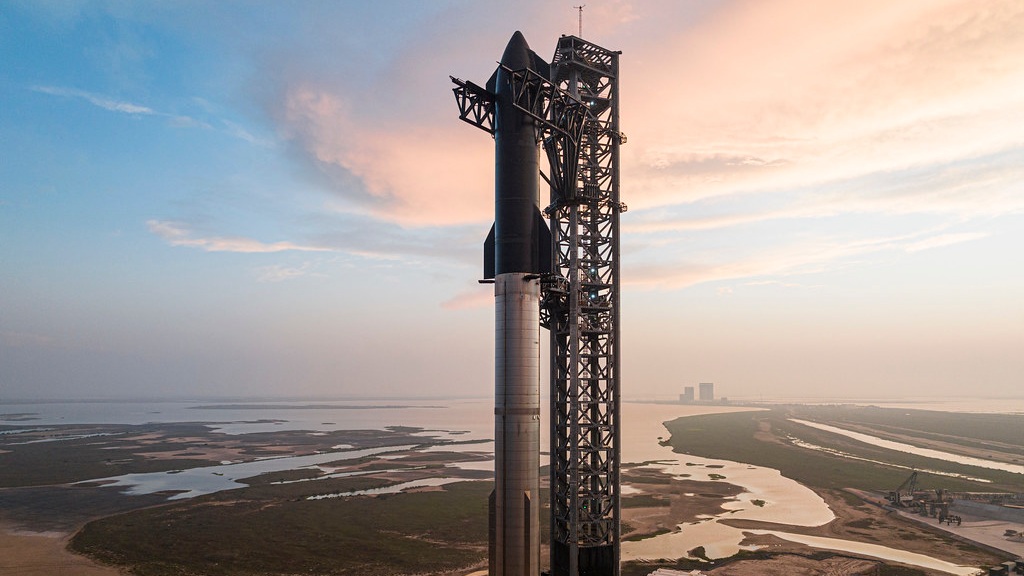
The global aerospace industry is experiencing a historic transformation unlike anything seen since the dawn of the Space Age. Traditional development cycles that once required years of planning and testing are being replaced by rapid iteration, continuous hardware upgrades, and aggressive testing schedules. At the center of this revolution stands SpaceX, whose ambitious Starship program continues to redefine what is possible in modern spaceflight.
As June 2026 unfolded, SpaceX shifted its complete focus toward preparing for Starship Flight 13, conducting an intensive series of cryogenic, structural, and operational tests at Starbase in Boca Chica, Texas. These activities represent far more than routine rocket testing—they are critical milestones on the path toward orbital refueling, lunar missions, and ultimately human exploration of Mars.
At the same time, the broader space industry witnessed major developments. The International Space Station (ISS) faced recurring engineering challenges that temporarily forced astronauts to shelter inside a SpaceX Dragon spacecraft, while NASA officially concluded the legendary MAVEN mission, ending a remarkable 12-year scientific journey around Mars.
Together, these events highlight the extraordinary pace of innovation, the engineering risks involved, and the scientific discoveries shaping humanity’s future beyond Earth.
SpaceX Accelerates Toward Starship Flight 13
The beginning of June 2026 marked a critical phase for the Starship program as engineers intensified preparations for Flight 13.
The groundwork for this mission began several weeks earlier when Ship 40 (S40) successfully completed its standalone cryogenic testing campaign at the Massey’s test facility. With the upper-stage vehicle clearing key structural validation requirements, SpaceX shifted attention to the massive first-stage booster assigned to the mission: Booster 20 (B20).
On June 5, Booster 20 rolled out to the Massey’s test site for an extensive series of validation procedures designed to evaluate its structural integrity and thermal resilience.
The First Round of Testing
Soon after arriving at the test stand, engineers initiated system checkouts. Throughout the afternoon, observers noticed venting activity from both the booster and the surrounding tank farm.
Unlike a full cryogenic fueling operation, this initial phase appeared focused on:
- Structural verification
- Pressure testing
- Pneumatic evaluations
- Plumbing inspections
- Weld seam validation
Before introducing thousands of tons of super-cold propellant into a rocket, SpaceX engineers must ensure that every component can withstand immense internal pressures.
This stage serves as a comprehensive health examination for the booster, confirming that its systems are ready for more demanding tests.
Booster 20’s Historic Cryogenic Endurance Test
On June 6, SpaceX advanced to the next major milestone by conducting the first full cryogenic loading test of Booster 20.
Observers immediately noticed a dramatic difference in venting behavior. Instead of small gaseous plumes, thick clouds enveloped the vehicle as liquid methane and liquid oxygen flowed into the giant stainless-steel tanks.
Why This Test Was Different
Previous Starship testing campaigns often focused on rapid fueling operations designed to simulate launch-day timelines.
However, this test followed a completely different approach.
Instead of filling the tanks quickly, engineers deliberately stretched the process over several hours.
Once fully loaded, Booster 20 remained filled with cryogenic propellant for approximately three additional hours.
The result was a spectacular visual:
The entire booster became covered in thick layers of frost and ice.
While visually stunning, the objective was purely engineering-focused.
What Engineers Learned
Long-duration cryogenic testing provides valuable information in several key areas.
Thermal Equilibrium Analysis
Liquid oxygen reaches temperatures near -183°C, while liquid methane remains around -162°C.
Maintaining these temperatures allows engineers to monitor how the massive stainless-steel structure contracts and behaves under prolonged exposure.
Boil-Off Measurement
No insulation system is perfect.
Engineers carefully track how quickly propellants naturally warm and convert back into gas, helping refine future storage systems.
Leak Detection
Some seals and valves perform differently after hours of sustained pressure than they do during brief testing windows.
Extended holds can reveal issues that shorter tests might miss.
Why Orbital Refueling Is the Holy Grail of Starship
The significance of Booster 20’s endurance testing extends far beyond Earth.
It directly supports one of the most important technologies required for the future of deep-space exploration:
Orbital Refueling
For Starship to reach the Moon, Mars, and beyond, it cannot rely solely on the fuel loaded before launch.
A Starship vehicle consumes the majority of its propellant simply reaching Low Earth Orbit.
To continue deeper into space, it must be refueled by specialized tanker Starships operating in orbit.
This concept forms the backbone of:
- NASA’s Artemis Program
- Future Mars expeditions
- Deep-space cargo missions
- Long-duration exploration architectures
The Challenge of Storing Cryogenic Fuel in Space
Many people assume space is naturally cold.
While technically true, spacecraft in Low Earth Orbit experience extreme thermal conditions.
They are simultaneously exposed to:
- Intense solar radiation
- Reflected heat from Earth
- Continuous temperature cycling
Without advanced thermal management systems, cryogenic propellants can rapidly boil away.
This makes Earth-based endurance testing essential.
Every hour Booster 20 spends holding cryogenic propellants provides data that helps SpaceX design future orbital fuel depots and tanker operations.
June 7: When Testing Almost Went Wrong
SpaceX wasted no time following the successful endurance test.
On June 7, teams initiated another cryogenic testing campaign.
However, this test quickly demonstrated the unpredictable nature of rocket development.
A Possible Abort
Early in the operation, observers noticed that propellant loading appeared to stall.
The frost line on Booster 20 suggested that only partial tank filling had occurred.
Soon afterward:
- Venting activity decreased
- Frost began melting
- Loading operations paused
Many analysts believed the test had been aborted.
SpaceX’s Rapid Recovery
In a remarkable demonstration of operational agility, engineers identified and corrected the issue within approximately one hour.
Instead of ending the campaign, teams recycled procedures and resumed fueling operations.
What followed was even more impressive.
The Ultra-Fast 20-Minute Load
During the second phase of testing, SpaceX shifted from slow endurance loading to an aggressive fueling sequence.
The methane tank filled in roughly 20 minutes.
This achievement validated another critical capability:
Rapid launch-day fueling operations.
By successfully demonstrating both long-duration stability and ultra-fast loading within 48 hours, SpaceX checked two major objectives off its Flight 13 preparation list.
The Next Step: Engine Installation Begins
With cryogenic qualification complete, Booster 20 is now preparing for the next stage of development.
Moving to Mega Bay
The vehicle’s journey follows a clear progression:
Massey’s Test Site
↓
Cryogenic and pressure validation
Mega Bay
↓
Engine installation and systems integration
Orbital Launch Pad
↓
Static fire testing
Flight 13 Launch Campaign
Installing 33 Raptor Engines
Inside Mega Bay, technicians will transform Booster 20 from a structural shell into a fully operational rocket.
The process includes installing:
- 13 gimbaling center Raptors
- 20 outer Raptor Boost engines
- Electrical systems
- Hydraulic interfaces
- Propulsion plumbing
Once complete, Booster 20 will become one of the most powerful rocket stages ever assembled.
Double Static Fire Tests Could Happen Before July
One of the most exciting developments is the possibility of a rare dual testing milestone.
Ship 40 and Booster 20 Progressing Together
Ship 40 is simultaneously undergoing final integration work.
Reports indicate that all six Raptor engines required for the upper stage have arrived on site.
These include:
- Three sea-level Raptors
- Three vacuum-optimized Raptors
Because both vehicles use separate processing infrastructure, SpaceX may be able to conduct static fire campaigns for both stages before the end of June.
Why This Matters
A successful dual static-fire campaign would significantly accelerate Flight 13 readiness.
Benefits include:
- Faster mission timelines
- Reduced turnaround periods
- Improved launch cadence
- Increased confidence in hardware readiness
If all milestones are completed on schedule, a July launch window remains a realistic possibility.
ISS Emergency Highlights Importance of SpaceX Dragon
While SpaceX engineers worked on Starship in Texas, astronauts aboard the International Space Station faced a concerning challenge.
Air Leak Forces Precautionary Measures
On June 5, NASA directed crew members to temporarily shelter inside a docked SpaceX Dragon spacecraft.
The action resulted from a recurring leak within the Russian segment of the station.
The issue centered around the PrK transfer tunnel, located near the Zvezda service module.
Despite multiple repair attempts over several years, micro-fractures continue to expand and contract because of constant thermal cycling.
Dragon Acts as an Orbital Lifeboat
As a precaution, NASA instructed astronauts to:
- Enter Dragon
- Seal the hatch
- Remain in a protected configuration
Fortunately, the situation stabilized before an evacuation became necessary.
The event highlighted the growing importance of commercial spacecraft as emergency safety systems.
The Reality of an Aging Space Station
The ISS first began assembly in 1998.
Continuous human occupation started in 2000.
After nearly three decades in orbit, structural aging is becoming increasingly evident.
Until next-generation commercial stations arrive, vehicles such as Crew Dragon will continue serving as essential lifeboats for astronauts.
NASA Officially Ends the MAVEN Mission
June 2026 also marked the conclusion of one of NASA’s most successful planetary science missions.
The End of a 12-Year Journey
The Mars Atmosphere and Volatile Evolution (MAVEN) spacecraft spent more than a decade studying the Martian atmosphere.
However, the mission encountered serious problems in late 2025.
After losing communications, engineers spent six months attempting recovery operations through NASA’s Deep Space Network.
Despite extensive efforts, the spacecraft never responded.
NASA subsequently declared the mission complete.
MAVEN’s Greatest Discovery: How Mars Lost Its Water
Although the spacecraft has fallen silent, its scientific contributions remain extraordinary.
Solving One of Planetary Science’s Biggest Mysteries
Scientists already knew ancient Mars once possessed:
- Rivers
- Lakes
- A thicker atmosphere
- Surface liquid water
What remained uncertain was how Mars transformed into the cold desert we see today.
MAVEN provided the answer.
The Solar Wind Stripping Effect
Unlike Earth, Mars lost its global magnetic field billions of years ago.
Without magnetic protection, solar wind particles gradually stripped away atmospheric gases.
MAVEN directly measured this process and confirmed that:
- Hydrogen escaped into space
- Oxygen escaped into space
- Atmospheric pressure steadily declined
- Water reserves diminished over time
The findings fundamentally changed scientists’ understanding of planetary evolution.
Implications for Life Beyond Earth
Perhaps the mission’s most profound discovery involves timing.
MAVEN determined that major atmospheric loss occurred between 4.2 and 3.7 billion years ago.
Remarkably, this period overlaps with the emergence of the earliest life on Earth.
The comparison offers crucial insights into what allows a planet to remain habitable over geological timescales.
What Happens to a Dead Mars Orbiter?
Even though MAVEN is no longer operational, its story is not entirely over.
A Silent Monument Around Mars
The spacecraft will continue orbiting Mars for decades.
Gradually, small gravitational influences and traces of atmospheric drag will lower its altitude.
Eventually, MAVEN will descend into denser atmospheric layers.
When that happens, friction will produce a brilliant meteor streaking across the Martian sky.
Until then, the spacecraft remains a silent monument to human exploration and scientific discovery.
The Future of Space Exploration Is Moving Faster Than Ever
The events of early June 2026 reveal a common theme:
Humanity’s expansion into space is accelerating at an unprecedented rate.
At Starbase, SpaceX is rapidly advancing Starship toward operational status through intensive testing and hardware integration.
In Low Earth Orbit, SpaceX Dragon continues proving its value as a reliable crew safety system.
Around Mars, MAVEN’s legacy provides critical knowledge that future astronauts may one day use when exploring the Red Planet.
Key Takeaways
- Booster 20 successfully completed major cryogenic endurance testing.
- SpaceX demonstrated both slow-fill and rapid-fill fueling capabilities.
- Engine installation is expected to begin soon inside Mega Bay.
- Double static fire tests for Ship 40 and Booster 20 are now within reach.
- The ISS leak incident highlighted Dragon’s importance as an emergency refuge.
- NASA officially concluded the MAVEN mission after 12 years of groundbreaking science.
- MAVEN fundamentally changed our understanding of how Mars lost its atmosphere and water.
Conclusion
Space exploration is entering a new era defined by speed, innovation, and continuous advancement. SpaceX’s aggressive testing campaign for Flight 13 demonstrates how rapidly reusable launch systems are evolving from experimental prototypes into operational vehicles capable of supporting lunar and Martian ambitions.
The successful cryogenic testing of Booster 20, combined with upcoming engine installations and potential double static fire tests, positions Flight 13 as one of the most anticipated Starship missions to date.
Meanwhile, events aboard the ISS and the conclusion of the MAVEN mission remind us that spaceflight remains a complex endeavor requiring constant vigilance, engineering excellence, and scientific dedication.
As Starship hardware continues moving through the production pipeline and preparations intensify for the next launch opportunity, one thing is becoming increasingly clear:
The future of human space exploration is arriving faster than anyone imagined.
FAQs
1. What is SpaceX Starship Flight 13?
Starship Flight 13 is the upcoming test mission of SpaceX’s fully reusable Starship launch system. The mission will utilize Ship 40 (S40) and Booster 20 (B20) and is expected to further validate critical technologies needed for future Moon and Mars missions.
2. Why is Booster 20 important for Flight 13?
Booster 20 is the Super Heavy first-stage booster assigned to Flight 13. It recently completed extensive cryogenic and pressure testing to verify its structural integrity and readiness for engine installation and static fire tests.
3. What was the purpose of Booster 20’s cryogenic endurance test?
The test evaluated how the booster performs while holding ultra-cold liquid methane and liquid oxygen for extended periods. Engineers gathered valuable data on thermal contraction, boil-off rates, and leak detection.
4. What fuels does Starship use?
Starship uses liquid methane (CH₄) and liquid oxygen (LOX) as propellants. These fuels power SpaceX’s advanced Raptor engines and are key to future orbital refueling operations.
5. What is orbital refueling and why is it important?
Orbital refueling involves transferring propellant between spacecraft in orbit. This technology is essential for long-duration missions to the Moon, Mars, and beyond because Starship cannot carry enough fuel from Earth alone for deep-space journeys.
6. How many Raptor engines will Booster 20 have?
Booster 20 will be equipped with 33 Raptor engines, including 13 gimbaling center engines and 20 fixed outer Raptor Boost engines.
7. What is a static fire test?
A static fire test is a ground test where rocket engines are ignited while the vehicle remains secured to the launch pad. It allows engineers to verify engine performance and system functionality before launch.
8. When could Starship Flight 13 launch?
If testing and integration proceed as planned, an optimistic launch window for Flight 13 could occur during the first half of July 2026.
9. Why did SpaceX perform both slow-fill and fast-fill cryogenic tests?
The slow-fill test validated long-duration propellant storage, while the fast-fill test simulated launch-day fueling procedures. Together, they help ensure Starship can support both operational flexibility and high launch cadence.
10. What happened aboard the International Space Station in June 2026?
NASA temporarily instructed astronauts to shelter inside a docked SpaceX Dragon spacecraft after an increase in air leakage was detected in the Russian segment of the ISS. The situation was stabilized without requiring evacuation.
11. Why is the SpaceX Dragon spacecraft important for ISS safety?
The Crew Dragon serves as an emergency lifeboat for astronauts aboard the ISS. In case of serious emergencies, the spacecraft can quickly transport crew members back to Earth.
12. What was NASA’s MAVEN mission?
MAVEN (Mars Atmosphere and Volatile Evolution) was a NASA mission launched to study the Martian atmosphere and understand how Mars lost much of its air and water over billions of years.
13. Why did NASA end the MAVEN mission?
NASA officially concluded MAVEN after the spacecraft stopped communicating with Earth. Despite months of recovery attempts, engineers were unable to reestablish contact.
14. What was MAVEN’s biggest scientific discovery?
MAVEN confirmed that solar wind stripping gradually removed much of Mars’ atmosphere after the planet lost its global magnetic field, helping explain how Mars transformed from a wetter world into a cold desert.
15. How does Starship support future Mars missions?
Starship is designed to be a fully reusable spacecraft capable of transporting cargo and humans to Mars. Technologies such as orbital refueling, rapid reusability, and large payload capacity are critical components of SpaceX’s long-term Mars exploration plans.
Read More:
- Tesla skeptics will hate what this new reliability study says
- SpaceX IPO set to provide massive $11.6B windfall for teacher pension plan
- Tesla Model 3’s cheapest trim just got a major accolade
- What SpaceX Did to Solve Starship Launch Pad Explosion Problem Totally Humiliated Blue Origin
- Elon Musk Shocked the Industry at Tesla’s 2026 New Product Showcase: Flying Cars & AI Robots
1 thought on “SpaceX just Did Something Impossible on Flight 13 Booster! Double Static Fire Tests Ready”