
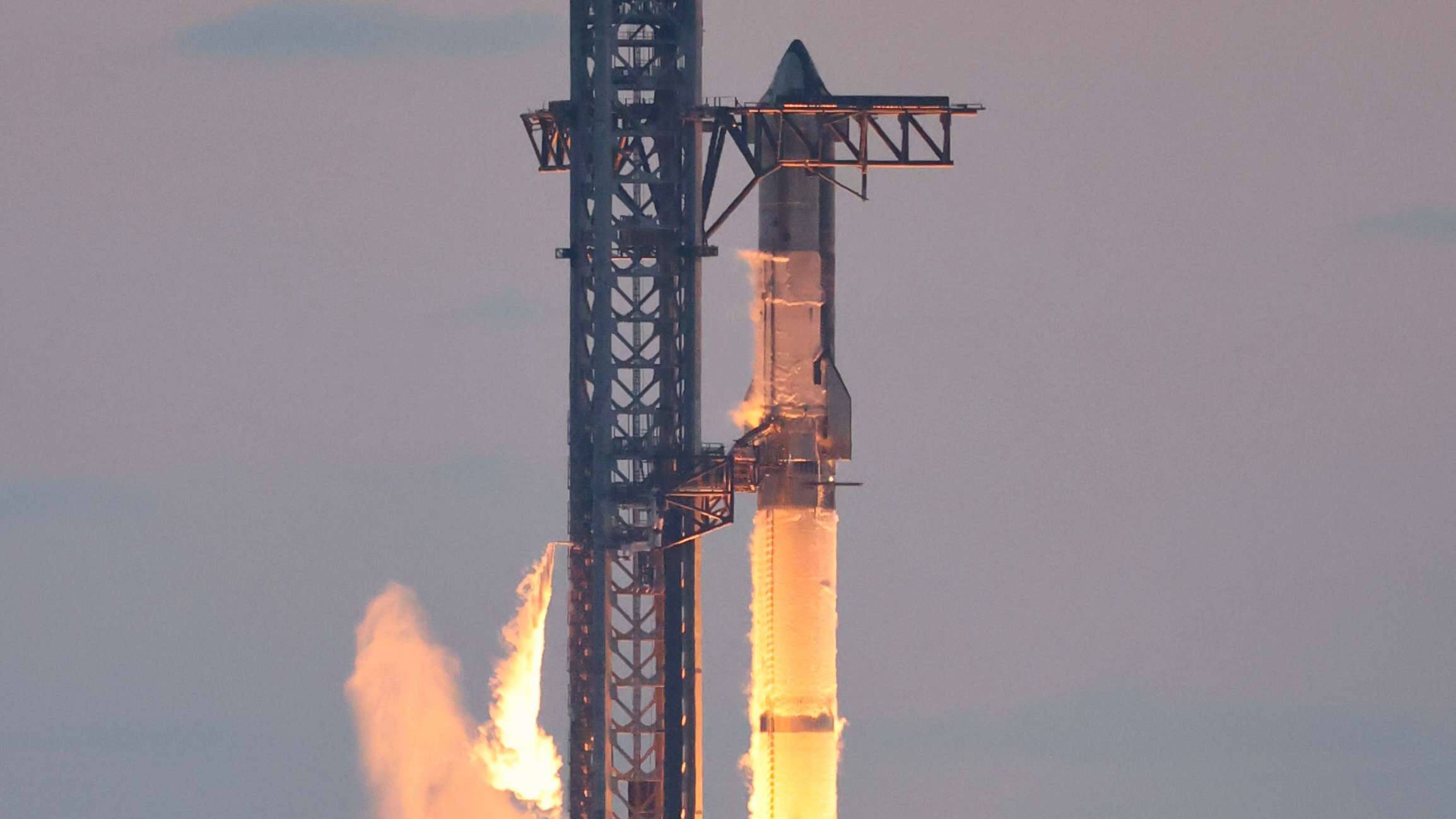
Starship Flight 14 to Make History with 1st Ship & Booster V3 RETURN Home: The SpaceX Starship program is entering one of the most exciting chapters in modern aerospace history. After completing 12 test flights, SpaceX is preparing to transition from experimental suborbital missions to a true orbital return demonstration. This milestone could redefine how rockets are designed, operated, and reused for future missions to the Moon, Mars, and beyond.
With Flight 13, Flight 14, and the introduction of the revolutionary Booster V3, SpaceX is steadily moving toward its ultimate goal of rapid and fully reusable space transportation. These upcoming missions are expected to validate new technologies, improve rocket reliability, and pave the way for routine orbital launches with dramatically lower costs.
SpaceX’s Vision for Fully Reusable Rockets
Since its inception, the Starship program has focused on solving one of the biggest challenges in spaceflight: complete rocket reusability.
Traditional launch systems discard upper stages after every mission, leaving them to burn up in Earth’s atmosphere or become long-term space debris. Starship aims to eliminate this waste by allowing both the Super Heavy booster and the Starship upper stage to return safely for future launches.
Achieving rapid reusability would significantly reduce launch costs while enabling frequent missions for satellite deployment, lunar exploration, and eventually human missions to Mars.
Flight 14 Could Mark the First True Orbital Return
One of the biggest developments comes from recently published FCC authorization documents, which specifically mention a “Starship orbital return demo.”
Unlike previous flights that followed suborbital trajectories, Flight 14 is expected to place the Starship upper stage into a genuine orbit before performing a controlled de-orbit burn and atmospheric re-entry.
This is a major leap forward because orbital re-entry is dramatically more demanding than suborbital testing.
Why Orbital Re-entry Is So Challenging
Returning from orbit means Starship must survive conditions never before tested on its full-scale vehicle.
Some of the biggest challenges include:
- Orbital speeds approaching 27,000 km/h
- Extreme plasma temperatures exceeding 1,400°C
- Extended heating duration during atmospheric re-entry
- Precise Guidance, Navigation and Control (GNC)
- Successful Raptor engine relight for de-orbit burn
- Perfect coordination of flight software and aerodynamic flaps
Every one of these systems must perform flawlessly for Starship to return safely.
Flight 14 Will Likely End with a Controlled Splashdown
Although many enthusiasts hope to see Starship caught by the giant Mechazilla launch tower, SpaceX is expected to remain cautious.
Instead of attempting orbital insertion, atmospheric re-entry, and a tower catch all in one mission, Flight 14 will likely conclude with a controlled ocean splashdown.
This step-by-step testing philosophy has been one of SpaceX’s biggest strengths throughout the Starship development program. Each flight expands the envelope while minimizing unnecessary risks.
Flight 13 Is the Key Before Flight 14
Before Flight 14 can attempt its historic orbital mission, Flight 13 must successfully validate several engineering improvements.
The mission will continue testing upgraded hardware while addressing issues discovered during Flight 12.
Major Engineering Fixes
SpaceX engineers are primarily focused on improving:
1. Raptor Engine Reliability
Previous testing revealed irregular engine shutdowns during boostback and landing burns. Flight 13 aims to demonstrate consistent and reliable engine performance throughout the mission.
2. Cryogenic Fuel Leak Prevention
Engineers are also redesigning internal plumbing and insulation systems to prevent liquid methane and liquid oxygen (LOX) leaks that previously caused damage inside the engine bay.
Resolving these issues is essential before regulators approve more ambitious orbital return missions.
Starship Flight 14 Hardware Is Nearly Ready
While engineers prepare for Flight 13, manufacturing of Flight 14 hardware continues at an impressive pace.
Ship 41
The Ship 41 (S41) upper stage has already entered final assembly stages, including installation of its aerodynamic control flaps and remaining structural components.
Booster 21
Meanwhile, Booster 21 (B21) is progressing through final assembly after joining its primary fuel tanks and integrating specialized LOX landing tanks.
These production milestones indicate that Flight 14 hardware is approaching mechanical completion well before launch preparations begin.
Booster V3 Introduces the Biggest Design Changes Yet
Perhaps the most significant advancement in the Starship program is the arrival of Booster V3.
This next-generation Super Heavy booster includes numerous structural improvements that simplify operations while increasing reliability.
Three Larger Grid Fins Replace Four Smaller Ones
One of the most noticeable changes is the replacement of the traditional four-grid-fin layout with three larger high-strength steel grid fins.
This redesign offers several advantages:
- Reduced vehicle weight
- Improved structural efficiency
- Better protection from hot-staging exhaust
- Simplified maintenance
- Greater aerodynamic control
The new fins are mounted lower on the booster, keeping critical steering systems farther away from intense thermal loads generated during stage separation.
Integrated Catch Points
Earlier booster versions required separate structural hardpoints welded onto the vehicle for the launch tower’s chopsticks to capture.
Booster V3 eliminates these extra components by integrating the catch points directly into two of the grid fins.
This innovation:
- Reduces dry mass
- Eliminates unnecessary hardware
- Removes potential structural failure points
- Improves overall reliability
The redesign perfectly reflects SpaceX’s philosophy of simplifying systems while improving performance.
Megazilla Launch Tower Receives Major Upgrades
To support Booster V3, SpaceX has also upgraded its massive Megazilla launch tower.
Several important improvements have been introduced.
Faster Electromechanical Actuators
The tower’s giant chopstick arms now use electromechanical actuators instead of slower hydraulic systems.
Benefits include:
- Faster response times
- Greater positioning accuracy
- Lower maintenance requirements
- More predictable movement
Larger Catch Envelope
SpaceX has also shortened the chopstick arms while allowing them to open wider during booster approach.
This creates a significantly larger capture window, allowing successful booster catches even when facing crosswinds or slight engine thrust variations.
These infrastructure upgrades are expected to make routine booster recovery much more reliable.
SpaceX Expands Beyond Starbase
While Starship development accelerates in Texas, SpaceX is simultaneously expanding its launch infrastructure elsewhere.
At Vandenberg Space Force Base, the company is transforming the historic Space Launch Complex 6 (SLC-6) into a modern launch facility capable of supporting Falcon 9 and Falcon Heavy missions.
Once complete, the upgraded complex could support up to 100 launches annually, complete with dedicated booster landing zones for rapid reuse on the U.S. West Coast.
Griffin-1 Lunar Mission Highlights Falcon Heavy’s Growing Role
SpaceX’s expanding launch capabilities are also supporting ambitious lunar exploration.
Astrobotic’s Griffin-1 lunar lander, scheduled for launch aboard Falcon Heavy in late 2026, will transport scientific payloads, the Astrolab FLIP Rover, and multiple international experiments under NASA’s Commercial Lunar Payload Services (CLPS) initiative.
With a payload capacity of 625 kilograms, Griffin-1 is designed to deliver essential infrastructure needed for future long-term lunar operations, including autonomous navigation systems and surface equipment.
Final Thoughts
The Starship program is rapidly transitioning from experimental testing to operational capability. Flight 13 will verify key engineering improvements, while Flight 14 could become the first mission to demonstrate a true orbital return of the Starship upper stage.
Combined with the arrival of Booster V3, upgraded Megazilla recovery systems, and expanding launch infrastructure, SpaceX is laying the foundation for a future where rockets launch, land, and fly again with unprecedented speed.
If these upcoming missions succeed, they will mark another historic step toward making fully reusable orbital spaceflight a practical reality—bringing humanity closer than ever to sustained missions to the Moon, Mars, and beyond.
FAQs
1. What is the main objective of Starship Flight 14?
The primary objective of Starship Flight 14 is to perform the first true orbital return demonstration, where the Starship upper stage reaches orbit, re-enters Earth’s atmosphere, and completes a controlled landing sequence.
2. Why is Flight 14 considered historic?
Flight 14 could become the first Starship mission to successfully demonstrate an orbital return, proving that the upper stage can survive orbital re-entry and move closer to full reusability.
3. What is the difference between orbital and suborbital flights?
A suborbital flight briefly reaches space without completing an orbit around Earth, while an orbital flight travels at approximately 27,000 km/h, allowing the spacecraft to circle the planet before returning.
4. What is Starship Booster V3?
Booster V3 is the latest version of SpaceX’s Super Heavy booster, featuring redesigned grid fins, integrated catch points, lower weight, and improved structural efficiency for routine recovery operations.
5. What improvements does Booster V3 include?
Booster V3 introduces:
- Three larger grid fins instead of four
- Integrated launch tower catch points
- Reduced structural weight
- Better thermal protection
- Improved reliability during recovery
6. What is the purpose of Flight 13?
Flight 13 is designed to validate hardware upgrades, improve engine reliability, and resolve technical issues before Flight 14 attempts a true orbital return.
7. What problems is SpaceX trying to fix before Flight 14?
Engineers are focused on:
- Improving Raptor engine reliability
- Eliminating cryogenic methane and liquid oxygen leaks
- Enhancing overall flight stability and recovery performance
8. Will Starship Flight 14 be caught by the launch tower?
Most experts expect Flight 14 to end with a controlled ocean splashdown rather than a tower catch, allowing SpaceX to first validate orbital re-entry before attempting a full recovery.
9. What is Mechazilla?
Mechazilla is SpaceX’s giant launch tower equipped with robotic “chopstick” arms designed to catch returning Starship boosters and eventually the Starship upper stage.
10. Why is orbital re-entry so difficult?
Orbital re-entry exposes Starship to:
- Speeds of nearly 27,000 km/h
- Temperatures exceeding 1,400°C
- Extreme aerodynamic forces
- Intense plasma heating over an extended period
11. What are Starship’s heat shield tiles made for?
The ceramic heat shield tiles protect Starship from extreme temperatures generated during atmospheric re-entry, helping the spacecraft survive repeated missions.
12. What is the FCC authorization for Flight 14?
The recently published FCC authorization references a “Starship orbital return demo,” indicating that SpaceX is preparing for an orbital mission rather than another suborbital test.
13. How does Booster V3 improve rocket recovery?
Booster V3 integrates catch points directly into its grid fins, reducing weight, simplifying the design, and making launch tower recovery more efficient.
14. What upgrades have been made to the Megazilla launch tower?
The upgraded tower features:
- Faster electromechanical actuators
- Improved chopstick precision
- Wider capture range
- Lower maintenance requirements
- Better performance during booster recovery
15. What is the Griffin-1 lunar mission?
Griffin-1 is Astrobotic’s next-generation lunar lander that will launch aboard a SpaceX Falcon Heavy to deliver scientific equipment, the Astrolab FLIP Rover, and international payloads to the Moon.
16. Why is Starship important for future space exploration?
Starship is designed to become the world’s first fully reusable heavy-lift launch system, dramatically reducing launch costs while enabling missions to the Moon, Mars, deep space, and large-scale satellite deployment.
Read More:
- ELON CONFIRMED IT! Tesla Cybercab Is HERE With 4 HUGE Upgrades
- Tesla challenges startups to score a gig inside its most advanced European factory
- Tesla flexes how it will help the blind with Cybercab
- Elon Musk’s NEW Update On Tesla Bot Gen 3, 1000 Tasks Begins
- Tesla’s World’s First 1000GW Solar Factory Destroys Energy Industry
1 thought on “Starship Flight 14 to Make History with 1st Ship & Booster V3 RETURN Home”