
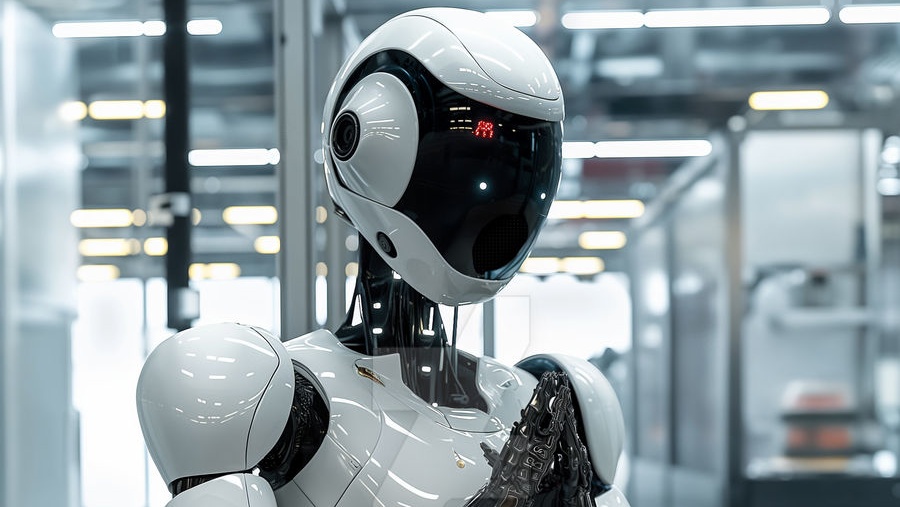
Elon Musk’s NEW Update On Tesla Bot Gen 3, 1000 Tasks Begins: The future of humanoid robotics is taking shape faster than ever. Elon Musk has once again made headlines by calling the Tesla Optimus Gen 3 robot the company’s most important long-term product. According to Musk, Optimus has the potential to become “the biggest product of all time,” surpassing every other technological innovation in history.
With Tesla shifting from prototype development to mass production, the Tesla Bot Gen 3 introduces revolutionary improvements in manufacturing, artificial intelligence, hardware, and real-world applications. Designed to perform 1,000 useful tasks, this next-generation humanoid robot is expected to transform factories, homes, healthcare, and many other industries.
Tesla Optimus Gen 3 Moves Toward Mass Production
One of the biggest updates is Tesla’s decision to manufacture the Optimus Gen 3 primarily at its Fremont Factory in California instead of Giga Texas, as many industry experts had expected.
To make room for the robot production line, Tesla temporarily paused production of the Model S and Model X, reallocating factory space, engineering resources, and manufacturing infrastructure to support the next phase of humanoid robot development.
This strategic move clearly demonstrates Tesla’s growing commitment to making Tesla Bot Gen 3 one of its flagship products for the future.
Why Manufacturing Optimus Is More Complex Than Building Cars
Unlike electric vehicles, the Tesla Optimus Gen 3 consists of nearly 10,000 individual components. Every mechanical system, electronic circuit, actuator, and AI module must be designed specifically for humanoid movement.
Tesla expects production to follow the classic S-Curve Manufacturing Model:
- Phase 1: Slow production while systems are tested and optimized.
- Phase 2: Rapid manufacturing growth as automation improves.
- Phase 3: Full-scale production targeting nearly 1 million robots annually.
Elon Musk has also cautioned that production will begin gradually because almost every part of the manufacturing process is entirely new.
Advanced Supply Chain and Custom Actuator Technology
Another major breakthrough lies in Tesla’s custom-built actuators.
Unlike traditional robots that use standardized motors, every actuator inside Optimus Gen 3 is individually engineered for its specific body location. From shoulders and elbows to fingers and even toes, each actuator has its own optimized size, torque, and mechanical design.
Benefits of Tesla’s Custom Actuators
The customized actuator system offers several advantages:
- Smooth and natural movements
- Greater energy efficiency
- Improved balance and stability
- Human-like flexibility
- Higher precision when handling delicate objects
Although Tesla aims to manufacture more components internally in the future, the company currently relies on a global supply chain, with many essential parts sourced from China.
Tesla Bot Gen 3 Features a Completely New Hardware Design
Tesla has redesigned nearly every aspect of the robot’s physical appearance.
Elon Musk compared the engineering philosophy behind Optimus Gen 3 to SpaceX’s Raptor 3 rocket engine, where unnecessary components are eliminated to create a cleaner, lighter, and more efficient design.
Sleeker Exterior Design
Instead of exposed mechanical parts and wiring, Gen 3 features a smooth outer shell that resembles a seamless bodysuit. Rounded joints at the shoulders, hips, and neck provide a more friendly and less industrial appearance.
Enhanced Dexterity
One of the biggest improvements is the robot’s hands.
The new hands include 22 Degrees of Freedom (DoF) combined with advanced tactile sensors, allowing the robot to:
- Pick up fragile objects
- Fold laundry
- Wash dishes
- Handle tools
- Perform precise household tasks
Improved Environmental Protection
Unlike earlier prototypes, the latest Tesla Bot Gen 3 includes basic resistance against dust and water, allowing it to work both indoors and outdoors.
Long Battery Life
Powering the robot is Tesla’s proprietary 3 kWh battery pack built using 4680 battery cells.
Under normal household conditions, the battery is expected to provide around 5–6 hours of continuous operation before automatically returning for recharging.
AI5 Computer Brings a Massive Intelligence Upgrade
Perhaps the most significant improvement is hidden inside the robot.
The Tesla AI5 computer represents a major leap over the previous AI4 system.
Instead of relying solely on faster processors, Tesla focused on dramatically increasing memory bandwidth, allowing information to move much faster between memory and the processor.
Why AI5 Matters
The AI5 chip delivers approximately five times more memory bandwidth than AI4.
This allows the robot to:
- Process visual information instantly
- Navigate changing environments smoothly
- React to unexpected obstacles in real time
- Eliminate awkward pauses before making decisions
As a result, Tesla Optimus Gen 3 can move more naturally while continuously adapting to its surroundings.
Tesla Optimus Can Perform 1,000 Useful Tasks
Tesla’s long-term vision goes far beyond factory automation.
The company plans to equip Optimus Gen 3 with the ability to perform 1,000 practical everyday tasks.
Household Assistance
The robot is expected to handle many repetitive household chores, including:
- Washing dishes
- Laundry
- Vacuuming
- Floor cleaning
- Lawn mowing
- Kitchen maintenance
These capabilities could save homeowners countless hours every week.
Elder Care Support
The robot may also become an important assistant for elderly individuals by helping with:
- Mobility support
- Fall detection
- Medication reminders
- Emergency alerts
As global populations continue to age, such technology could help reduce pressure on healthcare systems.
Childcare and Home Companion
Tesla also envisions Optimus serving as a household companion capable of:
- Walking pets
- Supervising basic childcare activities
- Conversing naturally using AI-powered voice technology
- Assisting with everyday routines
These features could make humanoid robots valuable family assistants in the future.
Safety and Cybersecurity Remain Top Priorities
As robots move from factories into private homes, safety becomes far more important.
Unlike smartphones or computers, a humanoid robot physically interacts with people and objects, meaning software failures could have real-world consequences.
Potential Risks
Tesla continues to address several important challenges:
Sensor Errors
Incorrect object recognition could cause mistakes while assisting elderly users or handling medications.
Physical Navigation
The robot must safely move around furniture, pets, children, and fragile household items.
Cybersecurity
Since Optimus may connect to Tesla’s larger digital ecosystem, preventing hacking and unauthorized access is essential.
To reduce these risks, Tesla is developing:
- End-to-end hardware encryption
- Emergency safety overrides
- Local fail-safe systems
- Strict privacy protection
These measures aim to make Optimus one of Tesla’s most secure AI products.
Future Learning Through Watching Humans
One of the most exciting concepts Elon Musk discussed is visual imitation learning.
Rather than programming every individual task manually, future versions of Tesla Bot Gen 3 could potentially learn simply by watching instructional videos.
For example, after viewing a tutorial, the robot might eventually understand how to:
- Assemble furniture
- Cook meals
- Use household appliances
- Perform maintenance tasks
Although this technology remains under development, it represents one of the most ambitious goals in artificial intelligence and robotics.
Tesla also recognizes that careful monitoring will be necessary to ensure robots do not learn unsafe or inappropriate behaviors from unverified training data.
Final Thoughts
The Tesla Optimus Gen 3 represents one of the most significant advancements in AI-powered humanoid robotics. With custom actuators, the powerful AI5 computer, improved battery technology, enhanced dexterity, and the ability to perform 1,000 useful tasks, Tesla is moving closer to making humanoid robots a practical part of everyday life.
While challenges such as production scaling, supply chain management, pricing, and cybersecurity still remain, Tesla’s aggressive investment in robotics signals a future where intelligent humanoid assistants could become as common as smartphones or electric vehicles.
If Elon Musk’s vision becomes reality, the Tesla Bot Gen 3 may redefine automation, transforming industries, supporting families, assisting healthcare, and changing how humans interact with intelligent machines for decades to come.
FAQs
1. What is Tesla Optimus Gen 3?
Tesla Optimus Gen 3 is Tesla’s latest humanoid robot designed to perform everyday tasks in factories, homes, and other environments using advanced AI and robotics technology.
2. What does Elon Musk say about Tesla Bot Gen 3?
Elon Musk believes Tesla Optimus could become the “biggest product of all time” and eventually surpass every other consumer product in terms of impact and production volume.
3. How many tasks can Tesla Optimus Gen 3 perform?
Tesla aims for Optimus Gen 3 to perform up to 1,000 useful tasks, including household chores, factory work, elderly assistance, and more.
4. Where will Tesla Optimus Gen 3 be manufactured?
Tesla plans to manufacture the Optimus Gen 3 primarily at its Fremont Factory in California, which has been reconfigured to support large-scale robot production.
5. Why is Tesla moving Optimus production to Fremont?
Tesla shifted production to Fremont to dedicate factory space, engineering resources, and manufacturing infrastructure specifically for humanoid robot development.
6. What processor powers Tesla Optimus Gen 3?
Tesla Optimus Gen 3 is powered by the new AI5 computer, which offers significantly higher memory bandwidth and faster real-time AI processing than previous versions.
7. What makes Tesla Optimus Gen 3 different from earlier models?
Gen 3 features custom actuators, improved hand dexterity with 22 degrees of freedom, better battery efficiency, a smoother body design, and a more powerful AI system.
8. How long can Tesla Optimus Gen 3 operate on a single charge?
The robot is expected to run for approximately 5 to 6 hours under light-duty household tasks before automatically recharging.
9. Can Tesla Optimus Gen 3 work inside homes?
Yes. Tesla is designing Optimus Gen 3 for household tasks such as cleaning, washing dishes, doing laundry, mowing lawns, and assisting family members.
10. Will Tesla Optimus help elderly people?
Yes. Future versions are expected to assist seniors with mobility support, fall detection, medication reminders, and emergency alerts.
11. Is Tesla Optimus Gen 3 waterproof?
The latest generation includes basic water and dust resistance, allowing it to safely perform many indoor and outdoor tasks.
12. How does Tesla Optimus Gen 3 learn new skills?
Tesla is developing AI that may eventually allow Optimus to learn new physical tasks by watching instructional videos and observing human demonstrations.
13. Is Tesla Optimus Gen 3 safe to use?
Tesla is building multiple safety systems into Optimus, including hardware encryption, emergency safety overrides, local fail-safe mechanisms, and advanced cybersecurity protections.
14. When will Tesla Optimus Gen 3 enter mass production?
Tesla expects initial production to begin gradually, with assembly line trials starting in late 2026 before scaling toward higher production volumes.
15. What is the future of Tesla Optimus Gen 3?
Tesla envisions Optimus becoming a general-purpose humanoid robot used in factories, homes, healthcare, logistics, and many other industries, potentially transforming the global workforce.
Read More:
- Tesla’s World’s First 1000GW Solar Factory Destroys Energy Industry
- Texas man charged in fatal Tesla crash where he blamed Autopilot
- Starship S40 finally Completed Full-Engine Fire Test, Faster Than Expected! Pad-2 in Strange Tests
- Elon Musk Unveils New Tesla Mega Projects That SHOCKED China
- Elon Musk outlines Tesla Optimus production expectations
2 thoughts on “Elon Musk’s NEW Update On Tesla Bot Gen 3, 1000 Tasks Begins”