
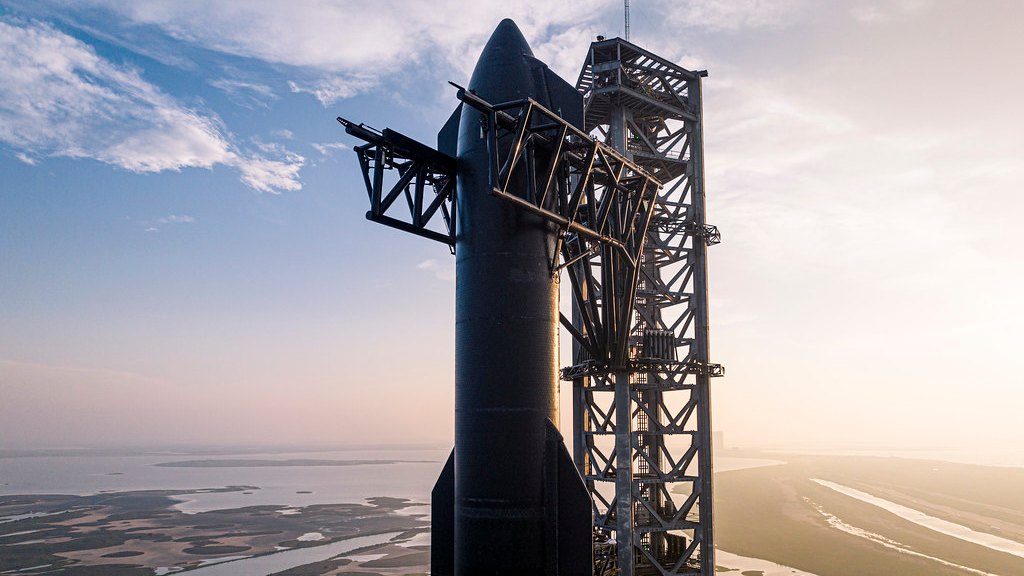
NASA Seriously WARNING Big Problems in Starship Refueling! Here’s How SpaceX Solves: The Artemis program is paving the way for humanity’s return to the Moon, but behind the excitement lies one of the biggest engineering challenges in spaceflight history. Unlike the Apollo era, where a single Saturn V rocket launched astronauts directly toward the Moon, NASA is now relying on an advanced network of reusable spacecraft, orbital logistics, and in-space refueling.
At the center of this ambitious mission is SpaceX’s Starship Human Landing System (HLS). Designed to transport astronauts from lunar orbit to the Moon’s surface, Starship promises unmatched cargo capacity and full reusability. However, before it can make history, it must overcome an enormous obstacle—orbital refueling.
A recent report from NASA’s Office of Inspector General (OIG) has highlighted serious concerns about whether SpaceX can successfully execute the massive refueling campaign required for future lunar missions. The report estimates that at least 15 Starship tanker launches may be needed to fuel a single lunar mission.
So why is this such a huge challenge, and how does SpaceX plan to solve it? Let’s dive in.
Why Starship Needs Orbital Refueling
One of the biggest advantages of Starship is its enormous size. Standing taller than the legendary Saturn V, the spacecraft is capable of carrying over 100 metric tons of cargo, astronauts, scientific equipment, and even future lunar habitats.
However, there’s a catch.
Launching such a massive spacecraft from Earth requires an incredible amount of fuel. Nearly all of Starship’s onboard liquid methane (CH₄) and liquid oxygen (LOX) is consumed simply reaching Low Earth Orbit (LEO).
That means once Starship reaches orbit, its tanks are almost empty.
Without additional fuel, the spacecraft cannot:
- Travel to the Moon
- Land safely on the lunar surface
- Return to lunar orbit
- Complete future deep-space missions
This is where orbital refueling becomes absolutely essential.
NASA’s OIG Report Raises Major Concerns
NASA’s latest Office of Inspector General report offered the clearest estimate yet of Starship’s fueling requirements.
15 Tanker Launches for One Mission
According to NASA, SpaceX may need at least 15 Starship tanker launches to fully fuel one Starship Human Landing System before it departs for the Moon.
Each tanker launch acts like a giant space fuel truck, carrying cryogenic methane and oxygen into orbit before transferring it to an orbital depot or directly to Starship.
This number surprised many aerospace experts.
Previous estimates ranged from 4 to 20 launches, but NASA’s assessment places the requirement firmly around 15 launches, making orbital refueling one of the most demanding logistics operations ever attempted.
An 8-Day Launch Cadence
NASA also estimates SpaceX must launch a Starship approximately every eight days to keep the refueling campaign practical.
If every launch succeeds on schedule:
- 15 launches
- Every 8 days
- Around 4 months to fill one orbital depot
That timeline leaves very little room for:
- Launch delays
- Weather issues
- Hardware failures
- Maintenance
- Technical problems
Any interruption could delay an entire Artemis mission.
Two Different Refueling Strategies
SpaceX has developed two possible methods for transferring fuel in orbit.
1. Direct Ship-to-Ship Refueling
In this approach:
- A Starship HLS waits in orbit.
- A tanker Starship launches.
- Both spacecraft dock together.
- Fuel transfers directly between vehicles.
Advantages
- No permanent orbital infrastructure required.
- Simpler mission architecture.
- Immediate fuel transfer.
Challenges
Every tanker must launch on time.
If one mission is delayed, the crewed Starship has to remain in orbit while waiting, consuming valuable resources and increasing mission risk.
Additionally, docking 15 separate times increases wear on docking systems and introduces more opportunities for failure.
2. Orbital Fuel Depot
NASA’s preferred architecture uses a dedicated orbital fuel depot.
Instead of fueling the lunar lander directly:
- A depot is launched first.
- Tanker Starships repeatedly dock with it.
- Fuel accumulates inside the depot.
- The fully loaded Starship HLS docks once.
- It receives all required fuel before heading to the Moon.
This greatly simplifies the final lunar departure.
However, it creates another enormous engineering challenge.
The Cryogenic Fuel Storage Problem
Liquid methane and liquid oxygen must remain incredibly cold.
Approximate storage temperatures include:
- Liquid Methane: −161°C
- Liquid Oxygen: −183°C
In space, sunlight continuously heats spacecraft surfaces.
Over time, these ultra-cold propellants begin to boil away, creating what engineers call cryogenic boil-off.
Since NASA estimates it could take four months to fill an orbital depot, SpaceX must develop advanced technologies including:
- Active cooling systems
- Multi-layer insulation
- Pressure management
- Boil-off reduction techniques
Without these systems, the depot could lose fuel almost as quickly as tanker flights replenish it.
Florida’s Space Infrastructure Faces New Pressure
Supporting more than 100 Starship launches every year requires major upgrades to America’s launch infrastructure.
Launch Complex 39A
Historic Launch Complex 39A at Kennedy Space Center once launched Apollo astronauts.
Now SpaceX plans to transform it into a high-frequency Starship launch site capable of supporting approximately 44 launches annually.
This requires improvements in:
- Launch pad cooling
- Water suppression systems
- Structural reinforcement
- Rapid refurbishment
Cape Canaveral Expansion
SpaceX is also expanding operations at Cape Canaveral.
The company expects to perform roughly 76 Starship launches annually from this region.
Major developments include:
- Upgrading Space Launch Complex 37
- Moving Falcon 9 operations to SLC-40
- Building dedicated Starship infrastructure
Combined, these facilities could support well over 100 Starship launches every year.
How SpaceX Plans to Solve the Refueling Challenge
Despite NASA’s concerns, SpaceX already has a roadmap for overcoming these obstacles.
1. Building More Launch Pads
Instead of relying on a single launch pad every eight days, SpaceX plans multiple operational Starship pads.
These include:
- Starbase Pad 1
- Starbase Pad 2
- LC-39A
- Two planned pads at SLC-37
With five active launch pads, tanker missions could launch in parallel rather than sequentially.
Instead of taking four months, orbital depots could potentially be filled in roughly one month, dramatically reducing cryogenic boil-off.
2. Developing Starship Version 4
Another major solution is Starship V4.
This future version is expected to feature:
- Larger propellant tanks
- Greater payload capacity
- Around 2,300 tons of fuel capacity
- Improved tanker efficiency
Because each tanker flight carries much more fuel, Elon Musk believes future missions could require only five or six tanker launches instead of fifteen.
Reducing launch count dramatically lowers overall mission complexity.
Artemis Timeline Has Changed
Recognizing these technical challenges, NASA has adjusted its Artemis schedule.
Rather than attempting a crewed lunar landing immediately, the agency has shifted priorities.
Artemis 3
The revised Artemis 3 mission will primarily focus on:
- Orion spacecraft operations
- Docking demonstrations
- Crew transfers in lunar orbit
- Testing mission architecture
Artemis 4
NASA now expects the first crewed Starship lunar landing to occur during Artemis 4, currently targeted for 2028.
This gives SpaceX valuable additional development time to demonstrate:
- Orbital docking
- Fuel transfer
- Depot operations
- High launch cadence
- Reliable Starship recovery
Why Orbital Refueling Could Transform Space Exploration
While NASA’s warnings highlight significant engineering risks, they also emphasize how revolutionary Starship’s architecture could become.
Mastering orbital propellant transfer doesn’t just enable Moon missions.
It opens the door to:
- Permanent lunar bases
- Large-scale Mars expeditions
- Deep-space scientific missions
- Massive space stations
- Affordable interplanetary transportation
Without orbital refueling, rockets remain limited by the amount of fuel they can launch from Earth.
With successful orbital depots, spacecraft can be fully fueled in space before beginning their journey, allowing much larger payloads to travel farther than ever before.
Conclusion
NASA’s Office of Inspector General has made one thing clear: orbital refueling is the single biggest technical hurdle facing the Artemis program. Requiring up to 15 tanker launches, maintaining an 8-day launch cadence, preventing cryogenic boil-off, and upgrading launch infrastructure represent challenges unlike anything attempted in modern aerospace.
Yet SpaceX is tackling these problems with an ambitious strategy that includes multiple launch pads, orbital fuel depots, and the next-generation Starship V4. If these innovations succeed, they won’t just power the first crewed lunar landing of the Artemis era—they could redefine how humanity explores the Solar System.
The technologies developed today for NASA’s Artemis missions may ultimately become the foundation for Moon colonies, Mars settlements, and the next generation of deep-space exploration, marking the beginning of a new era in human spaceflight.
FAQs
1. Why does Starship need orbital refueling?
Starship uses most of its fuel to reach Low Earth Orbit (LEO). To travel to the Moon, land safely, and return, it must be refueled in space with additional liquid methane (CH₄) and liquid oxygen (LOX).
2. How many tanker launches does NASA estimate are required for one Starship Moon mission?
According to NASA’s Office of Inspector General (OIG), SpaceX may need at least 15 Starship tanker launches to fully refuel a single Starship Human Landing System (HLS) for a lunar mission.
3. What is the Starship Human Landing System (HLS)?
The Starship Human Landing System (HLS) is a modified version of SpaceX’s Starship designed to transport astronauts from lunar orbit to the Moon’s surface as part of NASA’s Artemis program.
4. What is orbital refueling?
Orbital refueling is the process of transferring fuel between spacecraft while they are in orbit around Earth. This technology allows spacecraft to carry enough propellant for deep-space missions without launching fully fueled from Earth.
5. Why is orbital refueling considered so difficult?
Orbital refueling involves docking large spacecraft, transferring ultra-cold cryogenic fuels in microgravity, preventing fuel loss from boil-off, and maintaining precise spacecraft control throughout the process.
6. What is an orbital fuel depot?
An orbital fuel depot is a spacecraft designed to store cryogenic propellants in space. Tanker Starships deliver fuel to the depot, which later transfers it to a mission-ready Starship before it heads toward the Moon.
7. What are cryogenic propellants?
Cryogenic propellants are extremely cold fuels used by rockets. Starship relies on liquid methane (CH₄) and liquid oxygen (LOX), which must remain at very low temperatures to stay in liquid form.
8. What is cryogenic boil-off?
Cryogenic boil-off occurs when super-cooled liquid fuel gradually warms up and turns into gas, reducing the available propellant. Preventing boil-off is one of the biggest challenges for long-term fuel storage in space.
9. Why does NASA recommend an 8-day launch cadence?
NASA estimates that launching a Starship approximately every eight days would allow SpaceX to complete the refueling campaign before significant fuel losses occur inside the orbital depot.
10. How is SpaceX planning to reduce the number of tanker launches?
SpaceX is developing Starship Version 4 (V4) with larger fuel tanks and greater payload capacity. Elon Musk has suggested this could reduce the number of required tanker launches from around 15 to just 5 or 6.
11. What improvements is SpaceX making to its launch infrastructure?
SpaceX is expanding launch operations by upgrading Launch Complex 39A, developing Space Launch Complex 37, enhancing Starbase in Texas, and building multiple launch pads to support a much higher flight rate.
12. Has NASA changed the Artemis mission timeline?
Yes. NASA has revised the Artemis schedule, with Artemis 3 focusing primarily on orbital testing and docking operations, while the first crewed Starship lunar landing is currently planned for Artemis 4.
13. Why are reusable rockets important for Artemis?
Reusable rockets significantly reduce launch costs, increase mission frequency, and make ambitious projects like orbital refueling, lunar bases, and future Mars missions economically feasible.
14. Could orbital refueling help future Mars missions?
Absolutely. Successful orbital refueling would allow Starship to leave Earth orbit with much larger amounts of fuel, making Mars missions, deep-space exploration, and large cargo deliveries far more practical.
15. Why is Starship considered revolutionary for space exploration?
Starship combines full reusability, massive payload capacity, orbital refueling capability, and rapid launch potential. These innovations could dramatically lower the cost of space travel and enable long-term human exploration of the Moon, Mars, and beyond.
Read More:
- The secret behind Tesla’s Cybercab Gold goes well beyond just the color
- Next-Gen Tesla Giga Press 4.0 Deleted All Welding Robots
- SpaceX Starship Flight 13’s New Launch Date Revealed! Test & Launch in Days, Is It Feasible
- SpaceX’s newest logo confirms everything about what it’s become
- California snubs Tesla in its newly passed EV incentive that favors Rivian and Lucid
1 thought on “NASA Seriously WARNING Big Problems in Starship Refueling! Here’s How SpaceX Solves”