
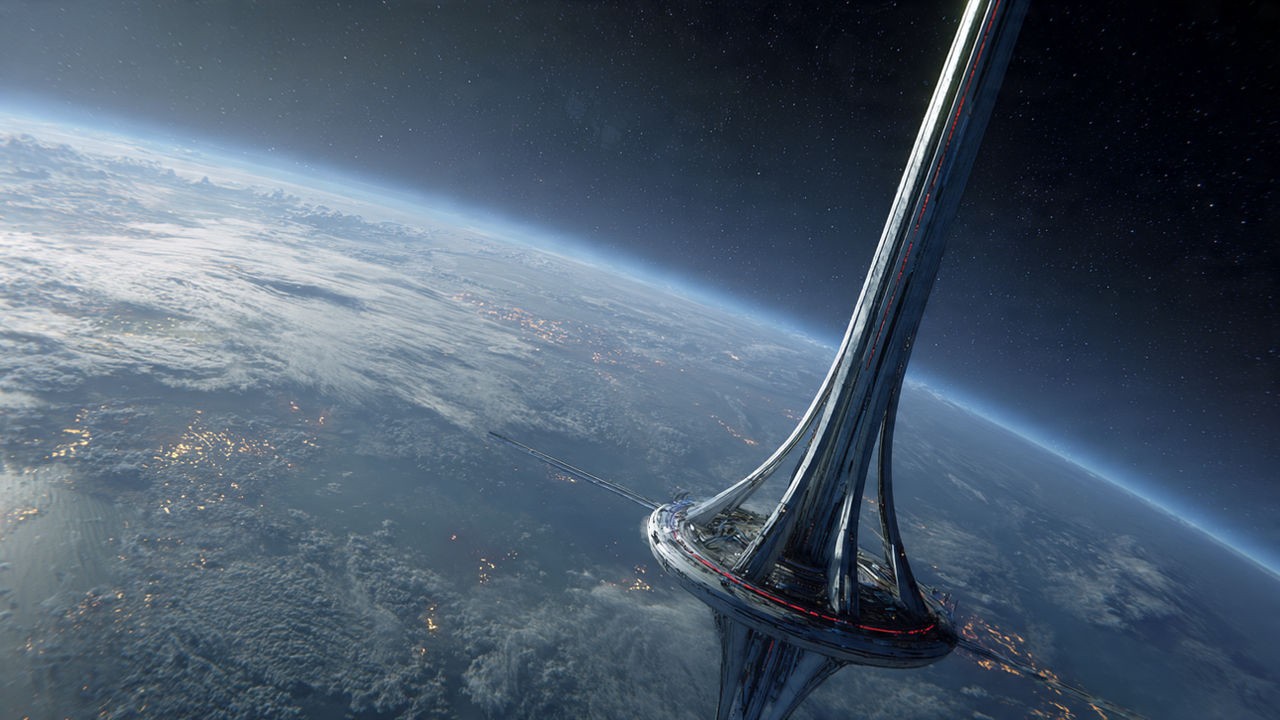
SpaceX’s new Gravity Space Station Rapidly Progresses toward Launch Sooner Than You Expected: The future of commercial space exploration is arriving much faster than anyone expected. While the International Space Station (ISS) has served as humanity’s home in low Earth orbit for more than two decades, a new generation of privately built space stations is preparing to take over. At the center of this revolution is Haven-1, a cutting-edge commercial space station developed by Vast Space and scheduled to launch aboard a SpaceX Falcon 9 rocket.
Unlike previous orbital stations, Haven-1 is designed not only to support astronauts but also to pave the way for artificial gravity, improved living conditions, and sustainable long-duration space missions. If everything goes according to plan, this mission will become one of the most significant milestones in the history of private spaceflight.
The Beginning of a New Era in Commercial Space Stations
For decades, governments dominated human space exploration. Today, private companies are transforming the industry at an unprecedented pace.
Vast Space, founded by cryptocurrency entrepreneur Jed McCaleb, aims to build the world’s most advanced commercial space station. Inspired by SpaceX’s rapid development philosophy, the company is investing heavily in innovation while avoiding the lengthy procurement processes that have traditionally slowed aerospace projects.
With CEO Max Haot leading operations, Vast has expanded from a small startup into a team of more than 1,000 engineers and aerospace specialists in just a few years.
The company’s mission is simple: build space stations faster, cheaper, and better than ever before.
Why Haven-1 Is Different From Every Other Space Station
Rather than competing with the ISS in size, Haven-1 is designed as a proof of concept for the future of commercial space habitation.
Key Specifications
- Launch Vehicle: SpaceX Falcon 9
- Launch Target: First Quarter of 2027
- Weight: Approximately 14,000 kilograms
- Habitable Volume: Around 45 cubic meters
- Crew Capacity: Four astronauts
Although relatively compact, Haven-1 demonstrates that private companies can successfully design, launch, and operate orbital habitats at a fraction of the traditional cost.
The module is currently over 80% complete, highlighting Vast Space’s remarkably fast development timeline.
Vertical Integration Gives Vast Space a Huge Advantage
One of the biggest reasons behind Vast Space’s rapid progress is its vertically integrated manufacturing model.
Instead of depending on dozens of external suppliers, the company builds nearly every critical component in-house.
Components Manufactured Internally
Structural Systems
- Aluminum hull fabrication
- Precision welding
- Pressure vessel construction
Life Support Systems
- Thermal regulation
- Environmental controls
- Air recycling technology
Guidance & Navigation
- Control Moment Gyroscopes (CMGs)
- Attitude control systems
- Flight electronics
Building these systems internally dramatically reduces production costs and eliminates lengthy supply-chain delays.
For example, traditional aerospace companies often spend years and tens of millions of dollars acquiring Control Moment Gyroscopes, while Vast reportedly produces them in under six months for a fraction of the cost.
SpaceX Partnership Makes Haven-1 Possible
A major factor behind the project’s rapid progress is Vast Space’s close partnership with SpaceX.
After launch, Haven-1 will initially operate without astronauts. This phase allows engineers to thoroughly test every onboard system before humans arrive.
These systems include:
- Power generation
- Life support
- Thermal control
- Communication systems
- Navigation
- Docking operations
Once all systems are verified, a SpaceX Crew Dragon spacecraft will transport four astronauts to the station.
Interestingly, Crew Dragon will remain permanently docked throughout the mission, serving as an emergency escape vehicle if necessary.
This approach greatly improves crew safety during Haven-1’s early operational missions.
Advanced Propulsion Will Keep the Station in Orbit
Maintaining a stable orbit isn’t as simple as placing a spacecraft in space.
Even hundreds of kilometers above Earth, traces of the atmosphere gradually slow spacecraft down. Without periodic boosts, orbital stations eventually fall back toward Earth.
To solve this challenge, Haven-1 combines multiple propulsion technologies.
Chemical Thrusters
Traditional chemical engines provide powerful bursts of thrust when needed.
Hall-Effect Thrusters
The real innovation is the inclusion of a Hall-effect electric propulsion system based on NASA’s H10 design.
Compared with conventional chemical engines, Hall-effect thrusters offer:
- Far greater fuel efficiency
- Specific impulse exceeding 3,000 seconds
- Long operational lifespan
- Minimal propellant consumption
Using Xenon gas, these engines can keep Haven-1 in orbit for years while consuming only a small amount of fuel.
A Space Station Designed for Human Comfort
Unlike older stations filled with exposed wiring and industrial equipment, Haven-1 focuses heavily on astronaut well-being.
Scandinavian-Inspired Interior
The station features a modern interior using:
- Warm earth-tone colors
- Acoustic insulation
- Custom LED lighting
- Minimalist Scandinavian design
The goal is to reduce stress and improve mental health during long-duration missions.
Private Crew Quarters
Each astronaut receives a personal sleeping compartment equipped with specially designed inflatable sleeping systems that gently simulate the feeling of sleeping under Earth’s gravity.
High-Speed Internet
Haven-1 will also connect directly to Starlink, allowing astronauts to:
- Stream videos
- Make video calls
- Communicate with family
- Access high-speed internet
This level of connectivity has rarely been available in orbit before.
Better Food Means Better Missions
Astronaut meals have traditionally been functional rather than enjoyable.
Vast Space plans to change that.
Professional chefs have helped develop an improved menu featuring dishes such as:
- Vegetable curry
- Caramel apple granola
- Freeze-dried tiramisu
The company even redesigned ordinary utensils.
Its specially engineered spoon includes:
- Longer handle
- Better grip
- Improved pouch access
- Easier food collection in microgravity
Small improvements like these can significantly boost astronaut morale during extended missions.
The Largest Observation Window Ever Built for Space
One of Haven-1’s standout features is its massive 1.1-meter observation window.
This panoramic dome is expected to become the largest single-piece window ever flown into orbit.
Beyond providing breathtaking views of Earth, large observation areas help reduce feelings of isolation, anxiety, and confinement experienced during long space missions.
Haven-2 Will Be Even Bigger
Haven-1 is only the beginning.
If successful, Vast Space plans to rapidly expand with Haven-2.
Planned Development Timeline
2027
Launch of Haven-1
2028
First Haven-2 module launches aboard Falcon Heavy
2029–2030
Three additional modules added
2032
Large central module launched using Starship
When complete, Haven-2 will offer over 510 cubic meters of living space—more than 11 times larger than Haven-1.
It will also include:
- Multiple docking ports
- Robotic arm
- Spacewalk airlock
- Larger observation dome
- Expanded research facilities
Artificial Gravity Could Change Human Spaceflight Forever
Perhaps the most exciting innovation is Vast Space’s plan to demonstrate artificial gravity.
Why Artificial Gravity Matters
Long-term exposure to microgravity causes:
- Muscle loss
- Bone density reduction
- Vision problems
- Fluid shifts
- Cardiovascular changes
Even with hours of daily exercise aboard the ISS, these health issues cannot be completely prevented.
Artificial gravity offers a potential long-term solution.
How Haven-1 Will Test Artificial Gravity
Instead of spinning the station alone, Vast plans to connect Haven-1 with the docked Crew Dragon spacecraft.
The combined structure will rotate slowly around its center of mass, generating centrifugal force that mimics lunar gravity—approximately one-sixth of Earth’s gravity.
This experiment could become the first sustained artificial gravity test involving astronauts in orbit, providing invaluable data for future missions to the Moon, Mars, and beyond.
The Future of Permanent Human Civilization in Space
Vast Space ultimately envisions constructing a 100-meter rotating space station capable of producing Earth-like gravity through continuous rotation.
Such a station would allow astronauts to:
- Walk normally
- Sleep comfortably
- Maintain healthy bones and muscles
- Live in space for years without severe physiological decline
This technology could fundamentally change humanity’s ability to establish permanent settlements beyond Earth.
Conclusion
The rapid development of Haven-1 marks a major turning point in the future of human space exploration. Backed by SpaceX, powered by innovative engineering, and driven by Vast Space’s ambitious vision, this commercial space station is progressing toward launch faster than many experts predicted.
From artificial gravity and advanced Hall-effect propulsion to comfortable living spaces and a roadmap for massive future stations, Haven-1 represents far more than another orbital laboratory. It is the first step toward creating a sustainable human presence beyond Earth.
As the International Space Station approaches retirement, Haven-1 may become the foundation of a new era where commercial space stations, private spaceflight, and eventually permanent human civilization in space become reality.
FAQs
1. What is Haven-1?
Haven-1 is a next-generation commercial space station developed by Vast Space. It is designed to become one of the first privately operated orbital habitats and is scheduled to launch aboard a SpaceX Falcon 9 rocket.
2. When will Haven-1 launch?
According to current plans, Haven-1 is expected to launch in the first quarter of 2027, following the completion of manufacturing and final testing.
3. Who is building Haven-1?
Haven-1 is being built by Vast Space, a private aerospace company founded by entrepreneur Jed McCaleb with the goal of developing commercial space stations for the future.
4. Why is Haven-1 important?
Haven-1 represents a major milestone in commercial space exploration by demonstrating that private companies can build, launch, and operate orbital space stations more efficiently than traditional government programs.
5. Will Haven-1 replace the International Space Station (ISS)?
Haven-1 is not an immediate replacement for the International Space Station (ISS), but it is expected to become one of several commercial space stations that could support astronauts after the ISS is retired.
6. How many astronauts can Haven-1 accommodate?
The station is designed to support four astronauts during crewed missions, providing private sleeping quarters and modern living facilities.
7. What rocket will launch Haven-1?
SpaceX’s Falcon 9 rocket has been selected to launch Haven-1 into Low Earth Orbit (LEO).
8. What is artificial gravity, and why is it important?
Artificial gravity is created by rotating a spacecraft to generate centrifugal force. It helps reduce health problems caused by long-term exposure to microgravity, such as muscle loss and bone density reduction.
9. How will Haven-1 test artificial gravity?
Vast Space plans to rotate the combined Haven-1 module and the docked Crew Dragon spacecraft, creating a small amount of artificial gravity similar to the gravity experienced on the Moon.
10. What propulsion system does Haven-1 use?
Haven-1 combines traditional chemical thrusters with highly efficient Hall-effect thrusters, allowing the station to maintain its orbit while using significantly less fuel.
11. What makes Haven-1 different from the ISS?
Unlike the ISS, Haven-1 features a modern interior design, private crew cabins, improved food options, high-speed internet through Starlink, and plans for future artificial gravity experiments.
12. What is Haven-2?
Haven-2 is Vast Space’s planned second-generation commercial space station. It will be much larger than Haven-1 and is expected to include multiple modules, additional docking ports, and expanded research capabilities.
13. Will astronauts have internet access on Haven-1?
Yes. Haven-1 will use Starlink satellite internet, enabling astronauts to communicate with family, conduct research, and access high-speed internet while in orbit.
14. Why is SpaceX partnering with Vast Space?
SpaceX provides reliable launch services and Crew Dragon spacecraft, making it an ideal partner for transporting astronauts and supporting commercial space station missions.
15. What is the future of commercial space stations?
As the ISS approaches retirement, commercial space stations like Haven-1 and Haven-2 are expected to play a vital role in scientific research, space tourism, industrial manufacturing, and future missions to the Moon and Mars.
Read More:
- SpaceX’s Insane Plan to Make History in Starship Flight 13! Here’s Launch Timeline
- SpaceX unveils Starlink next-gen V5 kit: here’s what’s new
- Tesla responds to strange Supercharging pricing error with classy move
- Lucid CEO dispels any rumors of bankruptcy: ‘So far from the facts’
- Elon Musk’s Texas ranch to showcase the lifelong work that changed the world