
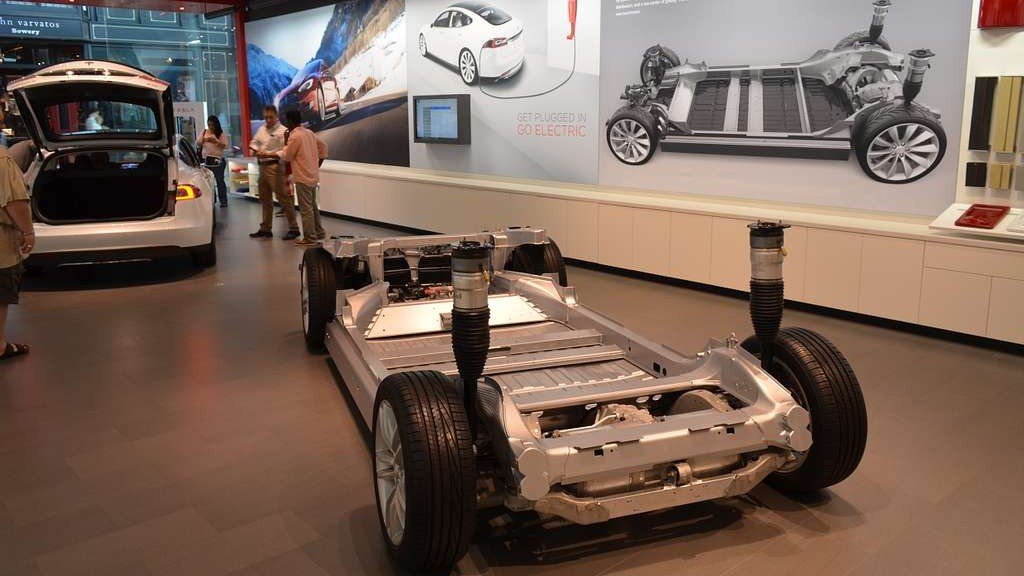
Tesla’s New Motor Changes EVERYTHING! No Rare Earths Needed: The electric vehicle industry is entering a new era of innovation, driven by the demand for higher efficiency, lower manufacturing costs, and sustainable technology. Among the most important developments in electric vehicle engineering is the move toward rare-earth-free electric motors. Tesla’s next-generation motor technology highlights how automakers can rethink traditional powertrain designs to reduce material dependence while improving manufacturing efficiency.
For decades, many high-performance electric vehicles have relied on permanent magnets containing rare-earth elements. Although these magnets offer excellent performance, their production involves complex supply chains, energy-intensive processing, and environmental challenges. Developing alternative motor architectures could help manufacturers overcome these limitations.
Tesla’s reported next-generation motor improvements, including claims of reduced size, lower weight, and faster production, have attracted attention across the automotive industry. While specific performance figures and production details require independent verification, the underlying engineering approach represents an important direction for the future of electric mobility.
1. Tesla’s Rare-Earth-Free Motor: A Major Engineering Shift
Why Traditional Electric Motors Use Rare-Earth Metals
Many modern electric vehicles use permanent magnet synchronous motors (PMSMs) because they deliver strong torque, excellent efficiency, and high power density. These motors commonly use magnets containing neodymium, sometimes combined with dysprosium or other materials to maintain performance under demanding operating conditions.
However, rare-earth materials create several challenges:
- Supply Chain Dependence: Mining and processing capacity is geographically concentrated, creating potential supply disruptions.
- Material Costs: Prices can fluctuate because of changes in demand, production capacity, and international trade conditions.
- Environmental Impact: Mining and refining can generate waste and consume substantial energy and water.
- Manufacturing Complexity: Producing high-performance permanent magnets requires specialized processing and quality control.
These challenges have encouraged automakers to explore alternative motor technologies that deliver competitive performance without relying on rare-earth permanent magnets.
How Tesla Could Eliminate Rare-Earth Dependence
A rare-earth-free electric motor does not necessarily mean a motor without any critical materials. Instead, it avoids the need for rare-earth elements in its magnetic system.
Potential solutions include induction motors, which generate magnetic fields through electrical currents, and switched reluctance motors, which produce torque through the magnetic properties of their rotor and stator. Other approaches may use alternative materials or redesigned motor configurations.
Tesla has previously used different motor architectures across its vehicle lineup, demonstrating that electric vehicles do not require a single motor design for every application.
The key engineering challenge is balancing efficiency, torque, power density, heat management, and manufacturing cost. Eliminating permanent magnets can reduce material dependence, but engineers must carefully optimize the motor to maintain competitive performance.
2. Smaller and Lighter Motors Could Improve EV Efficiency
Reducing Motor Size and Weight
The supplied technical claims suggest that a next-generation Tesla drive unit could be approximately 18% smaller and 25% lighter than its predecessor. These figures should be treated as reported estimates rather than independently confirmed specifications.
Nevertheless, reducing the size and weight of an electric motor can offer several potential advantages.
A lighter powertrain reduces the mass that the vehicle must accelerate, decelerate, and support. Although the overall effect depends on the vehicle’s design, even modest weight reductions can contribute to improved energy efficiency.
A smaller motor also gives engineers greater flexibility when packaging other components.
How Compact Drive Units Benefit Electric Vehicles
A more compact powertrain can create additional space for battery modules, structural components, passenger comfort, or other vehicle systems.
For manufacturers, the benefits may include:
- Lower Vehicle Weight: Reduced mass can help improve efficiency.
- Improved Packaging: Smaller components provide more design flexibility.
- Potentially Lower Material Use: Simplified designs may require fewer components or less material.
- Manufacturing Advantages: Compact assemblies can simplify handling and integration.
- Greater Platform Flexibility: Shared drive-unit designs may support several vehicle models.
However, a smaller motor is not automatically more efficient. Engineers must also consider electrical losses, cooling requirements, operating speeds, and inverter performance.
The most meaningful improvement comes from optimizing the entire electric drive system, rather than focusing on motor dimensions alone.
3. Faster Automated Manufacturing Could Lower Production Costs
Building Motors at High Volume
Electric vehicle manufacturers need production systems capable of delivering thousands or millions of components with consistent quality. As demand for affordable EVs grows, manufacturing efficiency becomes just as important as technical performance.
Tesla’s broader manufacturing strategy emphasizes automation, simplified assembly, and integrated vehicle design. Applying these principles to electric motor production could help reduce manufacturing time and improve consistency.
Potential improvements include automated rotor and stator assembly, precision stamping, automated inspection, and streamlined material handling.
The Importance of Shorter Production Cycle Times
A production cycle time measures how long a manufacturing process takes to complete a unit or operation. Reducing cycle time can increase factory output, provided that equipment reliability, component supply, and quality control remain strong.
For example, a highly automated motor assembly line could reduce repetitive manual tasks and maintain more consistent production standards.
The potential benefits include:
- Higher Production Throughput
- Reduced Labor Requirements for Repetitive Tasks
- More Consistent Component Quality
- Lower Manufacturing Costs per Unit
- Improved Production Scalability
However, automation also requires significant investment in machinery, software, maintenance, and worker training. Real-world savings depend on factory utilization, equipment reliability, and the complexity of the manufacturing process.
4. Why Rare-Earth-Free Motors Matter for Tesla Cybercab
Supporting the Next Generation of Autonomous Vehicles
Tesla’s Cybercab concept places a strong emphasis on autonomous transportation and manufacturing at scale. If the company can develop a reliable, affordable, and compact electric drive unit, it could support the economics of future robotaxi fleets.
A robotaxi designed for frequent operation must balance energy efficiency, reliability, maintenance requirements, and operating costs. Even small savings per vehicle can become significant when applied across a large fleet.
A rare-earth-free motor could help reduce exposure to material price fluctuations and simplify certain aspects of the supply chain.
However, the total cost of a robotaxi also depends on its battery, electronics, tires, software, charging infrastructure, maintenance, and vehicle utilization. Motor improvements alone cannot guarantee lower overall operating costs.
Benefits for High-Volume Consumer EVs
The same principles could apply to conventional electric cars, delivery vehicles, and other transportation platforms.
If a motor architecture proves economical and scalable, automakers could potentially use it across multiple vehicle categories. Shared components can simplify procurement, maintenance, and manufacturing.
For Tesla, the larger opportunity would be combining efficient motor design with standardized platforms and high-volume production.
5. Environmental Benefits and Supply Chain Independence
Reducing Dependence on Rare-Earth Mining
Rare-earth elements are important in many modern technologies, but their extraction and processing can create environmental challenges. Reducing demand for these materials in electric motors could diversify supply options and lower exposure to certain mining-related impacts.
Nevertheless, a complete environmental assessment must consider the entire product lifecycle, including the materials used in alternative motors, electricity consumption during operation, manufacturing emissions, and end-of-life recycling.
A motor that avoids rare-earth magnets may still require copper, electrical steel, aluminum, and other industrial materials.
Therefore, rare-earth-free does not automatically mean impact-free. The strongest environmental benefits would come from combining responsible material sourcing, efficient manufacturing, long service life, and effective recycling.
Strengthening Manufacturing Resilience
Reducing dependence on concentrated supply chains could also make EV production more resilient.
Manufacturers that have greater flexibility in material selection may be better positioned to respond to shortages, price volatility, and changing trade conditions.
This advantage is particularly important as electric vehicle production expands globally and competition for battery and powertrain materials increases.
6. Challenges Tesla Must Overcome
Despite the potential benefits, developing a successful rare-earth-free motor is not simply a matter of removing magnets.
Engineers must ensure that the motor delivers sufficient torque, maintains efficiency across different speeds, and operates reliably under high temperatures and demanding driving conditions.
They must also consider inverter compatibility, noise, vibration, cooling, durability, and manufacturing tolerances.
For induction and switched reluctance motors, achieving high power density and strong efficiency across a broad operating range can require careful electromagnetic and control-system optimization.
Additionally, manufacturers need to validate long-term reliability before introducing a new architecture across high-volume vehicle platforms.
Independent performance testing, production data, and lifecycle cost comparisons will be essential for determining whether a particular design delivers the claimed advantages.
7. What Tesla’s Motor Innovation Could Mean for the EV Industry
The broader significance of rare-earth-free motor development extends beyond Tesla. As automakers compete to make electric vehicles more affordable, powertrain innovation could become an increasingly important source of differentiation.
Manufacturers are exploring multiple strategies, including improved permanent magnets, alternative motor architectures, more efficient inverters, integrated drive units, and simplified production processes.
There is unlikely to be one motor design that is ideal for every vehicle. High-performance sports cars, affordable passenger vehicles, heavy commercial trucks, and autonomous taxis have different requirements.
Instead, the future may involve a combination of technologies selected according to cost, efficiency, durability, performance, and material availability.
If Tesla or another manufacturer demonstrates that a rare-earth-free motor can meet these requirements at scale, it could encourage wider adoption across the industry.
Conclusion: A New Direction for Electric Motor Engineering
Tesla’s reported next-generation motor improvements illustrate an important shift in electric vehicle development: optimizing not only performance but also materials, manufacturing, and supply chain resilience.
A successful rare-earth-free electric motor could reduce dependence on specialized materials, support compact vehicle packaging, and improve manufacturing flexibility. When combined with efficient electronics and high-volume automation, such a design could contribute to more affordable and sustainable electric transportation.
However, claims about specific weight reductions, dimensions, and production speeds should be verified through reliable technical disclosures and independent testing.
Ultimately, the most important breakthrough would not simply be eliminating rare-earth magnets. It would be proving that an alternative motor can deliver competitive efficiency, dependable performance, lower lifecycle costs, and scalable production.
That achievement could influence the next generation of electric cars, autonomous robotaxis, and commercial vehicles while helping the EV industry build a more resilient manufacturing future.
FAQs
1. What is Tesla’s new rare-earth-free motor?
Tesla’s reported next-generation motor technology aims to reduce or eliminate the need for rare-earth elements in electric motor designs while maintaining competitive performance, efficiency, and manufacturing scalability.
2. Why is Tesla eliminating rare-earth metals from electric motors?
Rare-earth-free motor technology could reduce dependence on geographically concentrated supply chains, limit exposure to material price fluctuations, and potentially reduce certain environmental impacts associated with mining and refining.
3. Which rare-earth elements are commonly used in electric motors?
High-performance permanent magnet motors commonly use neodymium and may include dysprosium or other rare-earth elements to improve magnetic performance and resistance to high temperatures.
4. How does a rare-earth-free electric motor work?
A rare-earth-free motor can use alternative designs, such as induction motors or switched reluctance motors, which generate torque without relying on rare-earth permanent magnets.
5. Is Tesla’s new motor smaller and lighter than previous motors?
The supplied information suggests reductions of approximately 18% in size and 25% in weight. However, these figures should be treated as reported estimates until confirmed by reliable technical disclosures or independent testing.
6. Can a rare-earth-free motor deliver high performance?
Yes. Induction motors and switched reluctance motors can deliver strong performance when properly designed. Actual efficiency, torque, power density, and durability depend on the specific motor architecture and operating conditions.
7. How could Tesla’s new motor improve electric vehicle range?
A more efficient motor and optimized drivetrain could reduce energy losses, potentially improving electric vehicle range. The actual improvement depends on the complete powertrain, battery, vehicle weight, aerodynamics, and driving conditions.
8. Will a rare-earth-free motor make Tesla vehicles cheaper?
It could help reduce certain material costs and supply chain risks. However, the final vehicle cost also depends on manufacturing equipment, component prices, labor, electronics, battery costs, and production volume.
9. How does automated manufacturing benefit Tesla’s motor production?
Automated manufacturing can improve production consistency, reduce repetitive manual tasks, streamline assembly, and increase factory throughput when equipment and material supplies operate reliably.
10. Could Tesla use its new motor technology in the Cybercab?
A compact, efficient, and cost-effective motor could potentially support future Tesla Cybercab production. However, the exact motor specifications and configuration intended for Cybercab require confirmation from Tesla.
11. Are rare-earth-free motors better for the environment?
They may reduce demand for rare-earth mining and refining. Nevertheless, their overall environmental impact depends on the materials used, electricity consumption, manufacturing emissions, durability, and recycling practices.
12. What are the main challenges of developing rare-earth-free motors?
Key challenges include maintaining high efficiency, strong torque, compact dimensions, effective cooling, low noise, and long-term reliability while keeping manufacturing costs competitive.
13. Will rare-earth-free motors replace all permanent magnet motors?
Not necessarily. Permanent magnet motors remain attractive for applications requiring high power density and efficiency. Different motor technologies will likely coexist because vehicle categories have different performance and cost requirements.
14. How could Tesla’s motor innovation affect the electric vehicle industry?
If a rare-earth-free design proves reliable and economical at scale, it could encourage other automakers to explore alternative motor architectures and improve supply chain resilience, manufacturing efficiency, and electric vehicle affordability.
15. Is Tesla’s new rare-earth-free motor technology fully confirmed?
The broader engineering concept of rare-earth-free electric motors is established, but the specific claims about Tesla’s next-generation design—including 18% smaller dimensions, 25% lower weight, and exceptionally fast production cycles—require reliable, independently verifiable evidence before being treated as confirmed specifications.
Read More:
- Why Elon Musk’s target date for buying an Optimus robot is harder than it sounds
- Tesla Cybercab and Robotaxi’s real advantage won’t be the ride service
- Taiwan power firm bets big on Tesla Megapacks as AI data center thirst grows
- Starship Flight 15 is finally Making a Ship Catch Possible
- $119B Elon Musk’s Terafab Amazing Inside New Update