
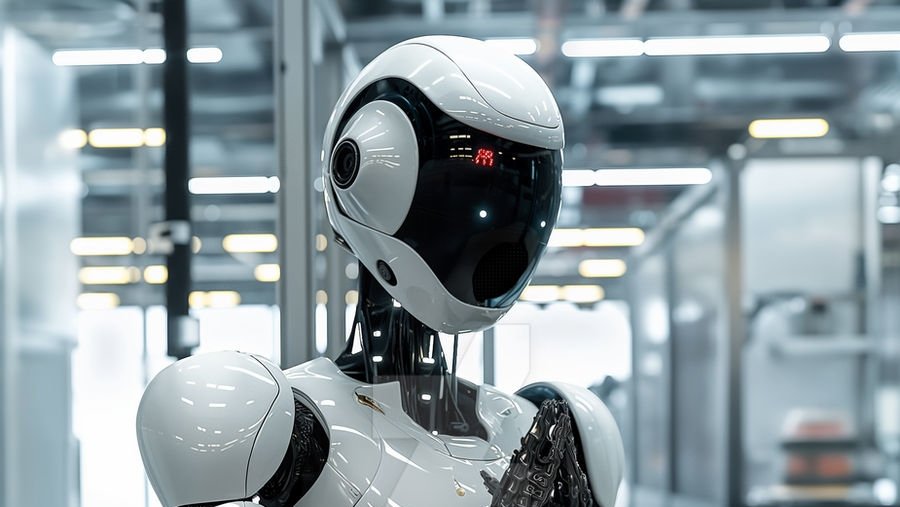
NEW Tesla Bot Gen 3 Replacing Housekeepers With $1/Hour: Tesla is making a dramatic shift beyond electric vehicles. The company’s latest technological ambitions increasingly focus on physical artificial intelligence, humanoid robotics, autonomous transportation, advanced computing, and large-scale infrastructure. At the center of this transformation is the Tesla Bot Optimus Gen 3, a humanoid robot designed to perform useful real-world tasks while targeting an operating cost that could be remarkably low.
Alongside Optimus, Tesla is developing the Cybercab, exploring satellite connectivity, expanding its manufacturing and computing infrastructure, and preparing updates for vehicles such as the Next-Gen Roadster. Together, these projects suggest a company increasingly focused on building an interconnected AI ecosystem rather than simply selling electric cars.
Tesla Bot Optimus Gen 3: The Next Generation of Humanoid Robots
The Optimus Gen 3 is expected to represent an important step in Tesla’s humanoid robotics strategy. Earlier Optimus prototypes demonstrated basic movement and manipulation, but the long-term goal is much more ambitious: creating a robot capable of performing repetitive, physical tasks in factories, businesses, and potentially homes.
22 Degrees of Freedom for Human-Like Hands
One of the most important developments is the robot’s redesigned hand. The proposed system features 22 degrees of freedom (DoF), compared with fewer degrees of freedom in earlier generations.
Greater articulation could allow Optimus to perform delicate operations that require considerably more precision than conventional industrial robots. Potential applications include handling fragile objects, assembling electronic components, manipulating battery cells, preparing food, and performing household chores.
Tesla is also expected to move much of the hand’s actuation into the forearm. Instead of placing bulky motors directly inside the fingers and palm, tendon-like mechanical systems can transmit force from the forearm to the fingers. This approach could make the hand lighter while preserving strength and dexterity.
Another major area is tactile sensing. A higher-density sensor network could enable Optimus to detect grip pressure, contact, and surface characteristics. That type of feedback is critical if a robot is expected to pick up objects such as eggs without breaking them.
AI5 and the Rise of Physical AI
A humanoid robot requires more than cameras and conventional vehicle-style artificial intelligence. It needs what can broadly be described as physical intelligence.
Optimus must understand an object’s position, determine how much force is necessary to grab it, maintain balance, coordinate multiple joints, and react to unexpected changes—all in real time.
The proposed AI5 computing platform is therefore an important part of Tesla’s robotics vision. Higher processing capability and memory bandwidth could allow neural networks to handle visual information and physical interactions with extremely low latency.
Instead of programming every possible movement manually, Tesla’s broader strategy involves end-to-end neural networks and machine learning. Human demonstrations can provide training data, while robots operating in Tesla facilities can generate additional real-world information.
The $1-Per-Hour Robot
Perhaps the most attention-grabbing claim surrounding Optimus is a potential $1-per-hour operating cost.
The concept is based on spreading the robot’s purchase price across thousands of working hours while accounting for electricity, maintenance, and other operating expenses. A projected price around $30,000 combined with a long service life could theoretically produce a very low hourly hardware cost.
However, the $1-per-hour figure should be viewed as a target or projection rather than a guaranteed commercial price. Real-world expenses such as repairs, software, supervision, insurance, downtime, and replacement parts could significantly affect the final economics.
If Tesla can approach its projected cost while delivering reliable performance, the implications for manufacturing, logistics, cleaning, hospitality, warehouses, and household work could be enormous.
Fleet-Wide Learning Could Make Optimus Smarter
Tesla’s biggest advantage may not be the hardware itself, but the possibility of fleet-wide learning.
A robot could learn a task from human demonstrations, perform it inside a factory, identify mistakes, and send useful information back to a centralized training system. Improvements could then be distributed to other robots through software updates.
This creates a potentially powerful feedback loop: more robots → more data → better AI → better robots.
If successful, Optimus could eventually become a scalable physical AI platform rather than a single-purpose machine.
Cybercab and Satellite Connectivity
Tesla’s autonomous transportation ambitions are also expanding through the Cybercab. Designed around autonomous operation, the vehicle could become part of a future robotaxi network.
One particularly interesting development is the reported integration of Starlink satellite connectivity into Cybercab hardware.
Why Starlink Could Matter
Autonomous vehicles already rely heavily on onboard computing and sensors, meaning a Cybercab does not necessarily need an internet connection to perform every driving function. However, reliable connectivity can provide significant benefits.
A satellite connection could support teleoperation communications, fleet management, software updates, diagnostics, routing, and passenger entertainment in locations where cellular coverage is limited.
For a large autonomous fleet, connectivity redundancy could become especially important. A vehicle operating outside a dense cellular network could potentially maintain communication with Tesla’s broader fleet infrastructure through satellite services.
Manufacturing Scale and the Terrafab Vision
Tesla’s ambitions for AI and robotics require enormous amounts of computing power. That makes semiconductors, energy, batteries, and manufacturing capacity increasingly important.
The proposed Terrafab initiative represents a broader vision of producing advanced computing infrastructure at massive scale. The concept reportedly combines semiconductor manufacturing with dedicated power generation and large-scale energy storage.
Building Independent Computing Infrastructure
Semiconductor manufacturing requires highly reliable electricity. Even small disruptions can create major operational challenges.
A dedicated microgrid combining natural-gas generation and battery storage could provide a more controllable power supply for an industrial facility. The broader objective is to reduce dependence on conventional grid expansion while supporting the enormous energy requirements of future AI infrastructure.
Whether such plans reach their proposed scale remains an important question, but the underlying strategy is clear: Tesla needs more computing capacity if autonomous vehicles and humanoid robots are to operate at millions-unit scale.
Next-Gen Tesla Roadster Developments
While AI and robotics are receiving much of the attention, Tesla’s traditional performance-car ambitions have not disappeared.
The Next-Gen Roadster remains one of Tesla’s most anticipated vehicles. The company has previously discussed extraordinary acceleration and performance targets, while its potential SpaceX performance package has generated considerable interest.
The proposed package has been associated with cold-gas thruster technology designed to enhance vehicle performance. Demonstrations and production-intent testing will ultimately determine how much of the concept makes it into a customer vehicle.
For Tesla enthusiasts, the Roadster represents a very different side of the company: extreme automotive performance combined with experimental aerospace-inspired technology.
Tesla’s Broader Shift Toward Physical AI
Tesla’s latest projects reveal a strategy that extends far beyond electric vehicles. Optimus represents physical AI, Cybercab represents autonomous transportation, satellite connectivity provides communication infrastructure, and advanced semiconductor projects could supply the computing resources needed to connect everything.
The most important development may therefore not be any single product. It is the possibility of an integrated ecosystem in which cars, robots, batteries, AI computers, factories, and connectivity systems work together.
The claim that a Tesla Bot could eventually replace some housekeeping and repetitive labor at around $1 per hour is certainly ambitious. But if Tesla succeeds in reducing robot costs while improving dexterity, reliability, and autonomy, humanoid robots could become one of the company’s most consequential products.
For now, many of these figures and capabilities remain targets, projections, or developments that still require real-world validation. Nevertheless, Tesla’s direction is becoming increasingly clear: the company wants to compete not only in electric vehicles, but also in the rapidly expanding world of physical artificial intelligence and autonomous machines.
FAQs
1. What is Tesla Bot Optimus Gen 3?
Tesla Bot Optimus Gen 3 is Tesla’s next-generation humanoid robot concept, designed to perform physical tasks using artificial intelligence, advanced sensors, and human-like mechanical movement. Its long-term goal is to handle repetitive and potentially complex tasks in factories, businesses, and homes.
2. Can Tesla Optimus replace housekeepers?
Optimus is being developed with the potential to perform household and repetitive physical tasks, including carrying objects, cleaning, organizing, and other routine activities. However, widespread household replacement depends on its final capabilities, reliability, safety, and commercial availability.
3. How much could Tesla Optimus cost per hour?
Tesla-related projections have suggested a potential operating cost of around $1 per hour under specific assumptions about purchase price, lifespan, electricity, and maintenance. This is a target or projection, not a confirmed commercial operating cost.
4. How much could Tesla Bot Gen 3 cost?
Some projections place the potential retail price of Optimus at approximately $30,000. Tesla has not established this as a guaranteed final consumer price, so the actual price could differ substantially.
5. What makes Optimus Gen 3 different from earlier versions?
One major proposed improvement is its more advanced hands, including approximately 22 degrees of freedom. Greater articulation and improved tactile sensing could allow the robot to perform more precise tasks than earlier prototypes.
6. What are Optimus Gen 3’s 22 degrees of freedom?
Degrees of freedom (DoF) describe the number of independent ways a mechanical system can move. More degrees of freedom in Optimus’s hands could provide greater flexibility for tasks requiring fine motor control, precision, and dexterity.
7. What chip could power Optimus Gen 3?
The supplied development information identifies the AI5 computing platform as a proposed processing system for Optimus Gen 3. Its purpose would be to support real-time AI processing, visual perception, and physical interaction.
8. How will Tesla Optimus learn new tasks?
Optimus is expected to rely heavily on neural networks and machine learning. Human demonstrations, teleoperation, factory operations, and other training data could help robots learn tasks. Improvements could potentially be shared across a connected fleet through software updates.
9. What is physical AI?
Physical AI refers to artificial intelligence that interacts directly with the physical world. Unlike software that only processes information, a humanoid robot must understand its environment, control its body, manipulate objects, maintain balance, and respond to physical changes in real time.
10. What is Tesla Cybercab?
The Cybercab is Tesla’s autonomous-vehicle concept designed for future robotaxi operations. It is intended to combine autonomous driving technology with fleet management and other connected vehicle systems.
11. Why could Starlink be important for Cybercab?
A satellite connection could provide additional connectivity for autonomous vehicles, particularly in areas with limited cellular coverage. Potential uses include fleet communication, teleoperation support, software updates, diagnostics, routing, and passenger services.
12. What is Tesla Terrafab?
Terrafab refers to a proposed large-scale semiconductor and computing infrastructure initiative associated with Tesla and its broader AI ambitions. The concept is intended to help provide the computing and semiconductor capacity required for future autonomous vehicles and humanoid robots.
13. Why does Tesla need more semiconductor capacity?
Autonomous vehicles and humanoid robots require substantial AI computing power. If Tesla eventually operates millions of robots and autonomous vehicles, greater control over semiconductor production and computing infrastructure could help address supply and capacity constraints.
14. What is happening with the Tesla Roadster?
The Next-Gen Tesla Roadster remains a high-performance vehicle project. Tesla has discussed advanced performance capabilities and a potential SpaceX performance package, although final production specifications, timing, and availability should be confirmed through official announcements.
15. Will Tesla’s robots really cost only $1 per hour?
The $1-per-hour figure should not be treated as a guaranteed price. It is based on projections involving factors such as robot cost, operating lifespan, electricity consumption, maintenance, and utilization. The actual cost will only become clear once Optimus is commercially deployed at scale.
Read More:
- SpaceX’s Plan to Build Offshore Platforms to Launch & Catch Starship is Much Insane Than You Think
- Tesla finally got its Nevada Robotaxi Permit but with a few catches hard to miss
- Tesla Roadster unveiling nears, and it will fly: The Information
- SpaceX revealed Breakthrough Solution for Starship Launch Pad Turnaround In Hours
- Tesla Semi 2027 NEW Version Revealed — SHOCKING Upgrades