
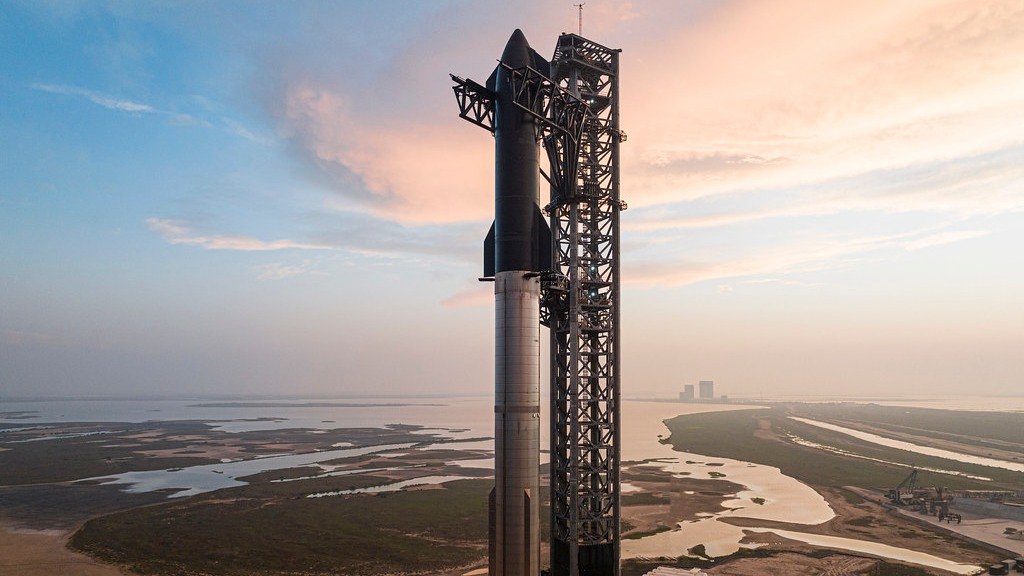
SpaceX’s Plan to Build Offshore Platforms to Launch & Catch Starship is Much Insane Than You Think: SpaceX is pushing the boundaries of rocket engineering once again, and this time, the company may be looking beyond traditional launch sites. As Starship moves toward more frequent launches, rapid reusability, and eventually point-to-point transportation, offshore platforms could become a critical part of its future.
The idea of launching and catching Starship from the ocean sounds futuristic, but it solves several practical problems associated with large-scale rocket operations. Instead of depending entirely on land-based facilities such as Starbase, SpaceX could use floating or offshore spaceports to expand launch capacity while reducing some of the environmental, acoustic, and safety limitations faced by terrestrial launch sites.
Why SpaceX Wants Offshore Starship Spaceports
Starship is designed to be a fully reusable launch system, with both its Super Heavy booster and Starship upper stage intended to return for future flights. Reaching that goal requires more than simply building a powerful rocket. SpaceX also needs infrastructure capable of supporting an extremely high launch cadence.
Traditional launch complexes have limited space, extensive safety zones, environmental requirements, and restrictions on how frequently powerful rockets can be launched. Offshore facilities could provide SpaceX with additional operational flexibility.
Reducing Noise and Safety Restrictions
One of the biggest challenges surrounding Starship is its enormous acoustic footprint. A vehicle of this size produces extraordinary levels of sound and energy during liftoff.
Launches from populated or environmentally sensitive regions therefore require substantial planning and safety precautions. Offshore spaceports could move some of these activities farther away from population centers.
Operating from the Outer Continental Shelf (OCS) or potentially international waters could give SpaceX a larger safety buffer. This could make it easier to schedule frequent launches without placing the same level of operational pressure on nearby communities.
Supporting a Higher Launch Cadence
The long-term Starship vision involves far more than occasional test flights. SpaceX ultimately wants Starship to support Starlink satellite deployments, NASA Artemis missions, commercial payloads, and potentially human transportation.
That ambitious schedule could require multiple launch and landing locations.
An offshore spaceport could function as an additional node in SpaceX’s growing launch network. Rather than relying on a single land-based complex, the company could distribute operations across several strategically positioned facilities.
This is particularly important if Starship eventually becomes capable of rapid turnaround between flights.
The Biggest Advantage: Catching Starship Over the Ocean
Perhaps the most interesting part of the concept is not launching from the ocean—it is catching the rocket on an offshore platform.
Starship and Super Heavy are being developed around a recovery architecture in which large mechanical arms can catch returning vehicles. Recovering a booster directly on a platform could eliminate the need for ocean splashdowns.
Avoiding Saltwater Damage
A rocket landing in the ocean would face an obvious problem: saltwater is highly corrosive.
Even if a vehicle successfully survives a splashdown, recovering and preparing it for another flight could require substantial inspection, cleaning, refurbishment, and transportation.
A controlled landing or catch on a purpose-built offshore platform could dramatically simplify this process.
The goal would be straightforward: launch, return, catch, inspect, refuel, and fly again.
That rapid turnaround is central to SpaceX’s reusable-rocket strategy.
Four Possible Offshore Platform Designs
SpaceX could theoretically use several types of maritime infrastructure. Each design presents different engineering advantages and challenges.
1. Modified Drone Ship
A modified autonomous drone ship would be one of the simplest approaches.
SpaceX already operates large autonomous vessels for recovering Falcon rocket boosters. A much larger and more capable version could potentially serve as a recovery platform for Starship.
Its biggest advantage would be mobility. The platform could potentially be positioned according to launch trajectories and recovery requirements.
However, the available deck space could become a major limitation. A Starship launch complex requires enormous infrastructure, including launch equipment, propellant systems, towers, communications systems, and potentially catch mechanisms.
For that reason, a modified drone ship may be more suitable for recovery operations than complete orbital launches.
2. Converted Aircraft Carrier
An aircraft carrier offers something a drone ship does not: massive deck space.
A suitably modified carrier could potentially accommodate launch infrastructure, control systems, fuel storage, maintenance areas, and recovery equipment.
However, the ocean introduces another major engineering challenge: wave-induced movement.
A Starship launch or landing requires extremely precise positioning. Even small platform movements could become problematic during critical phases of a catch.
3. Semi-Submersible or Converted Oil Rig
A semi-submersible offshore platform may be one of the most practical long-term concepts.
These structures are designed specifically to operate in demanding ocean environments. Their submerged components can provide significant stability while supporting extremely heavy equipment.
A converted oil rig could offer the structural strength needed for Starship infrastructure while providing extensive space for fuel systems and support equipment.
The drawback is mobility. A fixed offshore platform cannot simply move whenever SpaceX wants to change its launch trajectory.
Still, the combination of stability, strength, and existing offshore engineering technology makes this approach particularly interesting.
4. Artificial Island
At the extreme end of the spectrum is an artificial island.
This would provide the largest possible operational footprint and could significantly reduce wave-related movement compared with floating structures.
An artificial island could potentially function as a permanent offshore Starship spaceport, complete with launch towers, landing infrastructure, propellant facilities, maintenance buildings, and control centers.
The problem is cost.
Constructing such a facility would require enormous investment, lengthy construction, and extensive environmental permitting. It is therefore more likely to remain a long-term concept rather than an immediate solution.
The Global Race for Ocean-Based Launch Infrastructure
SpaceX is not the only organization exploring maritime space infrastructure.
China is also developing and testing sea-based launch technologies, demonstrating that offshore operations could become an increasingly important part of the global space industry.
Chinese companies have already explored maritime launch concepts, including sea launches and experimental approaches to reusable booster recovery.
This creates a broader strategic competition.
As reusable rockets become more capable, launch infrastructure itself could become a competitive advantage. The companies and countries that can launch rockets more frequently, recover them faster, and operate from strategically positioned locations could gain an important advantage in the commercial space market.
Regulatory Challenges Could Be Just as Important as Engineering
Building an offshore Starship spaceport is not simply an engineering problem.
SpaceX would need to navigate a complicated regulatory environment involving agencies responsible for launch licensing, ocean resources, environmental protection, maritime operations, and public safety.
The Outer Continental Shelf is particularly important because it could provide a location for offshore infrastructure while remaining subject to U.S. regulatory frameworks.
Engagement with agencies such as the Bureau of Ocean Energy Management (BOEM) could therefore become an important part of developing future offshore launch facilities.
Could Offshore Starship Launches Change Space Travel?
The most exciting possibility goes beyond rockets and satellites.
If Starship achieves the rapid reusability SpaceX is targeting, offshore spaceports could eventually support point-to-point transportation between distant coastal regions.
Instead of building enormous launch facilities inside cities or heavily populated areas, strategically located offshore platforms could serve as departure and arrival points.
That could theoretically enable extremely fast transportation of cargo and, eventually, passengers across the planet.
There are still enormous technical, regulatory, economic, and safety challenges before such a system becomes realistic. However, the infrastructure concept provides a glimpse into what a mature Starship transportation network could look like.
Conclusion: SpaceX May Be Building More Than a Rocket
The idea of an offshore Starship spaceport may initially sound extreme, but it follows a logical progression from SpaceX’s broader reusable-rocket strategy.
Higher launch frequency requires more infrastructure. Faster reuse requires easier recovery. Larger rockets require greater safety zones. And future point-to-point transportation requires strategically positioned launch and landing facilities.
Floating platforms, converted offshore rigs, artificial islands, and other maritime concepts could each play different roles in that future.
The truly remarkable part is that Starship’s success may ultimately depend as much on the infrastructure surrounding the rocket as on the rocket itself.
If SpaceX can successfully combine reusable vehicles with offshore launch and landing platforms, the result could be a completely new model for space transportation—one where rockets operate more like commercial aircraft and spaceports are no longer limited to land.
For SpaceX, the ocean may not simply be a place to recover rockets. It could become the foundation for the company’s next generation of high-cadence Starship operations.
FAQs
1. What is SpaceX’s offshore Starship platform concept?
SpaceX’s offshore Starship concept involves using floating platforms, converted offshore rigs, or other maritime structures to launch, land, and potentially catch Starship vehicles. The goal is to expand launch capacity beyond traditional land-based facilities.
2. Why does SpaceX want to launch Starship from offshore platforms?
Offshore platforms could help SpaceX overcome some noise, safety, environmental, and space limitations associated with terrestrial launch sites. Operating farther from populated areas could also make higher launch frequencies more practical.
3. Could SpaceX catch Starship on an offshore platform?
Yes, this is one of the most interesting potential applications. A suitably engineered platform could include catch arms and landing infrastructure designed to capture returning Starship or Super Heavy vehicles.
4. What are the benefits of catching Starship at sea?
Catching a rocket directly on a platform could prevent it from falling into saltwater. This may reduce corrosion and refurbishment requirements, potentially allowing SpaceX to inspect, refuel, and prepare vehicles for another flight more quickly.
5. Would offshore platforms make Starship launches faster?
Potentially. If SpaceX can establish efficient offshore operations, additional platforms could increase the number of available launch locations and support a higher launch cadence.
6. What types of platforms could SpaceX use?
Several concepts are possible, including modified drone ships, aircraft carriers, semi-submersible offshore rigs, and artificial islands. Each option has different advantages involving mobility, stability, available space, cost, and construction requirements.
7. Could a SpaceX drone ship launch Starship?
A modified drone ship could potentially be useful for Starship recovery, but launching Starship would require substantially more infrastructure. The limited deck area of existing drone-ship designs could make full orbital launch operations challenging.
8. Why might an offshore oil rig be suitable for Starship?
A semi-submersible oil rig is designed to support extremely heavy equipment in harsh ocean conditions. Its structural strength and stability could make it an attractive foundation for future Starship launch and recovery infrastructure.
9. What is the biggest challenge with floating Starship platforms?
One of the biggest challenges is platform movement caused by waves and ocean conditions. Starship launch and catch operations require extremely precise positioning, making stability a critical engineering requirement.
10. Could SpaceX build an artificial island for Starship?
An artificial island is theoretically possible and could provide a very large and stable operating area. However, it would require massive investment, extensive construction, environmental approvals, and significant development time.
11. Would offshore Starship launches reduce noise problems?
They could potentially reduce the impact of rocket noise on nearby communities by placing launch operations farther offshore. However, acoustic and environmental impacts would not disappear and would still need to be assessed and regulated.
12. What is the Outer Continental Shelf?
The Outer Continental Shelf (OCS) refers broadly to submerged lands outside state coastal waters under U.S. federal jurisdiction. Offshore launch infrastructure located there would still need to comply with applicable regulatory and safety requirements.
13. Would SpaceX need government approval for an offshore spaceport?
Yes. Offshore Starship operations would involve multiple regulatory considerations, potentially including launch licensing, environmental reviews, maritime safety, ocean-resource regulations, and other federal requirements.
14. Could offshore Starship platforms support Starlink missions?
Potentially. A larger network of launch facilities could help SpaceX support the growing demand for Starlink satellite launches while reducing dependence on individual land-based launch complexes.
15. Could offshore Starship spaceports enable global passenger transportation?
In the long term, SpaceX has discussed the possibility of using Starship for point-to-point transportation. Offshore spaceports could theoretically provide launch and landing locations near major coastal regions while reducing the need for massive land-based facilities.
16. Will offshore platforms become a major part of Starship operations?
It is too early to say. Significant engineering, regulatory, environmental, and economic challenges remain. However, offshore infrastructure could become an important part of SpaceX’s long-term strategy if Starship achieves the rapid reusability and high flight cadence the company is targeting.
Read More:
- Tesla finally got its Nevada Robotaxi Permit but with a few catches hard to miss
- Tesla Roadster unveiling nears, and it will fly: The Information
- SpaceX revealed Breakthrough Solution for Starship Launch Pad Turnaround In Hours
- Tesla Semi 2027 NEW Version Revealed — SHOCKING Upgrades
- Tesla wins three-year standoff against Sweden’s IF Metall union
2 thoughts on “SpaceX’s Plan to Build Offshore Platforms to Launch & Catch Starship is Much Insane Than You Think”