
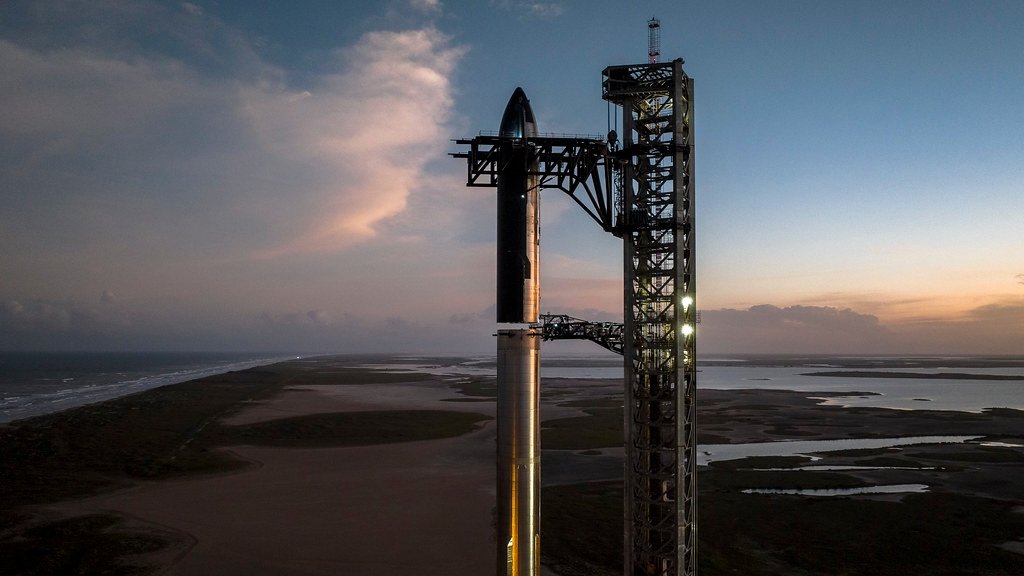
NASA Reveals Starship Flight 14 NEW Schedule and S40 Recovery Trouble Update: The aerospace industry is moving through one of its most ambitious periods, with reusable spacecraft, rapid launch cadence, and commercial space tourism reshaping the sector. In August 2026, developments surrounding SpaceX Starship, Florida launch infrastructure, and Virgin Galactic are highlighting a common challenge: turning experimental spacecraft into reliable, repeatable commercial systems.
From a revised Starship Flight 14 schedule to questions surrounding Ship 40 recovery operations, SpaceX is balancing speed with engineering validation. At the same time, its expanding Florida infrastructure points toward a future of much higher launch frequency. Virgin Galactic is pursuing a similar transformation through its new Delta-class spacecraft.
SpaceX Starship Flight 14 Schedule Moves to September 2026
Expectations for Starship Flight 14 had been building following Flight 13. Earlier comments from SpaceX leadership had raised the possibility of a late-August launch, which would have represented a remarkably quick turnaround for the program.
However, the timeline has now shifted.
During a NASA event at Kennedy Space Center on August 14, 2026, NASA Administrator Jared Isaacman indicated that SpaceX is targeting early September 2026 for Flight 14. That effectively rules out the previously anticipated late-August launch window.
The revised schedule appears closely connected to the extensive testing and preparation still required for the next Starship stack.
Why Starship Flight 14 Is Taking Longer
The Flight 14 hardware includes Ship 41 (S41) and Super Heavy Booster 21 (B21). Both vehicles have undergone cryogenic testing, but additional preparations remain before they can be cleared for flight.
The expected sequence is:
Flight 13 operations → Ground inspections → Vehicle preparation → Static-fire testing → Final analysis → Early September launch target
S41 completed its initial cryogenic proof testing in June, while B21 completed its testing sequence in July. Before launch, both vehicles must also complete static-fire testing at the launch site.
Static fires are more than a simple countdown rehearsal. They require operational coordination, safety procedures, road closures, environmental monitoring, and extensive post-test data analysis.
This makes the late-August testing schedule particularly important. If static-fire operations occur toward the end of August, an early September Starship Flight 14 launch becomes a logical target.
SpaceX Is Prioritizing Reliability Over Speed
The schedule change may also reveal something more important than a simple delay: a changing development philosophy.
Earlier Starship iterations emphasized rapid prototyping and aggressive flight testing. Hardware was pushed quickly toward launch to generate real-world data.
The Version 3 era appears increasingly focused on reliability, repeatability, and operational cadence.
That distinction matters because SpaceX ultimately needs Starship to become more than a successful experimental vehicle. It needs a system capable of supporting frequent orbital missions, satellite deployments, refueling demonstrations, and NASA lunar missions.
A slower pre-launch process can therefore be viewed as an investment in future reliability.
Why Starship Cadence Matters to NASA
Starship is central to NASA’s Artemis Human Landing System (HLS) plans. Future lunar missions require more than simply launching a Starship once.
The architecture depends on capabilities such as orbital refueling, propellant transfer, vehicle endurance, and repeated launches.
For that reason, NASA has a major interest in SpaceX achieving a dependable launch cadence. A long-term target of launching Starships every couple of weeks would represent a significant step toward operationalizing the architecture required for sustained lunar exploration.
Ship 40 Recovery Operations Face a Difficult Maritime Challenge
While Flight 14 preparation continues, Ship 40 (S40) has presented another challenge: recovering a large Starship upper stage from the ocean.
A Starship vehicle is roughly 50 meters long, and recovering such a structure from open water is a complex maritime operation. Following splashdown, the vehicle must be stabilized, monitored, and transported using specialized vessels.
What the Vessel Movements Suggest
Tracking information from support vessels has shown changing patterns during the recovery operation.
The recovery vessel Norman Ranger initially operated at very low speeds while apparently towing or assisting with S40. Speeds in the range of roughly 1–2 knots are consistent with moving a large floating structure.
Later movements showed the vessel traveling at substantially higher speeds while heading toward Christmas Island. Such a change can indicate that the vessel is no longer towing the same heavy load.
Another support vessel, GO Australis, also separated from the main group and moved south at relatively low speed, potentially reflecting continued monitoring or preparation for another recovery phase.
Reports also indicated movement toward Dong Bang Giant No. 2, a heavy-lift cargo barge.
Using a large barge could provide a more stable transportation platform than a direct ocean tow, potentially simplifying the journey back toward SpaceX facilities.
The exact condition and recovery status of S40 remain important variables, but the operation illustrates how Starship recovery is not limited to launch-site engineering. Maritime logistics can become a major part of reusable spacecraft operations.
SpaceX Expands Its Florida Starship Infrastructure
SpaceX is also building the infrastructure needed to support Starship’s future beyond Starbase, Texas.
One of the most significant developments is Project Ignition, a planned facility covering approximately 101 acres near SpaceX’s existing Roberts Road operations at Kennedy Space Center.
What Is Project Ignition?
Project Ignition is intended to provide dedicated Starship testing and operational infrastructure in Florida.
The broader Florida ecosystem is expected to connect manufacturing, assembly, testing, and launch operations much more closely.
The planned architecture can be viewed as:
Florida Star Factory → Gigabay assembly → Project Ignition testing → Launch infrastructure
This approach could reduce the logistical burden of moving large Starship vehicles between Texas and Florida.
Building a Florida Starship Ecosystem
SpaceX’s Florida expansion is strategically important because the company is preparing for high-frequency orbital operations.
The ecosystem is expected to include:
- Manufacturing: Localized Starship vehicle production.
- Assembly: Large high-bay facilities for stacking Starship and Super Heavy vehicles.
- Testing: Dedicated infrastructure for static fires and component qualification.
- Launch: Access to facilities including LC-39A and planned Starship infrastructure associated with SLC-37.
Florida could eventually become a major operational hub for Starship missions, including Starlink deployments, Artemis HLS missions, national security launches, and commercial payloads.
This represents a shift from building a prototype to developing an entire industrial ecosystem around reusable launch vehicles.
Virgin Galactic Delays Commercial Return to February 2027
SpaceX is not the only commercial space company undergoing a major transition.
Virgin Galactic has also revised its schedule, pushing its return to commercial spaceflight from late 2026 to February 2027.
The company has indicated that the delay is associated with the assembly, avionics integration, and system installation required for its next-generation spacecraft.
From VSS Unity to the Delta-Class Fleet
Virgin Galactic retired VSS Unity in 2024 after seven commercial missions.
Unity demonstrated that winged suborbital spaceflight could become a commercial service, but its relatively intensive maintenance requirements limited the number of missions it could conduct.
The company’s future strategy therefore depends heavily on its Delta-class spacecraft.
The Delta architecture is designed around higher reusability and faster turnaround. Virgin Galactic has outlined an ambitious target of eventually achieving up to two flights per week per vehicle.
That represents a fundamental change from the operational model used by Unity.
Virgin Galactic’s Financial Challenge
Virgin Galactic reported a net loss of approximately $56 million in Q2 2026, compared with roughly $67 million in the same quarter of 2025.
Although the improvement is notable, the company’s long-term financial strategy depends on turning the Delta fleet into a high-frequency commercial operation.
Virgin Galactic has targeted a future fleet of two operational Delta-class vehicles, with the goal of reaching 10 or more spaceflights per month by Q2 2027.
Achieving that rate would be critical for improving revenue generation, supporting positive cash flow, and recovering the substantial investment required to develop the new spacecraft.
A New Opportunity in the Suborbital Space Market
Virgin Galactic may also benefit from changes elsewhere in the suborbital market.
Blue Origin’s New Shepard program has reportedly paused flights while engineering resources are redirected toward lunar infrastructure initiatives.
If that pause continues while Virgin Galactic prepares the Delta fleet, the company could have an opportunity to strengthen its position in the commercial suborbital tourism market.
However, the opportunity will depend on execution. A successful Delta debut alone will not be enough. Virgin Galactic must demonstrate that the new spacecraft can achieve the high flight rate and turnaround efficiency promised by the company.
Conclusion: Commercial Space Is Entering a New Phase
The latest developments across the commercial space industry demonstrate that launch cadence, reliability, infrastructure, and financial sustainability are becoming just as important as headline-grabbing test flights.
For SpaceX, the move of Starship Flight 14 to early September 2026 suggests that the company is willing to prioritize testing and validation rather than rush hardware to the launch pad. The ongoing S40 recovery operation meanwhile highlights the complexity of recovering and transporting massive reusable spacecraft.
At the same time, Project Ignition in Florida signals that SpaceX is preparing for a future in which Starship operations extend beyond experimental testing toward high-frequency orbital missions.
Virgin Galactic faces a different but related challenge. Its Delta-class spacecraft are intended to transform the company from a low-frequency space tourism operator into a higher-rate commercial flight business. The February 2027 target and ambitious 2027 flight-rate goals will be critical milestones.
Ultimately, the next stage of the private space industry will not be defined simply by who can reach space. It will be defined by who can fly repeatedly, recover efficiently, operate reliably, and scale economically.
FAQs
1. When is SpaceX Starship Flight 14 expected to launch?
Starship Flight 14 is currently targeted for early September 2026. The schedule has moved away from the previously anticipated late-August window as SpaceX completes additional ground testing, inspections, and launch preparations.
2. Why was Starship Flight 14 delayed?
The schedule adjustment appears to be related to the required pre-launch testing and validation of Ship 41 and Super Heavy Booster 21. Static-fire testing and the analysis that follows are important steps before the vehicles can be cleared for launch.
3. What vehicles will fly on Starship Flight 14?
Flight 14 is expected to use Ship 41 (S41) as the Starship upper stage and Super Heavy Booster 21 (B21) as the first-stage booster.
4. What testing must Starship Flight 14 complete before launch?
The vehicles need to complete necessary ground inspections and static-fire testing at the launch complex. These activities can involve road closures, safety procedures, environmental monitoring, and detailed post-test data analysis.
5. Does the Flight 14 delay mean Starship development is slowing down?
Not necessarily. The schedule change may reflect SpaceX’s increasing focus on reliability and repeatability as the Starship program moves into more advanced vehicle iterations. Taking additional time before launch can help identify problems before flight.
6. Why is Starship’s launch cadence important to NASA?
Starship is being developed for NASA’s Artemis Human Landing System (HLS) architecture. Future lunar missions require capabilities such as orbital refueling and repeated vehicle operations, making a reliable launch cadence essential.
7. What is happening with Starship Ship 40 recovery?
Ship 40 (S40) entered ocean recovery operations after its flight test. Recovering a large Starship upper stage from open water involves specialized vessels, towing operations, monitoring, and potentially heavy-lift transportation.
8. What is the role of the Norman Ranger in S40 recovery?
The Norman Ranger has been involved in the maritime recovery operation. Its movements and towing speeds have provided indications about the changing stages of the S40 recovery effort.
9. Why is Dong Bang Giant No. 2 important to the S40 recovery?
Dong Bang Giant No. 2 is a heavy-lift cargo barge that has been associated with the recovery operation. A heavy barge can provide a more stable platform for transporting a large Starship vehicle than a direct ocean tow.
10. What is SpaceX’s Project Ignition in Florida?
Project Ignition is a planned Starship testing and operational facility covering approximately 101 acres near SpaceX’s existing Roberts Road operations at Kennedy Space Center. It is intended to strengthen SpaceX’s Starship infrastructure in Florida.
11. Why is SpaceX expanding its Starship operations in Florida?
Florida can provide a more complete Starship manufacturing, assembly, testing, and launch ecosystem. Expanding local infrastructure can reduce transportation bottlenecks and support a future high-frequency launch schedule.
12. Which Florida launch facilities could support Starship?
SpaceX’s Florida Starship plans are associated with Launch Complex 39A (LC-39A) and proposed Starship infrastructure at Space Launch Complex 37 (SLC-37). These facilities could eventually support a wide range of orbital missions.
13. When will Virgin Galactic return to commercial flights?
Virgin Galactic has moved its expected return to commercial operations to February 2027. The company has attributed the schedule change to work involving assembly, avionics integration, and system installation for its next-generation spacecraft.
14. What is Virgin Galactic’s Delta-class spacecraft?
The Delta-class spacecraft is Virgin Galactic’s next-generation suborbital vehicle. It is designed for improved reusability and faster turnaround compared with the company’s retired VSS Unity, with ambitious plans for substantially higher flight frequency.
15. What is Virgin Galactic’s target flight rate for the Delta fleet?
Virgin Galactic has outlined a goal of achieving 10 or more spaceflights per month by Q2 2027 with two operational Delta-class vehicles. Reaching that target would be important to the company’s strategy for increasing revenue and moving toward positive cash flow.
Read More:
- Terafab BIG Circle In The Center Finally Destroy Chip Industry
- Tesla launches V2L Outlet Adapter for Premium Model Y in the U.S.
- NEW Tesla Bot Gen 3 Replacing Housekeepers With $1/Hour
- SpaceX’s Plan to Build Offshore Platforms to Launch & Catch Starship is Much Insane Than You Think
- Tesla finally got its Nevada Robotaxi Permit but with a few catches hard to miss
1 thought on “NASA Reveals Starship Flight 14 NEW Schedule and S40 Recovery Trouble Update”