
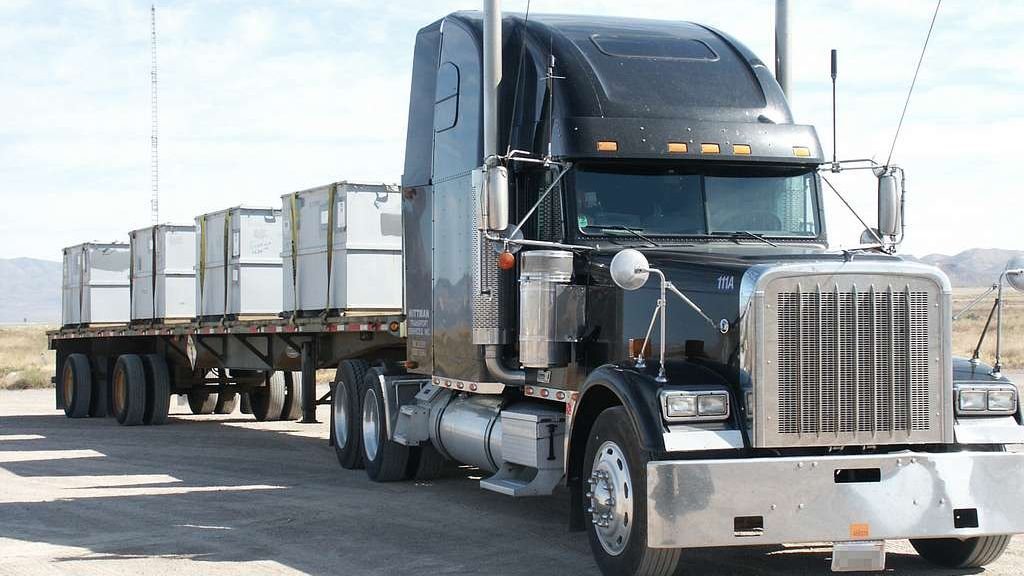
New Tesla Semi Mass Production Line LEAKED CHANGE Everything: The transition from diesel-powered Class 8 trucks to zero-emission battery-electric semis is one of the most difficult challenges in modern vehicle manufacturing. Unlike passenger EVs, heavy-duty trucks must carry enormous payloads, operate for long hours, and deliver dependable uptime for commercial fleets.
That makes the manufacturing strategy behind the Tesla Semi particularly important. Tesla’s expansion at Gigafactory Nevada represents a major step toward transforming the Semi from a relatively low-volume vehicle into a high-rate mass-produced electric truck.
The planned manufacturing approach focuses on automation, integrated battery architecture, dedicated powertrain production, and faster assembly cycles. If successfully implemented, this could fundamentally change how electric Class 8 trucks are manufactured.
Tesla Semi Production Is Moving Toward High-Rate Manufacturing
Traditional heavy-duty truck manufacturing has historically emphasized flexibility rather than extreme automation. Fleet operators can order trucks with different configurations, wheelbases, chassis arrangements, and equipment.
That creates a manufacturing environment where manual assembly remains important and production stations can have relatively long cycle times.
Tesla’s approach is different.
The company’s high-volume Semi strategy is centered on greater standardization and automation. Instead of treating the truck as a collection of independently installed components, the factory can organize major systems into pre-engineered subassemblies that are integrated rapidly on the main production line.
From Manual Assembly to Automated Integration
A traditional heavy truck may follow a sequence involving frame assembly, diesel engine installation, transmission mounting, cab installation, wiring, plumbing, and final customization.
A high-volume Tesla Semi factory can instead rely on parallel manufacturing cells for:
- Battery pack production
- E-axle assembly
- Power electronics
- Chassis components
- Thermal management systems
- Final vehicle integration
These subassemblies can then converge on the main line, reducing the amount of work required at individual stations.
The objective is simple: more trucks produced with fewer manual operations and shorter cycle times.
The Tesla Semi’s Integrated Electric Powertrain
One of the biggest differences between a diesel Class 8 truck and an electric Semi is the architecture underneath the vehicle.
A diesel tractor requires a large engine, transmission, driveshaft, exhaust system, fuel system, cooling system, and numerous supporting components. An electric truck can consolidate many of these systems into a much more integrated powertrain.
Tesla’s Semi architecture centers around electric drive units and e-axle technology, allowing electric motors and reduction gearing to be packaged close to the driven wheels.
Why E-Axles Matter for Manufacturing
An integrated e-axle can arrive at the vehicle assembly line as a largely completed module.
Instead of installing individual motors, gearboxes, driveshafts, and associated components separately, the factory can position a pre-tested drive assembly underneath the chassis and secure it using automated equipment.
This approach can provide several manufacturing advantages:
- Fewer individual installation operations
- Reduced mechanical complexity
- Faster assembly cycles
- Improved consistency
- Easier automated testing
The result is a factory designed around modules rather than individual components.
4680 Cells and the Structural Battery Challenge
The battery is arguably the most important manufacturing component of an electric Class 8 truck.
A long-haul electric Semi requires a battery dramatically larger than those used in most passenger EVs. The supplied manufacturing concept places the battery requirement at approximately 800 kWh to 1 MWh, illustrating the enormous scale of energy storage required for heavy freight.
Tesla’s 4680 cylindrical cells are central to the proposed production architecture.
Battery Manufacturing Becomes Part of the Vehicle Structure
Rather than treating the battery as a conventional box simply bolted onto a finished chassis, Tesla’s structural battery philosophy integrates the battery system much more closely with the vehicle structure.
This can provide important advantages in weight distribution, rigidity, packaging, and manufacturing efficiency.
The production process can begin with high-speed cell production before moving through automated stages such as:
- Cell preparation
- Module or pack assembly
- Cooling-system integration
- Structural enclosure assembly
- Seal inspection
- High-voltage testing
- Automated chassis installation
Pre-testing the battery before it reaches final vehicle assembly is especially important. A problem discovered after the pack has been installed into a completed truck could create significant production delays.
Thermal Management Is Critical at Megawatt Charging Speeds
A huge battery is only useful commercially if it can be recharged quickly enough to keep a truck productive.
The Tesla Semi is designed around Megawatt Charging System (MCS) technology, which is intended to deliver extremely high charging power.
Charging hundreds of kilowatt-hours at very high power creates substantial heat. Consequently, the battery’s cooling system must be engineered and manufactured with extremely high precision.
Automated Cooling and Quality Control
A high-rate factory would need to carefully control:
- Cooling-channel assembly
- Thermal interface materials
- Cell connections
- High-voltage isolation
- Coolant pressure
- Battery-management communication
- Pack sealing
Automated inspection and testing can identify defects before the battery reaches the final assembly line.
This is particularly important because battery quality directly affects vehicle safety, range, charging performance, and reliability.
Why Mass Production Matters for Fleet Economics
Passenger EV buyers may consider styling, technology, acceleration, and brand identity when purchasing a vehicle. Fleet operators generally have a different calculation.
For commercial trucking, the key metric is Total Cost of Ownership (TCO).
Operators consider acquisition price, energy costs, maintenance, charging infrastructure, downtime, financing, and vehicle utilization.
Lower Operating Costs Could Become a Major Factor
Electric trucks can potentially benefit from fewer moving drivetrain components and regenerative braking.
Regenerative braking allows electric motors to recover energy during deceleration while reducing reliance on friction brakes. This can potentially lower brake wear compared with conventional heavy-duty vehicles, although actual maintenance savings depend on operating conditions.
Energy efficiency is another major consideration.
The supplied production model targets operational efficiency of roughly 1.7 to 2.0 kWh per mile, demonstrating why battery efficiency and aerodynamic design are so important for long-haul freight.
The 50,000-Unit Manufacturing Target
One of the most ambitious elements of the proposed Semi production strategy is the eventual goal of reaching approximately 50,000 units annually.
At an assumed battery capacity of around 900 kWh per truck, producing 50,000 trucks would require approximately 45 GWh of battery capacity per year.
That calculation highlights an important reality: building the truck is only one part of the challenge.
Battery Supply Could Become the Bottleneck
If Semi production rises rapidly, Tesla must ensure that enough battery cells are available.
A shortage of 4680 cells, manufacturing yield problems, or difficulties scaling battery production could limit the number of trucks that can leave the factory.
This makes battery manufacturing capacity just as strategically important as final vehicle assembly.
Megawatt Charging Infrastructure Must Scale Too
A mass-produced electric truck is only useful to a fleet if its operating environment can support it.
High-power MCS charging requires substantial electrical infrastructure, including grid connections, transformers, charging equipment, and sufficient utility capacity.
That means Tesla’s manufacturing expansion and the development of commercial charging corridors must progress together.
For long-haul trucking, charging infrastructure cannot simply be treated like a passenger-EV charging station. Freight operators need predictable charging access, high uptime, and locations compatible with logistics routes and driver schedules.
Automation Creates New Factory Challenges
Automation can increase production speed, but it also introduces new engineering requirements.
Large overhead carriers, automated torqueing systems, robotic assembly equipment, and material-handling systems must operate reliably around extremely heavy components.
A failure at a critical production station can potentially interrupt downstream manufacturing.
Therefore, Tesla must balance automation, redundancy, preventive maintenance, safety, and first-pass quality.
A New Manufacturing Model for Electric Trucking
The Tesla Semi’s proposed high-volume production system represents more than simply increasing the number of trucks built each year.
It reflects a broader attempt to apply passenger-EV manufacturing principles to heavy-duty commercial vehicles.
Structural battery integration, dedicated e-axles, automated material handling, parallel subassembly cells, and high-voltage testing can all contribute to a manufacturing system designed for scale.
The biggest challenge will be synchronizing all of these systems while maintaining quality and controlling costs.
The Road Ahead for Tesla Semi
If Tesla can successfully scale battery production, automated assembly, e-axle manufacturing, and charging infrastructure, the Semi could demonstrate how electric Class 8 trucks can transition from specialized low-volume products toward industrial-scale manufacturing.
The significance of the Gigafactory Nevada expansion therefore extends beyond a single vehicle. It could provide a blueprint for producing heavy-duty electric vehicles at substantially higher volumes.
The real test will be whether Tesla can translate advanced factory concepts into consistent production, reliable vehicles, competitive economics, and dependable fleet uptime.
For the trucking industry, that manufacturing transformation may ultimately prove just as important as the electric powertrain itself.
FAQs
1. What is the new Tesla Semi mass production line?
The Tesla Semi mass production line is designed to move the Tesla Semi from lower-volume manufacturing toward a much higher production rate, with an eventual target of approximately 50,000 trucks per year.
2. Where is Tesla manufacturing the Semi?
Tesla is expanding Gigafactory Nevada to support higher-volume Tesla Semi production and dedicated manufacturing operations.
3. How many Tesla Semis could be produced annually?
The production strategy discussed in the article targets an eventual capacity of around 50,000 Tesla Semis per year.
4. Why is mass production important for the Tesla Semi?
Mass production can help Tesla reduce manufacturing costs, improve production consistency, increase supply, and potentially make electric Class 8 trucks more competitive with conventional diesel trucks.
5. What battery technology does the Tesla Semi use?
The manufacturing concept discussed centers on Tesla’s 4680 battery cells and a highly integrated battery architecture designed for the demanding requirements of heavy-duty transportation.
6. How large is the Tesla Semi battery?
The article’s manufacturing model estimates a battery capacity of approximately 800 kWh to 1 MWh, although the exact production configuration and specifications can vary.
7. What is a structural battery pack?
A structural battery pack is designed to contribute to the vehicle’s overall structural rigidity rather than functioning solely as a separate battery enclosure. This approach can improve packaging and potentially reduce structural complexity.
8. What are e-axles in the Tesla Semi?
E-axles integrate electric motors and reduction gearing into the axle or drive-unit assembly. This can eliminate components such as conventional driveshafts and transmissions used in traditional diesel trucks.
9. How could automation improve Tesla Semi production?
Automation can perform repetitive tasks such as component positioning, torqueing, material movement, battery installation, and testing. This can shorten cycle times and improve assembly consistency.
10. What is Megawatt Charging System (MCS)?
Megawatt Charging System (MCS) is a high-power charging standard intended for heavy-duty electric vehicles. It is designed to provide substantially higher charging power than conventional passenger-EV charging systems.
11. Why is battery thermal management important for the Tesla Semi?
Large batteries operating at high power generate significant heat. Effective thermal management helps maintain battery performance and supports safe, reliable operation during demanding driving and high-power charging.
12. How could the Tesla Semi reduce fleet operating costs?
Electric trucks can potentially reduce certain operating expenses through energy efficiency, regenerative braking, and reduced drivetrain complexity. Actual savings depend on electricity prices, routes, loads, charging costs, and maintenance requirements.
13. How much battery capacity could 50,000 Tesla Semis require?
Using an illustrative 900 kWh per truck, 50,000 trucks would require about 45 GWh of battery capacity annually. The actual requirement would depend on the final battery configuration and production mix.
14. What are the biggest challenges in scaling Tesla Semi production?
Major challenges include 4680 battery-cell supply, manufacturing yields, automated assembly reliability, supply-chain capacity, charging infrastructure, and maintaining consistent quality at higher production rates.
15. Why does charging infrastructure matter for Tesla Semi production?
Producing large numbers of electric trucks is only part of the challenge. Fleets also require sufficient high-power charging infrastructure, grid capacity, transformers, and strategically located charging stations to keep trucks operating efficiently.
16. Could Tesla’s Semi production strategy change heavy-duty truck manufacturing?
Tesla’s approach could demonstrate a different manufacturing model for electric Class 8 trucks, combining automated production, integrated batteries, modular electric powertrains, and high-rate assembly. Its broader impact will depend on Tesla’s ability to achieve sustained production volume, reliability, and competitive fleet economics.
Read More:
- Tesla integrates Grok Bot into its vehicles for the ultimate personal assistant
- Tesla Semi lands the biggest electric truck deal in U.S. history
- Starship Flight 14 Ready for Full-stack and Final Test before Biggest Mission Yet
- Inside $119B Terafab World’s Largest Building SHOCKED
- Tesla Roadster is available for order once again following brief hold