

The world of artificial intelligence and robotics is on the brink of a historic transformation. Just like the recent leaks suggested, Tesla Optimus Gen 3 is shaping up to become the most advanced humanoid robot in history, especially when it comes to software intelligence and AI brain power. At the center of this revolution is Tesla’s upcoming AI5 chip, a breakthrough that could redefine not only humanoid robots but also self-driving cars, data centers, and even space-based AI computing.
Elon Musk has once again shocked the tech world by confirming that the AI5 chip design is nearly complete, while simultaneously revealing an ambitious roadmap that stretches all the way to AI9—all on a mind-bending 9-month design cycle. This is not just an upgrade. This is Tesla going all in on artificial intelligence.
A 9-Month Revolution: Tesla’s Fastest Semiconductor Race Ever
In the traditional semiconductor industry, developing a new chip generation usually takes 18 to 24 months. Even giants like Apple operate on long, carefully planned annual cycles. Tesla, however, is rewriting the rules.
Elon Musk has confirmed that Tesla is aiming for a 9-month chip design cycle, starting with AI5, already moving into AI6, and planning AI7, AI8, and AI9 soon after. This pace is almost unheard of in hardware development.
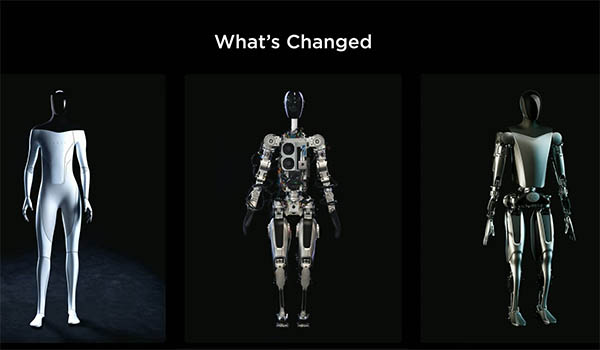
Why does this matter?
Because in artificial intelligence, speed equals dominance.
- Faster chip cycles mean faster learning
- Faster learning means better AI models
- Better AI models mean smarter robots and safer autonomous vehicles
This aggressive iteration speed could open a technological gap so wide that competitors like Waymo, Nvidia, and legacy robotics companies may struggle to keep up.
Tesla Bot Optimus Gen 3: More Than Just a Robot
The most anticipated tech event in the coming months is undoubtedly the debut of Tesla Bot Optimus Gen 3. According to insiders and early leaks, this version will feature a mind-blowing new design—so advanced that it might make people forget Tesla ever started as a car company.
This is not just a cosmetic upgrade.
Optimus Gen 3 represents a fundamental leap in humanoid robotics, combining:
- Advanced mechanical flexibility
- Human-like balance and coordination
- Real-time decision-making
- And most importantly, the AI5 chip
Elon Musk himself hinted that once people see Optimus Gen 3 in action, “nobody will remember that Tesla ever made a car.”
Why the AI5 Chip Is a Game Changer for Humanoid Robots
To understand why AI5 matters so much, you first need to understand the challenge of humanoid robotics.
Cars Think Fast—Robots Must Think Faster
Tesla’s current AI4 hardware already allows vehicles to process millions of visual data points in real time to enable Full Self-Driving (FSD). But a humanoid robot like Optimus faces exponentially greater complexity.
Optimus doesn’t just drive forward on roads. It must:
- Recognize and manipulate objects
- Maintain balance on uneven surfaces
- Perform delicate, human-like hand movements
- React instantly to unpredictable human behavior
This requires massive computational power with ultra-low latency—and that’s exactly what AI5 is designed to deliver.
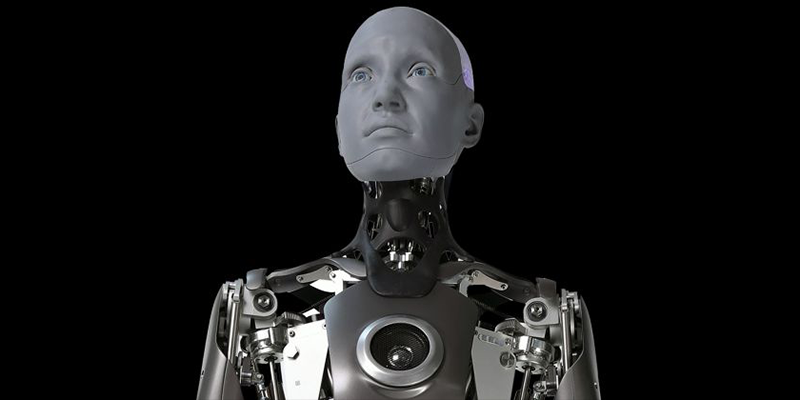
AI5 vs AI4: A Massive Leap in Performance
According to reports, the AI5 chip will offer:
- Multiple times the performance of AI4
- Up to 5× memory bandwidth
- Ultra-low latency processing
- Significantly improved energy efficiency
One of the biggest weaknesses of current humanoid robots isn’t raw computing power—it’s data movement. Information often can’t travel from memory to the processor fast enough, causing robots to pause, hesitate, or move unnaturally.
AI5 solves this.
With dramatically increased memory bandwidth, Optimus Gen 3 can access massive machine-learning models almost instantly. This eliminates the awkward “pause and think” moments that plague today’s robots.
Optimus With AI5: Seeing, Understanding, and Reacting Instantly
With AI5, Optimus doesn’t just see the world—it understands it in real time.
Ultra-Low Latency in Action
A perfect example is the now-famous video where Optimus catches a tennis ball. Earlier robots would lag behind, reacting a split second too late. With AI5:
- The robot calculates the ball’s trajectory instantly
- Adjusts its arm and hand position in real time
- Executes smooth, precise, human-like motion
This ultra-low latency is critical not only for performance but also for safety. Optimus will be able to react naturally to sudden human movements, making it suitable for homes, factories, hospitals, and public spaces.
Power Without Overheating: Advanced 2nm and 3nm Design
More power usually means more heat and higher energy consumption. Tesla has addressed this challenge by leveraging cutting-edge semiconductor processes.
2nm and 3nm Manufacturing
- Samsung is expected to produce AI5 chips using a 2-nanometer process at its US-based fabs
- TSMC is believed to handle a 3-nanometer variant
This dual-supplier strategy is a smart move that ensures supply chain resilience while maximizing production capacity.
Thanks to these advanced nodes, Optimus Gen 3 can carry a brain up to five times more powerful than previous versions while still operating for hours without overheating or draining its battery.
What AI5 Means for Tesla Vehicles
AI5 isn’t just for robots.
For Tesla cars, AI5 will enable:
- Better handling of complex traffic scenarios
- Improved prediction of human driver behavior
- Safer navigation in edge cases humans struggle with
Elon Musk has stated that:
- AI4 alone will achieve self-driving safety levels far above humans
- AI5 will make cars almost perfect
This positions Tesla even further ahead in the race for true autonomous driving.
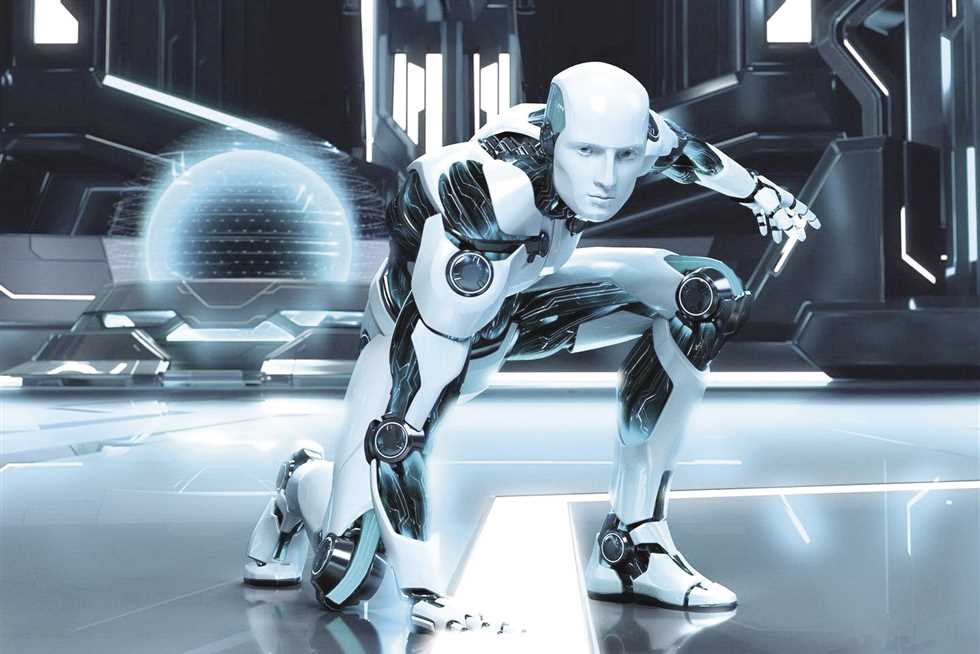
The Roadmap Beyond AI5: AI6, AI7, AI8, and AI9
The most shocking part of Musk’s announcement isn’t just AI5—it’s what comes next.
Tesla’s AI Roadmap
- AI5 – Cars and Optimus enhancement
- AI6 – Optimus and data centers
- AI7 – Space-based AI compute (Dojo 3)
- AI8 & AI9 – Future generations with exponential gains
Yes, you read that correctly. Tesla is planning space-based AI computing, pushing artificial intelligence beyond Earth itself.
Dojo 3 and Space-Based AI Computing
Tesla’s Dojo supercomputer has already played a crucial role in training FSD and robotics models. With Dojo 3 and AI7, Tesla aims to extend AI computation into space.
Why space?
- Massive scalability
- Reduced latency for global systems
- Redundancy and resilience
This could fundamentally change how AI systems are trained and deployed at a planetary scale.
Tesla vs Nvidia: A New Semiconductor Powerhouse?
Today, the AI world heavily depends on Nvidia for data center GPUs. But Tesla has a unique advantage: massive internal demand.
- Millions of Tesla vehicles
- Potentially millions of Optimus robots
- Gigantic AI training workloads
Elon Musk has openly stated his ambition to turn Tesla’s in-house chip designs into the highest-volume AI processors in the world. With enough scale, Tesla could emerge as a true semiconductor powerhouse, challenging even the biggest names in the industry.
The Ultimate Weapon: Iteration Speed
What truly sets Tesla apart is not just hardware—it’s iteration speed.
In AI, learning ability scales directly with how fast you can:
- Build
- Test
- Fail
- Improve
Tesla’s 9-month chip cycle creates a compounding advantage. By the time competitors optimize hardware comparable to AI4, Tesla could already be deploying AI6 or AI7.
The gap in robot intelligence and self-driving capability will no longer be measured in years—it will be measured in stacked generations of technology.
Optimus Gen 3: From Demo to Real Work
With AI5, Optimus Gen 3 transitions from an impressive demo into a real-world worker capable of:
- Manufacturing tasks
- Logistics and warehouse work
- Home assistance
- Dangerous or repetitive jobs
This is the moment when humanoid robots stop being science fiction and start becoming economically transformative.
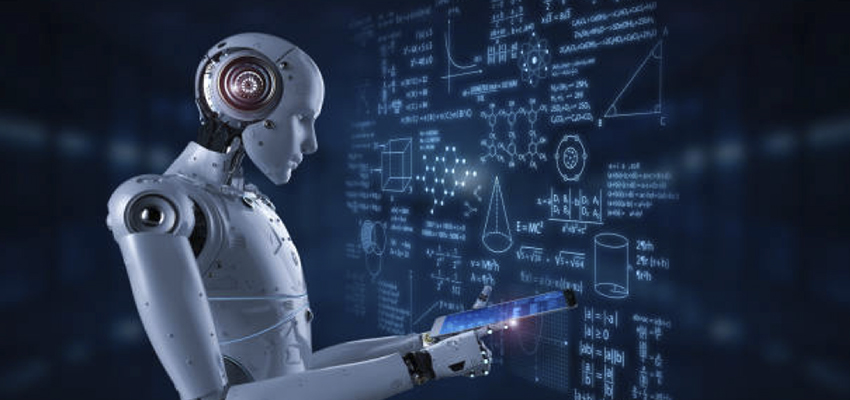
Tesla’s Full-Stack AI Vision
Tesla isn’t just building cars or robots. It’s building a full-stack AI ecosystem, including:
- Custom AI chips
- Training supercomputers (Dojo)
- Autonomous vehicles
- Humanoid robots
- Space-based AI infrastructure
This end-to-end control allows Tesla to optimize every layer of the system—something few companies on Earth can match.
A Powerful Recruiting Message to the World
Elon Musk has also turned these announcements into a bold recruiting call. Tesla is inviting the world’s brightest engineers to help build the most impactful AI brains on the planet.
This isn’t just a job.
It’s a chance to shape the future of intelligence itself.
Final Thoughts: A Defining Moment for AI and Robotics
The combination of Tesla Optimus Gen 3 and the AI5 chip could mark one of the most important turning points in technological history. With unmatched iteration speed, cutting-edge semiconductor design, and a vision that stretches from Earth to space, Tesla is positioning itself at the center of the next AI revolution.
If Elon Musk delivers on even half of this roadmap, the future of robots, transportation, and artificial intelligence will never be the same.
The age of thinking machines has truly begun.
FAQs
1. What is the Tesla Optimus Gen 3 robot?
Tesla Optimus Gen 3 is the latest generation of Tesla’s humanoid robot, designed to perform real-world tasks using advanced artificial intelligence, improved mechanical flexibility, and human-like movement powered by Tesla’s newest AI hardware.
2. What is the AI5 chip and why is it important?
The AI5 chip is Tesla’s next-generation artificial intelligence processor. It delivers significantly higher performance, ultra-low latency, and up to five times the memory bandwidth of AI4, making it critical for advanced robotics and autonomous driving.
3. Will Optimus Gen 3 use the AI5 chip?
Based on leaks and Tesla’s roadmap, Optimus Gen 3 is expected to be the first humanoid robot to integrate the AI5 chip, dramatically improving its intelligence, reaction speed, and ability to perform complex tasks.
4. How is AI5 different from AI4?
AI5 offers multiple times the performance of AI4, much faster data movement, improved energy efficiency, and ultra-low latency, enabling smoother motion, faster reactions, and better real-time understanding.
5. Why does a humanoid robot need so much computing power?
Unlike cars, humanoid robots must balance, manipulate objects, understand environments, and interact safely with humans, all at once. These tasks require far more complex and faster AI processing.
6. What does ultra-low latency mean for Optimus?
Ultra-low latency allows Optimus to react instantly to changes in its environment, such as sudden human movement or falling objects, resulting in more natural, smooth, and safe behavior.
7. How powerful will Optimus Gen 3 be with AI5?
With AI5, Optimus Gen 3 could be up to five times more capable in terms of perception, decision-making, and motion control compared to earlier versions.
8. Will Optimus Gen 3 overheat with such a powerful chip?
No. Tesla is using advanced 2nm and 3nm semiconductor processes, allowing higher performance while maintaining energy efficiency and safe operating temperatures.
9. Who is manufacturing Tesla’s AI5 chips?
Tesla is reportedly working with Samsung for 2nm production in the U.S. and TSMC for 3nm variants, ensuring high-quality manufacturing and supply chain diversification.
10. How does AI5 improve Tesla’s self-driving cars?
AI5 enables Tesla vehicles to handle complex traffic scenarios, edge cases, and unpredictable human behavior more safely, moving closer to near-perfect autonomous driving.
11. What is Tesla’s 9-month chip design cycle?
Tesla aims to design new AI chip generations every nine months, far faster than the industry standard of 18–24 months, giving it a major competitive advantage in AI development.
12. What are AI6, AI7, AI8, and AI9?
These are future generations of Tesla’s AI chips.
- AI6: Optimus and data centers
- AI7: Space-based AI compute (Dojo 3)
- AI8 & AI9: Advanced future AI platforms
13. What is Dojo 3 and why does it matter?
Dojo 3 is Tesla’s next-generation AI supercomputer platform designed for massive-scale AI training, potentially including space-based computing for global AI systems.
14. Can Tesla compete with Nvidia in AI chips?
While Nvidia dominates AI data centers today, Tesla’s massive internal demand from vehicles and robots could make it one of the highest-volume AI chip producers in the world.
15. When will Tesla Optimus Gen 3 be officially revealed?
Tesla has indicated that Optimus Gen 3 is expected to debut very soon, with major announcements anticipated at an upcoming Tesla event.
16. Why is Tesla’s AI strategy considered revolutionary?
Tesla controls the entire AI stack, from custom chips to software, robots, vehicles, and supercomputers. Combined with rapid iteration, this creates a powerful technological moat that few companies can match.
Read More:
- Elon Musk’s xAI brings 1GW Colossus 2 AI training cluster online
- Tesla confirms that work on Dojo 3 has officially resumed
- Tesla seen as early winner as Canada reopens door to China-made EVs
- Tesla Cybercab sighting confirms one highly requested feature
- Elon Musk’s net worth is nearing $800 billion, and it’s no small part due to xAI