
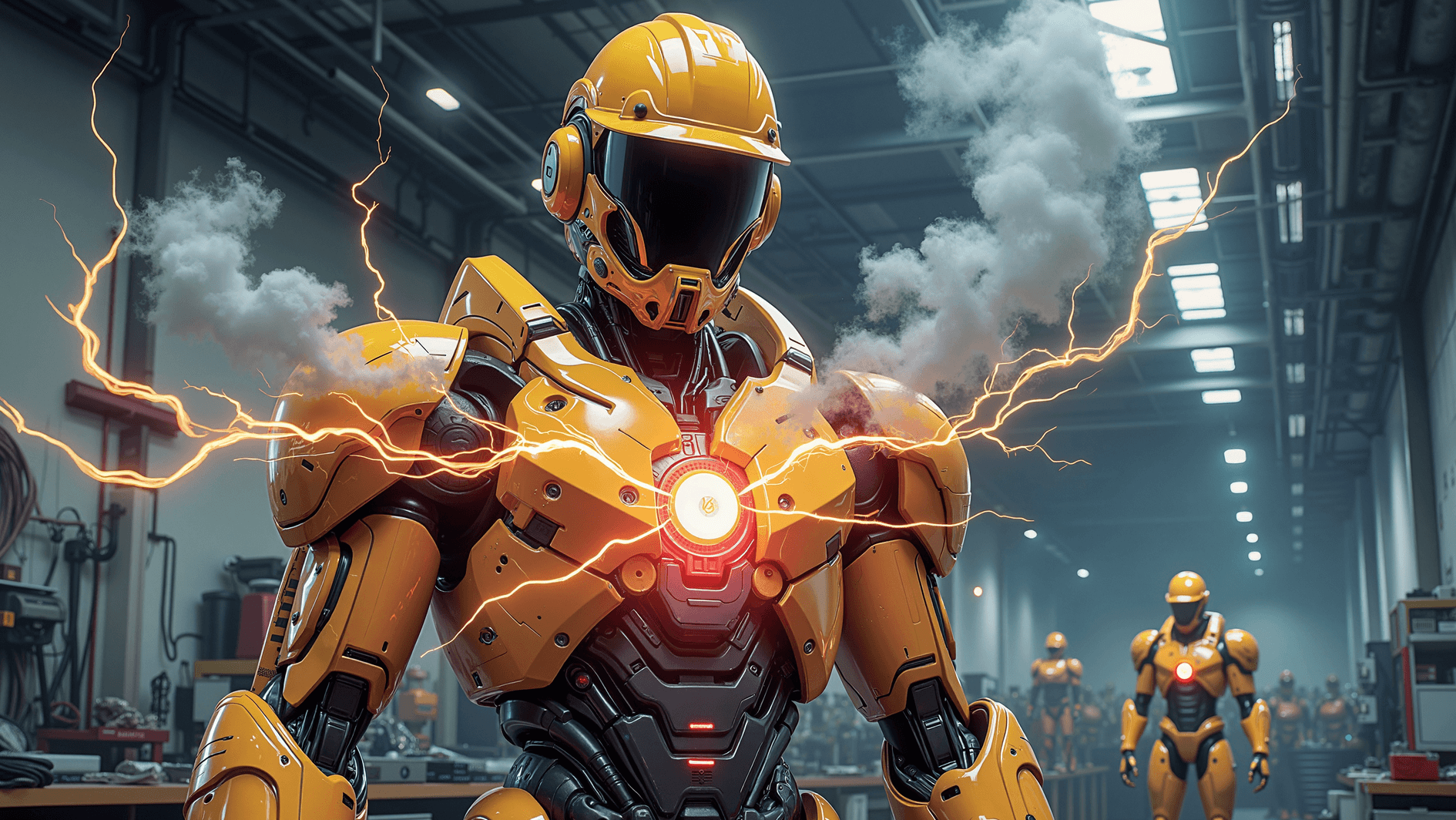
The idea of household robots has long been treated as science fiction—something promised decades away, always just over the horizon. But if you still believe humanoid robots are 20 or 30 years from reality, Tesla’s latest revelations about Optimus Gen 3 may completely change your mind.
This is not another flashy demo designed to grab headlines. It is not a staged performance or a controlled lab experiment. According to Elon Musk, Tesla Bot Optimus Gen 3 represents the most important product Tesla has ever created, even more significant than electric vehicles or full self-driving technology.
In this in-depth, we will explore why Optimus Gen 3 is a genuine turning point in robotics, what makes it fundamentally different from every humanoid robot before it, and how Tesla plans to manufacture it at a cost as low as $10,000—a figure that has stunned the entire tech industry.
Why Tesla Optimus Gen 3 Is Not Just Another Robot
Tesla Optimus did not emerge fully formed. In just two years, the robot has gone through three major design overhauls and four hand upgrades, evolving from a shaky prototype into a humanoid robot already operating inside Tesla factories.

Earlier versions required teleoperation, meaning human operators were constantly correcting movements and guiding tasks. That limitation was not a failure—it was a deliberate and data-driven strategy. Teaching a humanoid robot to function safely in the real world is one of the hardest problems in artificial intelligence.
Optimus Gen 3 changes everything.
Elon Musk has confirmed that this generation is designed to operate fully autonomously, without remote control, without constant supervision, and without humans behind the scenes.
This single shift—from assisted operation to true autonomy—marks the transition from demonstration to deployment.
The True Meaning of Full Autonomy
From Controlled Machine to Independent Agent
A robot that needs human oversight cannot scale. It cannot be economically viable, and it cannot integrate meaningfully into daily life. Optimus Gen 3 is designed to perceive, decide, and act entirely on its own.
This distinction transforms Optimus from a machine into something fundamentally new:
- A worker, not metaphorically, but literally
- A system capable of learning, adapting, and operating independently
- A platform that improves continuously through software updates
Autonomy is the foundation upon which scalability, affordability, and usefulness are built.
Five Breakthrough Upgrades That Set Optimus Gen 3 Apart
1. Human-Level Dexterity With 22 Degrees of Freedom
Walking may dominate public attention, but manipulation is the real challenge. Human environments are designed for human hands—tools, switches, handles, and delicate objects all assume a level of dexterity most robots cannot achieve.
Optimus Gen 3 features over 20 degrees of freedom in each hand, approaching human-level manual dexterity.
This enables:
- Handling fragile objects
- Using tools designed for humans
- Folding laundry and preparing food
- Performing precision tasks like playing the piano
This is not for entertainment—it is proof of general-purpose capability.

2. Learning Tasks by Watching Videos
Traditional robots rely on explicit programming. If conditions change, they fail.
Tesla has taken a radically different approach.
Optimus Gen 3 can learn tasks by observing videos, similar to how humans learn by watching others. If a task can be demonstrated visually, it can potentially be learned.
This changes everything:
- No complex setup or custom programming
- Faster deployment across industries
- Continuous improvement after release
The more Optimus observes, the more capable it becomes.
3. Factory-Proven Autonomous Operation
Optimus Gen 3 is not confined to a lab. According to Tesla, it is already performing real automated tasks such as battery handling inside Tesla facilities.
This matters because:
- Factory environments are unpredictable
- Tasks vary constantly
- Safety and precision are critical
Operating autonomously in such conditions signals that Optimus has crossed a critical real-world threshold.
4. Long Battery Life and Self-Recharging
A robot that needs constant charging cannot compete with human labor.
Optimus Gen 3 is expected to use Tesla’s 4680 battery cells, enabling:
- 8 to 10 hours of continuous operation
- Intelligent energy management during idle periods
- Dynamic power usage during movement and manipulation
Even more importantly, Optimus can recharge itself without human assistance, completing the autonomy loop.

5. Designed From Day One for Mass Production
This may be the most important upgrade of all.
Most humanoid robots are:
- Built from custom parts
- Fragile and expensive
- Impossible to scale
Tesla took the opposite approach.
Optimus is built using:
- Tesla-designed motors and actuators
- In-house AI computers
- Mass-produced battery cells
- Mature camera and sensor systems
Every redesign has reduced part count, simplified assembly, and improved durability.
How Tesla Can Build Optimus for Around $10,000
The robotics industry was stunned when Elon Musk stated that Tesla could manufacture Optimus for $10,000 to $20,000.
For comparison:
- Most humanoid robots today cost $150,000 to $250,000
- Many are fragile prototypes with limited autonomy
Tesla’s advantage lies in vertical integration.
Leveraging Tesla’s Existing Ecosystem
Tesla already manufactures:
- High-efficiency electric motors
- Power electronics
- AI hardware
- Battery packs
- Neural networks at scale
Optimus is not built from exotic components—it is a recombination of proven systems Tesla already knows how to produce efficiently.
This makes low-cost humanoid robots not just possible, but strategically inevitable.
Why Optimus Gen 3 Is a Turning Point for the Global Labor Market
A robot priced under $20,000 that can work continuously would:
- Pay for itself quickly
- Generate consistent monthly value
- Operate without fatigue or downtime
Optimus does not replace workers by moving faster—it replaces them by never stopping.
It:
- Does not get sick
- Does not quit
- Does not require retraining
- Improves through software updates
At scale, even conservative productivity assumptions lead to transformational economic outcomes.
Beyond Homes: Industrial, Healthcare, and Hazardous Environments
While household chores are the most relatable use case, they represent only a fraction of Optimus’ potential.
Industrial Applications
- Logistics and material handling
- Repetitive assembly tasks
- Quality inspection
Healthcare and Elderly Support
- Mobility assistance
- Basic monitoring
- Reducing caregiver workload
Dangerous and Hazardous Environments
- Disaster recovery
- Hazardous industrial sites
- Areas unsafe for humans
In these contexts, autonomy is not optional—it is essential.

Tesla’s Timeline: What to Expect Next
Elon Musk has confirmed:
- Internal deployment of Optimus in 2025
- Commercial sales targeted for 2026
- Low production volumes initially, followed by high-volume manufacturing
Musk estimates long-term demand could exceed 20 billion humanoid robots, combining household ownership and industrial use.
While timelines should always be treated cautiously, the direction is clear: Optimus is no longer experimental.
Why Optimus Could Redefine Tesla’s Valuation
Elon Musk has suggested that Optimus alone could help push Tesla toward a $25 trillion valuation.
At first glance, this sounds extreme. But consider:
- The global labor market is measured in tens of trillions of dollars
- Optimus targets labor itself, not a niche product category
- Tesla is building a platform, not a single robot
If Tesla succeeds, Optimus could become the most valuable product in human history.
Final Thoughts: Is the World Ready for Optimus Gen 3?
Optimus Gen 3 represents:
- A shift from prototypes to deployment
- A leap from assisted control to autonomy
- A move from expensive curiosity to affordable platform
The real question is no longer if humanoid robots will arrive, but how society adapts when they do.
Will they replace jobs—or redefine work itself?
One thing is certain: the future of robotics is no longer decades away. With Tesla Optimus Gen 3, it is unfolding right now.
FAQs
1. What is Tesla Bot Optimus Gen 3?
Tesla Bot Optimus Gen 3 is Tesla’s latest humanoid robot designed to operate fully autonomously. Unlike earlier versions, Gen 3 does not require remote control and is built for real-world deployment in factories, homes, and industrial environments.
2. Why does Elon Musk call Optimus Tesla’s most important product?
Elon Musk believes Optimus has a larger economic impact than electric vehicles or self-driving cars because it targets the global labor market, potentially transforming productivity across every industry.
3. What makes Optimus Gen 3 different from Gen 2?
Optimus Gen 3 introduces full autonomy, improved dexterity, better energy efficiency, and manufacturability at scale, marking a transition from experimental prototype to deployable product.
4. Is Optimus Gen 3 fully autonomous?
Yes. Optimus Gen 3 is designed to operate without teleoperation, meaning it can perceive its environment, make decisions, and act independently without human intervention.
5. How much will Tesla Bot Optimus Gen 3 cost?
Elon Musk has stated that Tesla aims to manufacture Optimus for around $10,000 to $20,000, significantly lower than competing humanoid robots that cost over $150,000.
6. When will Tesla start selling Optimus robots?
Tesla plans to begin internal use in 2025 and target commercial sales in 2026, starting with limited volumes before scaling production.
7. What tasks can Optimus Gen 3 perform?
Optimus Gen 3 can perform repetitive factory tasks, object handling, logistics, basic household chores, and precision manipulation, with capabilities expanding through software updates.
8. Can Optimus Gen 3 learn new tasks on its own?
Yes. Optimus can learn tasks by watching videos, allowing it to acquire new skills through observation rather than manual programming.
9. How dexterous are Optimus Gen 3’s hands?
Each hand features over 20 degrees of freedom, enabling near human-level dexterity for delicate and complex tasks.
10. How long can Optimus Gen 3 operate on a single charge?
Optimus Gen 3 is expected to operate for 8 to 10 hours continuously, depending on task intensity, using Tesla’s advanced battery technology.
11. Can Optimus Gen 3 recharge itself?
Yes. Optimus is designed to autonomously recharge itself, eliminating the need for human assistance and enabling sustained independent operation.
12. Is Optimus Gen 3 already being used in Tesla factories?
Yes. Tesla has confirmed that Optimus is already performing automated tasks such as battery handling inside its facilities.
13. Will Optimus Gen 3 replace human workers?
Optimus is expected to replace certain repetitive and hazardous jobs, while also creating new roles focused on robot supervision, maintenance, and AI development.
14. Can Optimus Gen 3 be used in homes?
Yes. Tesla envisions Optimus assisting with household chores, elderly care support, and general home assistance in the future.
15. Why is Tesla able to produce Optimus so cheaply?
Tesla leverages vertical integration, using in-house motors, batteries, AI hardware, and manufacturing expertise refined through years of EV production.
16. How big is the potential market for Optimus?
Elon Musk estimates long-term demand could exceed 20 billion units, combining household ownership and industrial use worldwide.
17. Could Optimus change Tesla’s valuation significantly?
Yes. Musk has suggested that Optimus could help push Tesla toward a multi-trillion-dollar valuation, potentially redefining the company’s future beyond electric vehicles.
Read More:
- SpaceX is Rushing towards Starship Flight 12! Tory Bruno Left ULA! Double Rocket Failure
- Tesla FSD (Supervised) v14.2.2 starts rolling out
- Elon Musk’s Grok AI to be used in U.S. War Department’s bespoke AI platform
- Tesla FSD v14.2.2 is getting rave reviews from drivers
- Waymo sues Santa Monica over order to halt overnight charging sessions
- Tesla (TSLA) receives “Buy” rating and $551 PT from Canaccord Genuity