
Today, we dive into a fascinating story that is both humorous and serious, centered around Tesla, Elon Musk, and the highly anticipated Tesla Bot Gen 3. While some of the updates might make you chuckle, a great deal of money is being wagered on whether this effort will succeed. Let’s clarify the situation and break down everything you need to know about the latest developments.
The Viral Tesla Optimus Bot Incident: What Really Happened?
Recently, a video of a Tesla Optimus bot demonstration in Miami went viral. In the clip, the humanoid robot falls backward in a dramatic collapse. While falling robots are expected in testing, the controversy came from the robot’s hand movements, which suggested that it was mimicking a remotely controlled operator panicking and removing a VR headset.
This revelation sparked significant disappointment among Tesla fans. Users are willing to accept occasional falls during development, but what caused frustration was the idea that Elon Musk and Tesla had presented the robot as fully autonomous, while this demonstration clearly indicated otherwise.
The Growing Hype Around Humanoid Robots
Humanoid robots are currently attracting billions of dollars in investment, with Tesla at the forefront. Elon Musk has boldly predicted that Optimus will become a trillion-dollar product for Tesla:
“The scale of Optimus is really going to be something else. I think it’s going to be the biggest product of all time.”
Currently, humanoid robots use artificial general intelligence (AGI) to perform human-like tasks, but there are ethical and technological concerns surrounding their deployment.
Ethical Concerns: Jobs and Robot Armies
From an ethical perspective, Elon Musk’s talk of a robot army makes many uneasy. There is also widespread anxiety about robots taking human jobs, raising a crucial question:
Will humanoid robots cause unemployment and poverty, or will they help eliminate it, as Elon Musk suggests?
Technological Hurdles: Remote Control vs. Autonomy
Most humanoid robots, including the Tesla Optimus bots, still rely on remote human control. This highlights the gap between software capabilities and physical hardware. Other companies like Boston Dynamics and Figure AI face similar challenges.
Elon Musk believes Optimus Gen 3 will revolutionize humanoid robotics not through speed or strength, but by solving fundamental problems that have plagued the industry for years.
Tesla Bot Gen 3: What’s New?
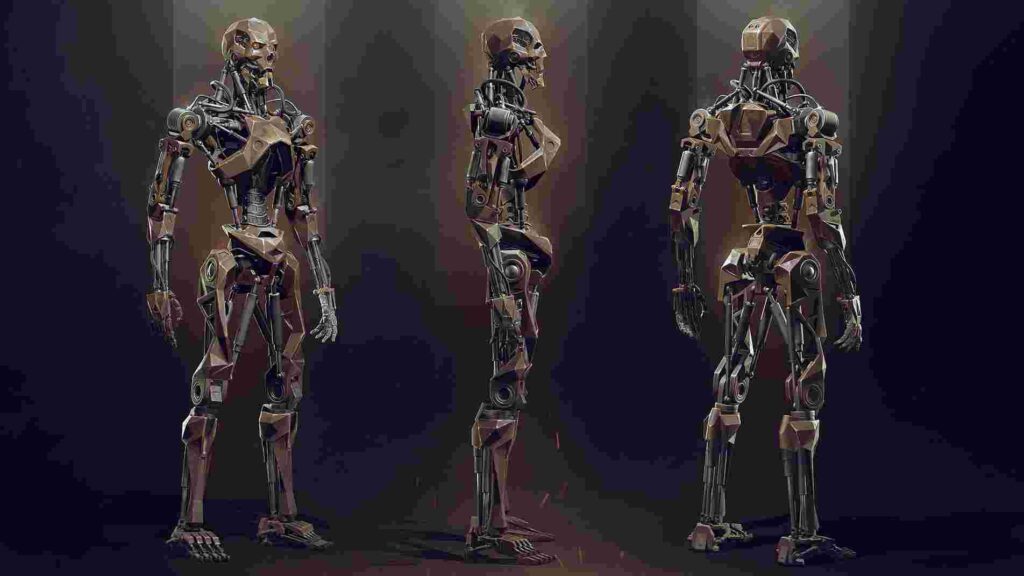
Let’s clarify an important point: the yellow and black Tesla bot images circulating online are not Gen 3. Elon Musk confirmed they are version 2.5 units used for testing.
Optimus Gen 3, expected to launch in early 2026, will be a fully autonomous robot, capable of performing up to 3,500 open-ended tasks per day. This includes household chores such as cooking, cleaning, and preparing breakfast.
Why Tesla Bot Gen 3 Will Stand Out
The success of Optimus Gen 3 relies heavily on its dexterous hands, which are more complex than any previous Tesla product, including the Model X and Cybertruck. Elon Musk explained that the human hand is a marvel of evolution with 27 degrees of freedom, essential for tasks like:
- Peeling vegetables
- Handling fragile items
- Cooking meals
- Assembling machinery
Without solving the hand problem, a robot cannot realistically perform real-world household tasks.
Cooking as the Ultimate Test
Cooking is one of the most demanding tasks for a humanoid robot. A simple breakfast requires the robot to:
- Open the refrigerator
- Identify ingredients
- Handle fragile items like eggs
- Operate the stove and pan
- Cook food evenly and on time
If Optimus Gen 3 can cook a meal, it proves it has crossed the threshold from industrial robot to human-world assistant.
Technical Upgrades: Design, Autonomy, and Battery Life
Optimus 2.5 already features:
- Smoother exterior design
- Covered joints and fewer exposed cables
- Integration with XAI’s Gro voice assistant
However, Gen 3 will surpass this with:
- Expanded household task capabilities
- Upgraded battery life: 2 hours of charging for up to 22 hours of operation
- Fully autonomous mobility and self-charging
This ensures that Tesla Bot Gen 3 is truly functional for everyday use, unlike experimental prototypes.
Walking, Interaction, and Real-World Functionality
Tesla recently demonstrated Optimus walking around Gigafactory Texas, performing real-world tasks like:
- Selling popcorn
- Serving drinks at crowded events
Key abilities include:
- Autonomous navigation
- Obstacle avoidance
- Human interaction and conversation
- Learning from its environment
Importantly, data collected by one Optimus robot can be shared with others, making the fleet progressively smarter over time.
Tesla Cortex 2 Data Center: Powering AI for Optimus
To train the Optimus Gen 3, Tesla has invested heavily in AI infrastructure. The Cortex 2 data center at Gigafactory Texas can operate at 200 megawatts, supporting large-scale machine learning for:
- Real-time decision-making
- Complex task learning
- Autonomous navigation
This infrastructure is essential for Tesla to deploy thousands of humanoid robots in factories, households, and commercial settings.
Market Potential and Tesla’s Strategic Advantage
The global humanoid robot market is projected to grow from $1.5 billion in 2023 to over $38 billion by 2035. Tesla’s integrated approach gives it a competitive edge:
- In-house AI development
- Scalable hardware production
- Strategic partnerships with logistics and automation companies
Tesla could also monetize Optimus through subscription-based AI updates, similar to autonomous driving software.
Regulatory and Ethical Considerations
Despite the excitement, challenges remain:
- Energy consumption: Large AI centers impact power grids
- Ethical concerns: Safe human-robot interactions and diverse training datasets
- Liability: Who is responsible if a robot causes harm—the manufacturer, software developer, or user?
Pricing: Cheaper Than You Think
While early skepticism suggested $20,000 might be unrealistic, Tesla plans to offer Optimus Gen 3 at a competitive price, making it accessible for both commercial and household use. This could dramatically accelerate adoption.
Final Thoughts: The Future of Humanoid Robots
Elon Musk and Tesla are pushing boundaries with Optimus Gen 3, aiming to create robots that are:
- Autonomous
- Dexterous
- Household-ready
- Commercially viable
With the combination of advanced AI, dexterous hands, and real-world testing, Tesla is positioning itself to lead the humanoid robot revolution.
What’s Next?
- Optimus Gen 3 launch: Early 2026
- Expanded AI capabilities: Thousands of autonomous tasks
- Mass deployment: Factories, households, and commercial environments
If successful, Optimus could redefine human-robot interaction and become Tesla’s most valuable division.
Conclusion
The Tesla Bot Gen 3 represents a massive leap in humanoid robotics, combining autonomy, dexterity, and AI intelligence. While skeptics remain, Tesla’s commitment to design, AI infrastructure, and real-world testing makes it a serious contender in the rapidly growing humanoid robot market.
Whether you are a Tesla fan, a tech enthusiast, or an investor, Optimus Gen 3 promises to be one of the most exciting innovations of the decade.
Share your thoughts below: Do you think Tesla’s humanoid robots will change the world, or are they still a futuristic dream?
FAQs
1. What is Tesla Bot Gen 3?
Tesla Bot Gen 3, also known as Optimus Gen 3, is Tesla’s fully autonomous humanoid robot designed to perform household tasks, factory work, and other real-world functions. It can handle up to 3,500 open-ended tasks per day.
2. When will Tesla Bot Gen 3 be released?
Tesla Bot Gen 3 is expected to launch in early 2026, with production focused on both commercial and household use.
3. How much will Tesla Bot Gen 3 cost?
While early prototypes suggested $20,000, Tesla aims to offer Gen 3 at a competitive and affordable price, making it accessible to households and businesses.
4. Can Tesla Bot Gen 3 cook and clean?
Yes! Tesla claims Optimus Gen 3 can cook meals, clean, and perform household chores, functioning as a true household assistant.
5. Is Tesla Bot Gen 3 fully autonomous?
Yes, unlike earlier versions, Gen 3 is designed to operate fully autonomously without requiring remote human control.
6. How long can Tesla Bot Gen 3 operate on a single charge?
Tesla Bot Gen 3 will have an upgraded battery life, requiring only 2 hours of charging for up to 22 hours of continuous operation.
7. What makes Tesla Bot Gen 3 different from other humanoid robots?
Tesla Bot Gen 3 combines dexterous hands, AI intelligence, and real-world task learning, making it capable of performing tasks that other robots cannot, such as cooking and cleaning.
8. Who is responsible if Tesla Bot Gen 3 causes harm?
Liability is a critical question. It could involve the manufacturer, software developer, or end user, depending on the situation. Tesla has not yet specified exact policies.
9. Can Tesla Bot Gen 3 interact with humans?
Yes! Tesla Bot Gen 3 can hold conversations, tell jokes, and respond to voice commands, making it suitable for both homes and public environments.
10. What kind of AI powers Tesla Bot Gen 3?
Tesla Bot Gen 3 relies on advanced artificial intelligence, including machine learning models trained in Tesla’s Cortex 2 data center, for perception, locomotion, and task performance.
11. Can Tesla Bot Gen 3 navigate complex environments?
Yes, it can walk autonomously, avoid obstacles, climb stairs, and adapt to crowded or dynamic environments like factories and retail spaces.
12. How many tasks can Tesla Bot Gen 3 perform per day?
Tesla claims up to 3,500 unlimited tasks per day, thanks to its ability to learn from human behavior and imitate actions.
13. Will Tesla Bot Gen 3 be used in factories?
Yes, Tesla plans to deploy Optimus in factories and industrial environments, where it can help reduce operational costs and improve productivity.
14. What are the main challenges Tesla faces with Optimus?
Challenges include building dexterous hands, mass production, ethical concerns, safety, and software-hardware integration.
15. How does Tesla Bot Gen 3 compare to Boston Dynamics robots?
While Boston Dynamics focuses on mobility and agility, Tesla Bot Gen 3 emphasizes human-like dexterity, household tasks, and large-scale autonomy, giving it an edge in practical applications.
Read More:
- Elon Musk’s Genius Solution to Beat China to the Moon Simplified Starship, No Reuse
- Where to Buy Tesla TV: Your Complete Guide 2026
- Just Happened! Elon Musk Finally Integrating STARLINK Into Tesla New CAR! Game Changer 2026
- Tesla Model 2 Leaked Coming In 2026, Specs & Hatchback Design Changes Everything
- Tesla FSD fleet is nearing 7 billion total miles, including 2.5 billion city miles
- Elon Musk’s 2026 Tesla Pi Phone Finally HERE: What Makes It a True iPhone KILLER?
1 thought on “Elon Musk Finally Release Tesla Bot Gen 3 with 3,500 Cleaning Tasks! Cheaper Price Than You Think”