
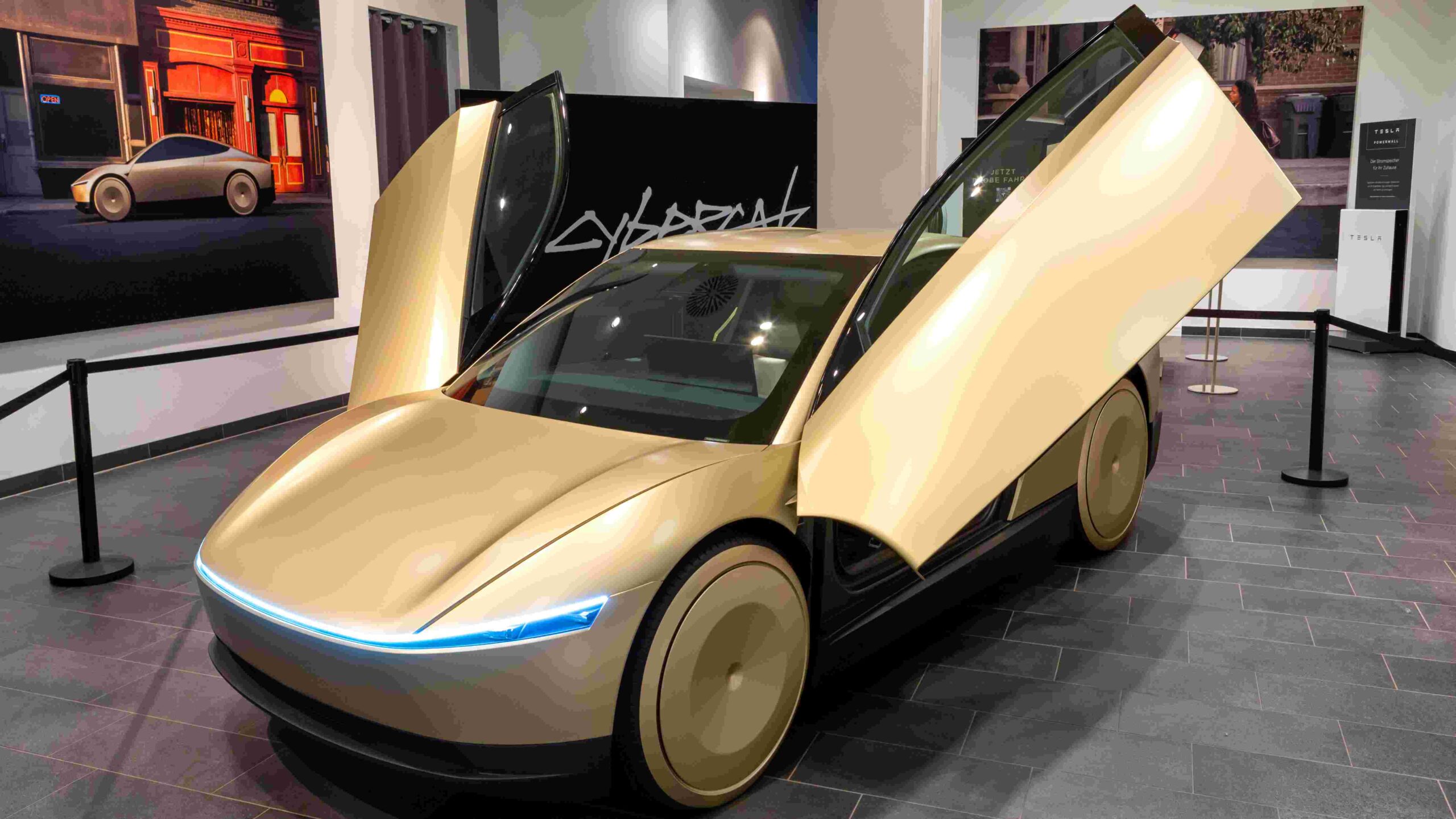
The future of autonomous transportation is no longer theoretical—it’s entering production. This week delivered one of the most significant updates yet from Tesla, spanning the long-awaited Cybercab, the European expansion of the Tesla Semi, a new underground transportation proposal from The Boring Company, and a surprisingly strategic pricing shift for the Cybertruck.
From autonomy without steering wheels to dynamic pricing experiments and tunnel-based mobility solutions, here’s a comprehensive breakdown of everything happening across Elon Musk’s ecosystem.
Cybercab Enters Production at Giga Texas
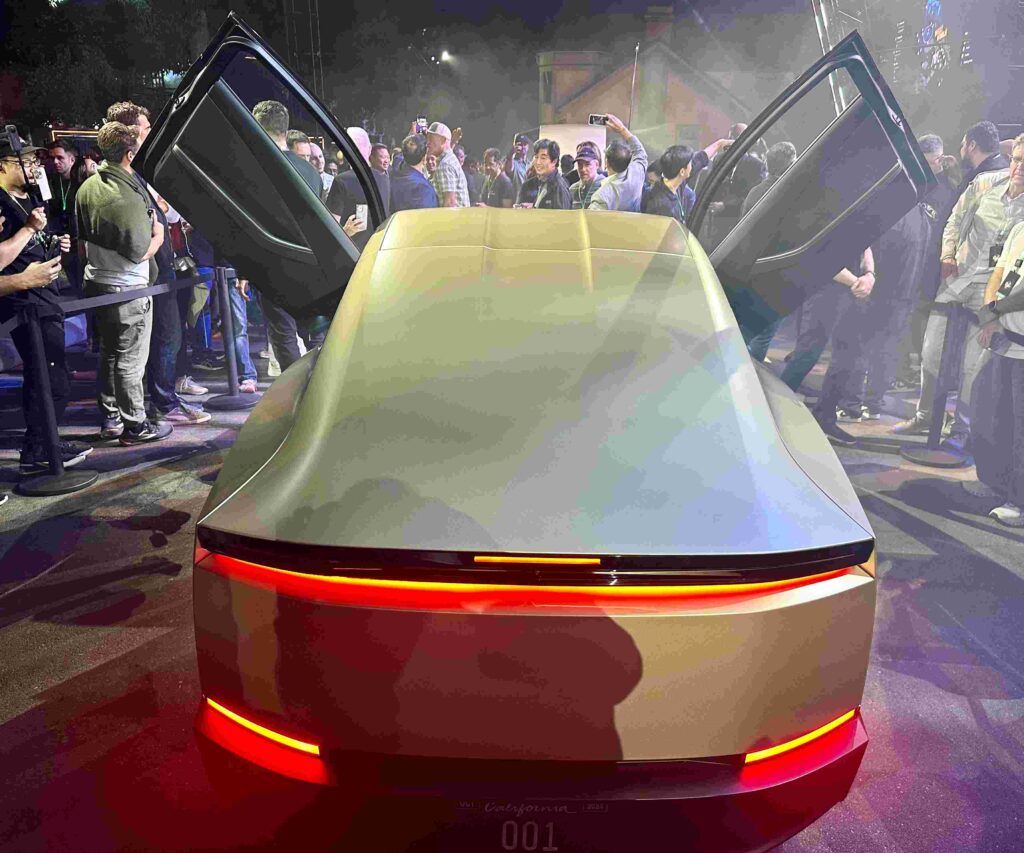
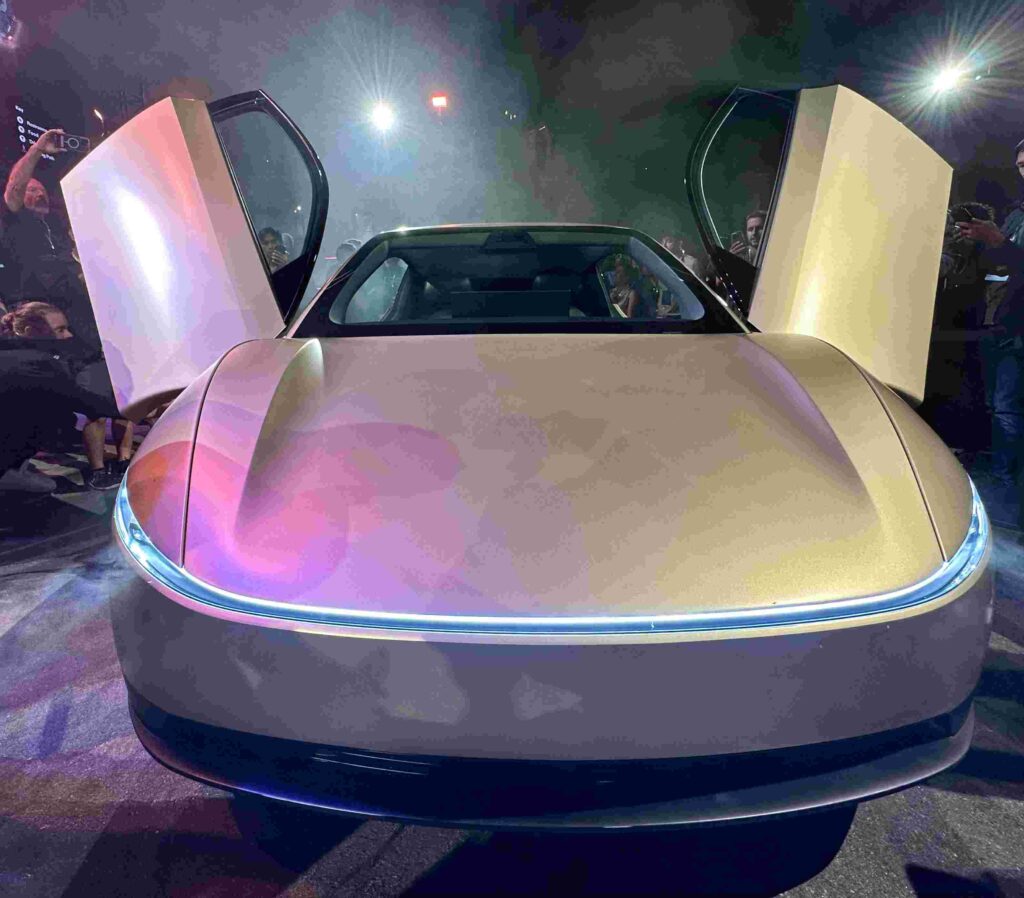
The biggest headline: Tesla has officially revealed what it describes as the first production Cybercab at Giga Texas.
To commemorate the milestone, Tesla’s official X account shared a photo of the Cybercab alongside the Giga Texas production team. This marks a crucial transition—the Cybercab is no longer a prototype or limited test vehicle. It is now moving through scalable manufacturing processes.
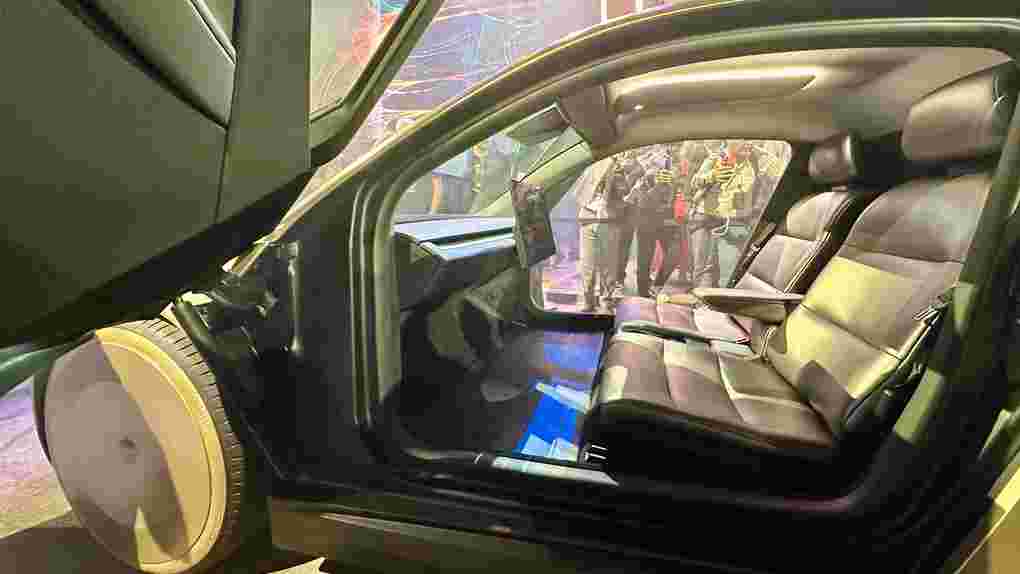
What Makes the Cybercab Different?
Unlike previous Tesla models that gradually adopted autonomy through software updates, the Cybercab was designed from day one for full autonomy.
Key distinctions include:
- No steering wheel
- No pedals
- No manual override system
- Fully autonomous architecture
During Tesla’s 2025 earnings call, Elon Musk made it clear:
“It’s like this car either drives itself or it does not drive.”
There is no fallback mechanism. This is a radical engineering and philosophical shift for Tesla.
Will the Cybercab Be Tesla’s Best-Selling Vehicle?
Elon Musk believes the Cybercab could become Tesla’s highest-volume vehicle ever, surpassing both the Tesla Model Y and the Tesla Model 3 combined.
That’s a bold prediction considering the Model Y has been one of the best-selling vehicles globally.
For this to happen, two conditions must be met:
- Mass production at scale
- Consumer-accessible pricing
Cybercab Price Confirmed Under $30,000
On X, Elon responded “yes” to a direct question about whether Tesla would sell the Cybercab to consumers for $30,000 or less before 2027.
That short answer carried massive implications:
- Confirms pricing target
- Confirms consumer availability timeline
- Signals aggressive production ramp
A sub-$30,000 fully autonomous vehicle would compete not only with electric vehicles but also entry-level combustion cars.
If achieved, it would represent one of Tesla’s most aggressive production expansions in history.
Wireless Charging and Fleet Infrastructure
Autonomous vehicles require autonomous infrastructure.
Tesla recently sought regulatory approval for ultra-wideband wireless charging technology for the Cybercab. For a robotaxi fleet, this is more than a convenience—it’s operationally critical.
Why wireless charging matters:
- Enables continuous fleet operation
- Reduces downtime
- Removes human intervention
- Scales more efficiently than manual plug-in systems
Even if Tesla deploys its Optimus robot to plug vehicles in, wireless charging remains a more elegant long-term solution.
Tesla Hires RoboTaxi Tracker Developer
In another strategic move, Tesla hired the developer behind “RoboTaxi Tracker,” a popular third-party tracking tool within the Tesla community.
Ethan McKenna shared on LinkedIn that he is joining Tesla’s vehicle software team to help build the robotaxi experience.
This signals something important:
Tesla understands that transparency and visibility are essential for autonomy adoption.
User confidence in fleet operations will be just as important as the driving software itself.
AI Is No Longer Optional: The Rise of Practical AI Skills
Beyond Tesla’s hardware innovations, artificial intelligence is reshaping the workforce.
Recent developments highlight this transformation:
- A creator won $1 million building an AI film live.
- A teenager runs an AI-powered agency earning six figures monthly.
- According to Forbes, employees who use AI tools earn roughly 40% more than those who don’t.
The early adoption window for AI is closing. The new competitive edge lies in practical implementation.
Platforms like Outskill are hosting live AI mastermind sessions designed to help professionals:
- Build AI agents
- Automate workflows
- Integrate CRM, spreadsheets, Notion, and email
- Create income-generating AI systems
The takeaway: AI is becoming a fundamental productivity layer across industries.
Tesla Semi Expands Toward Europe
While the Cybercab focuses on passengers, the Tesla Semi represents Tesla’s freight ambitions.
Recent job listings referencing Megacharger deployment in Europe strongly suggest Tesla is preparing to expand beyond North America.
Tesla Semi Specs That Matter
- ~500 miles of range
- ~1.7 kWh per mile energy consumption
- Up to 82,000 lbs gross combination weight
In Europe—where freight routes are typically shorter and diesel prices are significantly higher—the economics may be even more compelling than in the United States.
Regulatory Tailwinds in Europe
European governments have been aggressive in setting emissions targets and incentivizing zero-emission transport.
For fleet operators, electrification offers:
- Lower fuel costs
- Regulatory compliance
- Supply chain decarbonization
- Potential insurance benefits
Tesla’s updated Full Self-Driving (FSD) safety data indicates vehicles using the system are roughly seven times less likely to be involved in a collision. For long-haul operators, this translates to fewer costly accidents and downtime.
Recent sightings near Giga Nevada suggest Tesla is accelerating Semi production.
Elon Musk recently stated that high-volume Semi production begins this year—and the infrastructure signals align with that timeline.
The Boring Company Tackles Texas Traffic
Autonomous vehicles solve one layer of transportation. Underground tunnels solve another.
In Texas, The Woodlands Township has responded to The Boring Company’s Tunnel Vision challenge by exploring a two-tunnel system beneath its town center corridor.
Why The Woodlands Needs It
The Cynthia Woods Mitchell Pavilion hosts over 60 performances annually, with crowds reaching 16,500 per show.
Event-driven congestion creates predictable yet intense traffic bottlenecks.
The proposal—called “The Current”—would include:
- Two parallel 12-foot diameter tunnels
- Tesla vehicle shuttle system
- Potential integration of future autonomous platforms
Unlike general commuter traffic, event traffic is predictable in timing, making it a manageable engineering problem.
If implemented, this could represent one of the first serious municipal adoptions of a Boring Company transit solution.
Cybertruck Gets the “Perfect” Price — Temporarily
Tesla also introduced a new dual-motor all-wheel-drive configuration of the Tesla Cybertruck priced below $60,000.
The reaction was immediate and enthusiastic.
Why the Pricing Matters
When Elon first unveiled the Cybertruck in 2019, the dual-motor AWD version was listed at $49,990.
Adjusted for inflation through 2026, that equates to roughly $63,000 today.
For the first time, the Cybertruck appeared aligned with its original inflation-adjusted pricing promise.
But There’s a Catch
Elon later clarified that:
- The pricing variance is only for the next 10 days.
- Future price depends on demand at this level.
Reactions were divided:
- Some saw it as inventory management.
- Others saw it as undermining momentum.
Tesla has historically adjusted pricing dynamically to:
- Manage production flow
- Allocate components efficiently
- Test demand elasticity
Cybertruck’s Autonomous Future
During the recent earnings call, Elon revealed Tesla plans to transition the Cybertruck line toward fully autonomous configurations.
An autonomous Cybertruck could be ideal for:
- Localized cargo delivery
- Urban logistics
- Fleet operations
Giga Texas currently has Cybertruck production capacity exceeding 125,000 vehicles per year.
That’s substantial hardware potentially waiting for an autonomous deployment strategy.
The Bigger Picture: Tesla’s Integrated Autonomy Strategy
When you zoom out, a pattern emerges:
| Layer | Tesla Strategy |
|---|---|
| Passenger Transport | Cybercab robotaxi |
| Freight Transport | Tesla Semi |
| Urban Infrastructure | Boring Company tunnels |
| Utility Platform | Autonomous Cybertruck |
| Energy Backbone | Wireless charging + Megachargers |
Tesla is no longer “preparing” for autonomy.
It is:
- Building production lines
- Deploying charging infrastructure
- Hiring customer-experience engineers
- Testing municipal tunnel integration
- Repositioning vehicle lineups
What Happens Next?
If Tesla delivers:
- A sub-$30,000 fully autonomous Cybercab before 2027
- High-volume Tesla Semi production in Europe
- Operational tunnel systems in Texas
- Autonomous Cybertruck commercial deployment
Then the company transitions from EV manufacturer to autonomous infrastructure platform.
That would represent one of the most ambitious industrial pivots in modern history.
Final Thoughts
This week wasn’t just about a new vehicle—it was about system-level integration.
- The Cybercab enters production.
- The Semi prepares for European expansion.
- The Boring Company gains municipal traction.
- The Cybertruck undergoes strategic repositioning.
Each move reinforces a singular thesis:
Autonomy is no longer experimental. It’s operational.
And if Elon Musk’s projections hold true, the next few years could redefine not only Tesla’s trajectory—but the structure of transportation itself.
FAQs
1. What is the Tesla Cybercab?
The Tesla Cybercab is a fully autonomous vehicle designed from the ground up without a steering wheel or pedals. Unlike previous Tesla vehicles that added autonomy through software updates, the Cybercab was engineered specifically for driverless operation.
2. Where is the Cybercab being produced?
The first production Cybercab was revealed at Giga Texas, Tesla’s major manufacturing hub in Austin.
3. Does the Cybercab have a steering wheel or pedals?
No. The Cybercab has no steering wheel, no pedals, and no manual override, making it Tesla’s first purpose-built autonomous vehicle.
4. When will the Cybercab be available to consumers?
According to Elon Musk, Tesla plans to sell the Cybercab to customers for under $30,000 before 2027.
5. Will the Cybercab cost less than $30,000?
Elon Musk confirmed on X that Tesla intends to offer the Cybercab for $30,000 or less, positioning it competitively against both electric and gasoline-powered entry-level cars.
6. How is the Cybercab different from the Model 3 and Model Y?
Unlike the Tesla Model 3 and Tesla Model Y, which still include manual controls, the Cybercab is designed exclusively for autonomous driving with no driver intervention capability.
7. Will the Cybercab support wireless charging?
Tesla has reportedly pursued regulatory approval for ultra-wideband wireless charging technology, which would allow autonomous fleets to charge without human involvement.
8. What is the Tesla Semi?
The Tesla Semi is Tesla’s fully electric Class 8 truck designed for long-haul freight transportation.
9. Is the Tesla Semi expanding to Europe?
Recent job listings referencing Megacharger deployment in Europe suggest Tesla is preparing to expand Semi operations beyond North America.
10. What is the range of the Tesla Semi?
The long-range Tesla Semi offers approximately 500 miles of range, making it suitable for major freight corridors.
11. What is The Boring Company’s role in Tesla’s ecosystem?
The Boring Company focuses on underground tunnel systems designed to reduce urban traffic congestion and support efficient transportation.
12. What is the Woodlands tunnel proposal?
The Woodlands Township in Texas is exploring a tunnel solution beneath its town center corridor to address event-driven traffic congestion.
13. What venue is driving traffic concerns in The Woodlands?
The Cynthia Woods Mitchell Pavilion hosts over 60 performances annually and can accommodate crowds of up to 16,500 people per show.
14. What is the current price of the Cybertruck dual-motor AWD variant?
Tesla recently introduced a dual-motor all-wheel-drive configuration of the Tesla Cybertruck priced below $60,000, although the pricing may be temporary depending on demand.
15. Why is Cybertruck pricing dynamic?
Tesla has a history of adjusting trims and pricing to manage production flow, test demand, and allocate components efficiently.
16. Will the Cybertruck become fully autonomous in the future?
Elon Musk has stated that Tesla plans to transition the Cybertruck line toward fully autonomous configurations, potentially for commercial and cargo applications.
17. How safe is Tesla’s Full Self-Driving system?
Tesla’s updated safety data suggests that vehicles operating with Full Self-Driving engaged are significantly less likely to be involved in a collision compared to vehicles without it.
18. Could the Cybercab become Tesla’s best-selling vehicle?
Elon Musk believes the Cybercab could outsell the Model 3 and Model Y combined if production scales successfully and pricing remains competitive.
Read More:
- Elon Musk Unexpectedly Announced SpaceX First Ship-Catching Schedule Sooner than We Think
- Tesla preps to build its most massive Supercharger yet: 400+ V4 stalls
- Tesla wins another award critics will absolutely despise
- Elon Musk’s xAI plans $659M expansion at Memphis supercomputer site
- Tesla Roadster patent hints at radical seat redesign ahead of reveal
- Tesla Australia confirms six-seat Model Y L launch in 2026
1 thought on “Elon Musk Reveals Major New Cybercab Update”