
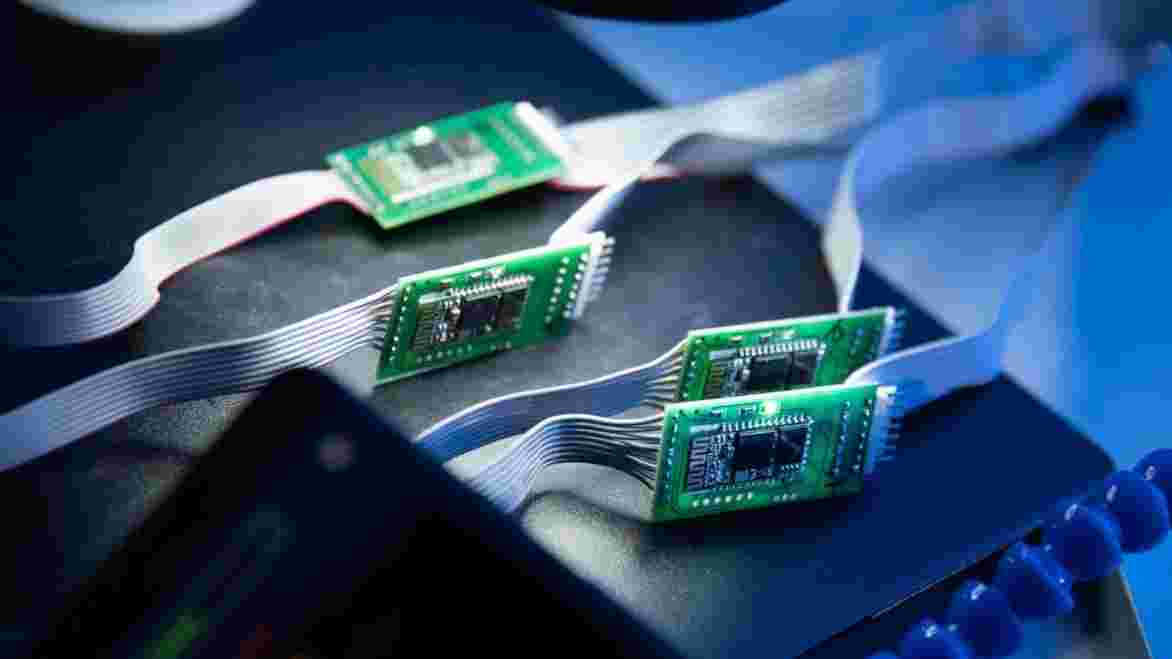
This past week delivered a flood of major announcements from Elon Musk that collectively signal a powerful shift in long-term strategy across Tesla, SpaceX, and The Boring Company. At the center of it all is a development many believed was finished for good: Tesla’s Dojo supercomputer.
Against expectations, Project Dojo is officially back. More importantly, it is returning in a far more ambitious form than before. Alongside this revival, The Boring Company announced it will build a tunnel for free, and SpaceX celebrated a historic 600 Falcon launches, while laying the groundwork for a future where rockets fly more than once per hour.
Together, these updates paint a clear picture of where Elon Musk believes the next decades of technological advantage will come from: scalable infrastructure, vertically integrated hardware, and relentless iteration.
What Is Tesla Dojo? A Clear Explanation
Dojo Is Not a Car Computer
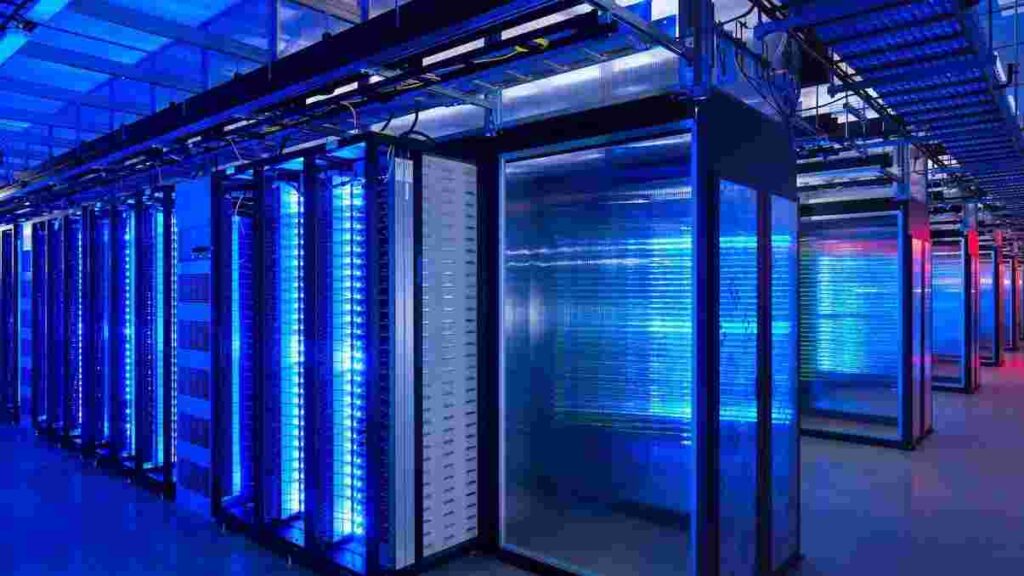
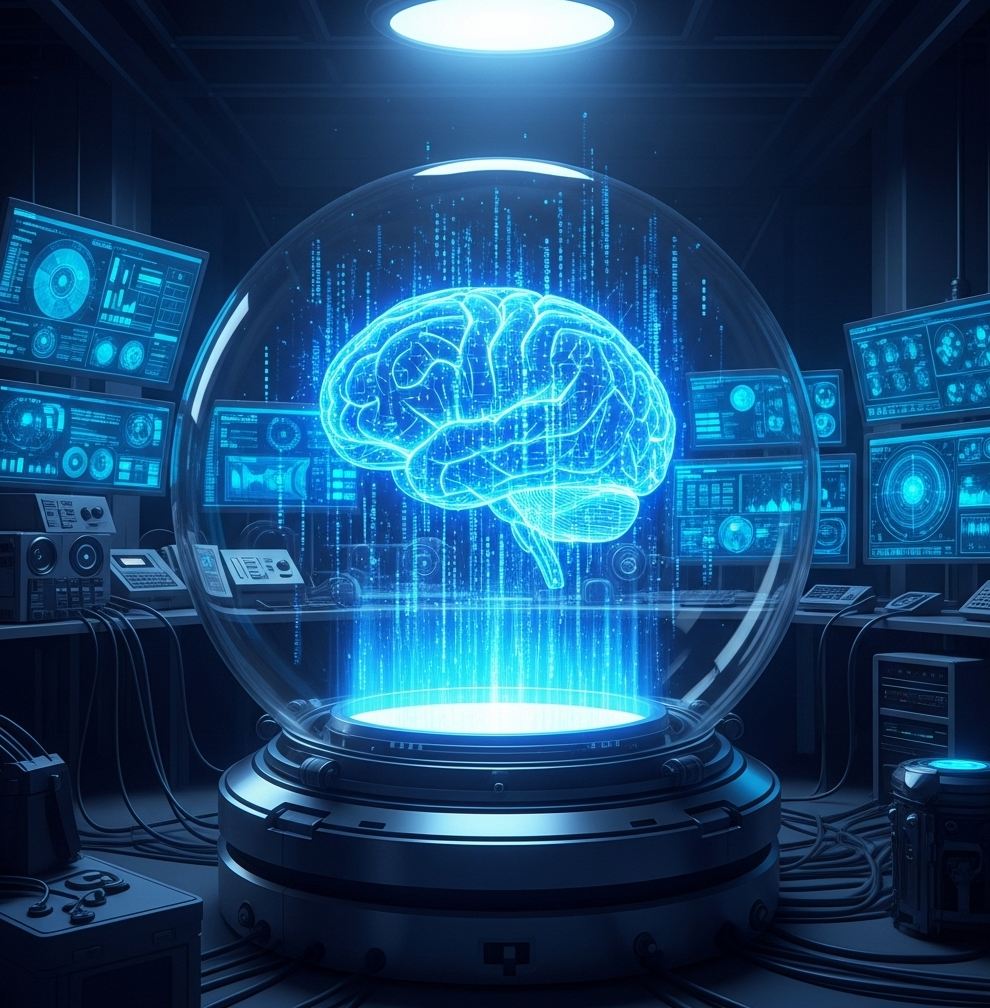
To understand why Dojo matters, it’s important to clear up a common misconception. Dojo is not the computer inside Tesla vehicles. Instead, it is a massive AI training supercomputer designed to teach neural networks how to understand the real world.
Tesla vehicles collect enormous volumes of video data from cameras across the global fleet. Dojo’s job is to process that data and use it to train AI systems that can handle:
- Highway merging
- Urban traffic
- Construction zones
- Rare edge cases like falling debris or unexpected pedestrians
In short, Dojo teaches AI how reality works, not just how it looks in simulations.
Why Tesla Built Its Own AI Supercomputer
Breaking Free From General-Purpose Hardware
Most AI companies rely on off-the-shelf GPUs, primarily from Nvidia. Tesla made a different bet.
Elon Musk believed that autonomous driving is a uniquely difficult problem, one that justified building custom hardware from the ground up. Dojo was designed to:
- Handle video-heavy workloads efficiently
- Deliver lower cost per computation
- Integrate tightly with Tesla’s internal software stack
The result was the D1 chip, a proprietary processor optimized specifically for AI training at massive scale.
The Rise and Pause of Project Dojo
From AI Day Hype to Strategic Pause
Tesla first revealed Dojo publicly during AI Day in August 2021, generating significant excitement. Initial production of the D1 chip began in July 2023, signaling real momentum.
Then, in mid-2025, Tesla shocked observers by disbanding the dedicated Dojo team and pausing development entirely.
This move sparked widespread speculation—but the pause had nothing to do with failure.
Why Tesla Temporarily Shut Down Dojo
The Real Problem Was Complexity
At the time, Tesla was pursuing multiple chip architectures simultaneously:
- Inference chips inside vehicles for real-time driving decisions
- Training chips like Dojo for large-scale neural network development
Maintaining two diverging hardware families was becoming too complex and resource-intensive. Tesla needed focus.
That focus became AI5.
AI5: The Chip Elon Musk Called “Existential”
Tesla’s Most Important Hardware Project
AI5 is Tesla’s next-generation inference chip, designed to power:
- Unsupervised Full Self-Driving
- The Cybercab platform
- Optimus humanoid robots
Elon Musk described solving AI5 as existential for Tesla, personally reviewing the chip’s design every Saturday for months.
By pausing Dojo, Tesla consolidated engineering talent around stabilizing AI5’s architecture—and the bet paid off.
AI5 Performance: Competing With Nvidia at Lower Cost
According to Elon Musk:
- A single AI5 chip delivers performance comparable to Nvidia’s Hopper generation
- A dual-chip configuration approaches Blackwell-class capability
- All while consuming less power and costing significantly less
With AI5 now in strong shape, Tesla once again has the bandwidth to think bigger.
That’s where Dojo 3 comes in.
Dojo 3 Is Back — And It’s Bigger Than Cars
Dojo 3 = AI7
Elon Musk recently clarified Tesla’s AI roadmap in a post on X, revealing how each generation of silicon fits into a much larger plan:
- AI4: Current in-vehicle hardware, already capable of exceeding human driving safety
- AI5: Near-perfect driving behavior and major Optimus improvements
- AI6: Optimized for Optimus and Earth-based data centers
- AI7 (Dojo 3): Space-based AI compute
This is a critical update. Previously, Elon had implied that AI6 would replace Dojo. Now, it’s clear that Dojo evolves into AI7, with a role far beyond Earth.
Why Space-Based AI Computing Changes Everything
The Constraints of Earth Disappear in Space
On Earth, AI data centers face massive limitations:
- Land availability
- Power generation
- Cooling infrastructure
- Water usage
In space, many of these constraints vanish:
- Solar power is effectively unlimited
- Heat can be radiated directly into the vacuum
- No massive cooling plants or water resources required
When combined with Starlink V3 satellites featuring high-bandwidth laser interlinks, this enables distributed space-based AI clusters operating continuously above Earth.
Elon Musk has described this concept as a “very big deal”—and it’s easy to see why.
Dojo 3 as a Cross-Company Infrastructure Play
At this scale, Dojo 3 is no longer just a Tesla project.
It becomes a shared infrastructure layer connecting:
- Tesla (autonomous driving and robotics)
- xAI (general artificial intelligence research)
- SpaceX (orbital deployment and Starlink connectivity)
This is vertical integration taken to an extreme—and it’s uniquely possible because all three companies sit under Elon Musk’s strategic umbrella.
The Boring Company Offers a Tunnel for Free
A Bold Infrastructure Experiment
While Dojo grabbed headlines, The Boring Company made waves with an unusual announcement: it will build a one-mile tunnel for free.
As part of its Tunnel Vision initiative, the company is inviting proposals for a tunnel with a 12-foot inner diameter, usable for:
- Passenger transport
- Freight
- Pedestrians
- Utilities
- Water infrastructure
Submissions are due February 23, 2026, with a winner announced March 23.
Why The Boring Company Is Doing This
The goal isn’t profit—it’s proof.
The judging criteria prioritize:
- Real-world usefulness
- Time and cost savings
- Congestion reduction
- Safety improvements
By funding the tunnel itself, The Boring Company aims to demonstrate that tunneling can be fast, affordable, and practical.
A Potential Tunnel Near Tesla’s Giga Nevada
Solving a Real Safety Problem
The Boring Company is also exploring a tunnel near Tesla’s Gigafactory in Nevada, connecting Interstate 80 to the Tahoe Reno Industrial Center.
This corridor currently sees:
- 22,000 daily commuters
- An accident roughly every other day
- Growing congestion as facilities expand
Tesla and Panasonic alone employ around 12,000 people at the site, with more growth coming.
Local officials have expressed openness, noting that a private solution could materially improve safety while reducing commute times.
SpaceX Hits 600 Falcon Launches
A Historic Milestone
SpaceX marked its 600th Falcon mission, including Falcon 9 and Falcon Heavy, since 2010.
For perspective:
- NASA’s Space Shuttle flew 135 missions over 30 years
- SpaceX achieved over four times that number in roughly half the time
Many of these launches reused the same boosters, transforming rocketry from bespoke engineering into industrial transportation.
Falcon 9: The Most Flown Rocket in History
Falcon 9 Block 5 booster B1067 set a record with 30 flights, including:
- 19 Starlink missions
- Crew and cargo flights to the ISS
- Commercial satellite launches
Falcon is now widely considered the most reliable and safest orbital rocket ever built.
Starship: The Endgame
Launching More Than Once Per Hour
Elon Musk recently stated that within about three years, Starship could launch more than once per hour.
That translates to 8,000+ launches per year.
This sounds unbelievable—until you compare it to commercial aviation, where aircraft take off every few minutes.
Why That Launch Cadence Matters
Starship’s goals demand it:
- Building a self-sustaining city on Mars
- Deploying planet-scale Starlink
- Supporting space-based AI compute
- Moving millions of tons of cargo to orbit
To achieve this, rockets must operate like aircraft, not one-off missions.
The Pattern Behind Everything Elon Musk Builds
From Dojo 3 in orbit, to free tunnels under highways, to rockets launching hourly, a clear pattern emerges across Musk’s companies:
- Build systems that scale
- Make them reusable
- Automate relentlessly
- Push until the future feels routine
What looks chaotic on the surface is, in reality, deeply coordinated.
Conclusion: Dojo 3 Signals the Next Technological Era
The return of Dojo isn’t nostalgia—it’s escalation.
Dojo 3 represents a shift from Earth-bound AI to space-based intelligence, tied directly into Tesla’s autonomy ambitions, SpaceX’s orbital dominance, and xAI’s broader goals.
At the same time, The Boring Company and SpaceX continue proving that infrastructure at scale—whether underground or in orbit—is the real unlock for the future.
Elon Musk isn’t just building products.
He’s building the physical and computational backbone of what comes next.
And with Dojo 3 officially back, that future just moved a lot closer.
FAQs
1. What is Tesla Dojo?
Tesla Dojo is a custom-built AI training supercomputer designed to train neural networks using massive amounts of real-world video data collected from Tesla vehicles.
2. Is Dojo used inside Tesla cars?
No. Dojo is not installed in vehicles. It is used exclusively for training AI models, while in-car chips handle real-time driving decisions.
3. Why did Tesla create its own AI supercomputer instead of using Nvidia GPUs?
Tesla believes autonomous driving is a unique problem that benefits from custom hardware, allowing lower cost per computation, higher efficiency, and tighter software integration.
4. What is the D1 chip?
The D1 chip is Tesla’s proprietary processor designed specifically for AI training workloads within the Dojo supercomputer.
5. Why was Project Dojo paused in 2025?
Dojo was paused to reduce complexity while Tesla focused engineering resources on AI5, which Elon Musk described as existential to the company.
6. Did Dojo fail?
No. Dojo did not fail. The pause was a strategic decision to prioritize chip architecture consolidation and execution speed.
7. What is AI5?
AI5 is Tesla’s next-generation inference chip designed to power unsupervised Full Self-Driving, the Cybercab platform, and Optimus humanoid robots.
8. How powerful is AI5 compared to Nvidia chips?
According to Elon Musk, AI5 rivals Nvidia’s Hopper generation, and dual-chip configurations approach Blackwell-class performance at lower power and cost.
9. What is Dojo 3?
Dojo 3 is the revived and evolved version of Dojo, officially aligned with AI7, Tesla’s future space-based AI compute platform.
10. Why is Dojo 3 considered space-based computing?
Dojo 3 is designed to operate in space-based data centers, where solar power, cooling, and scaling constraints are dramatically reduced.
11. How does Starlink support space-based AI computing?
Future Starlink V3 satellites will provide ultra-high bandwidth and laser interlinks, enabling distributed AI compute clusters in orbit.
12. How does Dojo 3 connect Tesla, xAI, and SpaceX?
Dojo 3 acts as shared infrastructure, supporting Tesla autonomy, xAI model training, and SpaceX orbital deployment capabilities.
13. What is The Boring Company’s free tunnel offer?
The Boring Company is offering to build a one-mile tunnel for free to demonstrate fast, practical tunneling for real-world use cases.
14. Who can apply for the free tunnel project?
Individuals, companies, and governments can submit proposals focused on utility, congestion reduction, safety, and cost savings.
15. Where might The Boring Company build a tunnel next?
A potential project is being explored near Tesla’s Giga Nevada, targeting a congested and accident-prone commuter corridor.
16. Why is the Giga Nevada tunnel important?
The tunnel could reduce commute times, improve safety, and support tens of thousands of daily workers in the region.
17. What milestone did SpaceX recently achieve?
SpaceX celebrated its 600th Falcon mission, making Falcon the most-flown orbital rocket family in history.
18. Why is Falcon considered so reliable?
Falcon rockets feature high reuse rates, rigorous testing, and an exceptional success record across hundreds of missions.
19. Why does Elon Musk want Starship to launch more than once per hour?
To support Mars colonization, global Starlink coverage, space-based AI computing, and massive cargo transport, Starship must operate like an aircraft, not a traditional rocket.
Read More:
- Elon Musk officially announced NEW LAUNCH DATE for first Starship V3 Launch after Pad 2
- Tesla winter weather test: How long does it take to melt 8 inches of snow?
- Tesla leases new 108k-sq ft R&D facility near Fremont Factory
- Elon Musk’s Boring Company opens Vegas Loop’s newest station
- Tesla Model 2 $14,999 Final On Production Line With All-New Specs! What’s Inside 2026 Game-Changer?
- Tesla hiring Body Fit Technicians for Cybercab’s end of line
1 thought on “Elon Musk Reveals New Dojo Super Computer Update”