
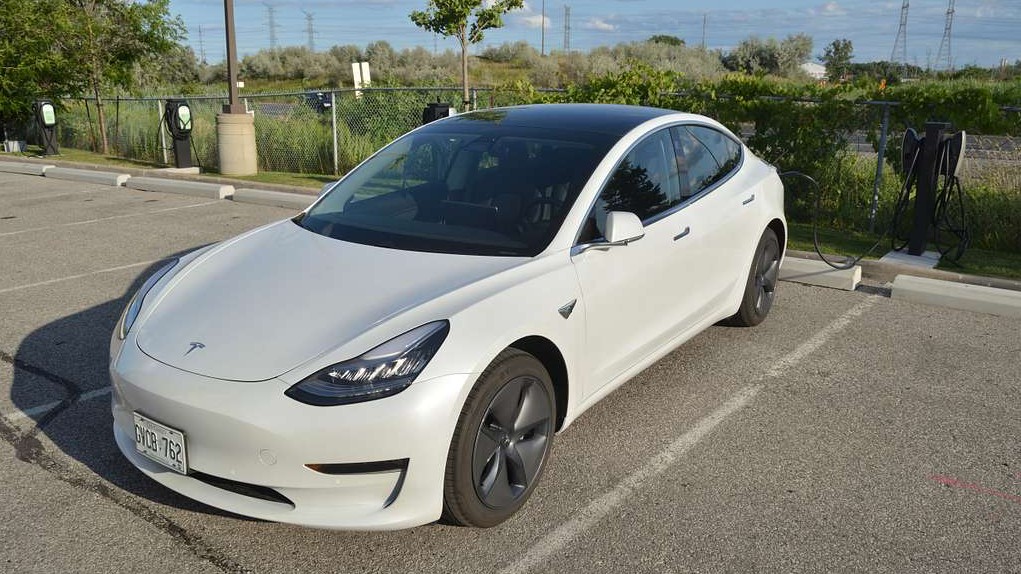
New Tesla Model 2 Cabin Cuts $20,990 YL, 53kWh LFP & 400km Range: The electric vehicle (EV) market is evolving faster than ever, and Tesla is once again at the center of attention. While the company recently introduced the Model Y L, industry watchers believe the premium SUV is doing more than expanding Tesla’s lineup—it may be revealing the blueprint for what the rumored Tesla Model 2 could become.
Although Tesla has not officially confirmed the Model 2, numerous reports, leaks, and industry expectations suggest the company is developing an affordable electric car aimed at a price of around $20,990. Rumors also point to a 53kWh LFP battery, an estimated 400km driving range, and a simplified cabin focused on maximizing manufacturing efficiency.
If these expectations prove accurate, the upcoming entry-level Tesla could redefine the affordable EV segment while helping the company compete against rapidly growing rivals such as BYD.
Why the Tesla Model Y L Could Be the Key to Understanding the Model 2
At first glance, the Tesla Model Y L appears to be a premium family SUV designed for buyers who prioritize comfort and practicality. It reportedly features a six-seat 2+2+2 captain’s chair configuration, a longer wheelbase, dedicated climate control for rear passengers, and several upscale interior upgrades.
However, many analysts believe the vehicle serves another purpose—it highlights exactly which features Tesla considers “premium.” Those same features are the ones most likely to disappear in a lower-cost vehicle like the rumored Tesla Model 2.
Because every additional component increases production costs, removing luxury equipment allows Tesla to dramatically reduce manufacturing expenses without compromising the vehicle’s safety or core functionality.
Premium Features That May Not Reach the Tesla Model 2
Extended Wheelbase and Spacious Cabin
The Model Y L reportedly stretches its wheelbase by approximately six inches, creating significantly more room for second and third-row passengers.
A future budget-friendly Tesla Model 2 is expected to take the opposite approach. Instead of maximizing passenger space, Tesla will likely focus on a compact footprint that requires fewer materials and occupies less factory space during production.
Smaller vehicles are also lighter, improving efficiency while lowering battery costs.
Captain’s Chairs vs. Standard Bench Seats
Another standout feature is the 2+2+2 seating layout.
Captain’s chairs improve passenger comfort and make it easier to access the third row, but they also require:
- Additional structural supports
- More interior trim pieces
- Higher manufacturing complexity
- Increased assembly time
Industry expectations suggest the rumored Model 2 would instead use a traditional five-seat bench configuration, helping Tesla reduce costs while maintaining practicality for everyday drivers.
Simplified Climate Control
The Model Y L reportedly includes dedicated B-pillar and C-pillar air vents, providing better airflow to rear passengers.
These vents require extra ducting, plastic components, seals, and installation time.
For a vehicle expected to target the entry-level EV market, Tesla will likely adopt a single centralized HVAC system, reducing manufacturing complexity without affecting basic cabin comfort.
Tesla’s Cost-Cutting Strategy Isn’t About Removing Quality
One of the biggest misconceptions surrounding an affordable Tesla is that it would simply be a “cheap” car.
Instead, Tesla’s strategy appears focused on eliminating unnecessary complexity.
Rather than sacrificing structural integrity or battery technology, Tesla is expected to simplify items such as:
- Interior trim
- Premium upholstery
- Multiple display screens
- Additional speakers
- Luxury storage features
- Decorative cabin materials
This approach allows Tesla to preserve its engineering standards while dramatically lowering production costs.
Giga Texas and the “Unboxed” Manufacturing Revolution
Perhaps the most important piece of the puzzle isn’t the vehicle itself—it’s how Tesla plans to build it.
At Giga Texas, Tesla has been developing what it calls the Unboxed Manufacturing Process, a radically different production method aimed at making EV assembly faster, cheaper, and more efficient.
Traditional car manufacturing follows a linear process where one vehicle shell moves through every stage of production.
Tesla’s new concept reportedly divides the vehicle into multiple large sub-assemblies that can be built simultaneously before being joined together in a final assembly step.
This parallel manufacturing system could deliver several advantages:
- Reduced factory footprint
- Shorter production times
- Lower labor costs
- Improved manufacturing efficiency
- Higher production capacity
For a vehicle rumored to cost around $20,990, these manufacturing innovations may be just as important as the vehicle’s battery or design.
Cybercab’s Minimalist Philosophy Could Shape the Model 2
Tesla’s futuristic Cybercab project also provides clues about the company’s long-term design direction.
Although the autonomous Cybercab removes the steering wheel and pedals entirely, many of its design ideas could influence future consumer vehicles.
Analysts expect the Tesla Model 2 to feature:
- Minimal dashboard design
- Central touchscreen interface
- Reduced physical buttons
- Simplified wiring architecture
- Fewer decorative interior components
The goal isn’t simply creating a futuristic appearance—it is reducing production costs while improving assembly efficiency.
Tesla’s Financial Strategy Is Driving Every Design Decision
The rumored Tesla Model 2 is not just about creating a cheaper electric vehicle—it’s about protecting Tesla’s long-term profitability. While Tesla continues to deliver hundreds of thousands of EVs every quarter, investors are paying close attention to profit margins, not just delivery numbers.
Price cuts, financing incentives, and increasing competition have put pressure on the company’s automotive earnings. This is why analysts believe Tesla is aggressively pursuing manufacturing simplification rather than simply lowering prices.
Every component removed from a vehicle can save money when produced at scale. A single omitted speaker, simplified seat design, or reduced amount of sound insulation may only save a few dollars per vehicle, but across millions of cars, those savings become significant.
This strategy could allow Tesla to introduce an affordable EV without sacrificing its overall business performance.
BYD Is Forcing Tesla to Build a Lower-Cost EV
One of the biggest reasons behind the rumored Tesla Model 2 is the rapid rise of BYD.
The Chinese automaker has become one of Tesla’s strongest competitors by producing affordable electric vehicles supported by its vertically integrated battery business. By manufacturing many of its own components, BYD has been able to keep prices highly competitive across global markets.
To remain competitive, Tesla is expected to focus on three priorities:
- Lower production costs
- Higher manufacturing efficiency
- Simplified vehicle design
Industry observers believe these priorities explain why the upcoming entry-level Tesla is expected to adopt a minimalist approach rather than trying to match premium models feature-for-feature.
Hardware Still Matters More Than Software
Tesla is well known for delivering over-the-air (OTA) software updates, adding new features and improving vehicle performance long after purchase.
However, software cannot replace physical hardware.
Recent discussions surrounding Hardware 3 (HW3) and Full Self-Driving (FSD) have reminded buyers that processing power, cameras, sensors, and other physical components ultimately determine what a vehicle can do.
For the rumored Model 2, this means buyers should evaluate the car based on the hardware it includes at launch instead of expecting future software updates to add missing physical features.
Software can improve:
- Navigation
- Energy management
- User interface
- Driver assistance refinements
Software cannot add:
- Extra air vents
- Premium speakers
- Additional displays
- Sound insulation
- Luxury seating
Understanding this distinction will be important if Tesla introduces a highly simplified entry-level EV.
Expected Tesla Model 2 Specifications (Rumored)
Although Tesla has not officially announced the Model 2 or confirmed its specifications, industry rumors and analyst expectations frequently mention the following targets:
| Feature | Rumored Specification |
|---|---|
| Estimated Starting Price | Around $20,990 |
| Battery | 53kWh LFP |
| Estimated Range | Approximately 400km |
| Seating | Five passengers |
| Drive Layout | Expected Rear-Wheel Drive |
| Interior | Minimalist cabin |
| Manufacturing | Expected to benefit from Giga Texas production innovations |
These details should be viewed as expectations rather than confirmed specifications until Tesla makes an official announcement.
Model Y L vs. Rumored Tesla Model 2
| Feature | Tesla Model Y L | Rumored Tesla Model 2 |
|---|---|---|
| Price | Around $61,990 | Around $20,990 (Expected) |
| Seating | Six-seat configuration | Five-seat layout |
| Wheelbase | Extended | Compact |
| Climate Control | Multi-zone | Simplified HVAC |
| Interior | Premium materials | Minimalist design |
| Manufacturing | Giga Texas | Expected Giga Texas production |
The comparison highlights Tesla’s expected strategy of separating premium comfort from essential functionality.
Should You Wait for the Tesla Model 2?
If Tesla delivers an affordable EV close to the rumored pricing, it could become one of the most disruptive electric vehicles ever produced.
Potential buyers looking for:
- Affordable EV ownership
- Tesla software ecosystem
- Low operating costs
- Modern battery technology
may find the Model 2 particularly appealing.
However, buyers wanting premium comfort, luxury materials, larger interiors, and advanced convenience features may still prefer higher-end models such as the Model Y.
Frequently Asked Questions
Is the Tesla Model 2 officially confirmed?
No. At the time of writing, Tesla has not officially announced the Model 2. Most specifications currently circulating online are based on industry rumors, analyst expectations, and media reports.
Will the Tesla Model 2 cost around $20,990?
That figure has been widely discussed by analysts and online reports, but Tesla has not confirmed an official price.
Will it use a 53kWh LFP battery?
A 53kWh LFP battery is one of the commonly reported expectations, but Tesla has not verified this specification.
Where could the Model 2 be built?
Many analysts expect Tesla to leverage manufacturing innovations at Giga Texas, particularly elements of its Unboxed Manufacturing Process, although Tesla has not officially confirmed production plans.
Final Thoughts
The launch of the Tesla Model Y L has sparked widespread discussion about Tesla’s future product strategy. While the SUV showcases premium comfort and upscale features, many industry observers believe it also hints at the trade-offs that could make a more affordable Tesla possible.
If the rumors prove accurate, the Tesla Model 2 could combine a 53kWh LFP battery, an estimated 400km driving range, and a starting price near $20,990 with a streamlined, minimalist cabin built using next-generation manufacturing techniques. At the same time, it’s important to remember that these details remain rumors and expectations, not confirmed specifications.
Whether or not every rumored feature becomes reality, Tesla’s apparent focus on cost-efficient engineering, simplified design, and innovative production methods could reshape the affordable EV market. If the company succeeds, the Model 2 may become the vehicle that brings Tesla ownership within reach of millions of new drivers while intensifying competition across the global electric vehicle industry.
FAQs
1. Is the Tesla Model 2 officially confirmed?
No. Tesla has not officially announced the Tesla Model 2. Most information currently available is based on industry rumors, analyst reports, patent filings, and expectations rather than confirmed specifications.
2. What is the expected price of the Tesla Model 2?
According to various rumors and industry expectations, the Tesla Model 2 could start at around $20,990. However, Tesla has not confirmed an official price.
3. What battery is the Tesla Model 2 expected to use?
Rumors suggest the Model 2 could feature a 53kWh Lithium Iron Phosphate (LFP) battery, offering lower production costs, improved durability, and enhanced safety compared to some other battery chemistries.
4. What will be the estimated driving range of the Tesla Model 2?
Industry speculation points to an estimated 400km (approximately 250 miles) of driving range on a full charge, although Tesla has not released official figures.
5. Why is Tesla simplifying the Model 2’s cabin?
Analysts believe Tesla aims to reduce manufacturing costs by eliminating unnecessary luxury features while maintaining safety, efficiency, and core driving performance. This could help make the vehicle more affordable.
6. What premium features might be removed from the Tesla Model 2?
Expected cost-saving measures may include:
- Standard bench seating instead of captain’s chairs
- Simpler climate control system
- Fewer interior trim pieces
- Reduced sound insulation
- Minimalist dashboard design
- Fewer physical buttons and displays
7. Will the Tesla Model 2 support Full Self-Driving (FSD)?
Tesla has not confirmed which driver-assistance hardware or software will be included. Availability of Full Self-Driving (FSD) features will depend on the final hardware configuration and regional regulations.
8. What is Tesla’s Unboxed Manufacturing Process?
The Unboxed Manufacturing Process is Tesla’s next-generation production method that assembles major vehicle sections separately before joining them together. This approach is expected to reduce factory space, labor, production time, and manufacturing costs.
9. Where is the Tesla Model 2 expected to be manufactured?
Although Tesla has not confirmed production plans, many industry observers expect the Model 2 to benefit from manufacturing innovations developed at Giga Texas.
10. How does the Tesla Model Y L relate to the Tesla Model 2?
Many analysts believe the premium Model Y L demonstrates which comfort features Tesla considers optional. Those premium additions could help identify the features most likely to be simplified or removed in a lower-cost Model 2.
11. Will the Tesla Model 2 compete with BYD?
Yes. If launched, the Model 2 would likely compete directly with affordable electric vehicles from BYD and other manufacturers offering budget-friendly EVs in global markets.
12. Will software updates add missing hardware features later?
No. While Tesla’s over-the-air software updates can improve navigation, efficiency, and user experience, they cannot add physical hardware such as extra speakers, additional air vents, or larger displays that were not installed at the factory.
13. Who is the Tesla Model 2 designed for?
The rumored Model 2 is expected to target first-time EV buyers, commuters, urban drivers, and customers seeking an affordable Tesla with modern technology rather than premium luxury features.
14. When could the Tesla Model 2 launch?
Tesla has not announced an official launch date. Various reports speculate that more information could emerge in the coming years, but any timeline remains unconfirmed.
15. Should you wait for the Tesla Model 2?
If you’re looking for an affordable Tesla and are comfortable waiting for an official announcement, the Model 2 may be worth watching. However, because its pricing, specifications, and release date remain unconfirmed, buyers should base purchasing decisions on currently available vehicles rather than rumors alone.
Read More:
- Elon Musk says your Tesla will start to learn your individual preferences
- Tesla Diner is throwing a birthday party with a Franz-signed special treat
- Elon Musk sheds details on Tesla FSD’s upcoming improvements
- Elon Musk debunks $52 billion SpaceX-NVIDIA GPU deal
- SpaceX adjusts Starship Flight 13 test launch target date once again
1 thought on “IT’S HERE! New Tesla Model 2 Cabin Cuts $20,990 YL, 53kWh LFP & 400km Range”