
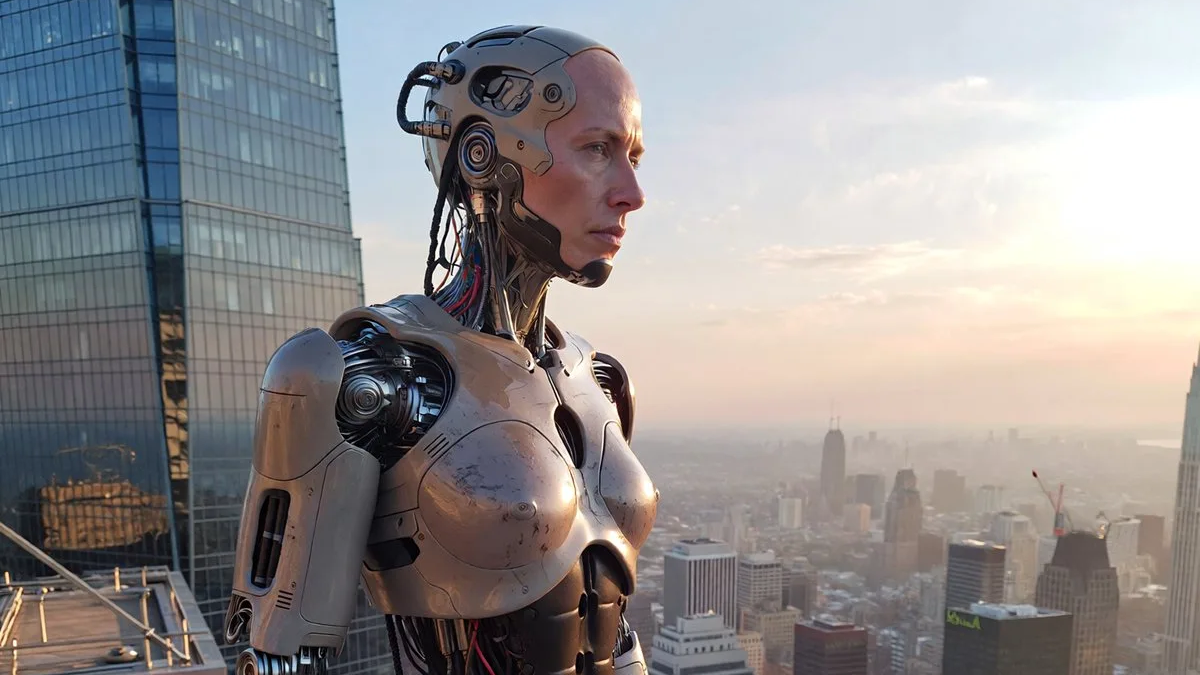
New Elon Musk’s Tesla Bot Optimus Gen 3 Capabilities LEAKED: Tesla is preparing for a major transformation in humanoid robotics with the upcoming Tesla Optimus Gen 3, a next-generation robot designed to perform a wide variety of household, industrial, and commercial tasks. According to the design insights and hardware developments described in recent reports, the new Optimus generation could introduce significant improvements in robotic hands, artificial intelligence, battery efficiency, physical appearance, and autonomous operation.
Elon Musk has repeatedly emphasized the potential of humanoid robots to change everyday life. From helping elderly people and preparing meals to cleaning homes and performing repetitive factory work, Optimus is being developed to handle tasks that traditionally require human labor.
Tesla is also reportedly preparing to increase production, with existing manufacturing facilities being adapted to support the new robot. If the company’s ambitious plans succeed, Optimus Gen 3 could become an important step toward mass-market humanoid robotics.
1. Tesla Optimus Gen 3 Features a Completely Refined Design
One of the most noticeable improvements in Tesla Optimus Gen 3 is its refined exterior. Compared with earlier prototypes, the new design reportedly features smoother body panels, concealed mechanical components, and more natural human-like proportions.
Sleeker Appearance and Improved Durability
Earlier Optimus versions displayed exposed joints, visible wiring, and mechanical components. The newer design aims to eliminate these elements with a cleaner exterior shell.
The hips, knees, and ankles have reportedly been redesigned to create more natural contours. Previous metallic gold leg components have also been replaced with a matte black finish, giving the robot a more polished appearance.
These changes are not purely cosmetic. Covering moving components can help protect sensitive mechanisms from dust, debris, and accidental contact with nearby objects.
This is particularly important when a humanoid robot operates in factories, warehouses, and residential environments. Improved durability and reliability will be essential if Tesla wants Optimus to work for thousands of hours.
Advanced Arm Architecture
Tesla has also reportedly redesigned the robot’s arms, introducing slimmer wrists and larger forearms.
By relocating complex drive mechanisms into the forearms, the design can resemble the way human muscles and tendons move the hands. This arrangement could reduce rotational inertia and improve precision during delicate movements.
Such improvements would help Optimus perform tasks that require controlled movements, including picking up small objects, handling tools, and manipulating household items.
2. Revolutionary Robotic Hands With 22 Degrees of Freedom
The hands are among the most technically challenging components of a humanoid robot. Tesla has reportedly developed an advanced hand system for Optimus Gen 3 featuring 22 degrees of freedom, compared with 11 in Gen 2 and 20 in Gen 2.5, according to the supplied design information.
Degrees of freedom describe the independent ways a mechanism can move. More degrees of freedom can provide greater flexibility, although real-world performance also depends on control software, sensors, and mechanical design.
Human-Like Dexterity for Complex Tasks
With more independent control over finger movement, thumb positioning, and grip adjustments, Optimus could handle a broader range of objects.
Potential applications include lifting boxes in warehouses, sorting components on factory floors, opening bottles, preparing ingredients, and handling fragile glassware.
The ultimate objective is to create robotic hands that can perform tasks requiring both strength and precision.
3D Tactile Sensors for Sensitive Handling
Another important development involves advanced 3D tactile sensors. Patent applications described in the supplied material point toward efforts to improve the robot’s ability to detect contact and pressure.
Sensors distributed across the fingertips and palms could help Optimus determine how firmly it is holding an object. The robot could then adjust its grip in response to changing conditions.
For example, lifting a heavy box requires a secure grip, while holding an egg requires minimal pressure. Tactile feedback could help the robot distinguish between these situations.
However, the precise capabilities of the final production hands will depend on the hardware and software Tesla ultimately deploys.
3. AI5 Chip and Grok Integration Could Transform Optimus
A sophisticated humanoid robot needs more than mechanical strength. It must understand its surroundings, recognize objects, maintain balance, and decide how to complete tasks.
Tesla’s reported plans for AI5 computing hardware could play an important role in advancing these capabilities.
More Powerful Onboard Computing
The supplied specifications project that AI5 could deliver approximately eight times the computing power, more than nine times the memory capacity, and five times the memory bandwidth of AI4.
These figures should be treated as projections rather than independently confirmed production specifications.
If achieved, greater onboard computing capacity could help Optimus process visual information, map its environment, recognize objects, and coordinate movements with lower dependence on external computing resources.
AI5 mass production has been projected for 2027 in the supplied material, but actual availability and integration timelines remain subject to confirmation.
Natural Language Communication
Integration with conversational AI systems, potentially including Grok, could allow Optimus to respond to more complex spoken instructions.
Instead of programming every action individually, users might eventually give commands such as, “Clean the kitchen counter and place the dishes in the dishwasher.”
The robot would need to interpret the instruction, identify relevant objects, plan a sequence of actions, and execute the task safely.
Combining artificial intelligence with physical dexterity could make humanoid robots more useful in homes and workplaces. Nevertheless, dependable real-world performance will require extensive training, testing, and safety validation.
4. Tesla Optimus Gen 3 Battery and Autonomous Charging
Battery efficiency is another essential factor in developing a commercially practical humanoid robot.
According to the supplied information, Optimus Gen 3 could use a 2.3 kWh battery pack based on Tesla’s 4680 battery cells, potentially replacing an earlier LFP-based configuration.
The reported design aims to reduce weight and manufacturing costs while extending operating time. The claimed improvement of approximately 40% has not been independently confirmed.
How Long Could Optimus Operate?
The supplied estimates place the robot’s weight at approximately 125 pounds (57 kilograms).
Its projected operating time is around six to eight hours during routine tasks, potentially decreasing to approximately five hours under demanding lifting workloads. Actual endurance would depend on movement intensity, payload, environment, and battery configuration.
Automatic Charging Technology
Autonomous charging could make Optimus more practical for continuous workplace operations.
The robot is expected to detect low battery levels, navigate to a designated charging station, and connect through a rear-mounted charging port.
The proposed recharge period is approximately one to two hours, although actual charging performance remains to be verified.
If successfully implemented, automatic battery management could allow Optimus to recharge without constant human supervision.
5. Tesla Optimus Production Plans and Expected Price
Tesla’s strategy reportedly involves deploying early Optimus units inside its own factories before expanding commercial availability.
Internal deployment would allow Tesla to collect real-world training data, identify mechanical weaknesses, and improve the robot’s ability to complete repetitive industrial tasks.
Existing production infrastructure in Fremont is reportedly being adapted for Gen 3 manufacturing, with ambitions to increase output substantially over time.
The long-term production target described in the supplied material is up to one million robots annually. This is an ambitious goal, not a confirmed current production rate.
How Much Will Tesla Optimus Gen 3 Cost?
Elon Musk has discussed a long-term target price of approximately $20,000 to $30,000 for humanoid robots. However, that target should not be confused with an announced retail price for Optimus Gen 3.
The supplied estimates suggest that early commercial models equipped with advanced hands and AI5 hardware could cost between $60,000 and $80,000.
These figures remain projections rather than confirmed prices. Production volume, component costs, software capabilities, and manufacturing efficiency will influence the eventual cost.
6. Tesla’s Unboxed Manufacturing Revolution
Tesla’s broader manufacturing strategy could also influence the production of future vehicles, including the Cybercab.
Parallel Assembly With the Unboxed Process
Traditional automotive manufacturing typically moves vehicles through a sequential assembly line. Tesla’s proposed Unboxed manufacturing process divides a vehicle into large modules that can be assembled in parallel.
These modules may include the front and rear sections, side structures, roof, and structural battery floor.
Parallel assembly could reduce factory space requirements, simplify certain production operations, and lower labor costs. However, the claimed reductions of 40% in floor space and 30% in labor costs depend on successful implementation and should be treated as projected benefits.
Large Giga Presses and Advanced Materials
The supplied material also describes exceptionally large casting systems intended to produce major vehicle structures as integrated components.
The reported 50,000-ton clamping-force figure is an ambitious specification that requires independent verification before being treated as an established production capability.
Tesla’s manufacturing research also includes reaction injection molding, which could enable colored exterior components to be produced with less reliance on conventional painting. Such methods may reduce certain production steps and associated volatile organic compound emissions, depending on the materials and process used.
Rare Earth-Free Electric Motors
Another reported development involves a compact electric drive unit designed without rare-earth elements such as neodymium and dysprosium.
Reducing dependence on these materials could improve supply-chain flexibility and lower exposure to price fluctuations. The supplied projections describe a motor that is 18% smaller, 25% lighter, and designed for a 10-second production cycle.
These figures remain subject to confirmation, but the broader goal is clear: simplify manufacturing while improving efficiency and reducing material dependence.
Conclusion: Could Optimus Gen 3 Change the Future of Robotics?
The reported capabilities of Tesla Optimus Gen 3 point toward a major evolution in humanoid robotics. Refined bodywork, more dexterous hands, tactile sensing, advanced onboard computing, and autonomous charging could help the robot perform increasingly complex tasks.
Tesla’s internal factory deployments may provide a practical route toward improving reliability before wider commercial adoption. Meanwhile, its manufacturing innovations could support the company’s broader ambition to produce robots and electric vehicles at greater scale.
However, many of the specifications, prices, production targets, and performance estimates discussed here remain unconfirmed or projected.
If Tesla can turn these ambitions into reliable, affordable products, Optimus could become a significant development in industrial automation and household robotics. The real test will be whether it can safely perform useful tasks consistently, at a cost that makes commercial adoption worthwhile.
FAQs
1. What is Tesla Optimus Gen 3?
Tesla Optimus Gen 3 is a next-generation humanoid robot being developed by Tesla to perform tasks in factories, warehouses, and potentially homes. It is designed to combine artificial intelligence, human-like movement, advanced robotic hands, and autonomous operation.
2. What are the main features of Tesla Optimus Gen 3?
The reported features of Optimus Gen 3 include a refined exterior design, 22-degree-of-freedom robotic hands, tactile sensors, advanced AI computing, improved battery efficiency, and autonomous charging capabilities. Final production specifications have not all been confirmed.
3. How many degrees of freedom do Tesla Optimus Gen 3 hands have?
According to the supplied design information, Optimus Gen 3 features 22 degrees of freedom in its robotic hands. This could provide greater flexibility for handling tools, lifting objects, and performing delicate tasks.
4. How are Optimus Gen 3’s hands different from previous versions?
The reported Gen 3 hands offer more degrees of freedom than the 11-degree-of-freedom hands of Gen 2 and the 20-degree-of-freedom design attributed to Gen 2.5. The improvements aim to deliver better dexterity, grip control, and precision.
5. Can Tesla Optimus Gen 3 handle fragile objects?
The robot is being developed with advanced tactile sensing and grip control that could help it handle delicate objects, including eggs, bottles, and glassware. Its actual ability to perform these tasks reliably will depend on the final hardware and software.
6. What AI chip will Tesla Optimus Gen 3 use?
The supplied information indicates that Tesla plans to integrate its AI5 chip into Optimus Gen 3. The proposed computing hardware is intended to support object recognition, spatial awareness, balance, and real-time task planning.
7. Will Tesla Optimus Gen 3 integrate with Grok?
Potential integration with Grok or other conversational AI systems could allow Optimus to understand natural-language instructions and communicate more naturally. The exact software integration and capabilities of a production version remain subject to confirmation.
8. How long can Tesla Optimus Gen 3 operate on a single charge?
The supplied projections estimate approximately six to eight hours of operation during routine tasks and around five hours during demanding lifting activities. Actual battery life will depend on workload, movement, and operating conditions.
9. What battery will Tesla Optimus Gen 3 use?
The reported configuration includes a 2.3 kWh battery pack using Tesla’s 4680 battery cells. This configuration is expected to balance energy capacity, weight, and operating efficiency, although the final production battery specifications have not been independently confirmed.
10. Can Tesla Optimus Gen 3 recharge itself automatically?
The proposed design includes autonomous charging capabilities. Optimus could detect a low battery level, navigate to a charging station, and connect through a dedicated charging port without requiring constant human assistance.
11. How much will Tesla Optimus Gen 3 cost?
The supplied estimates suggest that early commercial versions could cost between $60,000 and $80,000, while Elon Musk’s long-term target for humanoid robots has been discussed in the $20,000–$30,000 range. Tesla has not confirmed a final retail price for Optimus Gen 3.
12. When will Tesla Optimus Gen 3 be available commercially?
Tesla’s rollout plans involve using robots internally to improve their capabilities before broader commercial deployment. The exact commercial release date for Optimus Gen 3 has not been definitively confirmed, and timelines may change as development progresses.
13. How many Tesla Optimus robots does the company plan to produce?
The reported long-term ambition is to reach production of up to one million robots annually. This is a future target rather than a confirmed current production capacity, and achieving it will require substantial manufacturing expansion.
14. Can Tesla Optimus Gen 3 perform household tasks?
Optimus is being developed with the potential to perform household tasks such as cleaning, preparing food, organizing objects, and assisting with everyday activities. Reliable home use will require further improvements in safety, dexterity, and autonomous decision-making.
15. How could Tesla’s Unboxed manufacturing process improve production?
Tesla’s proposed Unboxed manufacturing process assembles major vehicle sections in parallel rather than relying entirely on a traditional sequential assembly line. It could reduce factory space requirements, simplify production, and lower costs if the projected efficiencies are achieved.
16. Could Tesla Optimus Gen 3 transform the future of robotics?
Tesla Optimus Gen 3 could significantly influence the future of robotics if it becomes reliable, safe, and affordable. Advanced robotic hands, AI computing, autonomous charging, and large-scale manufacturing could expand its use in factories and eventually homes. Its real-world impact will depend on demonstrated performance, production costs, and commercial availability.
Read More:
- Tesla Roadster owners to get “Flying Stunt Mode” and looping track access
- The Real Reason Starship Has 33 Engines
- Tesla Reveals Major New Optimus Robot Update 2027
- I Tried The NEW 2026 Tesla Pi Phone For UNDER $357
- SpaceX revealed New Breakthrough Upgrade on Raptor 3 Engine in 2026 Totally Ahead of Time