
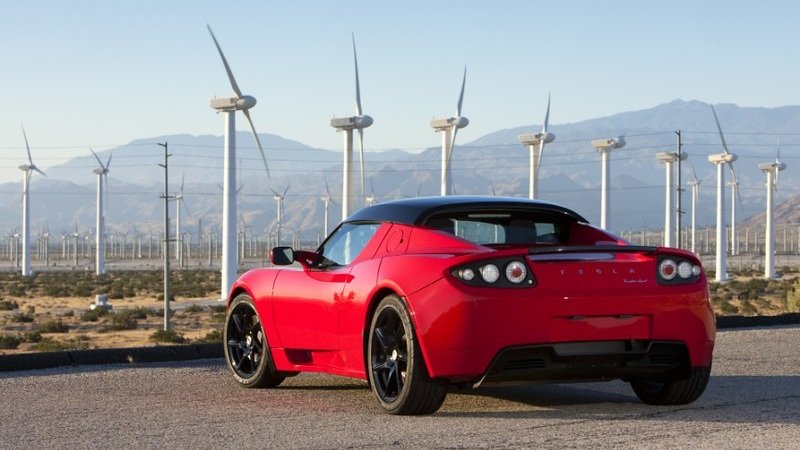
Tesla’s INSANE Roadster Flying Tech EXPOSED: The Tesla Roadster has long been one of the most anticipated vehicles in the automotive industry. First unveiled by Elon Musk in November 2017, the second-generation Roadster promised extraordinary acceleration, impressive driving range, and groundbreaking performance. However, years of delays have raised questions about whether Tesla could turn these ambitious promises into reality.
Now, a series of dramatic demonstrations has reignited excitement surrounding the Tesla Roadster’s flying technology, SpaceX-inspired propulsion, and next-generation performance engineering. During a recent company event, a prototype appeared to climb a curved ramp, travel upside down, separate from a structure, stabilize itself using gas thrusters, and perform an aerial rotation.
Although these demonstrations have not established independently certified flight capabilities, they highlight Tesla’s ambitious approach to combining automotive engineering with aerospace technology. With 2028 targeted for production, the Roadster could become one of the most technologically unusual electric sports cars ever developed.
Tesla Roadster Flying Technology: What Was Revealed?
The most attention-grabbing part of the demonstration was the Roadster’s apparent ability to perform movements beyond conventional automotive capabilities. Instead of relying exclusively on tires, suspension, and aerodynamic downforce, the concept incorporates technologies designed to influence the vehicle’s movement through external forces.
The demonstration featured a curved ramp, an upside-down maneuver, and a brief airborne sequence. These movements raised questions about how Tesla intends to combine electric propulsion, active aerodynamics, and rocket-inspired systems in a road-going vehicle.
However, it is important to distinguish a controlled demonstration from a fully validated production capability. Independent testing will be necessary to establish the vehicle’s actual operating limits, safety performance, and repeatability.
Can the Tesla Roadster Actually Fly?
The term flying Tesla Roadster describes the vehicle’s ambitious thruster-assisted concepts rather than a conventional aircraft-style flight system. Cold gas thrusters can generate brief bursts of force, helping influence rotation, orientation, and movement.
These systems do not automatically provide the sustained lift required for an airplane or helicopter to remain airborne. Tesla would need to demonstrate precisely how its proposed technology works under different conditions before claims of sustained flight could be accepted.
Nevertheless, the concept represents a radical departure from traditional electric sports car engineering.
Unprecedented Power and Performance Architecture
One of the most significant claims surrounding the new Roadster involves its reported power output. Information attributed to hardware discussions suggests a powertrain capable of delivering approximately 1 megawatt, equivalent to around 1,341 horsepower.
If independently verified, this would place the Roadster among the most powerful electric performance cars ever proposed.
A Lightweight, High-Power Battery System
Delivering enormous power from a compact battery system requires advanced cell arrangements, electrical connections, cooling systems, and power electronics.
The Roadster’s reported battery architecture uses densely packaged cylindrical cells intended to maximize available space and support high power output. However, the complete battery specifications, usable energy capacity, and peak discharge rates have not been fully established through independent testing.
Tesla’s original 2017 announcement included a proposed 200 kWh battery pack and a claimed range of approximately 620 miles. More recent discussions have suggested a possible range closer to 300 miles for certain configurations, although a final, verified production specification remains unavailable.
This distinction matters because maximum acceleration and long-distance driving range are different engineering challenges. A battery capable of releasing substantial energy for a short burst must also manage heat, efficiency, and durability during ordinary driving.
SpaceX-Inspired Propulsion: Cold Gas Thrusters
The Roadster’s proposed cold gas thruster system is one of its most unusual engineering features. Drawing inspiration from SpaceX aerospace technology, the system is intended to introduce controlled bursts of force into a vehicle traditionally designed around tire traction.
According to descriptions of the concept, the setup could incorporate as many as 10 thrusters supplied by approximately 600 liters of compressed gas.
How Cold Gas Thrusters Work
Cold gas propulsion operates by releasing pressurized gas through a nozzle. As the gas moves in one direction, it generates thrust in the opposite direction.
By coordinating several nozzles, engineers can produce forces that influence a vehicle’s orientation and rotational movement. This principle is used in spacecraft attitude-control systems, where precise positioning is essential.
For the Roadster, potential applications include:
- Acceleration assistance: Providing additional thrust during short performance demonstrations.
- Rotation control: Helping manage the vehicle’s orientation during specialized maneuvers.
- Airborne stabilization: Potentially influencing pitch or rotation during a brief jump.
- Performance experimentation: Exploring how aerospace technology might expand the capabilities of an electric vehicle.
Tesla has also discussed the possibility of replenishing the compressed gas supply over time. The practical implementation, energy requirements, operating duration, and maintenance needs remain important unanswered questions.
Most importantly, thruster-assisted movement is not the same as sustained powered flight. Independent testing would need to establish the system’s thrust, operating envelope, reliability, and safety.
Fan-Based Suction and Ground-Effect Technology
Another unusual feature associated with the Roadster is its proposed fan-based suction system. Unlike conventional aerodynamic downforce, which depends primarily on airflow over a vehicle’s body, active suction uses fans to create a pressure difference between the car and the surface beneath it.
How Active Suction Could Improve Grip
If properly engineered, a fan-based system could increase the force pressing the vehicle toward the road. Additional normal force can improve the available tire traction, depending on tire characteristics and surface conditions.
Reports surrounding the demonstration referenced a claimed suction force of approximately 2G. However, this figure should not be interpreted as proof that the Roadster can maintain 2G cornering forces on every road or attach itself safely to any ceiling.
Actual performance would depend on fan capacity, sealing, vehicle speed, surface irregularities, power consumption, and the design of the complete system.
Combining active suction, aerodynamic controls, and cold gas thrusters could create a unique performance package. Yet each technology must work reliably alongside the vehicle’s brakes, tires, suspension, and electronic stability systems.
Tesla Roadster 0–60 MPH in 0.81 Seconds?
Perhaps the most extraordinary performance claim associated with the Roadster is a potential 0–60 mph acceleration time of 0.81 seconds.
At 60 mph, a vehicle travels approximately 26.8 meters per second. Reaching that speed from rest in 0.81 seconds would imply an average acceleration of roughly 3.4 times the acceleration due to gravity, assuming a standing start and idealized timing.
Such a result would be exceptional for a passenger vehicle.
Can the Acceleration Claim Be Verified?
Traditional electric sports cars depend on motor torque, battery output, tire grip, and weight transfer to accelerate rapidly. If the Roadster uses thrusters to generate additional force, its acceleration characteristics could differ from those of conventional EVs.
However, the claimed time should not be treated as an independently verified production specification. Confirmation would require controlled testing, documented vehicle configurations, standardized timing procedures, and repeatable results.
Real-world acceleration depends on more than horsepower alone. Tire compounds, road conditions, battery temperature, vehicle weight, and the precise testing method can all influence the outcome.
Tesla Roadster Models and Performance Configurations
The proposed Roadster lineup has been described in several performance tiers, although final production specifications and availability remain subject to confirmation.
1. Standard Roadster
The standard configuration is positioned as the foundation of the lineup. Reported targets include approximately 1 megawatt of power and 960 lb-ft of torque.
Its final range, acceleration, and equipment will need to be confirmed through official production specifications.
2. Performance Roadster
The Performance version is described as potentially incorporating enhanced torque vectoring, active suspension, and ground-effect suction fans.
These technologies could improve handling and stability, particularly during high-speed driving or track use.
3. Thrust Roadster
The proposed Thrust configuration adds cold gas propulsion hardware, reportedly including four rear-mounted thruster nozzles.
Its stated goal is extreme acceleration and specialized performance capabilities. The actual benefits, operating restrictions, and production readiness have yet to be independently demonstrated.
4. Rocket Roadster
The most ambitious concept is the invitation-only Rocket configuration. Descriptions have included a single-seat layout, up to 10 thrusters, and additional compressed-gas storage.
This version represents the most experimental interpretation of the Roadster vision. Its proposed hovering or flight-oriented capabilities should be regarded as unverified concepts rather than established production features.
Reported reservation deposits have ranged from approximately $50,000 for performance-oriented configurations to $250,000 for a Thrust configuration. Final retail pricing and the availability of the most extreme versions remain unconfirmed.
Tesla Roadster Production Target: The Road to 2028
Despite the excitement surrounding the technology, manufacturing remains one of Tesla’s biggest challenges.
Building a prototype that performs a dramatic demonstration is very different from producing thousands of vehicles with consistent quality, durability, and regulatory compliance.
Major Challenges Before Production
Tesla must finalize the vehicle’s design, validate manufacturing equipment, secure specialized components, and establish repeatable quality-control procedures.
The addition of high-pressure gas storage vessels and aerospace-inspired propulsion systems introduces further engineering and certification challenges. These components must operate safely alongside a high-voltage battery, passenger compartment, and conventional vehicle safety systems.
The company will also need to demonstrate that any specialized performance features can withstand repeated use without compromising reliability.
Since the second-generation Roadster was first announced in 2017, expectations have continued to evolve. The 2028 production target is an ambitious goal, not a guaranteed delivery date.
Conclusion: Will Tesla Turn Flying Car Technology Into Reality?
The Tesla Roadster’s flying technology represents one of the most ambitious ideas in modern electric vehicle engineering. Its proposed combination of extreme electric power, SpaceX-inspired cold gas thrusters, active suction fans, and advanced vehicle controls could create a performance machine unlike conventional sports cars.
However, extraordinary demonstrations and engineering claims must eventually be supported by independently verified results. Questions about battery capacity, practical driving range, acceleration, propulsion safety, regulatory approval, and mass production remain essential.
If Tesla successfully transforms these experimental ideas into a safe, reliable, road-legal vehicle, the Roadster could establish a remarkable new benchmark for electric performance.
Until production vehicles are independently tested and delivered, however, the Tesla Roadster remains a bold engineering promise whose most extraordinary capabilities still require proof.
FAQs
1. What is the new Tesla Roadster flying technology?
The Tesla Roadster flying technology refers to proposed aerospace-inspired features, including cold gas thrusters and active suction fans. These systems are intended to help control vehicle movement, improve grip, and potentially enable brief airborne maneuvers. Sustained flight has not been independently verified.
2. When will the new Tesla Roadster be released?
Tesla has targeted 2028 for Roadster production. However, the date remains a target rather than a guaranteed delivery schedule, as the company must complete engineering validation, manufacturing preparation, and safety certification.
3. How much horsepower will the Tesla Roadster produce?
Reports associated with the new Roadster suggest a power output of approximately 1 megawatt, or 1,341 horsepower. The final production specifications have not been independently confirmed, so this figure should be treated as a reported target.
4. Can the Tesla Roadster actually fly?
The Roadster has been associated with demonstrations involving ramps, aerial movement, and cold gas thruster technology. However, controlling rotation or performing a brief jump is different from sustained powered flight. Independent testing would be necessary to establish its actual capabilities.
5. What are cold gas thrusters in the Tesla Roadster?
Cold gas thrusters release compressed gas through specially designed nozzles to generate force in the opposite direction. By coordinating several thrusters, the vehicle could potentially control its orientation or assist with specialized maneuvers. The technology draws inspiration from spacecraft control systems.
6. How many thrusters could the Tesla Roadster have?
Descriptions of the proposed system suggest that certain configurations could feature up to 10 cold gas thrusters. A more specialized Thrust configuration has reportedly been associated with four rear-mounted nozzles, while the proposed Rocket configuration could incorporate a larger system.
7. What is the claimed 0–60 mph acceleration time of the Tesla Roadster?
One of the most ambitious claims is a 0–60 mph time of approximately 0.81 seconds. This figure has not been established as a repeatable, independently verified production result. Controlled testing would be required to confirm the acceleration performance.
8. What battery capacity was originally announced for the Tesla Roadster?
When Elon Musk unveiled the second-generation Roadster in November 2017, Tesla announced a proposed 200 kWh battery pack and a driving range of approximately 620 miles. Final specifications for the upcoming production vehicle may differ from those original targets.
9. What is the expected driving range of the new Tesla Roadster?
The original announcement included a claimed range of around 620 miles, while later discussions have suggested approximately 300 miles for certain configurations. Tesla has not established a final, independently verified production range for every proposed version.
10. How do the Tesla Roadster’s suction fans work?
The proposed active suction system uses fans to create a pressure difference beneath the vehicle, increasing the force pressing it toward a surface. This could potentially improve traction and stability. Its effectiveness would depend on the design, surface conditions, airflow, and operating speed.
11. Can the Tesla Roadster drive upside down?
A demonstration has been described in which the Roadster appeared to travel upside down along a specially designed curved structure. The proposed fan-based suction technology may help explain such a maneuver, but it does not establish that the vehicle can drive upside down on ordinary roads or cling to arbitrary ceilings.
12. What are the different Tesla Roadster performance versions?
The proposed configurations include the Standard, Performance, Thrust, and Rocket versions. They are described as offering progressively more specialized performance hardware, including active suspension, suction fans, and cold gas thrusters. Final equipment, availability, and pricing remain subject to confirmation.
13. How much will the new Tesla Roadster cost?
Final retail pricing for the new Roadster configurations has not been fully confirmed. Reports have referenced reservation deposits of approximately $50,000 for certain performance configurations and up to $250,000 for a Thrust configuration. Reservation deposits should not be confused with the vehicle’s final purchase price.
14. What challenges could delay Tesla Roadster production?
Potential challenges include battery performance, thermal management, specialized component manufacturing, thruster safety, regulatory certification, and production-line development. Tesla must also demonstrate that the vehicle’s advanced systems can operate reliably and safely in real-world conditions.
15. Why is the Tesla Roadster considered a revolutionary electric sports car?
The Roadster stands out because it aims to combine extreme electric acceleration, advanced battery technology, active aerodynamic systems, and SpaceX-inspired propulsion. If these technologies can be delivered safely and reliably in a production vehicle, the Roadster could redefine expectations for electric sports cars. Its most extraordinary performance claims still require independent verification.
Read More:
- Tesla Roadster owners to get “Flying Stunt Mode” and looping track access
- The Real Reason Starship Has 33 Engines
- Tesla Reveals Major New Optimus Robot Update 2027
- I Tried The NEW 2026 Tesla Pi Phone For UNDER $357
- SpaceX revealed New Breakthrough Upgrade on Raptor 3 Engine in 2026 Totally Ahead of Time