
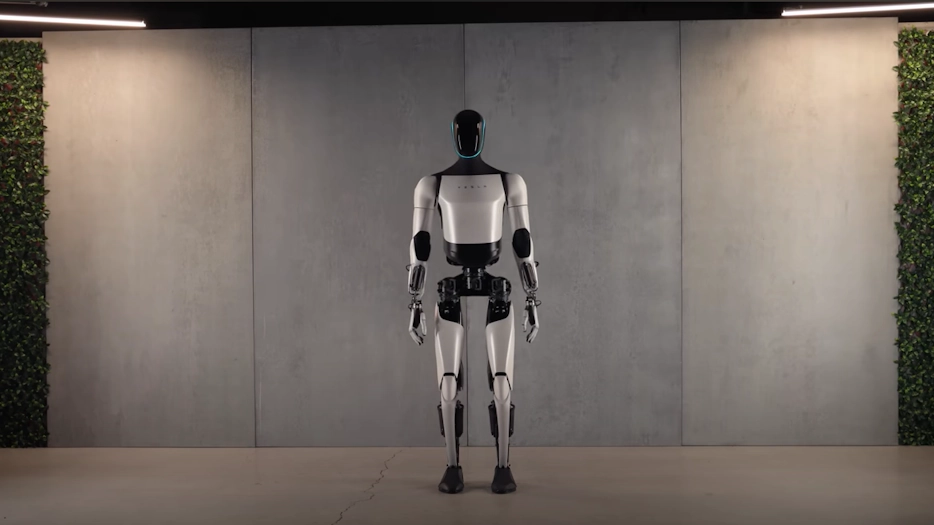
The world of robotics is no longer confined to science fiction or controlled lab environments. With the unveiling of Tesla’s third-generation humanoid robot, Optimus Gen 3, we are witnessing a pivotal shift in how machines will integrate into our daily lives. What was once an experimental concept has now entered a serious production phase, signaling a future where humanoid robots could become as common as smartphones.
By early 2026, Tesla has officially transitioned Optimus into the “S-RAMP” phase—short for scaled ramp-up production—marking a critical milestone toward mass adoption. The company’s ambitious goal is clear: make humanoid robots accessible for both industrial and household use by 2027.
This blog explores the groundbreaking capabilities of Tesla Bot Gen 3, from its unprecedented dexterity to its long-lasting battery, real-world applications, and disruptive pricing strategy.
The Breakthrough Moment: Robotics Meets Human-Like Precision
Why Gen 3 Is Being Called the “iPhone Moment” of Robotics
Every industry has a defining breakthrough moment. For smartphones, it was the iPhone. For humanoid robotics, Tesla’s Gen 3 Optimus might be that moment.
The biggest leap forward comes from one critical area: the hands.
22 Degrees of Freedom: A New Standard of Dexterity
Previous humanoid robots struggled with basic gripping tasks. Tesla has overcome this limitation by engineering hands with 22 degrees of freedom per hand—a level of articulation that closely mirrors human anatomy.
This advancement allows Optimus to perform highly delicate and complex actions, such as:
- Pressing buttons with precision
- Folding laundry smoothly
- Twisting knobs and tools
- Handling fragile objects like glass or electronics
The result is a robot that doesn’t just interact with objects—it manipulates them intelligently.
50 Actuators Powering Human-Like Movement
Behind this dexterity lies a sophisticated system of 50 actuators, functioning like a network of pulleys and muscles. These actuators enable fine motor control, allowing the robot to transition seamlessly between strength and delicacy.
This means Optimus can:
- Lift moderately heavy items
- Adjust grip strength dynamically
- Perform repetitive tasks without fatigue
AI-Powered Tactile Estimation
Instead of relying on thousands of expensive physical sensors, Tesla has taken a different approach. Optimus uses advanced AI and computer vision to estimate force and pressure.
This “tactile estimation” allows the robot to:
- Handle soft materials like fabric
- Work with sensitive electronics
- Adapt grip strength in real time
This innovation not only reduces cost but also simplifies the hardware, making large-scale production more feasible.
Solving the Biggest Challenge: Battery Life
The “10-Hour Energy Nightmare” in Robotics
One of the biggest barriers to practical humanoid robots has always been energy efficiency. A robot is only as useful as its ability to operate continuously without frequent recharging.
Tesla has tackled this challenge head-on with a completely reimagined battery system.
High-Density NMC Battery Technology
Unlike some Tesla vehicles that use LFP batteries, Optimus Gen 3 utilizes Nickel Manganese Cobalt (NMC) cells. These batteries offer a significantly higher energy density of around 400 Wh/kg.
This translates into:
- 8 to 10 hours of continuous operation
- A slimmer, more human-like design
- Greater efficiency in power usage
Advanced Liquid Cooling System
To prevent overheating during long work sessions, Tesla has integrated a liquid cooling system inspired by its automotive technology.
This system ensures:
- Stable performance under heavy workloads
- Protection of critical components like the AI processor
- Extended lifespan of the robot
Autonomous Charging Capability
Taking inspiration from robotic vacuum cleaners, Optimus Gen 3 can now recharge itself.
Key features include:
- Automatic return to charging docks
- Wireless charging support
- Magnetic spine contacts for efficient energy transfer
This means minimal human intervention—Optimus manages its own energy needs.
From Factories to Living Rooms: Real-World Applications
Industrial Deployment: Testing in Extreme Environments
Tesla’s strategy is to test Optimus in the most demanding environments first—its own factories.
At facilities like Giga Texas, Gen 3 robots are already:
- Transporting components across assembly lines
- Navigating complex, dynamic environments
- Operating without pre-loaded maps
These environments include noise, moving machinery, and autonomous vehicles, making them ideal testing grounds.
Why Factory Testing Matters
By proving itself in industrial settings, Optimus demonstrates:
- Reliability under pressure
- Adaptability in unpredictable scenarios
- Scalability for mass deployment
Once it succeeds here, transitioning to home use becomes much easier.
The Future of Caregiving: A Robot That Understands Humans
Assisted Mobility for the Elderly
One of the most promising applications of Optimus Gen 3 is in elder care.
Using advanced force feedback systems, the robot can:
- Hold a person’s hand for support
- Assist with walking
- Provide stability without causing harm
This level of sensitivity is crucial for working with fragile individuals.
Fall Detection and Emergency Response
Optimus is equipped with a sophisticated vision system capable of detecting falls.
In case of an incident, it can:
- Analyze the severity of the fall
- Initiate emergency video calls
- Alert caregivers or family members
This transforms the robot into a proactive safety companion.
Companion Features Powered by AI
Beyond physical assistance, Optimus also offers emotional and cognitive support.
With integration of advanced language models, it can:
- Engage in conversations
- Provide medication reminders
- Offer companionship
This addresses not just physical needs but also loneliness and mental well-being.
Tesla’s Production Strategy: Scaling at Unprecedented Speed
A Dedicated Robot Production Line
To achieve its ambitious pricing and scale goals, Tesla is restructuring its manufacturing operations.
Reports suggest that:
- Traditional vehicle lines are being repurposed
- A dedicated robot production line is being established
- Annual capacity could reach 1 million units
This level of production is unheard of in the robotics industry.
Leveraging Existing Tesla Technology
Tesla’s biggest advantage lies in its ecosystem.
By reusing components from its electric vehicles, such as:
- Batteries
- Motors
- AI chips
The company significantly reduces development time and costs.
This approach allows Tesla to outpace competitors who are starting from scratch.
The $20,000 Robot: A Game-Changing Price Point
Why Pricing Matters
One of the most shocking aspects of Optimus Gen 3 is its target price: around $20,000.
This is nearly 50% cheaper than many expected, making it accessible to:
- Small businesses
- Middle-class households
- Service industries
A Robot That Can Pay for Itself
Unlike most consumer products, Optimus is designed to generate value.
Potential uses include:
- Household chores
- Gardening and maintenance
- Assisting in small businesses
- Performing repetitive labor tasks
Over time, the robot could effectively “earn back” its cost.
Cyber Cab vs Optimus: A New Consumer Dilemma
Two Revolutionary Products, One Choice
As Tesla pushes forward with both autonomous vehicles and humanoid robots, consumers may face a unique decision:
- Spend $30,000 on a self-driving car
- Spend $20,000 on a humanoid robot
Which Offers More Value?
While a car provides transportation, Optimus offers:
- Labor assistance
- Time savings
- Multi-functional utility
For many, the robot may deliver greater long-term value, especially in households or businesses.
The Bigger Picture: Solving the Global Labor Shortage
A Universal Workforce Solution
One of the driving forces behind Optimus is the global labor shortage.
Industries worldwide are struggling with:
- Aging populations
- Declining workforce participation
- Rising labor costs
Optimus is positioned as a solution to these challenges.
An “Intelligent Mobile Energy System”
Tesla describes the robot as more than just a machine—it’s an intelligent mobile energy system.
This means it can:
- Perform physical tasks
- Adapt to different environments
- Learn and improve over time
What This Means for the Future
A Shift as Big as the Industrial Revolution
The introduction of affordable, capable humanoid robots could trigger a transformation comparable to the Industrial Revolution.
We may soon see:
- Robots in every household
- Fully automated factories
- New industries built around robotics
Challenges Ahead
Despite its promise, there are still hurdles to overcome:
- Regulatory approvals
- Ethical concerns
- Job displacement fears
However, Tesla’s rapid progress suggests these challenges may be addressed sooner than expected.
Conclusion: A New Era Has Begun
Tesla Bot Gen 3 is not just an upgrade—it’s a breakthrough that redefines what humanoid robots can achieve.
With its:
- Human-like dexterity
- Long-lasting battery life
- Real-world applications
- Affordable pricing
Optimus is poised to become a central part of everyday life.
As Tesla scales production and refines its technology, the dream of having a personal robot assistant is no longer distant—it’s rapidly becoming reality.
The question is no longer if robots will become part of our lives, but how soon we will welcome them into our homes.
FAQs
1. What is Tesla Bot Gen 3 (Optimus)?
Tesla Bot Gen 3, also known as Optimus, is a humanoid robot developed by Tesla designed to perform both industrial and household tasks with human-like precision and intelligence.
2. What makes Gen 3 different from previous versions?
The biggest upgrade is its advanced hand design with 22 degrees of freedom, improved AI capabilities, longer battery life, and enhanced real-world usability.
3. What are the “22 degrees of freedom” in Optimus hands?
It refers to the number of independent movements the robot’s hands can make, allowing highly precise actions like gripping, twisting, and handling delicate objects.
4. How many actuators does Tesla Bot Gen 3 have?
Each robot hand is powered by approximately 50 actuators, enabling smooth and complex movements similar to human muscles.
5. How long can Optimus work on a single charge?
Tesla Bot Gen 3 can operate for around 8 to 10 hours on a single charge, depending on the workload.
6. What type of battery does Optimus use?
It uses high-density Nickel Manganese Cobalt (NMC) battery cells, which provide better energy efficiency and longer operational time.
7. Can Tesla Bot charge itself?
Yes, Optimus can autonomously return to its charging station and recharge using wireless and magnetic contact systems.
8. What tasks can Tesla Bot Gen 3 perform?
It can handle tasks such as folding laundry, carrying items, cleaning, assisting in factories, gardening, and basic home maintenance.
9. Is Tesla Bot currently being used in factories?
Yes, Tesla has already deployed Gen 3 robots in its factories for tasks like transporting components and assisting in assembly operations.
10. Can Optimus be used for elderly care?
Yes, it is being developed to assist elderly individuals with mobility, fall detection, and daily support activities.
11. Does Tesla Bot have safety features?
Yes, it includes force control, fall detection, and AI-based vision systems to ensure safe interaction with humans.
12. Can Optimus communicate with humans?
Yes, it integrates advanced AI models that allow it to hold conversations, give reminders, and act as a companion.
13. What is the expected price of Tesla Bot Gen 3?
Tesla aims to price Optimus at around $20,000, making it significantly more affordable than earlier expectations.
14. When will Tesla Bot be available to the public?
Tesla plans to scale production by 2026 and aims for wider availability by 2027.
15. Can Tesla Bot replace human workers?
It is designed to assist with repetitive and labor-intensive tasks, but it may also reshape job roles rather than completely replace humans.
16. How does Optimus handle delicate objects without sensors?
It uses AI-powered tactile estimation through computer vision instead of relying on thousands of physical sensors.
17. What industries can benefit from Tesla Bot?
Industries like manufacturing, logistics, healthcare, retail, and home services can greatly benefit from Optimus.
18. Is Tesla Bot a better investment than an autonomous car?
For some users, yes. Unlike a car, Optimus can perform multiple tasks and potentially generate value through labor, making it a unique long-term investment.
Read More:
- SpaceX finally Completed First Ship V3’s Full Engine Fire Test, But B19 Delayed Again, WHY?
- Tesla Full Self-Driving shows stunning maneuver in Europe to silence skeptics
- Tesla Model 2 2026 Senior Edition $20–25K: Outer Crash Pods Spare $15–20K Pack + Anti-Rust Panels
- SpaceX Found Problems after B19’s tests, No Static Fire until…! New Glenn on Pad to Launch
- Tesla 2026 Spring Update drops 12 new features owners have been waiting for