
Solid-state batteries are widely considered the next major breakthrough in energy storage — and for good reason. They promise to fix the biggest limitations of lithium-ion technology: energy density, charging speed, lifetime, and safety. But despite decades of research, no production vehicle has used a true solid-state battery — until now.
Today, Donut Lab claims to have changed the game, introducing what they say is the world’s first solid-state battery shipping in production vehicles. This announcement is already shaking up the industry and raising questions that go beyond technology — because it challenges the entire foundation of modern battery manufacturing.
The Bold Claim: Donut Lab’s Solid-State Battery Is Real and Shipping Now
A post on X dated January 5th, 2026 confirmed that Donut Lab has developed an all-solid-state, non-toxic, thermally stable, high-performance battery. The most striking part? The battery is sodium-ion based, meaning it does not rely on lithium or cobalt.
Why This Matters
If even half of Donut Lab’s claims are true, this is not an incremental upgrade. It’s a fundamental breakthrough, potentially ending the lithium era entirely.
Their claim includes:
- No lithium
- No rare earth metals
- 5-minute charge
- 100,000 charge cycles
- Up to 100 years of usable life
- 400 Wh/kg energy density
- Thermal stability and safety
That combination is enough to disrupt the entire industry.
Why Major Companies Are Watching Donut Lab Closely
Even big names like Toyota, Samsung SDI, and QuantumScape are reportedly monitoring Donut Lab closely.
The reason is simple:
If Donut Lab is real, they’re years ahead of the competition.
Toyota has been developing solid-state batteries for decades and still projects production around 2027. Donut Lab claims to have already achieved what Toyota has struggled to build.
So why the skepticism?
The Big Question: Is Donut Lab’s Battery Even Real?
Many critics claim Donut Lab’s device is not a true battery, but rather a pseudo-capacitor or hybrid energy storage system.
Why Critics Are Skeptical
- 5-minute charge
- 100,000 cycles
- Super capacitor-like performance
These are characteristics more commonly associated with capacitors, not batteries.
The Counterargument
Capacitors charge quickly but suffer from low energy density.
Even the best supercapacitors rarely exceed 10–20 Wh/kg.
Donut Lab claims 400 Wh/kg, which is double Tesla’s best cylindrical cells and far beyond what current LFP or sodium-ion batteries can achieve.
This raises the question:
How could a sodium-based system reach such high energy density?
A Possible Explanation: Amorphous Ceramic Materials
If Donut Lab uses an amorphous ceramic structure, such as amorphous titanium dioxide, the usual tradeoffs may no longer apply.
In this case, high cycle life and fast charging could be possible without breaking the laws of physics — but it would require unconventional material science.
The CES 2026 Controversy: Where Is the Working Battery?
The most shocking moment at CES 2026 wasn’t a technical debate — it was the absence of a live battery demo.
Visitors saw:
- modules
- housings
- enclosures
…but no working cells charging or discharging in real time.
This absence triggered suspicion and comparisons to past scandals like Theranos.
But There’s Another Side to the Story
Donut Lab’s goal at CES was not to convince the public — it was to target OEMs and research institutions.
According to reporting by Electric, Donut Lab shipped fully functional battery packs to OEMs under NDA, allowing them to test:
- charge time
- cycle life
- thermal stability
- power output
But opening the cells was forbidden.
This reframes the issue:
The batteries might exist — they are just not publicly exposed.
Why Donut Lab Would Keep Their Technology Secret
The battery industry is highly competitive.
If Donut Lab reveals the internal structure, competitors will reverse-engineer it immediately.
Even Donut Lab’s CEO admitted competitors will buy their motorcycles, tear apart the packs, and analyze every layer.
So why delay?
Because even a few weeks of secrecy matters when the industry is racing for the next breakthrough.
The Real Test: Independent Verification
Donut Lab has promised third-party verification once NDAs expire.
This is risky if their technology is fake — but it’s also a strong signal that they’re confident.
If the claims are false, they can’t risk independent testing.
If the claims are true, they will be validated and dominate the industry.
Why Donut Lab’s Size Makes the Story Hard to Believe
Donut Lab is a small Finnish startup, reportedly with fewer than a dozen technical staff.
Compare that to Toyota:
- decades of research
- billions invested
- thousands of patents
- large research divisions
How could a tiny startup outperform such a giant?
Because breakthroughs don’t always come from big companies
Lithium-ion technology itself was born from small research breakthroughs that were later industrialized by corporations.
Sometimes the problem isn’t the chemistry — it’s the manufacturing process.
Toyota has struggled with:
- brittle crystalline solid electrolytes
- cracks and dendrite formation
- catastrophic failure during cycling
If Donut Lab uses amorphous ceramics or nanostructured materials, they may have avoided these issues entirely.
That doesn’t mean Toyota failed — it means Donut Lab may have taken a different path.
The Lithium-Free Paradox: How Is It Possible?
Lithium dominates modern batteries because of:
- low atomic weight
- high electrochemical potential
- high cell voltage
Removing lithium usually destroys energy density.
That’s why sodium-ion, zinc-based, and aluminum-based batteries trade density for cost and safety.
So how could Donut Lab claim 400 Wh/kg without lithium?
The Possible Answer: Surface-based Pseudocapacitive Reactions
Instead of relying on ion diffusion into crystals, the battery may rely on surface reactions across massive internal surface areas.
This is the same mechanism behind pseudocapacitive behavior in nanostructured materials.
Titanium dioxide, for example, is often dismissed because of low voltage — but in amorphous nanostructures, it behaves differently.
The Missing Detail: Volumetric Energy Density
Donut Lab is vocal about gravimetric energy density (Wh/kg) but silent about volumetric energy density (Wh/L).
For motorcycles and cars, size matters as much as weight.
A battery that is light but bulky may work for a motorcycle but fail for cars or consumer electronics.
This silence raises questions:
- Is the battery truly scalable?
- Can it fit inside EVs efficiently?
- Does it deliver enough energy per liter?
OEM testing will reveal these answers quickly.
Why Toyota and Others Should Be Worried
Toyota isn’t afraid because Donut Lab has “won” the race.
They’re worried because Donut Lab may be running a different race entirely.
A lithium-free, ceramic-based solid-state system with:
- high energy density
- fast charging
- extreme cycle life
- thermal stability
would reshape:
- supply chains
- manufacturing costs
- geopolitical dependencies
Even if volumetric density is only “adequate,” the impact would still be enormous.
The Bottom Line: Skepticism Is Healthy — But So Is Open-Mindedness
Extraordinary claims require extraordinary evidence.
Donut Lab has not yet provided full transparent independent proof.
But their claims are not pure fantasy.
There is a coherent material science narrative that could explain the results.
The coming months will determine whether Donut Lab is:
- the next industry disruptor
- or another battery miracle that fades away
If they’re right, the lithium era may end quietly, not with a dramatic explosion — and companies like Toyota already understand what that would mean.
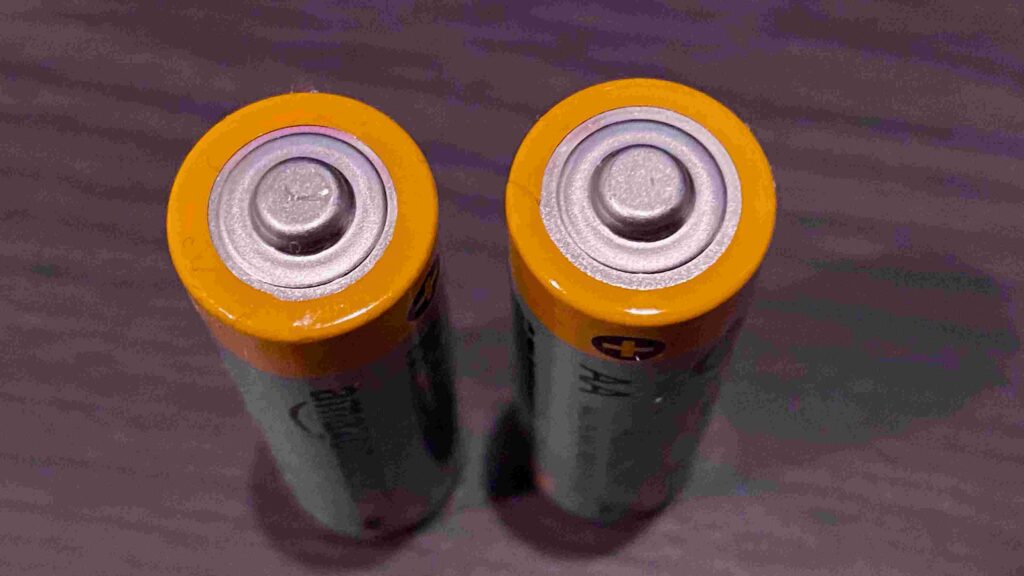
What’s Still Holding Solid-State Batteries Back?
Lithium-ion batteries have powered the EV revolution, but they are hitting fundamental limits.
Current liquid electrolyte designs introduce:
- fire risk
- thermal runaway
- dendrite growth
- capacity degradation
Global EV adoption is accelerating, putting pressure on:
- lithium supply
- manufacturing costs
- recycling infrastructure
Incremental lithium-ion improvements are no longer enough.
Why Solid-State Batteries Are the Future
The defining feature of solid-state batteries is replacing the liquid electrolyte with a solid material:
- ceramic
- glass
- sulfide
- oxide-based compounds
This change offers major benefits:
1. Enhanced Safety
Solid electrolytes are non-flammable and more stable under high temperatures.
This reduces the risk of thermal runaway and catastrophic fires.
2. Higher Energy Density
Solid-state batteries are projected to reach:
- 400 Wh/kg
- 1,000 Wh/L
This means longer range and lighter battery packs.
3. Faster Charging
Solid electrolytes support faster ion transport and better structural stability, allowing fast charging with less degradation.
The Big Question for Automakers
Should automakers invest heavily in solid-state batteries or continue optimizing lithium-ion technology?
That’s the question Donut Lab’s announcement has forced onto the industry.
Your Opinion Matters
What do you think?
Should the EV industry shift to solid-state batteries immediately?
Or should it continue refining lithium-ion in the short term?
Share your thoughts in the comments below.
FAQs
1. What makes Donut Lab’s battery different from traditional lithium-ion batteries?
Donut Lab claims to use a solid-state, sodium-ion battery that eliminates lithium and cobalt, offering faster charging, longer lifespan, and higher safety compared to conventional lithium-ion cells.
2. Is Donut Lab’s battery really the first solid-state battery in production vehicles?
Donut Lab claims to be the world’s first solid-state battery in production vehicles, but this remains controversial because independent verification is still pending.
3. How fast can Donut Lab’s battery charge?
Donut Lab claims the battery can fully charge in just 5 minutes, a speed typically associated with capacitors rather than traditional batteries.
4. Is the battery truly lithium-free?
Yes, Donut Lab claims the battery uses sodium-ion chemistry, meaning no lithium is required, which could significantly reduce supply chain pressures.
5. How long does the Donut Lab battery last?
Donut Lab claims up to 100,000 charge cycles, and potentially 100 years of use, which would be unprecedented for battery technology.
6. What is the energy density of Donut Lab’s battery?
Donut Lab claims an energy density of 400 Wh/kg, which is far higher than current lithium-ion alternatives like LFP and sodium-ion.
7. Why are experts skeptical about Donut Lab’s claims?
Experts are skeptical because the performance claims resemble supercapacitor behavior, and Donut Lab has not publicly shown a working cell or disclosed patents.
8. Why didn’t Donut Lab show a working battery at CES 2026?
Donut Lab argues they prioritized OEM partnerships and NDAs, and that fully functional packs were shipped to manufacturers but not publicly displayed.
9. What is a solid-state battery?
A solid-state battery replaces the liquid electrolyte with a solid material, such as ceramic or glass, improving safety and stability.
10. Are solid-state batteries safer than lithium-ion?
Yes, solid-state batteries are less flammable and more thermally stable, reducing the risk of thermal runaway and fires.
11. Why is Toyota watching Donut Lab?
Toyota has invested heavily in solid-state research. Donut Lab’s claims could disrupt Toyota’s timeline and the entire EV supply chain if verified.
12. Could Donut Lab’s battery be a capacitor instead of a battery?
Critics argue this, but Donut Lab claims their energy density is far too high for capacitors, suggesting a true battery mechanism.
13. What does “amorphous ceramic” mean in battery technology?
Amorphous ceramics lack a crystal structure, potentially allowing fast ion transport and longer cycle life without cracking or degradation.
14. What is the main advantage of sodium-ion chemistry?
Sodium is more abundant and cheaper than lithium, reducing costs and geopolitical supply risks.
15. Why hasn’t this technology been developed earlier?
Manufacturing challenges, scalability, and material process control often delay breakthroughs — not necessarily lack of knowledge.
16. When will independent testing confirm Donut Lab’s claims?
Donut Lab says independent verification is already underway, but an exact timeline depends on NDA expirations and OEM testing schedules.
Read More:
- Tesla states Giga Berlin workforce is stable, rejects media report
- Elon Musk to attend 2026 World Economic Forum at Davos
- Elon Musk shares incredible detail about Tesla Cybercab efficiency
- Tesla Earnings Call: Top 5 questions investors are asking
- BREAKING: Tesla launches public Robotaxi rides in Austin with no Safety Monitor
1 thought on “No Need Lithium! Donut Lab Confirms World’s FIRST Solid-State Battery! Toyota Worried”