
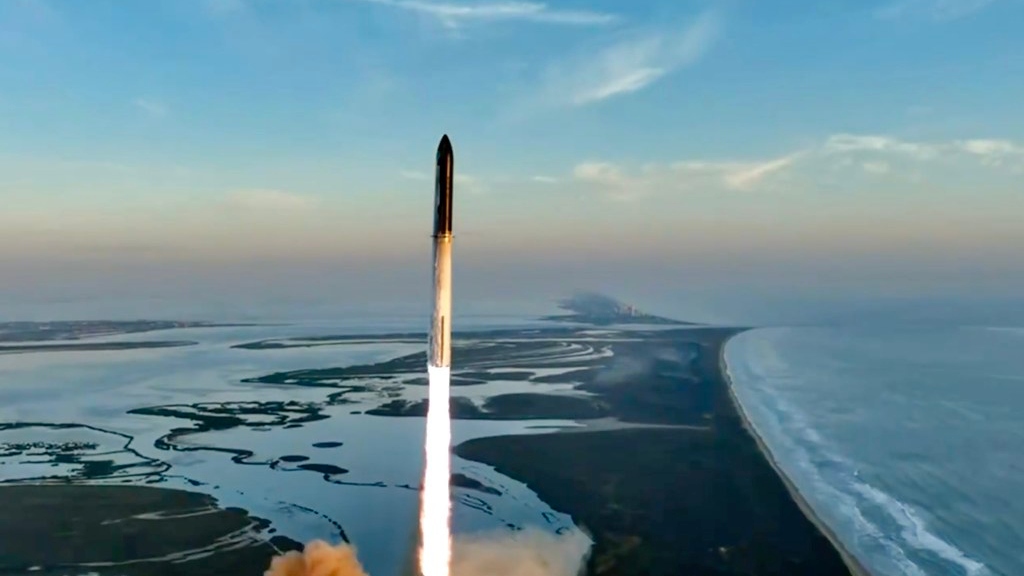
The aerospace industry witnessed a historic turning point when SpaceX unveiled the revolutionary Starship Version 3 (V3) during the highly anticipated Flight 12 test campaign at Starbase. What millions expected to be just another rocket test transformed into one of the most important moments in modern space exploration.
For decades, spaceflight remained trapped in a cycle of single-use rockets, astronomical costs, and painfully slow development timelines. SpaceX shattered that outdated model with its rapid iteration philosophy, and Starship V3 proved the company is no longer simply building rockets — it is engineering the foundation for a future where humanity becomes a multi-planetary civilization.
Hosted by senior SpaceX engineers including Kate Ty, Jake Burkowitz, and Dan Huot, the livestream revealed groundbreaking technological advancements that stunned both aerospace experts and casual viewers worldwide.
The Evolution from Starship V2 to Starship V3
At first glance, Starship V3 appears similar to its predecessor. However, beneath its stainless-steel exterior lies a completely redesigned launch architecture optimized for high-frequency reusable spaceflight.
Standing more than 407 feet tall, Starship V3 is now the tallest and most powerful launch system ever constructed.
Key Upgrades in Starship V3
- Expanded fuel tank capacity
- Redesigned Super Heavy Booster
- Integrated reusable hot-stage adapter
- 50% larger grid fins
- Enhanced orbital docking systems
- Improved payload deployment technology
- Completely redesigned Raptor 3 engines
The additional height allows the rocket to carry significantly more liquid oxygen (LOX) and liquid methane (CH₄), essential for supporting the upgraded propulsion system.
Super Heavy Booster Redesign Changes Everything
The Super Heavy Booster underwent one of the most dramatic transformations in Starship V3.
Fully Integrated Hot-Stage Adapter
One of the biggest innovations is the integrated reusable hot-stage adapter.
Previous Starship variants used a detachable hot-stage ring during stage separation. In V3, this system is permanently integrated into the booster structure, improving:
- Reliability
- Structural efficiency
- Reusability
- Turnaround speed
This advancement dramatically simplifies operations while reducing potential failure points.
Massive Grid Fin Improvements
The new booster now uses three oversized grid fins instead of four smaller ones.
These upgraded fins are:
- 50% larger
- Constructed from high-strength materials
- Optimized for lower aerodynamic drag
- Capable of better descent control
Even more impressive, the fins also function as structural catch points for the launch tower recovery system.
Raptor 3 Engines: The Biggest Leap Forward
At the heart of Starship V3 lies the astonishing Raptor 3 engine, arguably one of the most advanced rocket engines ever built.
Raptor 3 Performance Numbers
| Engine Type | Raptor 2 | Raptor 3 |
|---|---|---|
| Sea-Level Thrust | 230 Metric Tons | 250 Metric Tons |
| Vacuum Thrust | 258 Metric Tons | 275 Metric Tons |
With 33 Raptor 3 engines mounted on the Super Heavy Booster, the system generates a jaw-dropping 18 million pounds of thrust.
That is more than double the power produced by NASA’s legendary Saturn V rocket.
Why Raptor 3 Is Revolutionary
Unlike previous rocket engines covered in exposed pipes and heat shielding, the Raptor 3 design looks surprisingly clean and minimalistic.
This happened because SpaceX eliminated massive amounts of unnecessary hardware through:
- Internalized avionics
- Advanced cooling systems
- Additive manufacturing
- Integrated plumbing architecture
The result is:
- Lower dry mass
- Fewer leak risks
- Faster production
- Reduced maintenance
- Greater reliability
This design philosophy perfectly aligns with SpaceX’s goal of creating a rocket capable of airline-like operational cadence.
Launch Pad 2: Built Like a Battleship
A reusable rocket means little if the launch pad requires weeks of repairs after every mission.
To solve this problem, SpaceX developed Launch Pad 2 at Starbase.
The new infrastructure resembles a giant armored naval fortress designed for rapid relaunch capability.
Major Improvements in Launch Pad 2
Electromechanical Chopsticks
The massive launch tower arms — nicknamed “chopsticks” — now operate using 100% electrical systems instead of hydraulics.
This provides:
- Greater precision
- Improved redundancy
- Lower fire risk
- Faster response times
Bidirectional Flame Deflector
One of the biggest engineering upgrades is the advanced bidirectional flame trench system.
This innovation prevents severe launch pad erosion and moves SpaceX closer toward its goal of zero refurbishment launches.
Faster Propellant Loading
Pad 2 also includes a completely upgraded cryogenic fueling farm capable of loading millions of pounds of super-cooled propellant in under 35 minutes.
That is approximately 20% faster than previous systems.
Starlink V3: The Real Commercial Engine
While Starship captures headlines, the true commercial driver behind the system is Starlink.
What Makes Starlink V3 Important?
Starship V3 can deploy up to:
- 60 Starlink V3 satellites per launch
- Massive bandwidth improvements
- Better global coverage
- Faster internet speeds
- Enhanced direct-to-cell capability
This constellation expansion is critical for generating the revenue needed to fund future Mars missions.
The “Dodger Dogs” Test Satellites
During Flight 12, SpaceX included two highly modified experimental satellites nicknamed “Dodger Dogs.”
These spacecraft tested:
- Advanced Wi-Fi routing
- Direct-to-cell 5G systems
- Next-generation Starlink electronics
- Extended propellant systems
These experimental platforms act as bridges toward future deep-space communication systems.
Starlink on the Moon? Yes, Seriously
One of the most fascinating revelations from the Flight 12 presentation involved SpaceX’s plans for a lunar Starlink constellation.
The company aims to provide:
- Gigabit-speed lunar internet
- Real-time communications
- Laser-linked satellites
- Continuous Moon-to-Earth connectivity
This system could become the backbone of NASA’s future NASA Artemis Program missions.
Instead of relying on traditional radio communication, Starlink satellites will use inter-satellite laser communication, enabling dramatically faster data transfer across deep space.
Space Debris and Orbital Safety
As thousands of satellites enter orbit, concerns about space debris continue growing.
SpaceX addressed these concerns directly during the presentation.
Autonomous Collision Avoidance
Starlink satellites now perform over:
- 1,000 automated avoidance maneuvers every day
Using onboard ion thrusters, satellites automatically reposition themselves when potential collision risks are detected.
Project Stargaze
SpaceX also unveiled Project Stargaze, a system using Starlink satellites themselves to monitor orbital traffic in real time.
This initiative currently tracks nearly:
- 50% of objects below 600 km altitude
The project enhances global orbital awareness and helps prevent dangerous close encounters in space.
The Dramatic Flight 12 Countdown
The Flight 12 launch countdown became one of the most intense livestream events SpaceX has ever hosted.
Millions watched as the clock approached liftoff.
Countdown Timeline Highlights
T-37 Minutes
Upper-stage propellant loading begins.
T-36 Minutes
Booster fueling starts.
T-100 Seconds
Engine gimbal and thrust vector checks commence.
T-40 Seconds
Quick Disconnect vent procedures activate.
T-17 Seconds
Water deluge system engages.
T-0
All 33 Raptor engines ignite simultaneously.
The choreography between software systems and ground infrastructure demonstrated how advanced SpaceX’s launch operations have become.
Why Flight 12 Was Ultimately Scrubbed
Despite the excitement, Flight 12 did not launch successfully that day.
However, the stand-down itself proved enormously valuable.
What Caused the Hold?
The countdown experienced multiple technical issues including:
- Pressure anomalies in the quick-disconnect arm
- Sensor trips in the water deluge system
- Cryogenic boil-off concerns
The automated systems repeatedly recycled the countdown while engineers analyzed telemetry in real time.
Ultimately, SpaceX prioritized safety and called off the launch attempt.
That decision highlighted one of the company’s greatest strengths:
A Strong Engineering Safety Culture
Instead of forcing a risky launch, SpaceX chose data collection and long-term reliability over short-term spectacle.
This “test, learn, improve” philosophy has become central to the company’s success.
Florida Expansion Signals Massive Growth
While Starbase remains the testing hub, SpaceX is aggressively expanding operations in Florida.
LC-39A Expansion
At Kennedy Space Center, SpaceX is constructing a second giant launch tower beside the historic Launch Complex 39A.
This site previously supported:
- Apollo Moon missions
- Space Shuttle launches
- Falcon 9 operations
Now it is being transformed for Starship operations.
Gigabay: The Future Rocket Factory
SpaceX is also building Gigabay, a gigantic manufacturing facility exceeding:
- 800,000 square feet
The structure will reportedly support:
- Up to 24 Starship vehicles simultaneously
- Rapid assembly operations
- High-volume maintenance cycles
This infrastructure is essential if SpaceX hopes to achieve multiple orbital launches every week.
The Roadmap to Mars Has Officially Begun
Every improvement inside Starship V3 serves one long-term objective:
Making Humans Multi-Planetary
Phase 1: Low Earth Orbit Operations
Initial missions focus on:
- Starlink deployments
- Rapid launch turnaround
- Booster recovery optimization
Phase 2: Orbital Refueling
SpaceX plans to establish orbital “gas stations” using dedicated tanker Starships.
This system enables deep-space missions with fully fueled spacecraft.
Phase 3: Lunar Missions
Through collaboration with NASA’s Artemis program, Starship will support:
- Lunar habitats
- Cargo transport
- Surface rovers
- Permanent Moon infrastructure
Phase 4: Mars Flyby Missions
Eventually, SpaceX intends to launch human missions on free-return trajectories around Mars.
These missions will test:
- Long-duration life support
- Deep-space radiation shielding
- Advanced thermal protection
- Interplanetary communication systems
The First Humans to Fly Toward Mars
SpaceX recently announced plans involving commercial astronauts including Chun Wang for future deep-space missions.
The proposed mission profile includes:
- Earth launch
- Mars atmospheric flyby
- High-resolution data collection
- Gravity-assisted return to Earth
This would become humanity’s first true interplanetary crewed journey.
Why Starship Flight 12 Changed the Internet Forever
The internet exploded during the Flight 12 livestream because people realized they were not simply watching another rocket launch.
They were witnessing:
- The birth of reusable super-heavy spaceflight
- The beginning of orbital industrialization
- The infrastructure for lunar settlement
- The foundation for Mars colonization
Starship V3 is not merely a rocket.
It is an entirely new transportation architecture for humanity’s future beyond Earth.
Final Thoughts
SpaceX has once again proven why it remains the most disruptive force in aerospace history.
From the revolutionary Raptor 3 engines to the gigantic Starship V3 architecture, every component reflects a singular ambition:
Making Life Multiplanetary
Even though Flight 12 ended in a scrub, the mission demonstrated something far more important than a successful launch.
It showed that humanity is now engineering systems designed not just to reach space — but to permanently live there.
The era of experimental rockets is ending.
The era of interplanetary civilization has officially begun.
FAQs
1. What is Starship V3?
Starship V3 is the latest generation of SpaceX’s fully reusable super-heavy launch system designed for missions to Earth orbit, the Moon, and Mars. It includes major upgrades in propulsion, payload capacity, and launch infrastructure.
2. Why is Starship Flight 12 so important?
Flight 12 marked the public debut of Starship Version 3, showcasing revolutionary upgrades including the Raptor 3 engine, redesigned booster systems, orbital refueling hardware, and next-generation launch infrastructure.
3. How tall is Starship V3?
Starship V3 stands over 407 feet tall when fully stacked, making it the tallest and most powerful rocket system ever built.
4. What engines power Starship V3?
The rocket uses Raptor 3 engines, the newest methane-fueled engines developed by SpaceX. The Super Heavy Booster uses 33 engines, while the upper stage uses 6 engines.
5. How much thrust does Starship V3 produce?
Starship V3 generates approximately 18 million pounds of thrust, more than double the power of the historic Saturn V rocket.
6. What makes the Raptor 3 engine different?
The Raptor 3 features:
- Simplified internal systems
- Reduced external plumbing
- Advanced cooling technology
- Higher thrust output
- Improved reliability
- Faster manufacturing capability
7. What is the purpose of Starship?
Starship is designed for:
- Satellite deployment
- Lunar missions
- Mars exploration
- Orbital refueling
- Deep-space cargo transport
- Human interplanetary travel
8. What is Starlink V3?
Starlink V3 is the next generation of internet satellites offering:
- Faster speeds
- Higher bandwidth
- Better global coverage
- Direct-to-cell connectivity
- Improved laser communication systems
9. Why was Starship Flight 12 delayed?
The launch attempt was scrubbed due to:
- Pressure anomalies
- Water deluge sensor issues
- Cryogenic temperature concerns
SpaceX chose safety over rushing the launch.
10. What is orbital refueling in Starship missions?
Orbital refueling allows multiple Starship tanker vehicles to transfer fuel in space, enabling deep-space missions to the Moon and Mars with fully loaded propellant tanks.
11. What is Project Stargaze?
Project Stargaze is a space-tracking initiative where Starlink satellites monitor orbital debris and spacecraft traffic in real time to improve collision avoidance safety.
12. How many satellites can Starship V3 carry?
Starship V3 can reportedly deploy up to 60 Starlink V3 satellites in a single launch mission.
13. What is Launch Pad 2 at Starbase?
Launch Pad 2 is SpaceX’s upgraded launch facility at Starbase featuring:
- Electromechanical tower arms
- Advanced flame diverter systems
- Faster fueling infrastructure
- Reduced refurbishment requirements
14. Will Starship be used for Moon missions?
Yes. Starship is a key part of NASA’s Artemis Program and will support:
- Human lunar landings
- Cargo transport
- Lunar habitat construction
- Surface exploration missions
15. When will humans go to Mars using Starship?
While no official crewed Mars landing date exists yet, SpaceX is actively developing Starship for future human Mars missions, including planned interplanetary flyby tests and long-duration deep-space operations.
Read More:
- “Raptor Shielding Failed!” SpaceX Revealed WHY Starship Booster 19 Brutally Exploded
- The Boring Company is Building an Underground Factory
- SpaceX reveals reason for Starship v3 stand down, announces next launch date
- Zuckerberg’s Meta taps Musk’s Tesla for massive clean energy project
- Tesla Bot Gen 3 AI5 Upgrade Finally Destroy Robot Industry
1 thought on “SpaceX Broke the Internet with Starship Flight 12 Launching…Never Seen Before”