
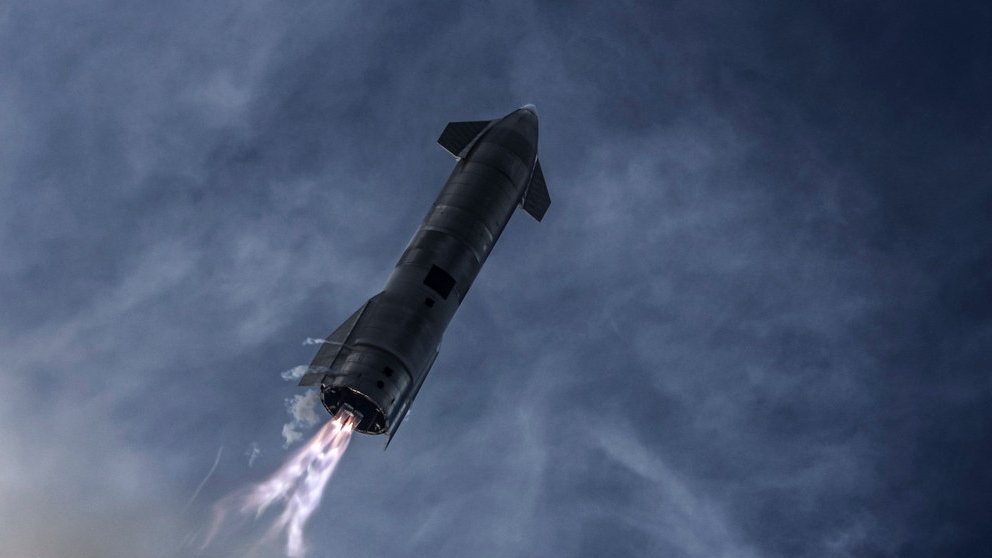
SpaceX Found New Problems on Starship during Catching! Here’s Solution: SpaceX has achieved another historic milestone in its Starship development program, successfully catching an orbital-class upper stage using the massive mechanical arms of its launch tower. However, this groundbreaking recovery method has also revealed a new engineering challenge that could affect the rocket’s long-term reusability.
During Starship Flight 15, Ship 42 completed its first successful upper-stage catch, but post-flight observations exposed signs of friction, scraping, and material damage around the catching points.
According to the video SpaceX Found New Problems on Starship during Catching! Here’s Solution…, published November 22, 2026, on GREAT SPACE, the recovery process produced visible smoke, dust, and small fragments near the contact areas. While the catch itself was successful, these observations highlighted an important problem: protecting Starship’s stainless steel structure while allowing the mechanical arms to grip the vehicle repeatedly.
Elon Musk has reportedly pointed toward an interesting solution: stainless steel wool. This material could help SpaceX reduce mechanical damage, simplify maintenance, and improve the turnaround time between flights.
What Happened During the Starship Flight 15 Catch?
Ship 42 Achieves a Historic Upper-Stage Catch
Starship Flight 15 represented a major step forward for SpaceX’s ambitious rocket recovery technology. Unlike conventional rockets that discard their upper stages after flight, Starship is designed to return to Earth and be captured by the launch tower.
The tower’s enormous mechanical arms, commonly associated with the Mechazilla recovery system, are designed to catch the returning vehicle at carefully controlled contact points.
During Flight 15, Ship 42 successfully demonstrated this upper-stage catching capability. However, slow-motion footage from the onboard cameras and launch tower revealed something unexpected.
As the mechanical arms approached and closed around the vehicle, viewers noticed:
- Black smoke appearing near the catching points.
- Dust and small fragments falling from the contact area.
- Visible material scraping during the gripping process.
- Signs of wear around the protective layer covering the stainless steel structure.
These observations raised questions about whether the current protection system could withstand repeated catches without requiring significant maintenance.
Why Was Black Smoke Coming From the Catching Area?
The video explains that the black smoke and debris were likely associated with the sacrificial ablative blanket installed around the catching points.
This protective material is believed to involve an organic fiber such as OPAN (oxidized polyacrylonitrile), potentially similar to Zoltek’s Pyron fiber.
Unlike rigid ceramic tiles, this softer material can tolerate physical contact and provide thermal protection in areas where traditional heat-shielding solutions may be less practical.
However, the catching process introduces a different type of stress.
When the mechanical arms grip Ship 42, the protective blanket experiences pressure, friction, and relative movement. After exposure to extreme temperatures during atmospheric re-entry, the material may become weaker and more vulnerable to scraping.
Consequently, sections of the blanket can tear, peel away, or become damaged during recovery.
Although this does not necessarily threaten the vehicle’s main stainless steel structure, it creates an additional refurbishment requirement before another flight.
Why Starship Needs Better Protection Around Catching Points
The Problem With Traditional Heat Shield Tiles
Starship uses thousands of thermal protection tiles to protect its structure during atmospheric re-entry. These tiles are essential because the vehicle encounters extremely high temperatures while returning from space.
However, ceramic tiles are not ideal for every section of the spacecraft.
The catching points experience mechanical pressure when the tower arms make contact with the vehicle. Rigid ceramic materials can crack, break, or detach under concentrated gripping loads.
This creates a difficult engineering challenge for SpaceX.
The protection system must accomplish two different objectives:
- Thermal protection: Prevent excessive heat from damaging the stainless steel structure.
- Mechanical protection: Withstand repeated contact with the tower’s catching arms.
The ablative blanket offers a practical solution, but its sacrificial nature means damaged sections may need replacement after recovery.
For a rocket designed to fly repeatedly, frequent repairs could become a major obstacle to rapid launch operations.
Elon Musk’s Proposed Solution: Stainless Steel Wool
Why Stainless Steel Wool Could Be a Better Option
Following observations of damage around the catching points, Elon Musk indicated that SpaceX intends to replace the existing ablative material with stainless steel wool.
At first glance, steel wool might sound like an unusual choice for protecting an advanced orbital rocket. However, its physical structure offers several potentially useful characteristics.
Stainless steel wool consists of a network of thin metallic fibers. These fibers create numerous small air pockets that can slow heat transfer while allowing the material to compress and flex under mechanical pressure.
Unlike an organic ablative blanket, stainless steel wool does not depend on charring and wearing away as its primary protective mechanism.
Its flexibility could also help distribute contact pressure when the tower arms grip the spacecraft.
NASA Previously Investigated Stainless Steel Wool
Interestingly, this idea is not entirely new.
NASA investigated stainless steel wool as a potential thermal protection material during research conducted in 1974, when engineers were exploring different approaches for protecting the Space Shuttle.
The research examined different material densities, including approximately 60 to 85 kg/m³, and evaluated thermal stability at temperatures approaching 1,250 K (approximately 977°C).
Although NASA ultimately selected ceramic tiles and blankets for operational Space Shuttle protection, the earlier research demonstrates that metallic fiber insulation has a history in aerospace engineering.
For SpaceX, revisiting this material could provide an opportunity to combine thermal insulation with improved mechanical durability.
Stainless Steel Wool vs. Ablative Blanket: Key Differences
The proposed material change could significantly influence how SpaceX maintains Starship after recovery.
| Feature | Ablative Blanket | Stainless Steel Wool |
|---|---|---|
| Thermal protection | Absorbs heat through charring and material loss | Uses a porous fiber structure to slow heat transfer |
| Mechanical durability | Can scrape, tear, or peel | Fibers can compress and flex |
| Catching performance | May require frequent repairs | Could tolerate repeated contact better |
| Maintenance | Damaged sections may need replacement | Potentially easier inspection and reuse |
| Material structure | Organic protective fibers | Metallic fiber network |
| Long-term objective | Sacrificial protection | More durable reusable protection |
The biggest potential advantage is reusability. If stainless steel wool survives repeated catching operations, SpaceX could reduce the amount of refurbishment required between missions.
However, its actual performance will depend on fiber density, thickness, attachment methods, temperature exposure, and repeated mechanical loading.
Small Stainless Steel Fiber Tests on Ship 42
SpaceX Is Already Exploring the Material
One particularly interesting detail from Flight 15 is the reported presence of small stainless steel fiber test patches on Ship 42.
These patches suggest that SpaceX may already be evaluating the material under real flight and recovery conditions rather than relying entirely on laboratory testing.
Instead of replacing the complete protective system immediately, engineers can experiment with smaller sections and examine how they perform after launch, atmospheric re-entry, and mechanical catching.
This approach allows SpaceX to collect valuable operational data before introducing a larger modification.
Density, Thickness, and Installation Matter
Stainless steel wool is not a simple drop-in replacement. Engineers must determine the ideal configuration for the catching zones.
Several factors could influence its performance:
- Fiber density: Determines how much material is packed into a given volume.
- Thickness: Influences thermal insulation and mechanical cushioning.
- Fiber arrangement: Helps determine how the material responds to compression.
- Attachment method: Prevents fibers from shifting or separating during flight.
- Thermal resistance: Ensures the material can survive the temperatures experienced during re-entry.
SpaceX could also explore quilting or needle-punching techniques to hold the fibers together and create a more stable protective layer.
The objective is to develop a system that is lightweight, durable, and capable of surviving repeated recovery operations.
Why Faster Starship Turnaround Is So Important
Reducing Maintenance Between Flights
SpaceX’s long-term Starship strategy depends on making the vehicle rapidly reusable.
A successful tower catch is only one part of that objective. Engineers must also inspect the vehicle, repair damaged components, prepare its systems, and return it to flight as quickly as possible.
If the catching points require extensive refurbishment after every mission, the benefits of catching the vehicle could be reduced.
Replacing sacrificial protective materials with a more durable alternative could help address this problem.
Less maintenance means faster turnaround, higher launch frequency, and potentially lower operating costs.
This is particularly important as SpaceX works toward an ambitious future in which Starship could support frequent orbital missions, satellite deployment, lunar exploration, and eventually Mars transportation.
Flight 16: The Next Important Starship Milestone
What Could Happen Next?
Attention is now turning toward Starship Flight 16, which could feature Ship 43 and additional improvements to the recovery system.
The video discusses the possibility of a Florida launch platform becoming part of the program as early as December 2026 or early 2027.
However, these timelines should be treated as reported possibilities rather than confirmed launch commitments.
Future flights could provide SpaceX with additional opportunities to test stainless steel wool protection and evaluate how the catching system performs under repeated operations.
If the material proves successful, it could become an important part of Starship’s reusable architecture.
The Long-Term Goal: Weekly Starship Launches
SpaceX ultimately wants to move beyond occasional Starship test flights toward a much higher launch cadence.
The company’s longer-term ambitions include potentially reaching weekly launches in 2027.
Achieving that goal will require improvements across nearly every part of the system, including propulsion, thermal protection, structural durability, launch infrastructure, and vehicle recovery.
The catching mechanism must become reliable, and the spacecraft must require minimal refurbishment after landing.
That is why even a relatively small material change around the catching points could have significant consequences for the entire Starship program.
Conclusion
Starship Flight 15 demonstrated that SpaceX’s ambitious upper-stage catching technology can work, but it also revealed an important challenge involving friction and protective material damage.
The reported proposal to introduce stainless steel wool could offer a promising solution by combining thermal insulation with greater mechanical flexibility and durability.
NASA’s earlier research into metallic fiber insulation provides an interesting historical connection, while the reported test patches on Ship 42 suggest that SpaceX is exploring practical applications.
Ultimately, the success of Starship will depend not only on launching and catching the world’s most powerful rocket, but also on making the entire operation repeatable.
If stainless steel wool reduces post-catch repairs, it could help SpaceX move closer to its ambitious goal of rapid Starship reuse and weekly launches. Flight 16 and subsequent recovery tests may provide important clues about whether this unusual material becomes a key part of Starship’s future.
FAQs
1. What problem did SpaceX discover during the Starship Flight 15 catch?
SpaceX reportedly discovered friction, scraping, and material damage around the catching points when the launch tower’s mechanical arms caught Ship 42. The protective ablative blanket showed signs of wear during the recovery process.
2. What happened during the Starship Flight 15 recovery?
During Flight 15, Ship 42 successfully completed its first upper-stage catch using the launch tower’s mechanical arms. However, slow-motion footage showed black smoke, dust, and small fragments coming from the catching area.
3. Why was black smoke visible during the Starship catch?
The black smoke was explained as likely coming from the sacrificial ablative blanket around the catching points. Friction and mechanical pressure from the tower arms may have scraped or torn the protective material.
4. What material does SpaceX currently use around Starship’s catching points?
The current protection is described as an ablative blanket, potentially made from OPAN fiber, such as Zoltek’s Pyron material. It provides thermal protection while remaining flexible enough to tolerate mechanical contact.
5. Why doesn’t SpaceX use ceramic tiles around the catching points?
Ceramic tiles are effective against extreme re-entry temperatures but can be vulnerable to concentrated mechanical pressure. The tower’s catching arms could cause rigid tiles to crack, break, or detach, making softer protective materials more suitable for these areas.
6. What solution has Elon Musk proposed for Starship’s catching problem?
Elon Musk indicated that SpaceX plans to replace the current ablative protection with stainless steel wool. This material could provide better mechanical flexibility and reduce damage caused by friction during recovery.
7. How can stainless steel wool protect Starship during recovery?
Stainless steel wool consists of thin metallic fibers that create a porous network containing small air pockets. This structure can slow heat transfer while allowing the material to compress and flex when the catching arms make contact.
8. Is stainless steel wool strong enough for rocket thermal protection?
Stainless steel wool has interesting thermal and mechanical properties, but its suitability depends on fiber density, thickness, installation, and temperature exposure. SpaceX will need repeated testing to establish whether it can reliably protect Starship.
9. Did NASA previously investigate stainless steel wool for spacecraft?
Yes. NASA investigated stainless steel wool in 1974 as a potential thermal protection material for the Space Shuttle program. Researchers examined different fiber densities and evaluated its thermal stability.
10. What temperatures did NASA test stainless steel wool against?
The historical NASA research discussed in the video evaluated stainless steel wool at temperatures approaching 1,250 K, or approximately 977°C. This research provides useful background for understanding the material’s potential aerospace applications.
11. What is the difference between an ablative blanket and stainless steel wool?
An ablative blanket protects surfaces by absorbing heat and gradually wearing away, while stainless steel wool uses a porous metallic fiber network to slow heat transfer. Stainless steel fibers may also provide better flexibility under repeated mechanical contact.
12. Were stainless steel fiber patches visible on Ship 42?
According to observations discussed in the video, small stainless steel fiber test patches were visible on Ship 42 during Flight 15. These patches may indicate that SpaceX is evaluating the material under real-world flight and recovery conditions.
13. Will stainless steel wool eliminate Starship’s catching damage?
It could reduce damage caused by friction and compression, but complete elimination of catching damage is not guaranteed. SpaceX must evaluate the material’s durability through repeated catches and thermal exposure.
14. How could stainless steel wool reduce Starship maintenance costs?
If the material survives multiple recovery operations, SpaceX could spend less time removing and replacing damaged protective blankets. This could reduce refurbishment work, improve rocket turnaround times, and support more frequent launches.
15. What improvements could SpaceX make to stainless steel wool protection?
SpaceX could experiment with different fiber densities, thicknesses, quilting, and needle-punching techniques. These improvements could help balance thermal insulation, mechanical cushioning, weight, and long-term durability.
16. What is expected during Starship Flight 16?
Flight 16 could introduce further improvements to Starship’s recovery and thermal protection systems. The video discusses the possibility of Ship 43 participating, although the exact vehicle configuration and launch schedule remain subject to change.
17. Why is rapid Starship turnaround important for SpaceX?
Rapid turnaround is essential because SpaceX wants to reuse Starship frequently without extensive refurbishment after every mission. Reducing catching-point damage could help achieve higher launch cadence, lower maintenance requirements, and improved operational efficiency.
18. Could SpaceX achieve weekly Starship launches in 2027?
SpaceX has ambitious long-term goals involving significantly more frequent Starship launches, potentially reaching a weekly cadence in 2027. Achieving this will require reliable recovery systems, durable thermal protection, rapid refurbishment, and successful testing across multiple flights.
Read More:
- Everyone Wants A Tesla Semi Now—Massive Orders Pour In
- Elon Musk will give every American kid a SpaceX share every year
- Tesla is rolling out its biggest battery upgrade through a software update
- Tesla aims to bolster Optimus with newest company acquisition
- Elon Musk’s Insane Starship Moon Landing Method Shocked NASA: Skip Legs
1 thought on “SpaceX Found New Problems on Starship during Catching! Here’s Solution”