
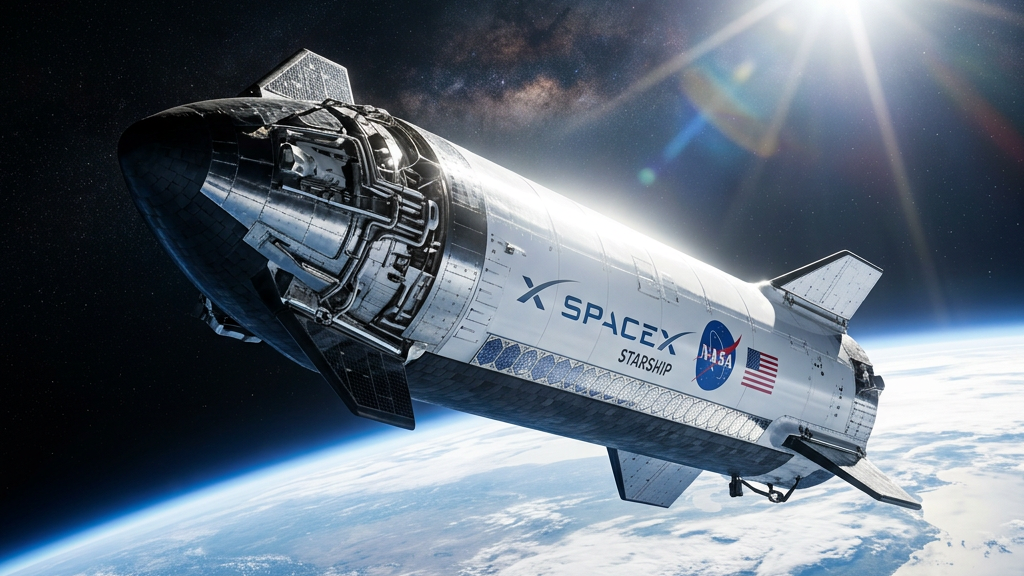
SpaceX just Did Something Never Seen with Starship Testing! Ready to Launch Every Month NOW: The SpaceX Starship program has entered a completely new phase of development. What once seemed like an experimental prototype is rapidly transforming into a high-frequency launch system capable of supporting monthly Starship missions. The latest testing campaign at Starbase, Texas, proves that SpaceX is no longer focused on simply building the world’s largest rocket—it is creating an industrial-scale transportation system for space.
A remarkable nine-day testing campaign involving Ship 40 (S40) and Ship 41 (S41) has demonstrated unprecedented operational speed. Combined with major engineering upgrades, launch infrastructure improvements, and automated manufacturing, SpaceX appears closer than ever to achieving its goal of launching Starship every month.
SpaceX Completes a Record-Breaking 9-Day Starship Testing Campaign
The biggest breakthrough came during an incredibly compressed nine-day testing window between late June and early July.
In previous years, individual Starship testing milestones often required weeks of preparation, inspections, and data analysis. This time, SpaceX completed multiple complex tests on two different Starship upper stages in just over a week.
Timeline of the Historic Test Campaign
- June 23: Ship 40 arrived at the Massey’s test site.
- June 25: Ship 40 successfully completed a single-engine static fire.
- June 26: Ship 40 returned to Mega Bay 2, immediately freeing the test stand.
- June 28: Ship 41 rolled out for structural validation.
- June 29–30: Ship 41 completed two cryogenic proof tests within 24 hours.
- June 30: Ship 40 returned to the test stand the same evening.
- July 1: Ship 40 successfully performed a full six-engine static fire.
- July 2: Ship 40 returned to the production facility after completing testing.
This rapid sequence allowed SpaceX to perform cryogenic pressure tests, single-engine testing, and maximum-thrust six-engine static fires across two separate vehicles in only nine days.
The achievement highlights one important reality: Starship hardware development is no longer the primary bottleneck. Instead, the limiting factor has become how quickly ground crews can transport vehicles between production and testing facilities.
A Major Engineering Upgrade: New Starship Engine Startup Sequence
Beyond testing speed, SpaceX quietly introduced a significant engineering improvement during Ship 40’s latest static fire.
Engineers noticed that the company modified the hot-staging engine ignition sequence, a change that could improve both reliability and booster recovery.
Previous Hot-Staging Configuration
Earlier Starship flights typically ignited:
- Three Vacuum Raptor engines
- One Sea-Level Raptor engine
The sea-level engine handled steering while the three vacuum engines generated maximum separation thrust.
The New 2+1 Engine Configuration
Recent testing suggests SpaceX now ignites:
- Two Vacuum Raptors
- One Sea-Level Raptor
Although the difference appears minor, it offers major operational advantages.
Improved Reliability
Using a 2+1 configuration creates additional redundancy.
If one vacuum engine experiences an ignition problem during stage separation, the spacecraft can continue operating without major flight instability. This significantly improves mission reliability and reduces the risk of launch failure.
Better Booster Recovery
The new ignition sequence also slightly reduces initial separation velocity.
This allows the Starship engine plume to interact with the Super Heavy booster for a fraction longer during separation. That additional push assists the booster’s flip maneuver, helping it rotate toward its return trajectory while consuming less propellant.
Every kilogram of fuel saved during recovery increases the efficiency of SpaceX’s reusable launch system.
Flight 13 Is Nearly Ready
With Ship 40 successfully completing its full-duration six-engine static fire, the spacecraft has passed one of its most critical pre-flight milestones.
Only a few important tasks remain before launch:
Final Flight Preparations
- Payload integration
- Flight Termination System installation
- Final heat shield tile inspections
- Vehicle closeouts
Attention is now shifting toward Booster 20, which already completed cryogenic testing earlier this summer.
Once Booster 20 performs its 33-engine static fire, Flight 13 could quickly move toward an official launch window.
Flight 14 Is Already Moving Through Production
Perhaps even more impressive is the fact that Flight 14 hardware is already progressing while Flight 13 is still being prepared.
Ship 41 has completed structural validation, while Booster 21 is entering final assembly inside Mega Bay.
This overlapping workflow represents a dramatic change in SpaceX’s development strategy.
Instead of building one rocket at a time, the company is creating a continuous production pipeline, ensuring that the next launch vehicle is nearly ready before the previous mission even leaves the launch pad.
The Four Pillars Behind SpaceX’s Monthly Launch Vision
Achieving monthly Starship launches requires much more than faster rockets.
SpaceX is rebuilding its entire operational ecosystem around four critical pillars.
1. Automated Starship Manufacturing
Traditional aerospace manufacturing relies heavily on manual labor and lengthy inspections.
SpaceX is replacing that model with automated industrial production.
Starfactory Expansion
The new Starfactory is designed to function more like an automotive factory than a traditional aerospace facility.
Its standardized production lines allow faster assembly of Starship sections while reducing manufacturing delays.
Robotic Welding and AI Inspection
High-precision robotic laser welding systems now construct Starship’s stainless-steel rings with exceptional consistency.
Artificial Intelligence assists quality control by performing automated X-ray and ultrasonic inspections, dramatically reducing inspection time while improving reliability.
Automated Heat Shield Installation
Thousands of ceramic heat shield tiles must be installed on every Starship.
SpaceX is developing automated tile installation systems that significantly reduce one of the most labor-intensive manufacturing processes.
2. Parallel Testing Infrastructure
Testing has traditionally been a major bottleneck.
If one vehicle occupied the test stand, every other spacecraft had to wait.
SpaceX is solving this problem by expanding the Massey’s test complex.
Multiple independent test stands will eventually allow engineers to perform:
- Cryogenic proof tests
- Static fires
- Structural validation
on several vehicles simultaneously.
Parallel testing dramatically increases launch readiness while minimizing delays.
3. Launch Pad Redundancy
Launching the world’s most powerful rocket places enormous stress on launch infrastructure.
To support monthly flights, SpaceX is building multiple operational launch pads.
Dual Launch Pads at Starbase
While one launch pad undergoes repairs and inspections after launch, another can immediately begin preparing the next Starship mission.
This eliminates lengthy downtime between launches.
Florida Expansion
SpaceX is also constructing Starship launch facilities in Florida.
Operating from multiple locations reduces weather risks, increases scheduling flexibility, and supports significantly higher launch frequency.
Stronger Ground Systems
Engineers continue upgrading:
- Water deluge systems
- Flame diverters
- Launch mounts
- Catch tower “Chopsticks”
These improvements are designed to reduce launch damage and shorten refurbishment from weeks to only a few days.
4. Industrial-Scale Logistics
Launching Starship every month requires an enormous supply chain.
Each launch consumes massive amounts of:
- Liquid Oxygen (LOX)
- Liquid Methane (CH₄)
Ground systems must rapidly load thousands of tons of cryogenic propellant while transportation networks continuously deliver raw materials to Starfactory.
Heavy transport vehicles, specialized barges, storage tanks, and fuel infrastructure must all operate at industrial scale to sustain monthly launches.
SpaceX’s Ultimate Goal: Making Spaceflight Routine
The recent Ship 40 and Ship 41 campaign demonstrates something much larger than faster testing.
SpaceX is transforming the entire economics of spaceflight.
Rather than treating rockets as handcrafted machines that launch once every few months, the company wants Starship to operate much like a commercial airplane.
In the future, Starships could roll off automated production lines, undergo rapid parallel testing, launch from hardened pads, complete missions, return, and quickly fly again.
This vision represents one of the most significant shifts in aerospace history.
If Flight 13 proceeds successfully and the current development pace continues, the era of rapid, reusable, and sustainable monthly space transportation may arrive far sooner than many industry experts expected.
Final Thoughts
The latest Starship testing campaign marks a turning point for SpaceX. Completing multiple cryogenic tests, engine static fires, and vehicle validations within just nine days demonstrates a level of operational efficiency never before seen in large-scale rocket development.
Combined with automated manufacturing, parallel testing facilities, dual launch pads, and industrial logistics, SpaceX is steadily building the foundation for monthly Starship launches.
The company’s long-term mission is no longer simply reaching space—it’s making spaceflight as routine as commercial aviation. If current progress continues, the world could soon witness a future where fully reusable Starships launch on a regular monthly schedule, opening the door to more affordable satellite deployments, lunar missions, and eventually human journeys to Mars.
FAQs
1. Why is SpaceX’s recent Starship testing considered historic?
SpaceX completed multiple cryogenic tests and static fires on two different Starship vehicles in just nine days, demonstrating an unprecedented level of testing speed and operational efficiency.
2. What is the goal of SpaceX’s Starship program?
The primary goal is to develop a fully reusable launch system capable of carrying people and cargo to Earth orbit, the Moon, Mars, and beyond while dramatically reducing launch costs.
3. What is Starship Flight 13?
Flight 13 is the upcoming Starship mission expected to use Ship 40 and Booster 20. It is one of the most anticipated launches as SpaceX moves toward a monthly launch cadence.
4. What is a static fire test?
A static fire test involves igniting a rocket’s engines while the vehicle remains securely attached to the launch stand. It verifies engine performance and overall system readiness before launch.
5. What are cryogenic proof tests?
Cryogenic proof tests fill the rocket’s tanks with extremely cold liquid propellants to verify the structural integrity of the vehicle under flight-like conditions.
6. Why did SpaceX change the Starship engine startup sequence?
The new 2+1 engine startup configuration improves mission reliability, provides greater redundancy during hot staging, and helps optimize the Super Heavy booster’s recovery.
7. What is hot staging in Starship?
Hot staging is the process where the Starship upper stage ignites its engines before completely separating from the Super Heavy booster, improving overall flight efficiency.
8. How often does SpaceX plan to launch Starship?
SpaceX aims to achieve a monthly Starship launch schedule, with long-term ambitions of increasing launch frequency even further.
9. What is the Starfactory?
Starfactory is SpaceX’s advanced manufacturing facility at Starbase, designed to automate Starship production using robotic welding, AI inspections, and streamlined assembly lines.
10. Why is automated manufacturing important for Starship?
Automation speeds up production, improves consistency, reduces manufacturing costs, and enables SpaceX to build enough rockets to support frequent launches.
11. What role does Booster 20 play in Flight 13?
Booster 20 is the Super Heavy first-stage booster expected to launch Ship 40 during the Flight 13 mission after completing its final testing milestones.
12. How is SpaceX improving its launch infrastructure?
The company is expanding testing facilities, building multiple launch pads, upgrading launch tower systems, and strengthening ground support equipment to reduce turnaround times.
13. Why are reusable rockets important?
Reusable rockets significantly lower launch costs, reduce manufacturing waste, and allow much faster access to space compared to traditional expendable launch vehicles.
14. How could monthly Starship launches change the space industry?
Monthly launches could enable more satellite deployments, support regular lunar missions, accelerate Mars exploration, and make commercial space transportation far more affordable.
15. When could SpaceX achieve regular monthly Starship launches?
Although no official timeline has been confirmed, the rapid testing pace, expanding infrastructure, and ongoing production improvements suggest SpaceX is moving closer to achieving regular monthly Starship launches in the near future.
Read More:
- Starship Flight 14 to Make History with 1st Ship & Booster V3 RETURN Home
- ELON CONFIRMED IT! Tesla Cybercab Is HERE With 4 HUGE Upgrades
- Tesla challenges startups to score a gig inside its most advanced European factory
- Tesla flexes how it will help the blind with Cybercab
- Elon Musk’s NEW Update On Tesla Bot Gen 3, 1000 Tasks Begins
2 thoughts on “SpaceX just Did Something Never Seen with Starship Testing! Ready to Launch Every Month NOW”