

As 2025 draws to a close, SpaceX finds itself at one of the most emotional, high-pressure, and consequential moments in its history. The Starship program—arguably the most ambitious spaceflight project ever attempted—has faced setbacks, skepticism, and intense scrutiny. Yet as the calendar turns toward 2026, optimism is rising once again.
Why? Because 2026 may be the year SpaceX proves Starship is ready for the Moon.
NASA, global competitors, and the entire spaceflight community are watching closely. The stakes are enormous: the future of the Artemis program, America’s return to the Moon, and SpaceX’s credibility as the primary lunar lander provider all hinge on what happens next.
So how does SpaceX plan to land Starship on the Moon in 2026? And is this bold vision truly achievable? Let’s break it down step by step.
The High-Stakes Race Back to the Moon
SpaceX’s role in Artemis 3 was once seen as a certainty. Today, it feels more like a competition under pressure.
Growing concerns around Starship’s development timeline have caused some within the space community—and even NASA—to question whether the vehicle will be ready in time. Internal assessments and external analyses suggest that while uncrewed missions may be possible in 2027, a crewed lunar landing could slip into 2028 or beyond.
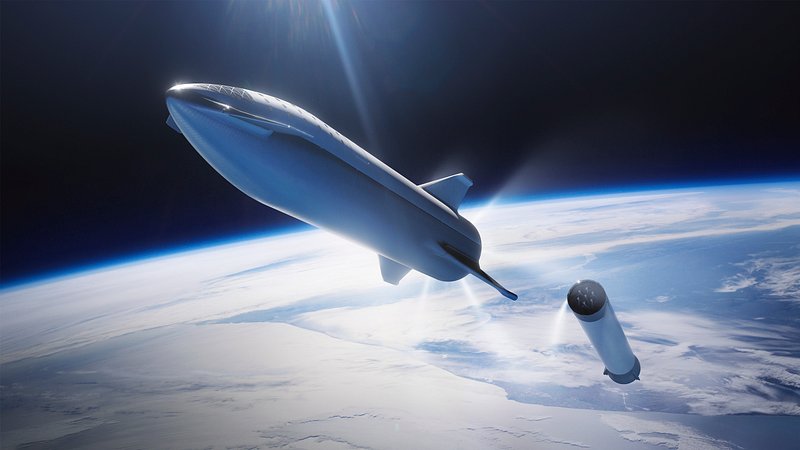
However, NASA cannot afford major delays.
Political pressure, international commitments, and rising competition—particularly from China’s lunar ambitions—mean the United States must demonstrate tangible progress before the decade ends. If Artemis 3 is to fly in 2027, SpaceX must show undeniable proof of readiness well before then.
That is exactly why 2026 has become the defining year for Starship.
Why 2026 Is the Make-or-Break Year for Starship
By the end of 2026, SpaceX must accomplish something far more significant than test flights or partial successes.
👉 Starship must reach the Moon.
More specifically, SpaceX must successfully complete the uncrewed Starship Human Landing System (HLS) mission—a lunar landing without astronauts aboard. This mission is not optional. It is a contractual requirement set by NASA and a critical proof point for Artemis.
Without a successful uncrewed lunar landing:
- A crewed Artemis 3 mission becomes extremely difficult to justify
- Confidence in the Starship architecture erodes
- NASA may lean more heavily toward alternative providers
Fortunately for SpaceX, there is a plan—though it leaves very little room for error.
The Starship HLS Prototype: SpaceX’s Lunar Key
The most important milestone on the path to the Moon is the launch of a dedicated Starship HLS prototype.
Why the HLS Prototype Matters
- It is specifically designed for lunar operations
- It eliminates Earth reentry systems in favor of optimized lunar landing hardware
- It serves as a full-scale demonstration of NASA-required capabilities
This prototype must fly between early and mid-2026. That timeline is essential because it allows:
- System and subsystem testing
- Integrated mission simulations
- Time to fix inevitable problems
Given Starship’s complexity, issues are not just possible—they’re expected. Schedule margin will be critical.
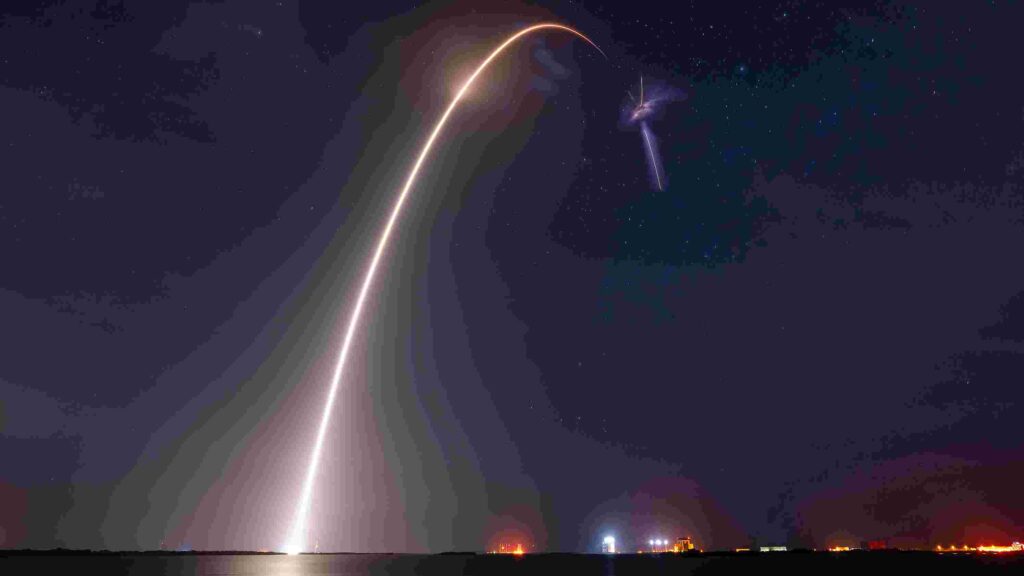
Starship V3 and Flight 12: The First Big Test of 2026
Before SpaceX can attempt lunar operations, it must prove that Starship V3 is ready.
Flight 12: A Defining Mission
Expected in Q1 of 2026, Flight 12 will validate:
- Improved hot staging
- Redesigned grid fins
- Enhanced engine performance
- Upgraded catch hardware
- Stronger heat shield tiles
- On-orbit refueling systems
This flight matters for two major reasons:
- Design Validation
Any failures will drive further redesigns and could impact the entire schedule. - Schedule Momentum
A clean success could accelerate orbital and lunar missions later in the year. A problematic flight could compress timelines dangerously.
Realistically, Flight 12 could occur as early as late January or early February, with built-in contingencies reflecting how much SpaceX understands is riding on this mission.
Reaching Orbit: The Foundation of Everything
While it may sound basic, reliable orbital insertion is the foundation of Starship’s entire purpose.
Without consistent access to orbit:
- Payload deployment is impossible
- Orbital assembly cannot happen
- Lunar missions are unfeasible
Orbit is the gateway to everything SpaceX wants to do next, from Starlink expansion to deep-space exploration.
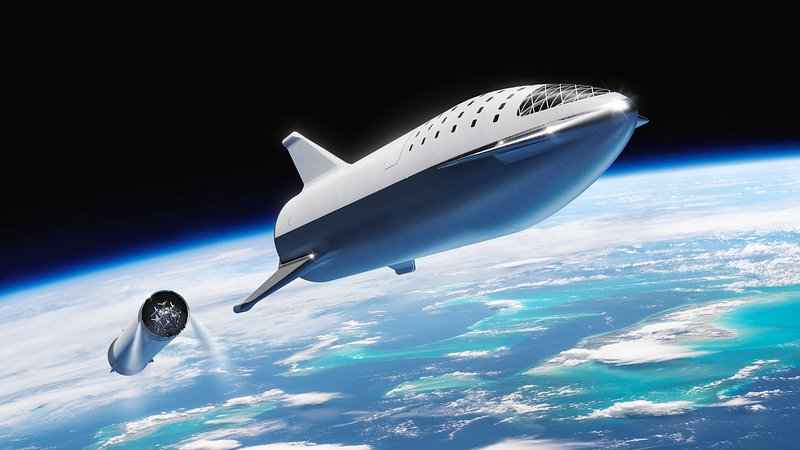
Payload Deployment and Starlink V3
Once orbital reliability is established, SpaceX must prove Starship’s payload capabilities.
This is where Starlink V3 satellites come in.
Why Starlink V3 Is Critical
- Larger and more powerful than previous versions
- Designed specifically for Starship’s massive payload bay
- Up to 50 satellites per launch
Payload deployment isn’t just about revenue—it’s about operational credibility. Every successful payload mission builds confidence that Starship can one day deliver cargo, infrastructure, and life-support systems to the Moon.
Landing and Reusability: Practicing for the Moon on Earth
Fully reusable spacecraft are at the heart of SpaceX’s philosophy.
Why Earth Landings Matter
- Enable rapid launch cadence
- Reduce costs dramatically
- Validate guidance, navigation, and propulsion systems
Most importantly, you cannot land on the Moon reliably if you cannot land reliably on Earth. The same systems—autonomous guidance, throttle control, structural integrity—apply directly to lunar operations.
Orbital Refueling: The Hardest Problem of All
To reach the Moon with enough fuel and payload, Starship must be refueled in orbit.
This requires:
- Multiple launches
- Precise rendezvous operations
- Fluid transfer in microgravity
- Extreme reliability
Initial tests are expected around mid-2026, potentially involving two Starships connecting in orbit. These early demonstrations will focus on mechanical interfaces and fuel transfer systems.
The Orbital Propellant Depot
SpaceX is also developing a dedicated propellant depot Starship, which would:
- Centralize refueling operations
- Reduce mission complexity
- Improve reliability
Significant progress has already been made, including:
- Power module demonstrations
- Hardware-in-the-loop testing
- Flight-representative simulations
Ground Infrastructure: Building the Backbone of Lunar Operations
Starship’s success depends as much on the ground as it does in space.
Launch Pads and Facilities
- Starbase Pad 2 nearing readiness for V3
- Pad 1 upgrades planned for late 2026
- Launch Complex 39A in Florida undergoing major enhancements
- SLC-37 expected to come online by 2027
Together, these sites will form a distributed launch network capable of supporting unprecedented flight rates.
Mass Production: The Star Factory Revolution
2026 is also the year SpaceX aims to unlock true rocket mass production.
Key Manufacturing Milestones
- Star Factory reaching full operational capacity
- World’s first mass-production facility for orbital rockets
- New Gigabay becoming operational in Q2
- Parallel assembly across multiple Mega Bays
This scale is essential for:
- High launch cadence
- Rapid iteration
- Supporting refueling-heavy lunar missions
Fixing the Testing Bottleneck
Past issues with vehicles like Ship 39 and Booster 18 exposed weaknesses in testing flow. But those challenges have driven major upgrades.
In 2026, SpaceX aims to:
- Expand testing infrastructure
- Improve reliability standards
- Support operational-scale missions
Testing is no longer just about prototypes—it’s about flight readiness.
The Moon: SpaceX’s Ultimate Objective
All roads lead to one destination: the Moon.
Starship’s lunar ambitions are among the most scrutinized efforts in modern spaceflight. Skepticism remains high, especially after NASA introduced competition for the Artemis 3 lander.
The message was clear:
👉 Progress must be proven, not promised.
A successful uncrewed Starship HLS lunar landing in 2026 would be the strongest possible response—restoring confidence, reinforcing SpaceX’s role, and stabilizing the Artemis timeline.
Why 2026 Will Shape the Global Space Race
If SpaceX hits its milestones in 2026:
- The 2027 Artemis 3 mission remains viable
- The U.S. maintains leadership over China
- NASA gains time to plan infrastructure and research
- A sustainable lunar presence becomes realistic
True leadership on the Moon isn’t defined by a single landing—it’s defined by capability, consistency, and momentum.
Final Thoughts: Is SpaceX’s Moon Landing in 2026 Really Going to Happen?
The challenge is enormous. The timeline is unforgiving. The scrutiny is relentless.
But if any company has proven it can defy expectations through iteration, scale, and relentless execution, it’s SpaceX.
What happens in 2026 will not just determine the fate of Starship—it will define the future of human space exploration.
As always, remember: curiosity, imagination, and inspiration will follow you—so long as you keep looking up. 🚀
FAQs
1. Is SpaceX really planning to land Starship on the Moon in 2026?
Yes, SpaceX aims to complete an uncrewed Starship HLS lunar landing in 2026, which is a required milestone for NASA’s Artemis program.
2. What is Starship HLS?
Starship HLS (Human Landing System) is a modified version of Starship designed specifically to land on the Moon as part of NASA’s Artemis missions.
3. Will astronauts be on the first Starship Moon landing?
No. The 2026 mission is planned to be uncrewed, serving as a critical demonstration before any crewed lunar landing.
4. Why is 2026 such a critical year for SpaceX?
Because NASA needs proof of readiness before approving a crewed Artemis 3 mission, currently targeted for 2027.
5. What happens if SpaceX misses the 2026 milestone?
Delays could push crewed lunar landings to 2028 or later and weaken SpaceX’s position within the Artemis program.
6. What is Starship Flight 12 and why is it important?
Flight 12 is expected to validate Starship V3 upgrades and is considered one of the most important test flights in the program’s history.
7. What upgrades are included in Starship V3?
Upgrades include improved engines, hot staging, heat shields, grid fins, landing hardware, and orbital refueling systems.
8. Has Starship reached orbit yet?
As of now, consistent and reliable orbital capability is still being proven, which is a key requirement for lunar missions.
9. Why is orbital refueling necessary for Moon missions?
Starship cannot carry enough fuel to reach the Moon in one launch, so refueling in orbit is essential for lunar operations.
10. How does Starlink support Starship’s Moon plans?
Launching Starlink V3 satellites helps prove Starship’s payload capabilities and generates revenue to support lunar development.
11. What is an orbital propellant depot?
It’s a dedicated fuel storage Starship designed to simplify and centralize orbital refueling operations.
12. Where will Starship launches take place?
Launches will occur from Starbase in Texas, Kennedy Space Center’s LC-39A, and eventually SLC-37.
13. What is the Star Factory?
The Star Factory is SpaceX’s mass-production facility designed to build Starships at unprecedented scale.
14. Why is reusability so important for Starship?
Reusable spacecraft reduce costs, increase launch frequency, and enable sustainable lunar missions.
15. How does landing on Earth help lunar landings?
Earth landings validate the same guidance, navigation, and propulsion systems needed for Moon landings.
16. Is NASA considering other lunar lander providers?
Yes. Due to schedule concerns, NASA has introduced competition, increasing pressure on SpaceX to deliver results.
17. How does this impact the global space race?
Success in 2026 would help the United States maintain leadership over other nations pursuing lunar missions, especially China.
18. Is a crewed Starship Moon landing still realistic?
Yes—if SpaceX successfully completes the uncrewed HLS landing in 2026, a crewed mission in 2027 becomes far more achievable.
Read More:
- Tesla quietly flexes FSD’s reliability amid Waymo blackout in San Francisco
- Tesla’s Elon Musk gives timeframe for FSD’s release in UAE
- Tesla is not sparing any expense in ensuring the Cybercab is safe
- 2026 Tesla Pi Tablet: Elon Musk Announces SHOCKING Discount & Production Plan
- Elon Musk Announces 3 MAJOR Tesla AI Products Take Over ALL Industry 2026! This Is Huge
1 thought on “SpaceX revealed Genius Solution to Land first Starship on the Moon in 2026! Is it going to Happen?”