


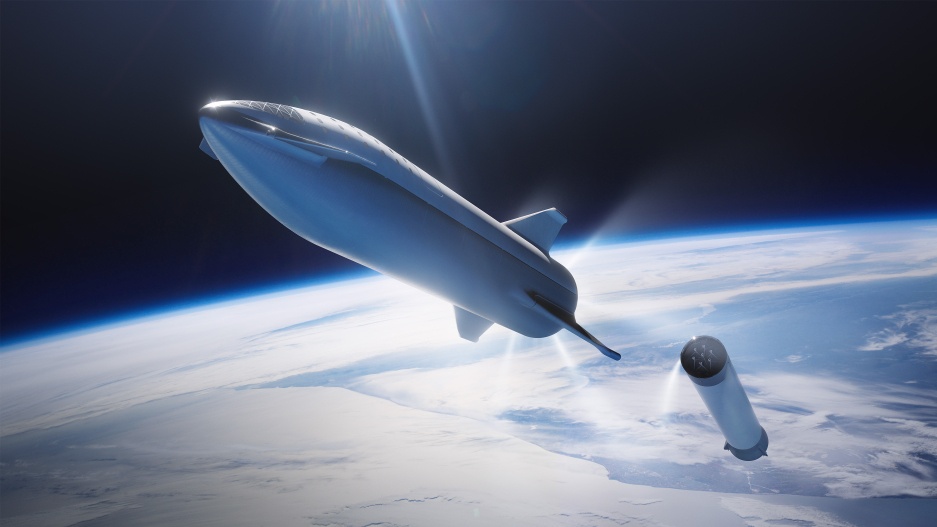
SpaceX’s Double Header Tests on Starship Ship 39 and Booster 19! Static Fire TODAY: The energy surrounding SpaceX right now is nothing short of extraordinary. Fresh off the global excitement of NASA’s Artemis 2 splashdown, SpaceX has quickly reclaimed center stage with an aggressive and highly coordinated testing campaign at Starbase in South Texas.
In a move that perfectly captures the company’s rapid development philosophy, SpaceX launched a “double header” operation featuring two of its most advanced vehicles: Starship Ship 39 (S39) and Super Heavy Booster 19 (B19).
This bold strategy is more than just a spectacle—it’s a signal. SpaceX is accelerating toward the next phase of Starship development, with Flight 12 and even more ambitious missions already on the horizon. Let’s break down everything happening at Starbase, why it matters, and how it could reshape the future of spaceflight.
The Simultaneous Rollout: A New Level of Speed
SpaceX kicked off the weekend with a dramatic and rare move—rolling out both Ship 39 and Booster 19 nearly simultaneously. While minor scheduling hiccups delayed the booster slightly, the overall execution was a powerful demonstration of operational efficiency.
Seeing two towering rocket components—each the size of a skyscraper—moving across the dusty roads of South Texas was more than just visually impressive. It symbolized a major shift in SpaceX’s approach: parallel processing.
Why This Matters
Traditionally, rocket development has been sequential and cautious. SpaceX is flipping that model by:
- Testing multiple vehicles at once
- Overlapping development cycles
- Rapidly iterating designs based on real-time data
This “double header” approach dramatically reduces turnaround time between launches and brings SpaceX closer to its ultimate goal: rapid reusability and frequent orbital flights.
Ship 39: Precision Testing at Massey’s Facility
Ship 39 was the first to arrive at its destination—the increasingly vital Massey’s test site. This facility has quickly become a cornerstone of Starbase operations.
Why Massey’s Is Critical
Unlike the main launch site, Massey’s allows SpaceX to:
- Conduct tests without major road closures
- Run repeated experiments in quick succession
- Gather high-quality data with minimal disruption
This flexibility is crucial for a program moving at SpaceX speed.
Cryogenic Proofing: Stress Testing the Limits
On April 11th, Ship 39 was engulfed in a thick cloud of white vapor—a signature sign of cryogenic testing. This process, known as cryo-proofing, is one of the most important steps before engine firing.
What Is Cryogenic Proofing?
Cryogenic proofing involves loading the rocket with super-chilled liquid oxygen and methane, simulating real flight conditions. This tests:
- Tank integrity under extreme temperatures
- Structural resilience
- Plumbing and valve performance
Why It’s Crucial
Rocket materials behave very differently under cryogenic conditions. Metal contracts, seals tighten, and even minor flaws can become catastrophic failures. By pushing Ship 39 to these limits, SpaceX ensures it can withstand the harsh environment of launch.
Spin Prime Test: The Engine Dress Rehearsal
Following the cryogenic test, SpaceX moved into a spin prime test—a key milestone before a static fire.
Understanding Spin Prime
During this test:
- High-pressure propellant is pumped into the engines
- Turbopumps spin up to operational speeds
- No ignition occurs
Think of it as the rocket “clearing its throat” before the main event.
What Engineers Look For
This test helps verify:
- Engine readiness
- Fuel flow stability
- Turbopump performance
Any anomalies detected here can be fixed before a full ignition test, reducing risk significantly.
Water Deluge Testing: Preparing for Fire
In a slight deviation from typical procedures at Massey’s, SpaceX conducted a water deluge test on Ship 39.
Purpose of the Deluge System
The deluge system:
- Suppresses extreme heat during engine firing
- Reduces acoustic shockwaves
- Protects the test stand and surrounding infrastructure
Why It’s Important
Rocket engines generate immense energy. Without proper suppression systems, the heat and pressure could damage both the vehicle and the ground systems.
By testing this early, SpaceX ensures that future static fires—and eventual launches—can proceed safely.
Booster 19: The 33-Engine Powerhouse
While Ship 39 was undergoing tests at Massey’s, Booster 19 was being prepared at the main launch site, Pad A. This is no ordinary booster—it represents the cutting edge of SpaceX engineering.
Key Features of Booster 19
- Version: V3 configuration
- Engines: 33 Raptor 3 engines
- Status: Fully installed and flight-ready
This makes Booster 19 one of the most powerful rocket stages ever constructed.
The Orbital Launch Mount: “The Giant Donut of Fire”
Booster 19 was lifted onto the Orbital Launch Mount (OLM), a structure famously nicknamed the “giant donut of fire.”
What Makes the OLM Special?
The OLM is designed to:
- Handle up to 9,000 tons of thrust
- Distribute heat and pressure during ignition
- Support rapid launch turnaround
It’s a critical component in SpaceX’s vision of reusable, high-frequency launches.
Critical Safety Systems Testing
Before any static fire, Booster 19 must pass a series of rigorous safety checks.
1. Detonation Suppression System (DSS)
This system prevents a worst-case scenario: a chain reaction explosion.
- If one engine fails
- The DSS absorbs and mitigates the shockwave
- Prevents destruction of the entire engine cluster
This is especially important with 33 engines operating simultaneously.
2. Grid Fin Testing
Located at the top of the booster, grid fins are essential for controlled descent and landing.
What Was Tested?
- Hydraulic responsiveness
- Movement precision
- Structural integrity
These “waffle iron” fins help guide the booster back to Earth during recovery operations.
3. Massive Water Deluge System
On April 12th, SpaceX conducted a spectacular deluge test at the launch pad.
What Happened?
- Water cascaded from the top deck
- Created a massive “waterfall” effect
- Simulated launch conditions
Why It Matters
This system protects the pad from:
- Extreme heat
- Acoustic energy
- Structural damage
Without it, repeated launches would quickly degrade the launch infrastructure.
Static Fire Timeline: When Will It Happen?
The big question on everyone’s mind: When will the static fire occur?
Current Schedule
- Primary window: April 13
- Backup dates: April 14–15
If all tests go smoothly, both Ship 39 and Booster 19 could proceed to static fire attempts within this window.
The Road to Flight 12
If mid-April testing is successful, SpaceX is aiming for a Flight 12 launch in early May.
What Flight 12 Represents
- Another step toward full reusability
- Validation of new hardware upgrades
- Increased confidence in rapid launch cadence
Each successful flight builds momentum toward routine orbital operations.
Looking Ahead: Flight 13 and True Orbital Capability
Flight 12 is just the beginning. The real milestone lies with Flight 13, which could mark the first fully realized orbital Starship mission.
Why Flight 13 Is So Important
- Demonstrates complete mission capability
- Validates long-duration orbital performance
- Moves SpaceX closer to Mars mission readiness
Even More Ambitious Goals
Regulatory filings suggest something even more exciting:
- Two Starship launches in a single month
If achieved, this would signal the dawn of a new era in spaceflight—one defined by speed, efficiency, and scalability.
Beyond Starship: SpaceX’s Expanding Role
While Starship dominates headlines, SpaceX continues to play a major role across the broader space industry.
ISS Resupply Missions
Recently, SpaceX acted as a logistical partner, launching a Cygnus XL freighter to the International Space Station.
Mission Highlights
- Payload: 11,000 lbs of supplies
- Partner: Northrop Grumman
- Demonstrates cross-industry collaboration
This shows that even competitors rely on SpaceX’s launch capabilities.
Rocket Lab: A Rising Competitor
While SpaceX pushes the limits of scale, Rocket Lab continues to excel in reliability and consistency.
Recent Developments
- Secured contracts for three additional Electron launches
- Partnered with Japanese company IQPS
- Maintains steady launch cadence
Why Rocket Lab Matters
Despite having fewer resources than larger players:
- It delivers consistent results
- Specializes in small satellite missions
- Fills a critical niche in the launch market
This diversity strengthens the overall space ecosystem.
A New Era of Space Exploration
From a 400-foot Starship in Texas to a compact Electron rocket in New Zealand, the pace of innovation is accelerating rapidly.
Key Trends Driving the Industry
- Rapid prototyping and iteration
- Increased launch frequency
- Reusability as a standard
- Commercial partnerships expanding
SpaceX’s double header test is a perfect example of these trends in action.
Why the “Double Header” Matters
This coordinated testing effort is more than just a technical milestone—it’s a strategic one.
What It Signals
- Confidence in parallel operations
- Maturity of Starbase infrastructure
- Readiness for higher launch cadence
It also demonstrates SpaceX’s willingness to take calculated risks in pursuit of faster progress.
Final Thoughts: All Eyes on Starbase
As SpaceX prepares for upcoming static fires, the world is watching closely. The success of Ship 39 and Booster 19 could set the tone for the rest of the year.
If everything goes according to plan, we may soon witness:
- Back-to-back Starship launches
- Rapid reuse of boosters
- The beginning of routine orbital missions
The “double header” isn’t just a test—it’s a preview of the future.
And if SpaceX delivers, that future is arriving faster than anyone expected.
FAQs
1. What is SpaceX’s “double header” test?
The “double header” refers to SpaceX testing two major rocket components simultaneously—Starship Ship 39 and Super Heavy Booster 19. This approach highlights faster development and parallel operations.
2. What is Starship Ship 39 (S39)?
Ship 39 is one of SpaceX’s latest Starship prototypes designed for orbital missions and deep space travel, including future Mars missions.
3. What is Super Heavy Booster 19 (B19)?
Booster 19 is a powerful first-stage rocket equipped with 33 Raptor engines, designed to lift Starship into space.
4. What is a static fire test?
A static fire test involves igniting rocket engines while the vehicle remains anchored to the ground, allowing engineers to verify performance before launch.
5. What is cryogenic proof testing?
Cryogenic proofing tests the rocket by filling it with super-cold liquid oxygen and methane to ensure the tanks and systems can handle extreme temperatures.
6. What is a spin prime test?
A spin prime test spins the engine turbopumps using fuel without ignition, acting as a rehearsal before a full engine firing.
7. Where is SpaceX conducting these tests?
These tests are happening at Starbase in South Texas, including the Massey’s test site and the main launch pad.
8. Why is the Massey’s test site important?
Massey’s allows SpaceX to conduct frequent tests without major road closures, improving efficiency and speed.
9. What is the “giant donut of fire”?
It’s a nickname for the Orbital Launch Mount (OLM), the structure that supports the booster and handles extreme thrust during launches.
10. What is the water deluge system?
The water deluge system releases large amounts of water to reduce heat, noise, and pressure during engine tests and launches.
11. What is the Detonation Suppression System (DSS)?
The DSS is a safety feature designed to prevent chain-reaction explosions if one engine fails.
12. What are grid fins used for?
Grid fins help guide the booster during descent, enabling controlled landing and reuse.
13. When is the next Starship launch expected?
If testing goes well, SpaceX is targeting Flight 12 in early May, following successful static fire tests.
14. What is special about Flight 13?
Flight 13 could be the first fully orbital Starship mission, marking a major milestone in space exploration.
15. Why is SpaceX’s rapid testing important?
Rapid testing allows SpaceX to innovate faster, reduce costs, and move closer to reusable rockets, making space travel more accessible.
Read More:
- Dream Chaser Heat Shield Upgraded SOLVED What Musk Called ‘Impossible’!
- The Starship V3 static fire everyone was waiting for just happened
- Elon Musk signals expansion of Tesla’s unique side business
- Tesla finalizes AI5 chip design, Elon Musk makes bold claim on capability
- Tesla intertwines FSD with in-house Insurance for attractive incentive