
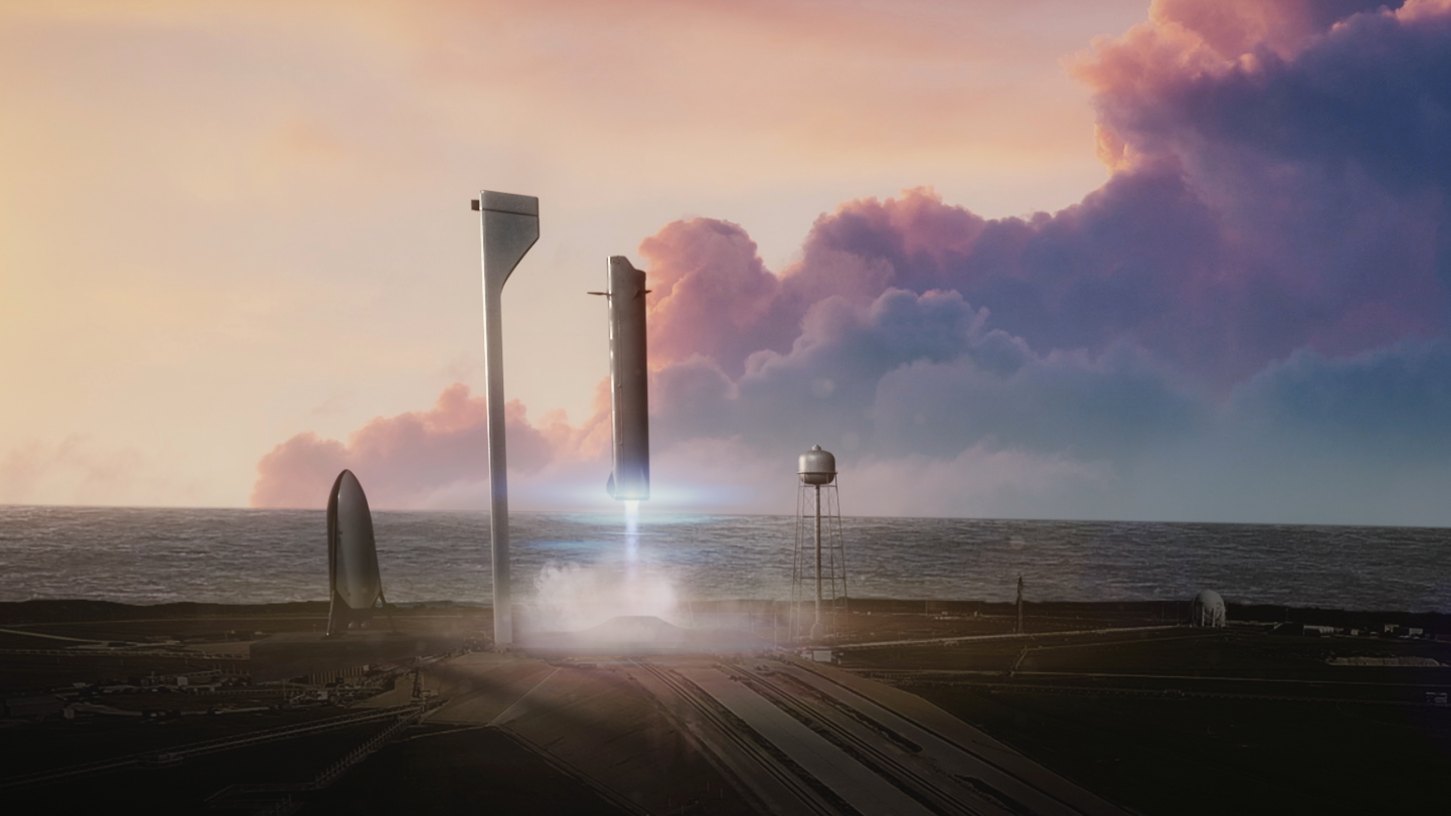
SpaceX’s First Starship Landing Droneship Revealed Destroyed Entire Industry: The aerospace industry is witnessing a transformative moment as SpaceX pivots from its highly successful Falcon 9 program toward the ambitious Starship initiative. This shift is not merely a technological upgrade—it represents a complete rethinking of how humanity approaches space travel, orbital logistics, and interplanetary ambitions.
At the center of this transition lies a surprising yet symbolic development: the reassignment of the legendary drone ship Just Read the Instructions (JRTI). Once a cornerstone of Falcon 9 recovery operations, this floating platform is now being reimagined for a far more demanding role—supporting Starship landings.
This move signals more than operational efficiency. It marks the beginning of a new era where existing infrastructure is repurposed to meet the extreme demands of next-generation spacecraft.
The End of an Era: JRTI’s Final Falcon Mission
A Legacy of Precision and Reliability
For years, JRTI played a crucial role in enabling the rapid reuse of Falcon 9 boosters. With an astonishing 156 successful landings, the drone ship became a symbol of SpaceX’s dominance in reusable rocket technology.
Its final Falcon 9 mission, conducted during a U.S. Space Force launch delivering a GPS satellite, was executed flawlessly—just like the many missions before it. However, what followed was far more significant than the launch itself.
The Official Transition
Shortly after the booster safely touched down, SpaceX announced that this would be JRTI’s final Falcon assignment. The drone ship would now be permanently reassigned to support Starship operations.
This decision reflects a calculated shift in priorities. Rather than retiring the platform, SpaceX is upgrading it—turning a proven asset into a key component of its future interplanetary architecture.
Why SpaceX Is Reallocating Its Fleet
Optimizing Launch Infrastructure
SpaceX’s Florida operations are undergoing a strategic overhaul to accommodate both Falcon and Starship missions efficiently.
- Launch Pad 39A is being positioned as the hub for heavy-lift missions, including Falcon Heavy and future Starship launches.
- Launch Pad 40 has been upgraded to handle standard Falcon 9 missions and critical crewed flights, including astronaut transport.
This redistribution allows SpaceX to streamline its operations while maintaining a high launch cadence.
Drone Ship Consolidation
With missions shifting primarily to Pad 40, SpaceX no longer requires multiple drone ships on the East Coast for Falcon operations.
Instead:
- One drone ship will handle offshore Falcon landings.
- Land-based landing zones will cover additional recovery needs.
This consolidation frees up JRTI for its new mission—supporting Starship, a vehicle that demands entirely new engineering solutions.
The Challenge of Starship Landings at Sea
A Completely Different Beast
Transforming JRTI into a Starship landing platform is not a simple upgrade. Starship is fundamentally different from Falcon 9 in both size and power.
Massive Increase in Thrust
- Falcon 9 uses a single engine during landing, generating about 60 tons of thrust.
- Starship, even when throttled down, could produce over 800 tons of thrust using multiple engines.
This represents a more than tenfold increase in force exerted on the landing surface.
Significant Weight Differences
- Falcon 9 booster: approximately 25 tons (empty).
- Starship: around 100 tons (empty).
- Super Heavy booster: roughly double that.
These differences mean the structural demands on the drone ship will be unprecedented.
Engineering the Transformation
Reinforcing the Deck
To withstand the immense forces of a Starship landing, JRTI will require:
- Heavy-duty steel reinforcement
- Enhanced structural integrity
- Advanced shock absorption systems
Without these upgrades, the deck could buckle under pressure.
Thermal Protection Systems
Starship landings generate intense heat due to engine exhaust and atmospheric interaction. To counter this, engineers must integrate:
- Heat-resistant coatings
- Thermal shielding
- Improved cooling systems
These modifications are essential to prevent structural damage during repeated landings.
The Landing Leg Dilemma
A Unique Design Challenge
Unlike Falcon 9, Starship currently lacks landing legs. It is designed to be caught mid-air by mechanical arms on a launch tower—a system known informally as “chopsticks.”
This creates a major challenge for sea-based landings.
Possible Solutions
1. Adding Landing Legs
One option is to equip Starship with landing legs, similar to those used on Falcon 9. This would:
However, it would also add weight and complexity.
2. Building a Support Cradle
Another approach involves constructing a specialized landing structure on the drone ship deck. This cradle would:
- Stabilize Starship upon touchdown
- Distribute weight more evenly
3. Deploying a Mini Catch Tower
Perhaps the most ambitious idea is installing a compact version of the tower-based catching system directly onto the drone ship.
This “mini-Mechazilla” concept would:
- Allow mid-air capture at sea
- Replicate land-based recovery methods
Each option presents unique engineering challenges, and SpaceX may experiment with multiple approaches before settling on a final design.
Human Expansion Beyond Earth
A New Distance Record
While SpaceX refines its hardware on Earth, humanity is simultaneously expanding its presence in space.
During a recent mission, a record-breaking distance was recorded between two groups of humans in space:
- One crew traveling toward the Moon
- Another orbiting Earth aboard a space station
The gap reached an astonishing 419,000 kilometers.
Why This Matters
This milestone reflects a fundamental shift in human spaceflight:
- Continuous human presence in low Earth orbit
- Simultaneous missions beyond Earth orbit
- Increasing operational complexity
Unlike earlier eras of space exploration, humanity is no longer limited to isolated missions. Instead, we are building a multi-layered presence across different regions of space.
The Bigger Picture: Toward a Multi-Planetary Future
From Testing to Operations
The reassignment of JRTI signals that SpaceX is moving beyond experimental phases. The company is now preparing for:
- High-frequency Starship launches
- Regular interplanetary missions
- Scalable infrastructure for deep space travel
Supporting Lunar and Martian Goals
Starship is central to upcoming missions aimed at:
- Returning humans to the Moon
- Establishing permanent lunar bases
- Enabling future missions to Mars
The transformation of JRTI plays a small but crucial role in this broader vision.
Industry Impact: Why This Changes Everything
Raising the Bar for Competitors
SpaceX’s decision to repurpose existing assets rather than build entirely new infrastructure demonstrates:
- Cost efficiency
- Engineering adaptability
- Long-term strategic planning
Competitors will need to match not just the technology, but also the operational philosophy behind it.
Accelerating Innovation
This move is likely to:
- Push advancements in maritime landing systems
- Inspire new approaches to reusable spacecraft
- Drive innovation across the aerospace sector
In many ways, the transformation of JRTI represents a blueprint for the future of space logistics.
What Comes Next
Testing and Iteration
As JRTI undergoes its transformation, engineers will:
- Conduct structural upgrades
- Test landing scenarios
- Refine recovery techniques
Each modification will provide valuable insights into how Starship can be safely and efficiently recovered at sea.
Scaling the System
If successful, this approach could lead to:
- Additional Starship-compatible drone ships
- Expanded recovery zones across oceans
- Increased launch and landing frequency
Conclusion: A Symbol of Transformation
The evolution of Just Read the Instructions from a Falcon 9 recovery vessel to a Starship landing platform is more than a technical upgrade—it is a symbol of a larger transformation within the space industry.
By repurposing a proven asset for a radically different mission, SpaceX is demonstrating its ability to adapt, innovate, and scale at an unprecedented pace.
As humanity pushes further into space, every piece of infrastructure—whether on land or at sea—will play a role in shaping our future beyond Earth.
JRTI’s next chapter is not just about landing rockets. It’s about laying the groundwork for a civilization that spans planets.
And in that sense, this single drone ship may very well represent the beginning of something far greater than anyone imagined.
FAQs
1. What is SpaceX’s Starship program?
The Starship program is SpaceX’s next-generation fully reusable spacecraft system designed for deep space missions, including travel to the Moon, Mars, and beyond.
2. What is the drone ship Just Read the Instructions (JRTI)?
JRTI is an autonomous drone ship used by SpaceX to land Falcon 9 boosters at sea, enabling rocket reusability and cost reduction.
3. Why is JRTI being reassigned to Starship missions?
SpaceX is reallocating resources to support the more demanding Starship program, making use of JRTI’s proven reliability for future maritime landings.
4. How many landings has JRTI completed?
JRTI has successfully completed 156 Falcon 9 landings, making it one of the most experienced recovery platforms in spaceflight history.
5. What makes Starship different from Falcon 9?
Starship is significantly larger, more powerful, and designed for interplanetary travel, while Falcon 9 is optimized for orbital missions around Earth.
6. Why can’t Starship land like Falcon 9?
Unlike Falcon 9, Starship currently lacks landing legs and is designed to be caught by a launch tower system, creating challenges for sea landings.
7. What modifications are needed for JRTI to support Starship?
JRTI will require structural reinforcement, thermal protection systems, and possibly new landing support mechanisms to handle Starship’s extreme forces.
8. How powerful is a Starship landing compared to Falcon 9?
A Starship landing can generate over 800 tons of thrust, compared to about 60 tons from a Falcon 9, making it far more intense and demanding.
9. What are the possible solutions for Starship sea landings?
Potential solutions include adding landing legs, building a support cradle, or installing a mini catch tower on the drone ship.
10. What is Mechazilla?
Mechazilla is the nickname for SpaceX’s launch tower system that uses large mechanical arms to catch Starship during landing.
11. Why is SpaceX restructuring its Florida launch sites?
The company is optimizing operations by assigning Pad 39A to heavy missions and Pad 40 to regular Falcon launches and crew missions.
12. Will Falcon 9 missions continue after this change?
Yes, Falcon 9 missions will continue, but with a more streamlined setup using fewer drone ships and upgraded launch facilities.
13. What is the significance of the 419,000 km human distance record?
It highlights humanity’s growing presence in space, with simultaneous missions in low Earth orbit and deep space trajectories.
14. How does this transition impact the space industry?
It raises the bar for innovation, cost efficiency, and reusability, pushing competitors to evolve faster.
15. Will more drone ships be converted for Starship?
If successful, SpaceX may develop additional Starship-compatible drone ships to support increased mission frequency.
16. What role will Starship play in future missions?
Starship will be central to lunar missions, Mars exploration, and building a multi-planetary human presence.
17. Why is this development considered a milestone?
Because it represents a shift from experimental testing to operational readiness, marking a major step toward interplanetary travel and infrastructure.
Read More:
- IT’HERE! Tesla Cell Phone Release Date: Pi Phone 2026 $199, Starlink, titanium, microLED
- Tesla pulls back the curtain on Cybercab mass production
- SpaceX just got pulled into the biggest Weapons Program in U.S. history
- Tesla plans to resolve its angriest bunch of owners: here’s how
- Tesla Summon got insanely good in FSD v14.3.2 — Navigation? Not so much