
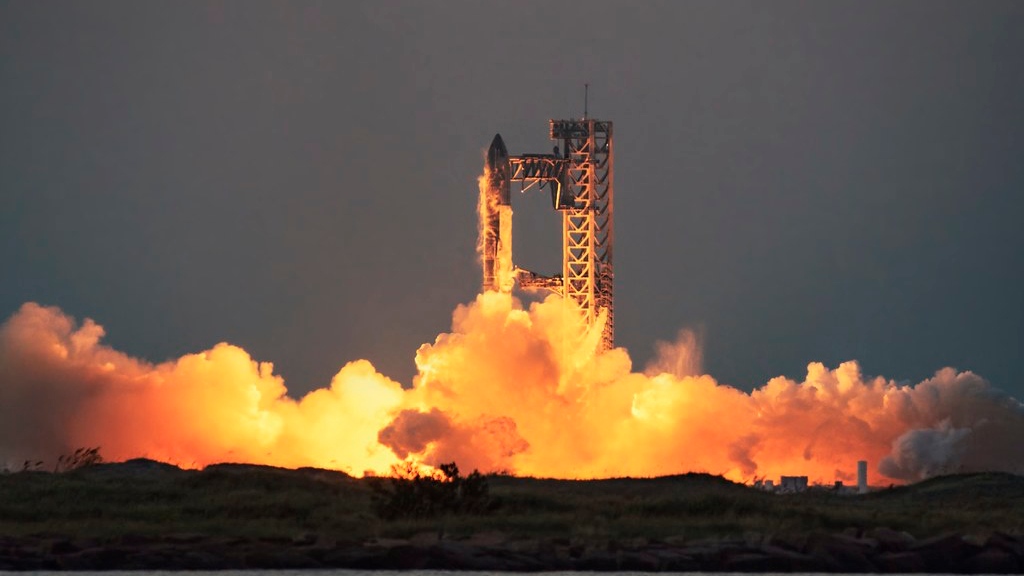
Starship Flight 12 ONE DAY Delayed due to…Final Preparations: The global aerospace industry is standing at a historic crossroads. On one side is SpaceX, the company that has completely redefined modern rocketry through rapid iteration, aggressive engineering, and what many insiders describe as “high-speed controlled chaos.” On the other side stand traditional aerospace giants, organizations built on decades of legacy systems, cautious verification cycles, and methodical engineering culture.
As we move deeper into May 2026, several major milestones are shaping the future of human spaceflight:
- Starship Flight 12 enters its final launch preparations.
- The Dragon spacecraft continues making orbital docking look effortless.
- United Launch Alliance (ULA) struggles to fully validate the Vulcan Centaur after a major booster anomaly.
Together, these developments reveal something bigger than individual missions. They show the emergence of an entirely new operational philosophy in space exploration—one focused on speed, reusability, infrastructure durability, and launch cadence.
This article dives deep into the fascinating details behind the one-day delay of Starship Flight 12, the incredible engineering behind routine ISS docking, and the uphill battle facing ULA’s Vulcan rocket program.
Why Starship Flight 12 Was Delayed by One Day
At first glance, a 24-hour launch delay might sound concerning. But in the world of cutting-edge aerospace engineering, this is actually extremely normal.
SpaceX recently updated the target launch schedule for Starship Flight 12, moving the expected launch from May 19th to May 20th, while maintaining the original 5:30 p.m. launch window.
For a project as massive and technically complex as Starship, every operation is interconnected like dominoes.
The Ripple Effect Behind the Delay
The delay was triggered after SpaceX shifted a major testing opportunity from May 17th to May 18th. That small adjustment created a cascading operational effect across the entire launch campaign.
Here’s how the chain reaction worked:
- Primary testing shifted by 24 hours
- Telemetry review timelines moved back
- Thermal tile inspections required additional buffer time
- Flight Termination System verification needed rescheduling
- Road closures and rollout operations had to be adjusted
- Final countdown sequencing became compressed
The result?
Launching on May 19th became operationally unrealistic.
Rather than rushing critical safety checks, SpaceX simply slid the launch target forward by one day to maintain proper engineering margins.
Why This Delay Is Actually a Positive Sign
Traditional aerospace companies often operate under rigid timelines that can make delays appear catastrophic. SpaceX operates differently.
The company prioritizes:
- Real-time engineering feedback
- Rapid troubleshooting
- Iterative verification
- Operational flexibility
This approach allows SpaceX to move dramatically faster than competitors while still preserving safety margins.
In many ways, this one-day delay demonstrates how mature the Starship program has become.
Ship 39: Final Preparations Are Absolutely Insane
The upper-stage spacecraft assigned to Flight 12 is known as Ship 39 (S39), and its final testing campaign has been nothing short of extraordinary.
Before receiving flight approval, Ship 39 underwent multiple integrated test sequences at the Massey’s test facility near Starbase.
These tests are designed to simulate the brutal conditions the vehicle will face during launch and ascent.
Cryogenic Proof Testing
One of the most critical milestones was Cryogenic Proof Testing.
During this process, engineers loaded the massive stainless-steel tanks with ultra-cold cryogenic simulants to verify structural integrity under extreme thermal stress.
This test validates:
- Weld strength
- Tank wall integrity
- Plumbing seals
- Structural contraction behavior
- Pressure resistance
Because Starship uses liquid methane and liquid oxygen, the vehicle experiences violent thermal contraction during fueling.
Any tiny structural weakness could become catastrophic.
That’s why this test is so important.
Spin Prime Testing
Another major milestone involved Spin Prime Testing.
This procedure spins the massive turbopumps inside the Raptor engines without igniting propellant.
The purpose is to verify:
- Turbine fluid dynamics
- Pump synchronization
- Fuel-flow timing
- Pressure stability
Think of it as a dry rehearsal before the engines actually roar to life.
Igniter Testing
Perhaps the most delicate process involved Igniter Testing.
The Raptor engines rely on internal torch igniters to safely begin combustion.
A poor ignition sequence can cause what engineers call a hard start—an uncontrolled explosion inside the engine chamber.
Igniter testing ensures:
- Stable combustion startup
- Correct ignition timing
- Reliable flame propagation
- Safe engine lighting at T-0
For a rocket with dozens of engines firing simultaneously, this verification is absolutely essential.
The “PEZ Dispenser” Payload System Is Genius
After completing testing, Ship 39 returned to the production facility and entered Mega Bay 2.
Here, SpaceX crews began integrating payload hardware using the company’s famous internal deployment mechanism nicknamed the “PEZ dispenser.”
This system is designed specifically for launching Starlink satellites efficiently.
Why the PEZ System Matters
Traditional payload deployment systems are mechanically complex and often require large fairings.
SpaceX instead designed a highly compact internal deployment architecture that:
- Simplifies payload integration
- Reduces mechanical complexity
- Speeds up turnaround times
- Improves mass efficiency
Simulated Starlink payloads were loaded into Ship 39 between May 16th and May 17th before the vehicle was mounted onto its transport stand.
At that moment, Ship 39 officially became fully flight-ready.
Booster 19 Remains Shrouded in Mystery
While Ship 39’s milestones were highly visible, the first-stage booster assigned to Flight 12—Booster 19 (B19)—has remained surprisingly secretive.
Reports suggest teams are currently focused on:
- Internal inspections
- Structural evaluations
- Flight Termination System arming
- Final sealing procedures
Because the launch schedule is compressed, SpaceX may attempt something incredibly rare.
A Dual Rollout Could Happen
Normally, the Super Heavy booster and Starship upper stage are transported separately.
But due to the compressed timeline, SpaceX may execute a dual rollout operation.
That means:
- Booster 19
- Ship 39
could travel simultaneously down Highway 4 toward the launch pad.
This would create one of the most visually astonishing logistics operations in aerospace history.
Imagine two skyscraper-sized rocket components moving together down a coastal highway at the same time.
That possibility alone has excited the entire spaceflight community.
Launch Pad 2 Is Undergoing Brutal Stress Testing
While Starship itself captures headlines, the true unsung hero may actually be Orbital Launch Pad 2.
After severe damage during earlier Starship tests, SpaceX completely changed its philosophy regarding launch infrastructure.
The company now treats pad durability and rapid turnaround capability as core engineering priorities.
Seven Massive Pad Tests in Just Four Days
Over an incredibly compressed four-day period, SpaceX teams pushed Pad 2 through an insane testing marathon.
May 14
- Two independent water deluge tests
May 15
- Additional water deluge testing
- Full integrated systems simulation
- BQD testing
- SQD testing
- Chopstick movement verification
May 16
- Tank farm venting tests
- High-volume deluge operations
- Pressure system checks
May 17
- Chopstick stabilizer verification
- Final water deluge sequence
That totals:
7 major integrated pad tests in only 96 hours
This level of infrastructure stress testing is almost unheard of in traditional aerospace operations.
Why SpaceX Is Pushing Ground Systems So Hard
Some observers assumed repeated testing indicated hidden failures.
But the evidence suggests the opposite.
SpaceX appears to be intentionally pushing Launch Pad 2 to its operational limits.
The upgraded pad now includes:
- Reinforced flame trenches
- Improved water-delivery manifolds
- Enhanced thermal shielding
- Stronger structural supports
The goal is clear:
Build a launch system capable of airline-like operational tempo.
Instead of treating launches as rare national events, SpaceX wants rockets flying constantly.
That requires infrastructure capable of surviving repeated launches without extensive refurbishment.
Dragon Capsule Makes Spaceflight Look Routine
While Starship represents the experimental future, the Dragon spacecraft represents the mature present.
On May 17th at approximately 6:37 a.m. Eastern Time, the CRS-34 Dragon cargo spacecraft successfully docked with the International Space Station.
The docking occurred fully autonomously at the forward-facing port of the Harmony module.
The Engineering Behind Autonomous Docking Is Extraordinary
To casual observers, docking may look simple.
It isn’t.
The Dragon capsule must:
- Navigate orbital mechanics perfectly
- Match trajectories with the ISS
- Synchronize velocity at 17,500 mph
- Maintain centimeter-level precision
- Execute autonomous braking sequences
- Avoid collision risk entirely
This process once represented the absolute pinnacle of national space capability.
Today, SpaceX performs it so consistently that the public barely notices anymore.
That alone demonstrates how dramatically the aerospace industry has evolved.
Dragon Delivered 6,500 Pounds of Cargo
The CRS-34 mission transported approximately 6,500 pounds of critical payloads to the ISS.
These included:
- Scientific experiments
- Crew provisions
- Hardware upgrades
- Research equipment
The spacecraft will remain attached to the station until mid-June before returning completed experiments and old station hardware safely back to Earth.
Elon Musk’s “Routine” Comment Says Everything
Following the successful docking, Elon Musk posted a statement saying:
“Docking with the space station has become routine.”
That sentence perfectly captures SpaceX’s impact on the industry.
Routine spaceflight used to sound impossible.
Now it’s reality.
And perhaps the most important part?
SpaceX remains the only organization currently capable of returning large amounts of cargo from orbit back to Earth safely and reliably.
That gives the company enormous strategic importance for NASA and future commercial space operations.
ULA Vulcan Faces a Very Different Reality
While SpaceX pushes toward rapid launch cadence, United Launch Alliance is fighting a very different battle.
Its next-generation rocket, the Vulcan Centaur, recently suffered a serious booster anomaly during its fourth mission.
What Actually Went Wrong With Vulcan?
One of Vulcan’s GEM 63XL solid rocket boosters experienced a major malfunction before stage separation.
This created:
- Asymmetric thrust
- Vehicle instability
- Performance degradation
Fortunately, the rocket’s two BE-4 engines compensated by extending burn duration.
As a result, the payload still reached orbit successfully.
But for national security missions, partial success isn’t enough.
Reliability is everything.
Deep Ocean Recovery Became Impossible
Investigators faced another huge challenge.
Critical booster components fell into extremely deep ocean waters.
Unlike a previous Vulcan incident in 2024, engineers could not physically recover the damaged hardware this time.
That means investigators were forced to rely on:
- Telemetry analysis
- Structural simulations
- Computational modeling
Without physical evidence, diagnosing the root cause becomes dramatically harder.
Northrop Grumman Conducted Critical Revalidation Tests
Despite setbacks, ULA has made progress.
Northrop Grumman recently completed a successful static fire test of a modified GEM 63XL booster.
The upgraded design reportedly includes:
- Improved nozzle geometry
- Enhanced propellant mixtures
- Better thermal protection
- Reduced throat erosion risk
ULA leadership now believes Vulcan can return to flight status before the end of 2026.
Amazon’s Kuiper Project Is Now a Massive Priority
Vulcan’s future is heavily tied to Amazon’s Project Kuiper satellite constellation.
ULA recently installed a fresh Vulcan booster vertically inside the newly built VIF-A facility at Space Launch Complex 41.
This facility is dedicated almost entirely to Kuiper missions.
Why?
Because Amazon has contracted 38 Vulcan launches.
That represents an enormous operational challenge.
ULA Is Trying to Transition Into High-Cadence Launch Operations
Historically, ULA specialized in:
- Low-frequency launches
- Bespoke national security missions
- Highly customized payload integration
But the commercial LEO market demands something very different.
It requires:
- Fast turnaround
- Standardized operations
- Rapid payload processing
- Assembly-line launch cadence
SpaceX already dominates this model.
ULA is now attempting to build similar operational capability from the ground up.
The Future of Spaceflight Is Being Decided Right Now
The contrast between SpaceX and traditional aerospace has never been clearer.
SpaceX Represents:
- Rapid iteration
- Aggressive testing
- High launch cadence
- Infrastructure scalability
- Reusability-first engineering
Traditional Aerospace Represents:
- Cautious verification
- Legacy operational structures
- Slower certification cycles
- Institutional reliability
Both philosophies have strengths.
But the market increasingly rewards speed, flexibility, and operational frequency.
That reality is reshaping the entire global space industry.
Final Thoughts
The one-day delay of Starship Flight 12 is not a setback—it’s a glimpse into the incredibly complex machinery behind the world’s most ambitious rocket program.
Meanwhile:
- Dragon continues normalizing orbital logistics
- ULA fights to preserve reliability
- Commercial launch cadence becomes the new battleground
- Infrastructure durability emerges as a critical metric
- Spaceflight transitions from spectacle to routine industry
Humanity is no longer merely experimenting with space access.
We are building the industrial foundation for a permanently spacefaring civilization.
And judging by the events unfolding in May 2026, that future may be arriving much faster than anyone expected.
FAQs
1. Why was Starship Flight 12 delayed?
Starship Flight 12 was delayed by one day because SpaceX shifted a critical testing window from May 17 to May 18. This created a ripple effect across telemetry reviews, safety checks, rollout logistics, and countdown preparations.
2. Is a one-day launch delay a bad sign for SpaceX?
No, a short delay is considered normal in modern aerospace operations. SpaceX prioritizes engineering verification, safety margins, and rapid troubleshooting rather than forcing launches on rigid schedules.
3. What is Ship 39 in the Starship program?
Ship 39 (S39) is the upper-stage Starship vehicle assigned to Flight 12. It completed extensive testing before final launch preparations at Starbase.
4. What is cryogenic proof testing?
Cryogenic proof testing involves filling rocket tanks with ultra-cold substances to verify:
- Structural integrity
- Weld durability
- Pressure resistance
- Thermal contraction handling
This is essential because Starship uses liquid methane and liquid oxygen propellants.
5. What is Spin Prime Testing?
Spin Prime Testing spins up the Raptor engine turbopumps without igniting fuel. It helps engineers verify:
- Turbine performance
- Fuel flow timing
- Pressure stability
- Pump synchronization
6. Why is igniter testing important for Starship?
Igniter testing ensures the Raptor engines start safely and avoid dangerous hard starts, which can cause explosive engine failures during ignition.
7. What is SpaceX’s “PEZ dispenser” system?
The “PEZ dispenser” is SpaceX’s internal payload deployment system designed for launching Starlink satellites efficiently from Starship.
8. What is Booster 19?
Booster 19 (B19) is the Super Heavy first-stage booster assigned to Starship Flight 12. It provides the enormous thrust needed to lift Starship into space.
9. What is a dual rollout operation?
A dual rollout means SpaceX could transport both:
- Ship 39
- Booster 19
to the launch pad simultaneously, which would be a rare and visually spectacular logistics operation.
10. Why is Launch Pad 2 so important for Starship?
Launch Pad 2 is critical because SpaceX wants to achieve:
- Rapid launch cadence
- Minimal refurbishment
- High infrastructure durability
- Faster turnaround times
The pad is being heavily stress-tested to support future frequent launches.
11. How many pad tests did SpaceX perform before Flight 12?
SpaceX conducted 7 major integrated pad tests in just 4 days, including:
- Water deluge tests
- Tank farm venting
- Chopstick arm tests
- Quick Disconnect system checks
12. What is the Dragon CRS-34 mission?
CRS-34 is a SpaceX cargo resupply mission delivering approximately 6,500 pounds of supplies, scientific experiments, and hardware to the International Space Station (ISS).
13. How does Dragon dock with the ISS?
The Dragon spacecraft docks autonomously using:
- Advanced navigation systems
- Precision orbital alignment
- Automated thruster controls
- Real-time trajectory calculations
The spacecraft matches the ISS orbit while traveling at roughly 17,500 mph.
14. Why did Elon Musk say ISS docking is “routine” now?
Elon Musk used the word “routine” to highlight how SpaceX has transformed complex orbital docking from a rare achievement into a reliable operational process performed regularly.
15. What problem did ULA’s Vulcan rocket experience?
Vulcan suffered a solid rocket booster anomaly when one GEM 63XL booster malfunctioned before separation, causing asymmetric thrust and reduced performance.
16. Why is Amazon’s Project Kuiper important for ULA?
Amazon’s Project Kuiper is a massive satellite internet constellation requiring 38 Vulcan launches. These missions are crucial for ULA’s future commercial launch business and high-cadence launch ambitions.
Read More:
- Tesla Cybertruck 2026 Shocked Update! Change Everything
- SpaceX just forced Verizon, AT&T and T-Mobile to team up for the first time in history
- Starship V3 is here putting SpaceX closer to Mars than it has ever been
- Tesla is making sweeping improvements to Robotaxi
- 2026 Tesla’s New AI Airbag is Insane!
1 thought on “Starship Flight 12 ONE DAY Delayed due to…Final Preparations is Kind of Mind-Blowing”