
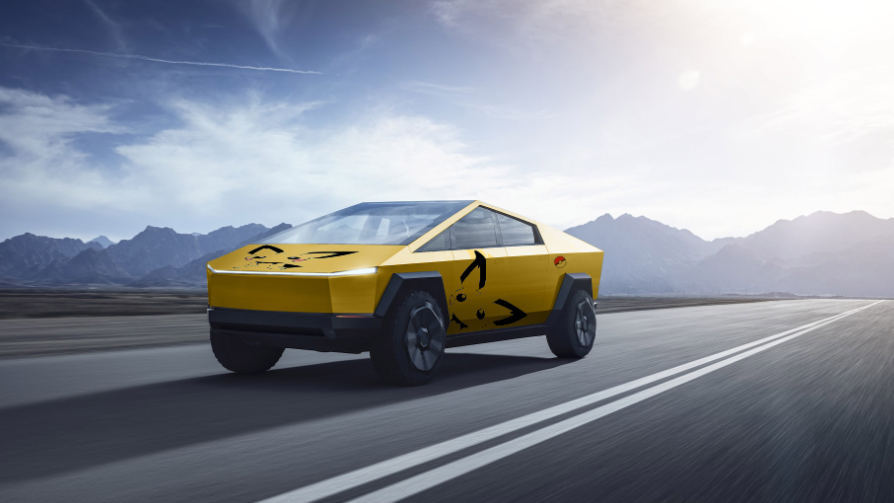
The Tesla Cybertruck 2026 has become one of the most controversial and revolutionary vehicles in modern automotive history. Since its unveiling, the futuristic electric pickup has divided opinions across the auto industry. Some see it as the future of transportation, while others view it as an overengineered experiment pushed too far, too fast.
Yet despite the criticism, the Cybertruck continues to dominate conversations about electric vehicles (EVs), manufacturing innovation, vehicle safety, and the future of mobility. The latest developments surrounding the Cybertruck have only intensified this debate.
Tesla recently announced a hardware recall affecting 173 Cybertrucks from the 2024–2026 production years because of concerns related to brake rotors, wheel hubs, and structural stability. At the same time, the company is facing slowing demand, major software recalls, and a dramatic decline in Cybertruck sales.
Surprisingly, however, the Cybertruck simultaneously achieved one of the highest safety recognitions in the automotive industry, earning a five-star overall safety rating from the NHTSA and the prestigious IIHS Top Safety Pick Plus Award.
How can a vehicle be considered one of the safest trucks ever built while also suffering from serious hardware concerns?
The answer lies in Tesla’s aggressive engineering philosophy, radical manufacturing methods, and the immense physical challenges of building one of the heaviest electric trucks ever produced.
The Cybertruck Recall That Shocked the EV Industry
Tesla’s latest recall centers around wheel components and brake rotor systems on select Cybertruck models equipped with 18-inch steel wheels.
According to reports, repeated exposure to harsh driving conditions such as:
- Deep potholes
- Rough off-road terrain
- Heavy payload hauling
- Aggressive cornering
- High-speed impacts
could create microscopic fractures near the wheel mounting areas.
Over time, these tiny fractures may worsen and eventually lead to wheel stud separation from the hub assembly. This represents a major safety concern because the wheel assembly directly affects:
- Steering precision
- Braking performance
- Vehicle handling
- Overall driving stability
In severe cases, partial wheel separation could occur during operation.
For any automaker, this would be a significant issue. But for Tesla, the recall highlights a much larger challenge: balancing rapid innovation with long-term physical durability.
Why the Tesla Cybertruck Is Different From Traditional Trucks
The Cybertruck was never designed to be just another pickup truck. Elon Musk and Tesla wanted to completely reinvent how vehicles are manufactured.
Traditional pickup trucks from companies like Ford, GM, and Ram rely on decades of incremental engineering improvements. Their trucks use:
- Soft sheet-metal body panels
- Conventional ladder-frame chassis
- Mechanical steering systems
- Standard manufacturing techniques
Tesla rejected nearly all of these conventions.
Instead, the Cybertruck introduced several groundbreaking technologies simultaneously.
Stainless Steel Exoskeleton
The Cybertruck’s body uses an ultra-hard cold-rolled stainless steel exoskeleton instead of traditional sheet metal.
This approach eliminates the need for:
- Complex stamping machines
- Conventional paint shops
- Multi-layer body panel structures
The result is an extremely rigid and highly durable outer shell unlike anything previously seen in mass-market vehicles.
However, this design initially created enormous skepticism among safety experts.
The Safety Concerns Behind the Cybertruck’s Rigid Body
Most modern vehicles are intentionally designed to crumple during crashes.
These crumple zones absorb kinetic energy before it reaches passengers. Traditional body panels deform progressively, reducing impact forces inside the cabin.
Critics feared the Cybertruck’s rigid exoskeleton would behave like a giant steel block during collisions, transferring dangerous crash forces directly into occupants.
But Tesla engineered a hidden solution.
Hidden Energy Absorption Zones
Beneath the stainless steel shell, Tesla integrated advanced energy-absorption structures that collapse strategically during impacts.
These internal structures function similarly to traditional crumple zones by:
- Absorbing collision energy
- Redirecting impact forces
- Protecting the passenger compartment
As a result, the Cybertruck achieved outstanding crash-test performance despite its rigid exterior.
Why the Cybertruck Earned a Five-Star Safety Rating
One of the biggest reasons behind the Cybertruck’s impressive safety performance is its EV platform design.
The truck features a massive battery pack mounted beneath the cabin floor. This creates an extremely low center of gravity, dramatically reducing rollover risks.
This is especially important because traditional pickup trucks often struggle with rollover safety due to their height and weight distribution.
Tesla’s design advantages include:
- Better rollover resistance
- Improved chassis rigidity
- Enhanced passenger protection
- Strong structural integrity
The Cybertruck weighs nearly 6,800 pounds (3,100 kg), making it one of the heaviest consumer electric trucks ever built.
Despite this massive weight, Tesla successfully engineered the truck to achieve elite safety standards.
The Physics Problem Tesla Cannot Ignore
While Tesla mastered crash safety, everyday mechanical stress revealed a different engineering challenge.
Heavy electric vehicles create enormous physical loads on:
- Suspension systems
- Brake rotors
- Wheel hubs
- Mounting assemblies
- Steering components
The Cybertruck’s extreme weight amplifies these forces significantly.
Why Heavy EVs Create More Stress
When a nearly 7,000-pound vehicle hits a pothole at highway speed, the amount of kinetic energy transferred through the wheel assembly becomes enormous.
Even tiny imperfections in:
- Material composition
- Structural geometry
- Manufacturing tolerances
can become serious problems over time.
This explains why microscopic fractures may form under repeated stress cycles.
Traditional automakers have spent nearly 100 years refining truck durability through millions of real-world testing miles. Tesla, by comparison, is compressing that development timeline dramatically.
In many ways, early Cybertruck owners are participating in Tesla’s real-world durability testing program.
Software vs Hardware: Tesla’s Biggest Challenge
Tesla revolutionized the auto industry by treating vehicles like software platforms.
The company became famous for its over-the-air (OTA) updates, allowing cars to receive improvements remotely without dealership visits.
This approach works brilliantly for software-related issues.
For example, Tesla recently fixed rear-view camera delays affecting over 200,000 vehicles through a simple OTA update.
But hardware failures are completely different.
Why Hardware Problems Are Harder to Fix
Software issues can often be resolved instantly through code updates.
Physical mechanical failures require:
- Manual inspections
- Component replacements
- Factory redesigns
- Manufacturing adjustments
- Mechanic labor
- Supply chain coordination
A cracked wheel hub cannot be repaired remotely.
A fractured brake rotor cannot be fixed with software.
This is where Tesla’s fast-moving tech-company culture collides with the slower realities of physical manufacturing.
Elon Musk’s Radical Manufacturing Philosophy
Elon Musk has repeatedly stated that “the factory is the product.”
Tesla’s philosophy centers on reducing complexity by eliminating as many components as possible.
The core idea is simple:
Fewer parts mean fewer things can fail.
This philosophy drove several revolutionary innovations in the Cybertruck.
Major Cybertruck Manufacturing Innovations
Mega Giga Castings
Tesla uses enormous Giga Press machines to create massive single-piece aluminum structures.
This replaces dozens of smaller stamped components traditionally welded together.
Benefits include:
- Faster production
- Fewer welds
- Reduced factory complexity
- Lower manufacturing costs
Structural Battery Pack
The battery itself acts as part of the vehicle’s structural chassis.
Instead of being a separate component, the battery pack becomes load-bearing architecture.
Steer-by-Wire Technology
The Cybertruck eliminates the traditional mechanical steering column entirely.
Instead, steering inputs are transmitted digitally using electronic actuators.
This creates:
- Faster steering response
- More cabin flexibility
- Reduced mechanical complexity
Stainless Steel Exterior
The unpainted stainless steel body removes the need for expensive paint facilities and improves durability.
The Hidden Problem With Structural Simplification
Tesla’s ultra-simplified manufacturing methods create major advantages, but they also introduce new risks.
In traditional vehicle designs, mechanical stress spreads across hundreds of separate components.
When one area experiences high stress, surrounding structures help distribute the load.
The Cybertruck’s highly integrated architecture changes this dynamic.
Stress Concentration Becomes a Major Issue
Because Tesla consolidated many components into fewer large structures, mechanical loads become concentrated in smaller critical areas.
This means components such as:
- Wheel hubs
- Mounting brackets
- Brake assemblies
- Suspension connection points
must handle enormous concentrated stress repeatedly.
If even one component is slightly under-engineered, fatigue can develop rapidly.
This appears to be exactly what happened with the recalled wheel assemblies.
Why Cybertruck Sales Are Falling
Despite enormous hype during launch, Cybertruck sales have slowed significantly.
Tesla reportedly saw domestic Cybertruck sales fall nearly 50% year-over-year, dropping from around 39,000 units to roughly 20,200 units.
Several factors may explain this decline.
High Price Tags
Many consumers expected a more affordable electric pickup. Instead, final production models arrived with significantly higher pricing.
Polarizing Design
The Cybertruck’s aggressive futuristic styling attracts passionate fans but also alienates many traditional truck buyers.
Durability Concerns
Recalls and reports of hardware issues may reduce buyer confidence.
Increasing EV Competition
Traditional automakers are now aggressively entering the electric truck market with models such as:
- Ford F-150 Lightning
- Rivian R1T
- Chevrolet Silverado EV
- GMC Hummer EV
Competition in the EV truck segment is growing rapidly.
Why Investors Still Believe in Tesla
Despite recalls and slowing sales, many investors remain highly optimistic about Tesla’s long-term future.
The reason is Tesla’s unmatched level of vertical integration.
Unlike traditional automakers, Tesla controls:
- Software development
- AI systems
- Battery technology
- Manufacturing processes
- Robotics infrastructure
- Supply chains
This allows Tesla to iterate faster than competitors.
Tesla’s “Production Hell” History
Tesla has faced major manufacturing crises before.
During the early Model 3 rollout, Elon Musk admitted Tesla was trapped in “production hell.”
At the time, many critics predicted failure.
Instead, Tesla optimized production systems and eventually transformed the Model Y into one of the world’s best-selling vehicles.
Supporters believe the Cybertruck is simply another painful but necessary stage in Tesla’s long-term evolution.
The Cybertruck Is Bigger Than Just a Truck
The Cybertruck is not merely a standalone product.
It serves as Tesla’s real-world testing platform for future technologies that may shape the entire company.
Technologies pioneered on the Cybertruck are expected to influence:
- Future mass-market EVs
- Tesla Robotaxis
- Autonomous vehicle systems
- Optimus humanoid robots
- Next-generation manufacturing systems
This makes the Cybertruck strategically important far beyond pickup truck sales alone.
Can Tesla Solve the Cybertruck’s Hardware Problems?
The biggest question now facing Tesla is whether the company can permanently resolve these durability concerns.
To succeed, Tesla will likely need to:
- Improve metallurgy processes
- Reinforce wheel hub assemblies
- Optimize stress distribution
- Redesign high-load mounting points
- Expand long-term durability testing
If Tesla solves these issues quickly, the Cybertruck may eventually be remembered as a revolutionary engineering milestone.
If not, concerns about long-term reliability could seriously damage consumer trust.
The Future of the Tesla Cybertruck 2026
The Cybertruck represents one of the boldest automotive experiments ever attempted.
It combines:
- Radical design
- Revolutionary manufacturing
- Advanced software integration
- Extreme structural engineering
- Futuristic driving technologies
At the same time, it exposes the dangers of pushing innovation beyond traditional development timelines.
Tesla’s challenge is no longer proving the Cybertruck can survive crash tests.
The challenge is proving it can survive years of harsh real-world driving while maintaining reliability at scale.
That battle will determine whether the Cybertruck becomes:
- A historic manufacturing breakthrough
or - A cautionary tale about moving too fast in automotive engineering
Final Thoughts
The Tesla Cybertruck 2026 stands at the center of one of the most fascinating engineering debates in modern automotive history.
On one side, it represents the pinnacle of EV innovation, safety technology, and manufacturing disruption.
On the other, it reveals the brutal physical realities of building ultra-heavy electric vehicles using radically simplified structures.
The recent recalls and sales decline undoubtedly raise serious concerns. Yet Tesla has repeatedly demonstrated an ability to learn rapidly, redesign aggressively, and scale solutions faster than traditional automakers.
Whether the Cybertruck ultimately succeeds or fails, one thing is certain:
It has already changed the automotive industry forever.
The coming years will determine whether Tesla’s bold gamble becomes the blueprint for the future of transportation—or one of the most ambitious engineering overreaches ever attempted.
FAQs
1. What is the Tesla Cybertruck 2026?
The Tesla Cybertruck 2026 is Tesla’s futuristic all-electric pickup truck featuring a stainless steel exoskeleton, advanced EV technology, steer-by-wire systems, and Tesla’s latest manufacturing innovations.
2. Why is the Tesla Cybertruck considered revolutionary?
The Cybertruck is revolutionary because it uses Mega Giga Castings, a structural battery pack, steer-by-wire technology, and an ultra-hard stainless steel body instead of traditional truck construction methods.
3. Why did Tesla recall some Cybertruck models?
Tesla recalled certain Cybertruck models due to concerns involving wheel hubs, brake rotors, and wheel stability. Repeated stress from potholes, heavy loads, and rough terrain could create microscopic fractures in wheel mounting areas.
4. How many Cybertrucks were affected by the recall?
The recall reportedly affected 173 Tesla Cybertrucks from the 2024–2026 model years.
5. Is the Tesla Cybertruck safe to drive?
Yes, despite the recall concerns, the Cybertruck received a five-star overall safety rating from the NHTSA and earned the IIHS Top Safety Pick Plus Award, making it one of the safest electric trucks tested.
6. What makes the Cybertruck safer than traditional pickup trucks?
The Cybertruck benefits from a low center of gravity due to its floor-mounted battery pack, reducing rollover risk. It also features advanced internal energy-absorption structures for crash protection.
7. Why is the Cybertruck so heavy?
The Cybertruck weighs nearly 6,800 pounds (3,100 kg) because of its large battery pack, reinforced stainless steel exoskeleton, and heavy-duty EV architecture.
8. What is Tesla’s “Giga Casting” technology?
Giga Casting uses giant aluminum casting machines to replace dozens of smaller vehicle parts with single large structural components, simplifying production and reducing manufacturing complexity.
9. What is steer-by-wire in the Tesla Cybertruck?
Steer-by-wire is a fully electronic steering system that eliminates the traditional mechanical steering column. Steering inputs are transmitted digitally using sensors and actuators.
10. Can Tesla fix Cybertruck issues through software updates?
Tesla can fix software-related problems using over-the-air (OTA) updates, but physical hardware issues like wheel fractures or brake problems require manual repairs and redesigned components.
11. Why are Cybertruck sales declining?
Cybertruck sales have slowed due to factors such as high pricing, durability concerns, increasing EV competition, and the truck’s highly polarizing futuristic design.
12. How does the Cybertruck compare to traditional trucks like Ford or Ram?
Unlike traditional trucks, the Cybertruck uses a stainless steel exoskeleton, digital steering, integrated battery structure, and highly simplified manufacturing methods instead of conventional body-on-frame construction.
13. What is Tesla’s manufacturing philosophy?
Tesla follows Elon Musk’s philosophy that “the factory is the product.” The company aims to reduce complexity by eliminating unnecessary parts and simplifying production systems.
14. Will Cybertruck technology be used in future Tesla vehicles?
Yes, many technologies developed for the Cybertruck—including Giga Castings, structural batteries, and advanced electronics—are expected to influence Tesla’s future EVs, Robotaxis, and Optimus robots.
15. Is the Tesla Cybertruck still worth buying in 2026?
For buyers seeking cutting-edge technology, extreme performance, and futuristic design, the Cybertruck remains highly attractive. However, some consumers may prefer to wait until Tesla fully resolves long-term durability and hardware concerns.
Read More:
- SpaceX just forced Verizon, AT&T and T-Mobile to team up for the first time in history
- Starship V3 is here putting SpaceX closer to Mars than it has ever been
- Tesla is making sweeping improvements to Robotaxi
- 2026 Tesla’s New AI Airbag is Insane!
- Elon Musk SHOCKED The Industry with Tesla’s First Solid-State Battery with 1,500km Range
1 thought on “Tesla Cybertruck 2026 Shocked Update! Change Everything”