
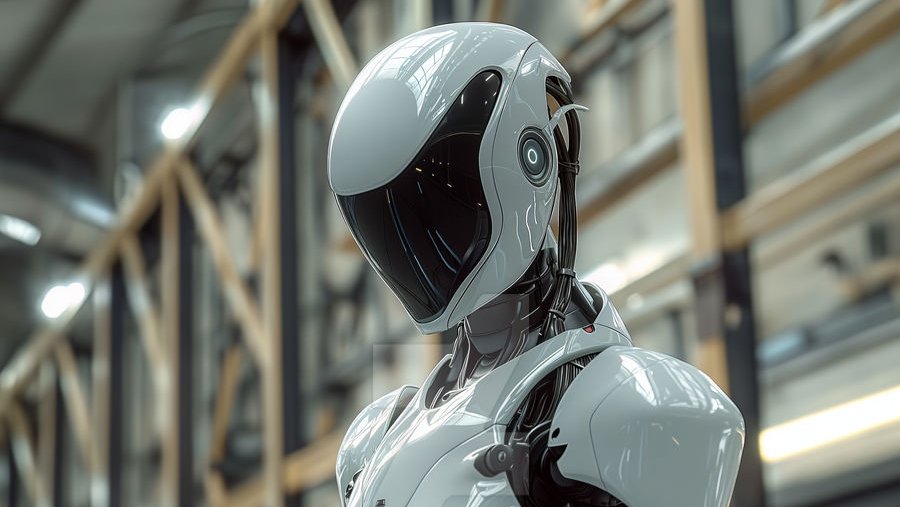
Tesla Bot Gen 3 SURPRISES At CoRL! New Hands & Design REVEALED: The humanoid robotics industry is entering an exciting new era as artificial intelligence and advanced robotics continue to evolve. One of the biggest highlights recently came from the Conference on Robot Learning (CoRL) in Austin, Texas, where Tesla showcased its latest humanoid robot, informally known as Optimus 2.5. The demonstration attracted significant attention thanks to its striking golden metallic exterior, green lighting around its head, and ability to interact directly with conference attendees.
During the event, Tesla’s humanoid robot successfully handed out snack packets to visitors, demonstrating improvements in its physical hardware and hand coordination. Although the demonstration was teleoperated rather than fully autonomous, it offered an important look at Tesla’s progress toward developing a commercially useful humanoid robot.
The appearance also raised exciting questions about the future of Tesla Optimus Gen 3, including upgraded robotic hands, next-generation AI computing, and the company’s ambitious manufacturing targets. With Tesla preparing for large-scale robot production, the latest developments could represent another important step toward bringing humanoid robots into factories and eventually everyday life.
Tesla Optimus 2.5 Steals the Spotlight at CoRL
Tesla’s appearance at the Conference on Robot Learning provided an opportunity to demonstrate its latest robotics hardware in front of researchers, engineers, and technology enthusiasts.
The robot featured an eye-catching golden metallic design, accompanied by green perimeter lighting around its head. However, its appearance was only one part of the demonstration. The more important achievement was its ability to interact with people by distributing snack packets.
Unlike conventional industrial robots that operate inside controlled environments, humanoid robots must perform tasks involving unpredictable objects and human interactions.
Even handing someone a small snack packet requires several coordinated movements.
Improved Hand Dexterity and Grip Control
One of the biggest challenges in humanoid robotics is developing hands capable of handling different objects without damaging them.
A snack packet is lightweight and flexible, meaning the robot must apply the correct amount of pressure. Excessive force could crush the packaging, while insufficient pressure could cause the object to slip.
Tesla’s Gen 2 robotic hands feature 11 degrees of freedom, allowing multiple coordinated finger movements. These hands also incorporate tactile sensing to improve object handling.
Meanwhile, reports and discussions surrounding newer hardware suggest that future configurations could potentially reach 22 degrees of freedom.
Such improvements could give Optimus greater flexibility when performing complicated activities, including picking up delicate objects, manipulating tools, and handling components on manufacturing lines.
Autonomous Demonstrations Could Be Coming Soon
Although the CoRL demonstration relied on human teleoperation, Tesla engineers reportedly indicated that autonomous demonstrations are approaching.
During the October 21 earnings call, Elon Musk discussed expectations for footage showing Optimus completing unscripted tasks without relying on pre-programmed routines.
The distinction between teleoperation and autonomy is extremely important.
A remotely controlled robot demonstrates mechanical capabilities, but a truly autonomous humanoid must independently understand its surroundings, recognize objects, plan movements, and execute tasks.
This is the next major milestone Tesla needs to achieve before Optimus can become a practical everyday assistant or industrial worker.
Tesla AI6 Chip Gets a Major Memory Configuration Change
While improvements to the robot’s physical design attract attention, its computing architecture could prove equally important.
Tesla is developing its next-generation AI6 computing chip, which is expected to support demanding artificial intelligence applications across its technology ecosystem.
One particularly interesting development involves a change to the planned memory configuration.
Tesla reportedly reduced its proposed LPDDR6 memory capacity from 216 GB to 144 GB, representing a reduction of 72 GB, or approximately one-third.
At first glance, reducing memory capacity might appear to be a disadvantage for an advanced AI system. However, Elon Musk emphasized that memory bandwidth is particularly important for real-time robotic applications.
Why Memory Bandwidth Matters More Than Capacity
Humanoid robots constantly process information from their surroundings.
Their onboard computing systems must analyze camera feeds, identify objects, recognize people, track movements, and calculate motor commands.
These operations require enormous amounts of data to move quickly between memory and the processor.
Memory bandwidth determines how quickly information can be transferred, making it a critical factor in real-time AI performance.
For a humanoid robot, processing information quickly can be more valuable than simply having a larger memory capacity.
The goal is to create an efficient computing architecture that delivers the performance necessary for complex physical tasks without creating unnecessary hardware requirements.
Lower Memory Requirements Could Increase Robot Production
The revised memory configuration could also provide an important manufacturing advantage.
Reducing the amount of memory required by each robot means Tesla could potentially manufacture more units using the same available memory supply.
For example:
- At 216 GB per robot, a fixed memory allocation could support approximately 10,000 robots.
- At 144 GB per robot, the same allocation could support approximately 15,000 robots.
That represents approximately 50% more robots from the same total memory allocation.
This approach could help Tesla manage component shortages, reduce manufacturing constraints, and improve its ability to scale Optimus production.
Tesla Begins Scaling Toward Million-Unit Optimus Production
Tesla’s ambitions for Optimus extend far beyond conference demonstrations and experimental prototypes.
During its third-quarter earnings call, Elon Musk confirmed that initial production lines for the high-volume Optimus program had commenced at Tesla’s Fremont factory in California.
The company’s long-term manufacturing ambitions are particularly impressive.
Tesla is targeting production capacity of approximately 20,000 humanoid robots per week, which would translate into roughly 1.04 million units annually if sustained throughout the year.
However, reaching this production rate will require substantial engineering and manufacturing improvements.
Four Major Challenges Tesla Must Overcome
1. Advanced Robotic Hands
Developing highly dexterous hands is essential for making Optimus useful in real-world environments. The robot must handle different objects, operate tools, and perform delicate tasks reliably.
2. Real-Time Artificial Intelligence
The next generation of computing hardware, including AI6, must provide sufficient processing performance for autonomous navigation, object recognition, and complex physical movements.
3. Large-Scale Manufacturing
Producing thousands of humanoid robots every week requires reliable suppliers, efficient assembly lines, automated testing, and consistent component quality.
4. Safety and Adaptability
Optimus must safely operate around people, recognize unexpected situations, and adapt to changing environments without requiring constant human supervision.
Tesla’s ability to solve these challenges will determine how quickly its humanoid robot moves from experimental technology to commercial deployment.
Humanoid Robot Market Experiences Explosive Growth
Tesla is entering a rapidly expanding global humanoid robotics market.
According to the supplied Counterpoint Research figures, global humanoid robot shipments exceeded 22,000 units during the first half of 2026, representing nearly 300% year-over-year growth.
Full-year projections were also expected to surpass 50,000 units.
These figures highlight how quickly humanoid robotics is moving from research laboratories toward commercial applications.
Industrial Applications Are Becoming More Important
Despite the impressive growth, much of the early humanoid robot market remains focused on entertainment, marketing, research, and data collection.
More than 60% of shipments during the first half of 2026 reportedly went toward these applications.
However, industrial deployment is becoming increasingly important.
One notable example is Figure AI’s Figure 02 robot, which completed an extensive deployment at BMW’s Spartanburg manufacturing facility.
According to the supplied figures, the robot operated for more than 1,250 hours, handled approximately 90,000 components, and contributed to the production process involving over 30,000 vehicles.
These results demonstrate why manufacturing facilities are attractive environments for humanoid robots.
Factories offer structured workflows where robots can gradually learn and perform repetitive physical tasks before expanding into more unpredictable environments.
Tesla Faces Growing Competition in Humanoid Robotics
Tesla is not the only company investing heavily in humanoid robots.
The competitive landscape includes established Chinese manufacturers such as Agibot and Unitree, alongside American robotics companies such as Figure AI.
Each company is pursuing different approaches to hardware development, artificial intelligence, commercial deployment, and manufacturing scale.
However, the biggest competitive advantage will not necessarily come from producing the most visually impressive robot.
Instead, the companies that succeed will likely be those capable of delivering machines that combine:
- Reliable robotic hardware
- Advanced AI and autonomous decision-making
- Highly dexterous hands
- Affordable manufacturing costs
- Practical industrial applications
- Safe operation around humans
Tesla’s advantage could come from combining its artificial intelligence expertise, manufacturing experience, computing technology, and ambitious production infrastructure.
The Future of Tesla Optimus Gen 3
The latest CoRL appearance provides another indication of how quickly Tesla’s humanoid robotics program is developing.
The golden Optimus demonstration highlighted improvements in physical interaction, while discussions surrounding advanced robotic hands and AI6 computing revealed the importance of optimizing both hardware and software.
The potential transition toward fully autonomous demonstrations will be especially important. Successfully completing unscripted tasks would provide stronger evidence that Optimus is progressing beyond remote operation.
Meanwhile, Tesla’s target of reaching 20,000 robots per week illustrates the company’s long-term ambition to make humanoid robotics a large-scale manufacturing business.
Conclusion: Tesla Is Preparing for the Next Robotics Revolution
The Tesla Optimus 2.5 appearance at CoRL offered an exciting glimpse into the future of humanoid robotics. Its golden exterior, improved hand hardware, and snack-distribution demonstration attracted attention, but the more important developments involve autonomy, computing efficiency, and production scalability.
The reported move toward 144 GB of AI6 memory, potential improvements to robotic hand dexterity, and Fremont production expansion all point toward a strategy focused on building commercially useful machines.
Nevertheless, major challenges remain. Tesla must demonstrate reliable autonomous operation, improve manufacturing efficiency, and prove that Optimus can perform valuable tasks consistently outside controlled demonstrations.
If the company successfully delivers on these ambitions, Tesla Optimus Gen 3 could become an important competitor in the rapidly expanding humanoid robot market, bringing advanced automation closer to factories, businesses, and eventually ordinary households.
FAQs
1. What is Tesla Optimus 2.5?
Tesla Optimus 2.5 is an updated version of Tesla’s humanoid robot showcased at the Conference on Robot Learning (CoRL) in Austin, Texas. It featured a golden metallic exterior, green lighting around its head, and the ability to hand out snack packets to conference attendees.
2. What did Tesla Optimus demonstrate at the CoRL conference?
At CoRL, Tesla Optimus demonstrated its ability to interact with people by handing out snack packets. The demonstration highlighted improvements in robotic hand dexterity, grip control, and coordinated physical movements, although the robot was teleoperated.
3. Is Tesla Optimus 2.5 fully autonomous?
No. The CoRL demonstration was teleoperated, meaning a human operator remotely controlled the robot. However, Tesla engineers reportedly indicated that autonomous demonstrations are coming soon, potentially showing Optimus performing tasks without direct human control.
4. How many degrees of freedom do Tesla Optimus Gen 2 hands have?
Tesla’s Optimus Gen 2 hands feature 11 degrees of freedom, allowing the robot to perform coordinated finger movements and handle different objects. Newer hardware discussions suggest that future configurations could potentially feature 22 degrees of freedom.
5. What improvements could Tesla Optimus Gen 3 hands introduce?
Future Optimus hands could introduce greater finger articulation, improved tactile sensing, and more precise grip control. These improvements could help the robot handle delicate objects, manipulate tools, and perform complicated industrial tasks.
6. What is the Tesla AI6 chip?
The Tesla AI6 chip is a next-generation computing platform being developed for demanding artificial intelligence applications. It is expected to support advanced computing requirements across Tesla’s technology ecosystem, including future robotics applications.
7. Why did Tesla reduce AI6 memory from 216 GB to 144 GB?
Tesla reportedly reduced its planned LPDDR6 memory configuration from 216 GB to 144 GB because memory bandwidth is more important than raw memory capacity for certain real-time robotic workloads. The change could also improve component availability and manufacturing efficiency.
8. How can reducing AI6 memory increase Optimus production?
Reducing memory requirements from 216 GB to 144 GB per robot could allow Tesla to manufacture approximately 50% more robots using the same total memory allocation. This could help Tesla manage memory supply constraints while scaling production.
9. Where is Tesla manufacturing its Optimus humanoid robots?
Tesla has started initial production-line preparations for its high-volume Optimus program at the Fremont factory in California. The facility is expected to play an important role in developing Tesla’s humanoid robot manufacturing capabilities.
10. What is Tesla’s long-term Optimus production target?
Elon Musk has discussed a long-term production target of approximately 20,000 Optimus robots per week. If achieved consistently, this would represent around 1.04 million humanoid robots annually.
11. When will Tesla Optimus reach high-volume production?
Tesla’s high-volume Optimus manufacturing ambitions will require additional time. Management has indicated that achieving sustained high-volume production could take at least another year, depending on hardware development, supply chains, and manufacturing improvements.
12. What are the main challenges facing Tesla Optimus Gen 3?
The biggest challenges include advanced robotic hand development, real-time AI processing, autonomous decision-making, manufacturing scalability, and operational safety. Tesla must overcome these challenges before Optimus can reliably perform complex tasks without human supervision.
13. How fast is the global humanoid robot market growing?
According to the supplied Counterpoint Research figures, global humanoid robot shipments exceeded 22,000 units in the first half of 2026, representing nearly 300% year-over-year growth. Full-year shipments were projected to surpass 50,000 units.
14. Which companies are competing with Tesla in the humanoid robot market?
Tesla faces competition from companies including Figure AI, Agibot, and Unitree. These manufacturers are developing humanoid robots for industrial automation, research, and other commercial applications.
15. How is Figure AI using humanoid robots at BMW?
Figure AI’s Figure 02 humanoid robot completed a manufacturing deployment at BMW’s Spartanburg facility. According to the supplied figures, it operated for over 1,250 hours, handled approximately 90,000 components, and contributed to production involving more than 30,000 vehicles.
16. What is the future of Tesla Optimus Gen 3?
The future of Tesla Optimus Gen 3 depends on improvements in autonomous AI, robotic hand dexterity, computing efficiency, and mass production. Tesla ultimately aims to develop affordable humanoid robots capable of performing useful industrial and household tasks, potentially transforming the future of automation and robotics.
Read More:
- Elon Musk is already planning a bigger Starship, and the Moon may be why
- Tesla makes €3 billion Cybercab bet at Giga Berlin
- SpaceX makes history, catching Starship from orbit for the first time
- MKBHD just ordered the Tesla Cybercab with his hair on the line
- Elon Musk’s $179 Tesla Pi Phone: FREE Starlink & Premium LOOK. Ending Apple