
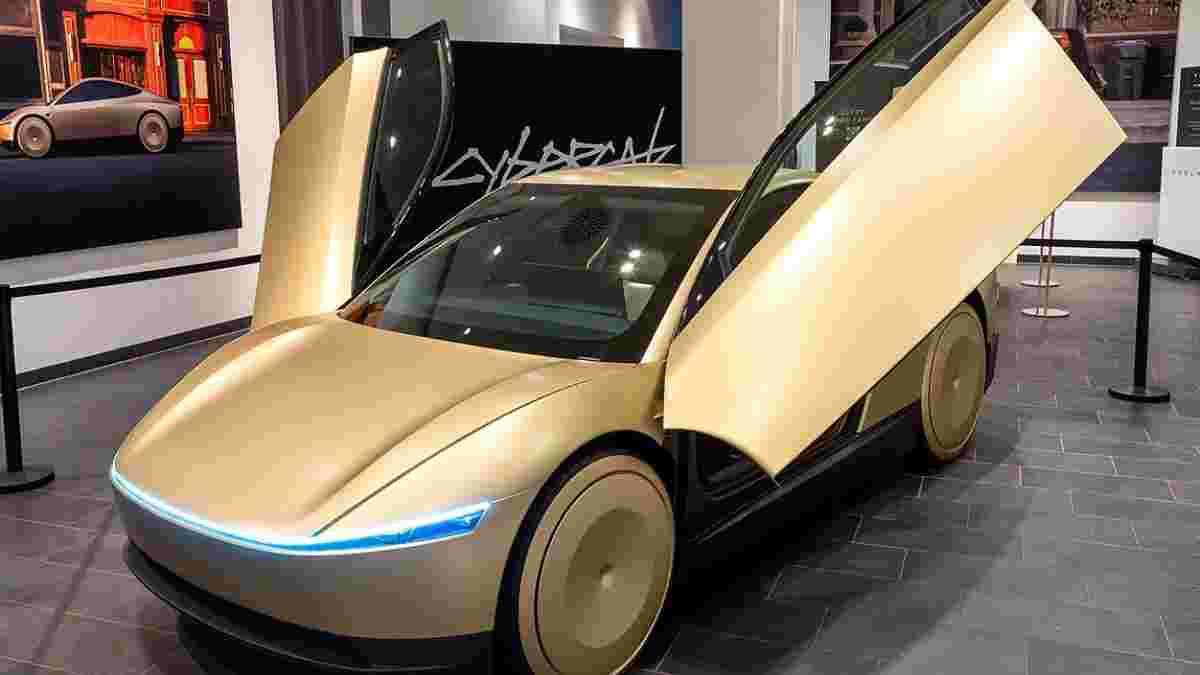
The world of autonomous driving has just witnessed a whirlwind of controversy, innovation, and bold claims — all courtesy of Tesla, Elon Musk, and a surprising appearance by the Tesla Bot. From Tesla’s Robo Taxi Cybercab receiving major updates ahead of its U.S. rollout, to Optimus suddenly collapsing during a drink-serving demo, to the Tesla Semi outperforming expectations in real-world stress tests, there’s a lot to unpack.
In this extensive breakdown, we’ll explore what’s new with Tesla’s RoboTaxi, why Elon insists full autonomy is basically solved, how Waymo’s progress compares, and what really happened with the Tesla Bot’s mysterious fall.
Let’s dive in.
Tesla Robo Taxi Cybercab — A New Era in Fully Autonomous Driving?
Tesla’s push toward a driverless future is accelerating faster than ever. Musk has repeatedly stated that Tesla Robo Taxis in Austin will operate without safety monitors by the end of 2025, but he recently doubled down, claiming the vehicles may begin operating with no safety equipment at all within weeks.
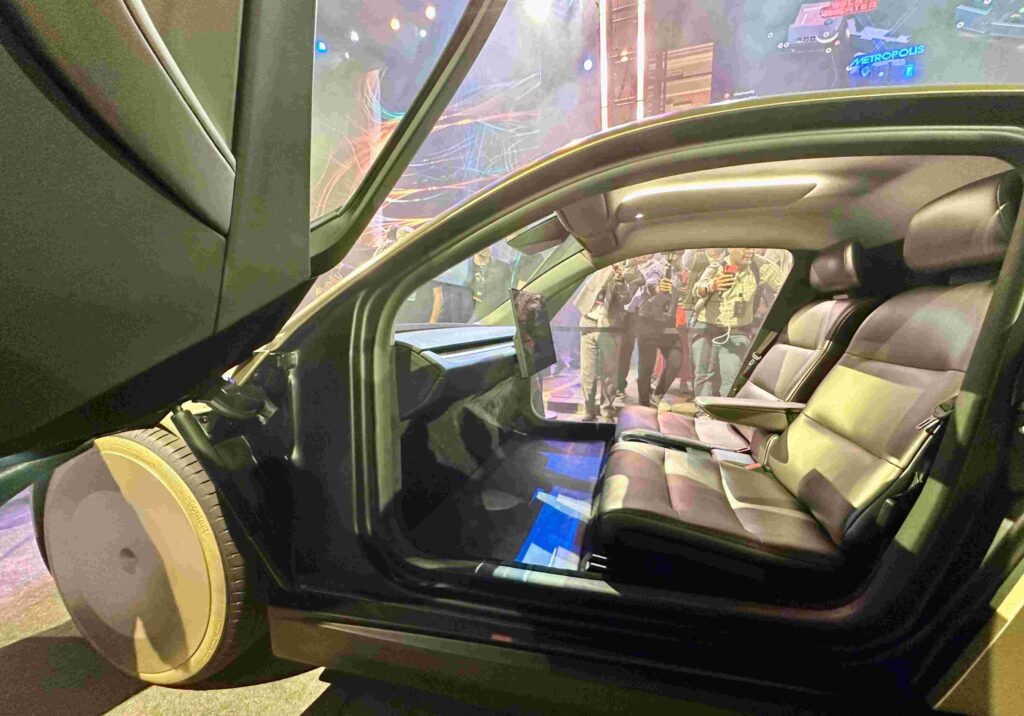
Tesla Is Removing Human Safety Monitors — Here’s Why It Matters
Currently, Tesla uses a safety monitor model in Austin:
- Safety staff sit in the passenger seat during city drives
- They move to the driver’s seat for highway routes
- In the San Francisco Bay Area, safety drivers remain behind the wheel at all times
But Elon Musk says that’s all ending — sooner than anyone expected.
“Unsupervised is pretty much solved at this point,” Musk said, suggesting the company is ready to operate Robo Taxis with zero humans on board.
This shift is crucial because human safety monitors prevent Tesla from scaling. Tesla could deploy 100,000 Robo Taxis in Austin next year, but only once these monitors are removed. As long as a human rides inside, deployment is slow, expensive, and inefficient.
Cabin Camera Analytics & Audio Analytics — The Secret to Removing Humans
Tesla’s November Robo Taxi update quietly activated new systems:
- Cabin camera analytics
- Audio analytics
These automated systems replace everything a human safety driver would normally monitor. If anything goes wrong:
- Tesla’s support team is notified instantly
- Passengers won’t be stranded mid-ride
- The vehicle can safely handle unexpected events
This is Tesla’s final step before launching fully autonomous public rides.
Tesla vs Waymo — Who’s Really Winning the Autonomous Race?
The U.S. autonomous ride-hailing market is dominated by Tesla and Waymo, but the two companies take radically different approaches.
Waymo’s Numbers Look Better Today — But Elon Says It Won’t Last
Waymo has logged an incredible 96 million fully driverless miles as of 2025. Their safety data is staggering:
- 80% fewer airbag deployments
- 91% fewer severe or fatal crashes
- 92% fewer pedestrian incidents
- 89% fewer motorcycle collisions
By every metric, Waymo’s vehicles are safer than human drivers.
But Elon Musk insists Waymo “never really had a chance” and that this will be obvious in hindsight. Why?
Tesla’s Vision-Only Approach vs Waymo’s Sensor-Heavy Strategy
Waymo uses:
- LiDAR
- Radar
- Cameras
- Multiple vehicle platforms
Tesla uses:
- Vision-only
- Its own manufactured vehicles
- A single software stack that rolls out globally
Tesla’s philosophy: humans drive using eyes and brain — cameras + AI should be enough.
Waymo’s philosophy: redundancy equals safety.
Both strategies have merits, but Tesla’s model is infinitely more scalable.
Where Tesla Robo Taxis Will Launch Next
Once safety drivers are gone in Austin, Tesla’s rollout plan looks like this:
- Phoenix, Arizona – supervised launch first
- Las Vegas – 2026
- Dallas – 2026
- Miami – 2026
- International expansion across Australia, Japan, Mexico, Canada
Tesla wants every Tesla vehicle worldwide to function as a Robo Taxi eventually — a massive leap compared to Waymo’s city-by-city geofenced strategy.
The Tesla Bot Collapse — What Really Happened?
While Tesla’s autonomous cars are progressing, the same can’t quite be said for its humanoid robot.
Recently, Optimus suddenly fell backward while serving drinks, shocking viewers and raising questions about Tesla’s claims of full autonomy.
Why the Fall Looked Suspicious
The Tesla Bot didn’t fall while:
- walking
- running
- climbing stairs
- performing a complex movement
It fell while standing still and reaching for a bottle.
Worse, it knocked over all the bottles on the table first.
As it fell, its arm swung toward its head — almost exactly like a human removing a VR headset.
This is where things get interesting…
Was Tesla Bot Actually Being Teleoperated?
Many experts believe Optimus was:
- mirroring the movements of a remote operator using VR
- not acting autonomously
- performing motions synced to a human wearing a headset
Footage from Tesla’s labs shows that:
- employees wear VR headsets to teach the robot
- motion-capture suits guide its movements
- operators repeat simple tasks for hours to create training data
So when the robot raised its hand to its head, many believe the operator was removing their VR headset, causing Optimus to mimic the motion and lose balance.
Musk Previously Claimed “AI, Not Teleoperated”
After Optimus performed an impressive kung fu demo earlier, Musk insisted the robot wasn’t remote-controlled.
But this recent fall has led people to question:
- Was the kung fu also teleoperated?
- How autonomous is Optimus really?
- Is Tesla hiding the truth until Optimus Gen 3?
Some believe Tesla is allowing skepticism to build intentionally — only to shock everyone with a truly autonomous Optimus Gen 3 in 2025.
Tesla Semi — The Unexpected Star of Tesla’s Lineup
While the Robo Taxi and Tesla Bot make headlines, the Tesla Semi is quietly becoming a monster success.
DHL’s Extreme Stress Test Delivers Jaw-Dropping Results
DHL, one of Tesla’s newest Semi customers, ran a brutal test:
- 390-mile trip
- Full 75,000-lb load
- Single charge
- Battery still left at the end
That alone shocked the trucking world.
But the deeper numbers are even more incredible:
- 3,000 miles logged
- Average speed: 50+ mph
- Energy use: 1.72 kWh per mile
(most electric trucks are 2.0–2.2 kWh/mi)
This makes Tesla Semi:
- more efficient than any competitor
- far cheaper to operate
- capable of long-haul routes companies didn’t expect
DHL now only charges the truck once a week.
Companies Are Rethinking Entire Fleet Strategies
PepsiCo, DHL, and Saiia say:
- the Semi is outperforming expectations
- drivers love it
- operating costs are much lower than diesel
- long-distance performance is shockingly good
Some drivers even joked:
“I hope to retire in this truck.”
Tesla Semi 2026 Refresh — A Complete Redesign
Tesla isn’t stopping there. The Semi is getting a major redesign before mass production.
New Exterior and Aerodynamics
Changes include:
- seamless front light bar
- simplified front bumper
- rounded roofline
- shorter windshield
- removal of the pointless 2017 rear window
- drag coefficient reduced to 0.33 (better than the already-excellent 0.36)
A 0.03 reduction in drag = 5–8% more efficiency and dozens of extra miles per charge.
Weight Reduction & Range Boost
Tesla trimmed the chassis weight below 23,000 lb, allowing:
- higher payload
- longer range
- better performance
Ultra-Fast Charging and Battery Options
Two battery types:
- 4680 cells for the long-range model
- LFP cells for short routes (40% cheaper)
Short-range price expected: $160,000 — incredibly competitive.
FSD for the Semi — A Trucking Revolution
Tesla added new camera locations hinting at:
- Full Self-Driving for heavy trucks
- nearly 24/7 operation
- dramatically reduced labor costs
- fewer accidents
- faster deliveries
This would transform global logistics.
Final Thoughts — What Should Elon Musk Focus On in 2026?
Tesla is juggling major innovations:
- Robo Taxi Cybercab on the verge of fully autonomous rides
- Optimus humanoid robot, still struggling but improving
- Tesla Semi, already outperforming industry expectations
Each product has massive potential — but also massive challenges.
If Tesla delivers:
- a fully autonomous Robo Taxi,
- an autonomous humanoid robot,
- and a revolutionary electric Semi,
the company won’t just dominate transportation — it may redefine it.
FAQs
1. What is the Tesla Robo Taxi Cybercab?
The Tesla Robo Taxi Cybercab is Tesla’s upcoming fully autonomous, driverless ride-hailing vehicle designed to operate without any human supervision. It is expected to launch first in Austin before rolling out to additional U.S. cities and international markets.
2. When will Tesla Robo Taxis operate with no safety drivers?
Elon Musk says Tesla Robo Taxis in Austin will begin operating with no safety monitors inside by the end of 2025, and possibly sooner based on recent comments.
3. How does Tesla’s self-driving technology differ from Waymo’s?
Tesla uses a vision-only approach powered by cameras and neural networks, while Waymo uses a sensor-heavy system that includes LiDAR, radar, and cameras. Tesla prioritizes scalability; Waymo prioritizes redundancy.
4. Is Tesla ahead of Waymo in driverless miles?
No. Waymo currently leads with over 96 million fully driverless miles, but Elon Musk believes Tesla’s system will ultimately surpass Waymo due to Tesla’s massive fleet and global scalability.
5. Will every Tesla vehicle eventually be a Robo Taxi?
Yes. Tesla intends for all newer Tesla vehicles to become part of a global autonomous ride-hailing network once software and regulatory approvals are finalized.
6. Which cities will get Tesla Robo Taxi next?
After Austin, Tesla plans to roll out services to Phoenix, Las Vegas, Dallas, and Miami, followed by international regions such as Australia, Japan, Mexico, and Canada.
7. What caused the Tesla Bot to fall during the demo?
Many analysts believe the Tesla Bot fall was caused by a teleoperation interruption, where the robot was likely mirroring movements of a remote operator who may have removed a VR headset mid-action.
8. Is the Tesla Bot actually autonomous?
The current version, Optimus 2.5, appears to use a mix of AI and teleoperation. True full autonomy is expected in Optimus Gen 3, rumored for release in 2025.
9. Does Tesla use VR to train the Optimus robot?
Yes. Tesla staff use VR headsets and motion-capture suits to teach Optimus complex tasks by physically performing them. This data trains the robot’s neural network.
10. Did Elon Musk confirm whether Optimus’ kung fu demo was teleoperated?
Elon Musk stated that the kung fu demo was AI-driven and not teleoperated, though some viewers remain skeptical after the recent fall incident.
11. How fast can the Tesla Bot run?
The latest Optimus prototype has demonstrated running speeds of nearly 7 mph, showcasing rapid progress in mobility.
12. What makes the Tesla Semi different from other electric trucks?
The Tesla Semi offers unmatched efficiency, achieving as low as 1.72 kWh per mile under load and completing 390-mile long-haul runs with a full 75,000-lb load on one charge.
13. How far can the Tesla Semi travel on a single charge?
The Tesla Semi can travel up to 500 miles on a single charge depending on load, terrain, and driving conditions.
14. How often does the Tesla Semi need to charge during normal operations?
According to DHL’s testing, the Tesla Semi needed to charge only once per week when used for daily 100-mile delivery routes.
15. What are the major upgrades coming to the 2026 Tesla Semi?
Upgrades include a redesigned aerodynamic exterior, improved chassis for lower weight, dual battery options (4680 and LFP), and support for 1.2 MW ultra-fast charging.
16. Will the Tesla Semi get Full Self-Driving?
Tesla has added new camera placements on the Semi, strongly suggesting it will receive Full Self-Driving capabilities, potentially enabling 24/7 autonomous freight operations.
Read More:
- Rivian unveils self-driving chip and autonomy plans to compete with Tesla
- Tesla adds 15th automaker to Supercharger access in 2025
- SpaceX IPO is coming, CEO Elon Musk confirms
- Tesla FSD’s newest model is coming, and it sounds like ‘the last big piece of the puzzle’
- Tesla Model Y gets hefty discounts and more in final sales push