
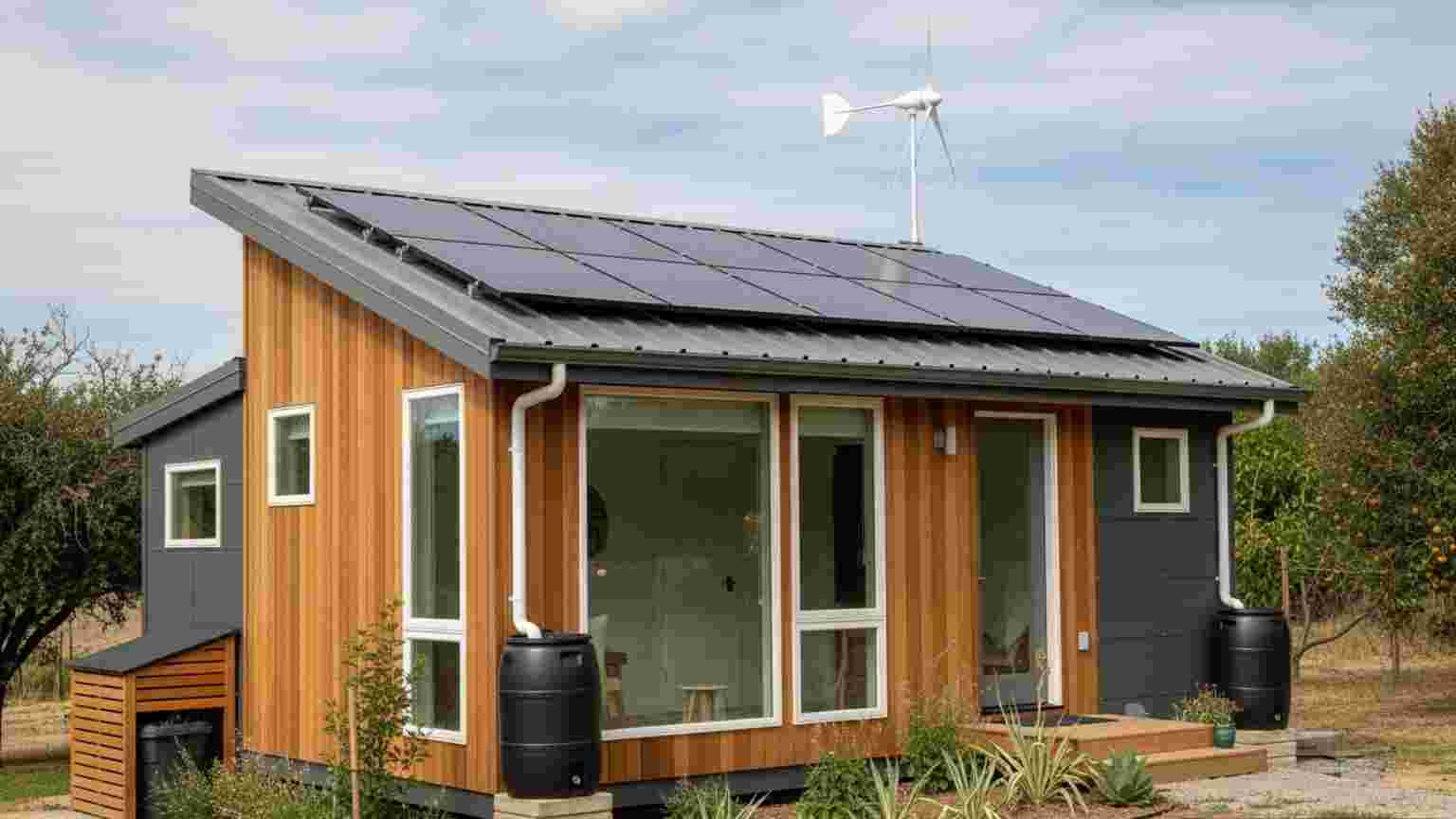
The idea of retiring in a Tesla tiny house sounds almost perfect.
A compact, futuristic home. Solar power. Low bills. Freedom from rent. Freedom from the grid. Freedom from stress.
But there’s a question almost no one asks:
What happens in year 10?
Not year one. Not the move-in day.
Year ten — when the battery weakens, the lease changes, and the land was never yours to begin with.
When most people see a Tesla tiny house, they think they’re buying a home.
In reality, they’re buying into a system — and that system has three separate layers, each with its own long-term costs and risks.
Understanding those layers is the difference between real freedom and long-term financial pressure.
Let’s break it all down.
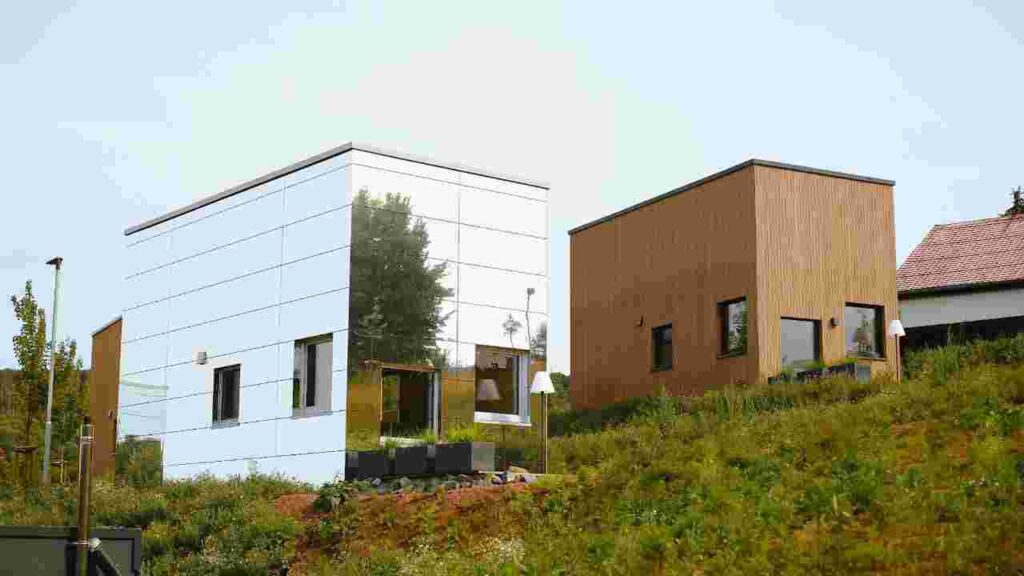
The Tesla Tiny House Isn’t Just a House — It’s a System
The Tesla tiny house concept is built on three interconnected layers:
- The house itself
- The land beneath it
- The ongoing systems that keep it livable
Most marketing focuses only on the first layer.
The real story lives in the other two.
Layer One: The House Itself (The Part Everyone Talks About)
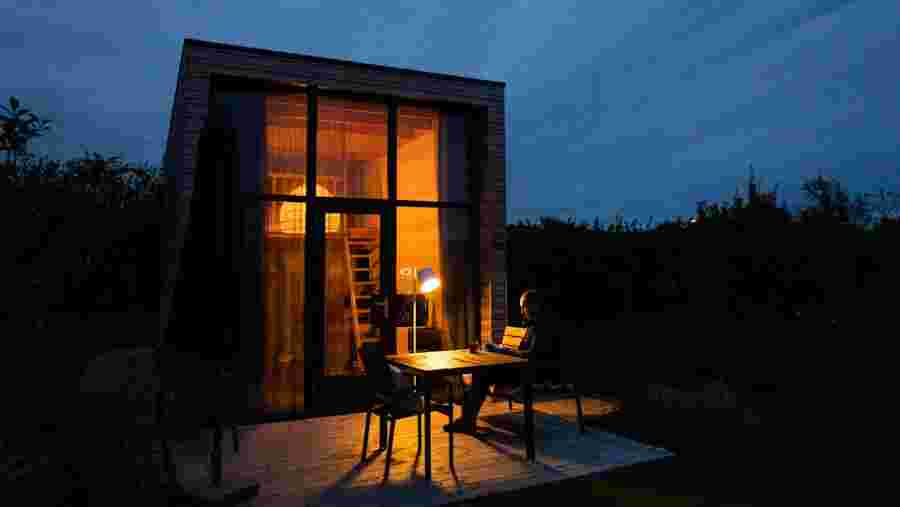
At its core, the Tesla tiny house is projected to be:
- Roughly 250 square feet
- Built on a steel frame
- Constructed with composite walls
- Equipped with solar panels and battery storage
- Designed for off-grid living
Based on patent filings, leaked references, and comparable prefab builds already on the market, projected pricing looks like this:
- ~$6,000 for a basic shell
- Up to ~$22,000 for a fully equipped off-grid setup
To be clear:
Tesla has not released official pricing.
These are educated projections, not promises.
But they reveal something critical:
The structure itself is not the expensive part
Compared to traditional housing, the house is the cheapest layer of the entire equation.
Layer Two: The Land (Where the Real Story Begins)
A house without land is just an object.
And this is where most retirees hit their first major obstacle.
If You Already Own Land
If you own land in a county that allows tiny homes, you’re in a powerful position:
- No landlord
- No lease
- No rent increases
- No sudden displacement
This is the scenario where tiny homes actually deliver on their promise.
If You Don’t Own Land (Most People Don’t)
Most retirees do not own land, which means leasing it.
Based on similar programs already in use, Tesla may offer a land lease model that looks friendly at first:
- Low or free initial lease
- Monthly payments introduced later
- Costs rising quietly over time
Here’s the uncomfortable truth:
Over 10 years, land rent can cost more than the house itself
And unlike a mortgage, lease agreements are not permanent.
- Terms can change
- Rates can rise
- Landowners can repurpose property
- Zoning laws can shift
If that happens, you don’t just lose stability.
You’re left with a house that can’t easily go anywhere.
That’s not ownership.
That’s long-term renting with a large upfront payment.
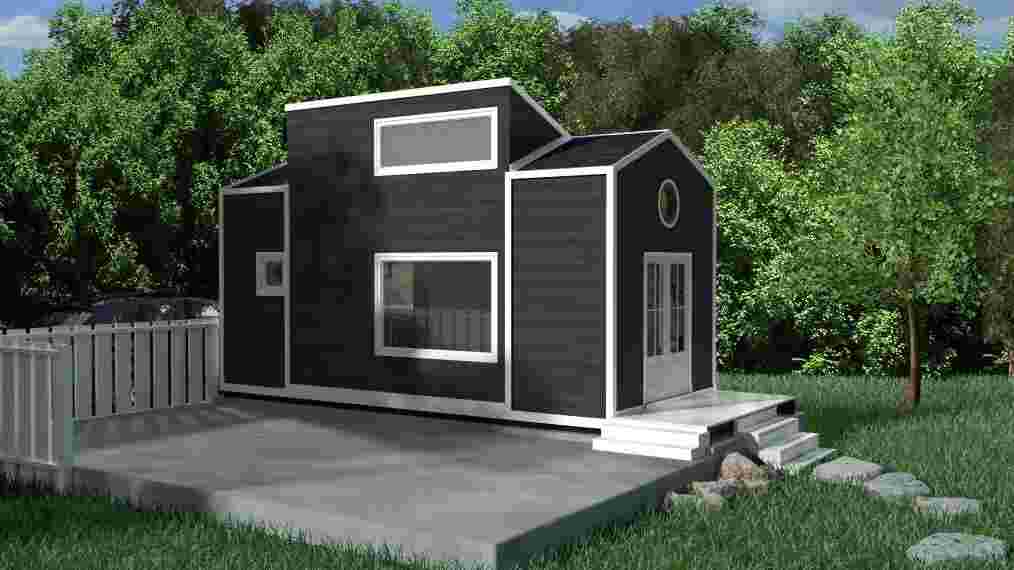
Layer Three: The Costs That Never Stop
This is the layer that breaks most budgets — slowly and quietly.
Even when the house is paid for, these costs never end:
- Energy systems
- Water access
- Internet
- Insurance
- Maintenance
- Permits
- Zoning compliance
For retirees on fixed incomes, this layer determines whether the math works — or collapses.
The 10-Year Cost Breakdown: Three Very Different Outcomes
The same Tesla tiny house can lead to three completely different financial realities.
What matters isn’t the model.
It’s where and how you place it.
Best Case Scenario: You Own the Land
This is the ideal path.
- You own land
- The county allows tiny homes
- No lease
- No landlord
Estimated costs:
- Tesla tiny house (fully off-grid): ~$22,000
- Site prep, permits, hookups: High $20Ks to low $30Ks total
After that, your ongoing expenses are predictable:
- Property taxes
- Insurance
- Maintenance
- Internet
Over 10 years, total costs stay far below traditional rent
This is where the Tesla tiny house delivers real value:
Control. Predictability. Ownership.
Most Common Scenario: Leasing Land
This is where things get tricky.
At first, it feels affordable:
- Low initial lease
- Manageable monthly costs
- Attractive upfront math
Then the lease kicks in.
Month by month, year by year, land rent becomes your largest expense.
By year ten:
- Tens of thousands paid just to stay parked
- No equity in the land
- No long-term guarantees
If zoning changes or the landowner decides otherwise, you may be forced to move — with a house that’s difficult and expensive to relocate.
The Fixed-Income Reality Check
One retiree shared they live on just under $2,000 per month.
In a lease scenario:
- Land rent
- Insurance
- Internet
- Maintenance
Those costs alone can consume most of that income — before food, medicine, or emergencies.
The house looks affordable.
The lifestyle quietly isn’t.
How Does This Compare to Other Options?
Renting an Apartment
- $1,000+ per month in many areas
- No ownership
- Money gone forever
RV Living
- Purchase price
- Lot fees
- Fuel
- Constant repairs
- Rapid depreciation
Over 10 years, RV living often matches or exceeds the least favorable tiny house path — with its own instability.
The Solar Promise: Free Energy Forever? Not Exactly
One of the biggest selling points is off-grid solar power.
Technically, it’s not a lie.
But it’s also not the full story.
Location Changes Everything
- Arizona, Nevada, Southern California
Near-ideal conditions. Long sunny seasons. Strong performance. - Pacific Northwest, New England
Shorter days. Cloud cover. Long winters. Reduced output.
When solar production drops, the system relies on the battery.
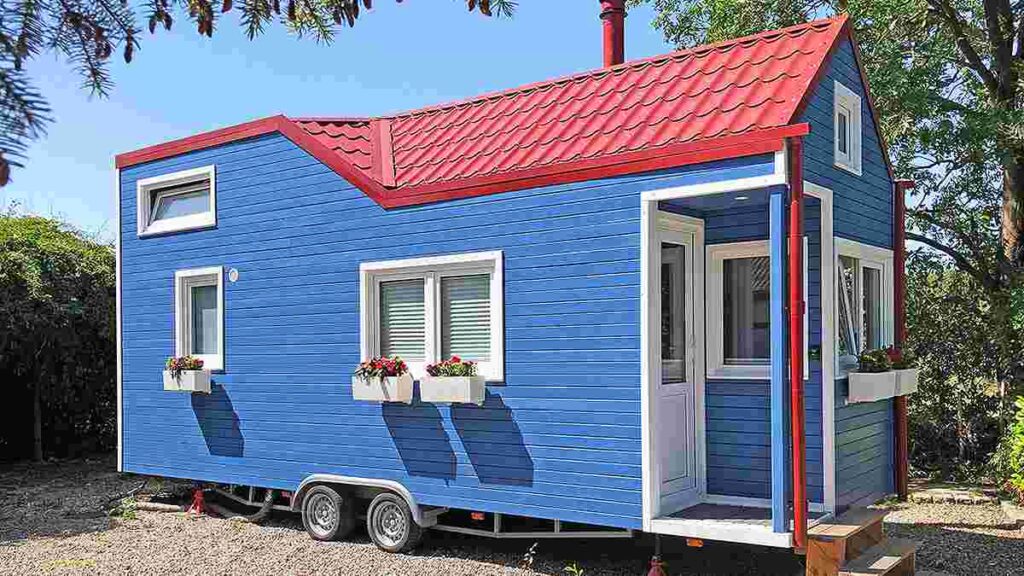
The Battery Reality
Lithium batteries degrade over time.
Industry data shows:
- Gradual capacity loss with every charge cycle
- Noticeable decline by year 8–10
- Reduced storage and independence
At that point, owners face a choice:
- Replace the battery at significant cost
- Accept reduced off-grid capability
Weather Makes It Worse
Extended storms, snow, or heavy rain can drain stored power faster than it can be replenished.
Backup options usually mean:
- Grid connection (fees, approvals, monthly bills)
- Generator (fuel, noise, maintenance)
This breaks the “set it and forget it” myth.
The Truth About Solar Costs
- Often very low
- Sometimes zero for long stretches
- Occasionally very expensive
Over 10 years, energy costs can range from minimal to several thousand dollars, depending on climate and battery replacement.
The Hidden Costs Nobody Mentions
Even when everything is working, expenses don’t disappear — they change form.
Maintenance Adds Up
- Window seals wear down
- Roof membranes need inspection
- Hinges, fold-down beds, hydraulic systems need service
- Solar panels require regular cleaning
Small costs. Constant costs.
Insurance Is More Expensive Than You Think
Tiny homes often don’t qualify for standard homeowners insurance.
Instead, owners need specialized policies because:
- The structure is movable
- Technology-heavy systems increase risk
- Weather exposure is higher
What looks minor monthly becomes significant over a decade.
Internet Is No Longer Optional
- Telehealth
- Banking
- Emergency communication
- Family connection
In remote areas, satellite internet is often the only option — and it’s not cheap.
Zoning: The Biggest Risk of All
Zoning laws are hyper-local:
- County by county
- City by city
- Even neighborhood by neighborhood
A tiny home can be legal in one area and prohibited five miles away.
Common restrictions include:
- Minimum square footage
- Foundation requirements
- HOA bans
- Unincorporated-only zones
This Is Where People Get Trapped
Someone buys the house.
Signs a lease.
Then discovers permits won’t be issued.
The house exists.
The payments continue.
Living there legally becomes complicated — or impossible.
Never rely on verbal assurances.
Zoning approval must be in writing before any money changes hands.
The Questions People Are Really Asking
How Do You Buy One?
There is currently:
- No official ordering system
- No confirmed release date
- No public dealer network
Can It Handle Extreme Weather?
Steel frames help, but you need:
- Certified wind ratings
- Flood zone compliance
- Regional building code approval
Is It Accessible for Aging in Place?
Standard layouts are:
- Tight
- Narrow
- Difficult for mobility aids
Modifications may be possible — at added cost and often restricted on leased land.
Is the Tesla Tiny House Real or Just Hype?
Tesla has not officially announced a finished product with confirmed specs, pricing, or availability.
Everything discussed here is based on:
- Patent filings
- Leaked references
- Comparable systems already on the market
That’s why every number is a range, not a promise.
This isn’t about certainty.
It’s about being prepared when official details arrive.
The Question That Changes Everything
One retiree said they weren’t just looking for cheaper housing.
They were looking for the feeling of ownership — the knowledge that no one could tell them to leave.
That question cuts through all the hype.
Final Verdict: Freedom or Renting in Disguise?
The Tesla tiny house isn’t a scam, but it isn’t a miracle either.
It’s a tool.
It Works Beautifully If:
- You own land
- The county allows tiny homes
- You live in a sunny region
- You want simplicity and predictability
In that case, it can save tens of thousands over 10–20 years and deliver real control.
It Becomes Risky If:
- You lease land
- You’re on a tight fixed income
- Zoning rules could change
- You need long-term stability as you age
This decision isn’t about technology.
It’s About Control
- Control of your land
- Control of your long-term costs
- Control of where you live later in life
Before committing, run the numbers honestly.
Think 10 and 20 years ahead, not just move-in day.
Ask yourself:
Who holds the power if something changes — your health, the lease, or local laws?
That answer matters more than any solar panel ever will.
FAQs
1. What is the Tesla tiny house?
The Tesla tiny house is a proposed compact, off-grid housing concept based on patent filings and comparable prefab systems. It is expected to feature solar panels, battery storage, and a steel-frame modular design, but Tesla has not officially released final specifications or pricing.
2. Has Tesla officially announced the tiny house for sale?
No. Tesla has not officially announced a finished product, pricing, or release date. Current information comes from patents, leaks, and market comparisons, not confirmed sales data.
3. How much is a Tesla tiny house expected to cost?
Projected estimates suggest:
- Around $6,000 for a basic shell
- Up to $22,000 for a fully off-grid setup
These numbers are estimates, not guarantees.
4. Does the Tesla tiny house include solar panels and batteries?
Yes, the concept is built around solar panels and lithium battery storage designed for off-grid living, though system size and performance will vary by location and usage.
5. Is the Tesla tiny house really off-grid?
It can be mostly off-grid, but true independence depends on climate, battery health, and energy usage. Backup power or grid connections may still be needed in some regions.
6. How long do the batteries last in an off-grid tiny house?
Lithium batteries degrade over time. By year 8–10, many systems operate at reduced capacity, often requiring replacement or supplemental power solutions.
7. Is solar power really free forever?
No. While solar can reduce or eliminate electric bills for long periods, battery replacement, backups, and weather-related shortfalls can introduce costs over time.
8. Can you live in a Tesla tiny house anywhere?
No. Zoning laws vary by county and city. Some areas prohibit tiny homes entirely, while others restrict them to specific zones or require minimum square footage.
9. Do you need to own land to live in a Tesla tiny house?
You don’t have to, but owning land dramatically improves long-term affordability and stability. Leasing land introduces rising costs and displacement risk.
10. How much does land leasing typically cost?
Land leases can start low or free but often rise to several hundred dollars per month or more, potentially costing tens of thousands over 10 years.
11. Is leasing land risky for retirees?
Yes. Lease terms can change, zoning can shift, and landowners can reclaim property, leaving owners with limited housing security.
12. Are Tesla tiny houses cheaper than renting an apartment?
They can be significantly cheaper over 10 years if you own land. With leased land, long-term costs may approach or exceed apartment rent.
13. How does a Tesla tiny house compare to RV living?
RV living often involves fuel costs, lot fees, frequent repairs, and depreciation. Over 10 years, it can cost as much or more than a tiny house, with less stability.
14. Are Tesla tiny houses insured like normal homes?
Usually not. Tiny homes often require specialized insurance policies, which can cost more due to mobility, weather exposure, and technology risks.
15. Are Tesla tiny houses good for aging in place?
Standard designs may be challenging for mobility due to narrow doorways and compact bathrooms. Accessibility upgrades are possible but add cost and may be restricted on leased land.
16. Can Tesla tiny houses handle extreme weather?
Steel-frame construction helps, but certified wind, flood, and snow load ratings are essential. These must meet local building codes to qualify for permits and insurance.
17. What ongoing costs should retirees expect?
Common ongoing costs include:
- Maintenance
- Insurance
- Internet (often satellite)
- Property taxes (if land is owned)
- Battery replacement over time
18. What is the biggest hidden cost of a Tesla tiny house?
Land control and zoning compliance. Without ownership and written approvals, long-term stability can disappear regardless of how affordable the house seems.
19. Is the Tesla tiny house a good idea for retirement?
It can be an excellent option if you own land, live in a sunny region, and plan long-term. Without land ownership, the financial and stability risks increase significantly.
Read More:
- SpaceX Starship B19’s Big Tests Began right after Rollout! Next Ship V3 Arrived for Stack
- Even Tesla China is feeling the Optimus V3 fever
- Elon Musk explains why Tesla’s 4680 battery breakthrough is a big deal
- Elon Musk Confirms 3 NEW Teslas Models For 2026
- Tesla Starts Building Cars With In-House 4680 Cells After Dry-Electrode Breakthrough
- 2026 Tesla Model 2 Is Finally Here – FIRST LOOK