
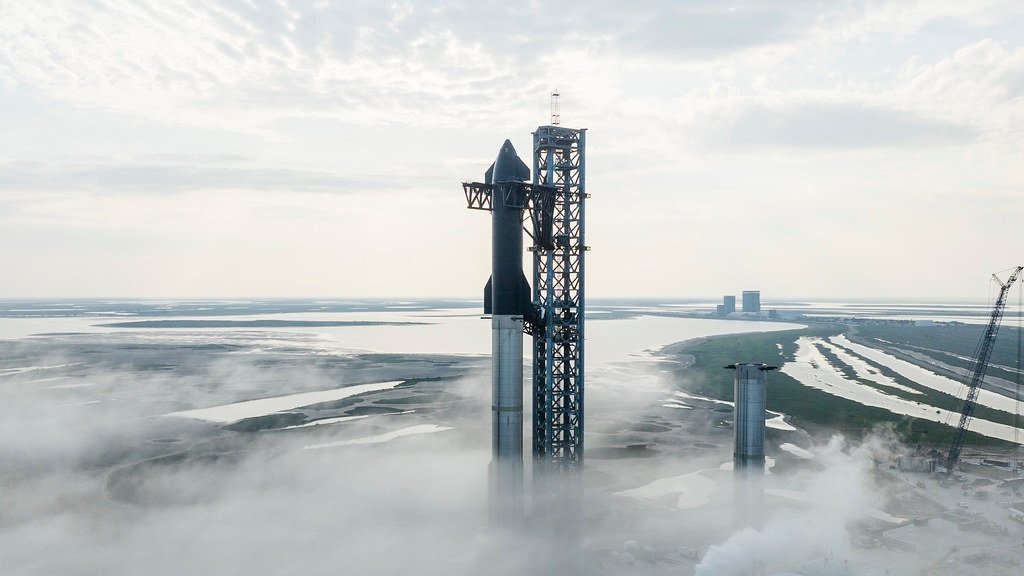
SpaceX Loaded S40 onto the Forte vessel & Began Return to Starbase: The global aerospace industry is moving through a period of rapid change, with major developments unfolding across rocket recovery, launch testing, lunar exploration, and commercial space leadership. From SpaceX Starship S40’s recovery at sea to a testing delay at Starbase, China’s postponed Chang’e 7 lunar mission, and a leadership transition at United Launch Alliance (ULA), the latest developments highlight both the progress and challenges facing the modern space sector.
These events demonstrate how aerospace companies and agencies are dealing with increasingly complex engineering requirements, unpredictable weather, strict launch windows, and growing competition in the commercial launch market.
SpaceX Starship S40 Successfully Recovered at Sea
One of the most notable recent developments is the recovery of SpaceX Starship S40, which spent approximately 32 days, or around 774 hours, in the ocean following its test splashdown.
Recovering a massive stainless-steel rocket stage from open water is a significant engineering challenge. Ocean waves, currents, structural loads, and prolonged exposure to saltwater can make conventional lifting operations extremely difficult.
Instead of relying on massive offshore cranes, SpaceX used the semi-submersible heavy-lift vessel Forte to bring S40 aboard.
How the Forte Recovery Operation Worked
The recovery used a carefully coordinated float-on operation involving several stages:
- Submerging the cargo deck: Forte filled its ballast tanks and lowered its main cargo deck roughly 13 meters below the waterline.
- Positioning Starship S40: Tether lines were used to guide S40 into position above the submerged deck.
- Stabilizing the vehicle: Pre-installed deck pins helped prevent unwanted lateral movement or rolling during the operation.
- De-ballasting the vessel: Water was pumped from the ballast tanks, causing Forte’s cargo deck to rise.
- Lifting S40 onto the deck: As the vessel rose, S40 was gradually lifted from the ocean and secured on the ship.
This approach reduced the need for an external crane and helped minimize the potentially damaging structural forces that could occur while lifting a large rocket in moving water.
Why Starship S40’s Recovery Matters
The recovery of S40 is important not simply because the vehicle was successfully loaded onto Forte, but because the hardware could provide valuable engineering data.
After more than a month exposed to seawater, storm conditions, and marine corrosion, the vehicle experienced significant environmental stress. Reports indicate that one forward flap was lost during its time in the ocean.
Despite the damage, the remaining hardware can potentially provide useful information about stainless-steel structural durability, heat-shield tile adhesion, corrosion, and long-duration ocean exposure.
For SpaceX, this type of real-world data can contribute to the broader development of increasingly reusable launch vehicles.
The vessel is expected to transport S40 back toward Texas, potentially using a route through the Panama Canal or around the Cape of Good Hope, depending on operational considerations.
Starbase Flight 14 Preparations Face a Testing Delay
While the S40 recovery operation was successful, preparations for the next major Starship flight encountered an obstacle at Starbase, Texas.
Super Heavy Booster 21 (B21) was undergoing preparations for its next testing campaign when a planned static-fire operation was scrubbed because of an issue involving the liquid oxygen (LOX) Quick Disconnect, or BQD, interface.
What Happened During the B21 Test?
During initial propellant loading and ground-system conditioning, the launch infrastructure was activated as engineers prepared the vehicle for testing.
However, technicians observed an anomaly involving the LOX BQD interface. The connection unexpectedly disengaged, creating a situation in which cryogenic liquid oxygen could not be transferred safely.
Because a reliable propellant connection is essential for any static-fire operation, the test was aborted rather than proceeding under unsafe conditions.
SpaceX subsequently returned the Booster Transport Stand to the pad as engineers worked to stabilize or remove B21 for further inspection and repairs.
The delay could affect the timing of the planned Flight 14 campaign, which had been targeted for around mid-September 2026, although the actual schedule depends on successful resolution of the hardware issue and regulatory and operational readiness.
China’s Chang’e 7 Mission Delayed by Tropical Weather
The aerospace sector’s challenges extend beyond commercial rocket companies. China’s ambitious Chang’e 7 lunar exploration mission has also faced a major setback after unfavorable tropical weather affected launch preparations at the Wenchang Space Launch Site on Hainan Island.
Weather Disrupts a Highly Precise Lunar Mission
Tropical Depression Nanga brought unfavorable weather conditions, including strong winds and heavy precipitation, to the launch region.
Although weather delays are common in the launch industry, lunar missions face an additional complication: orbital mechanics.
A spacecraft traveling to the Moon cannot necessarily launch on any convenient day. Engineers must account for the Moon’s position, spacecraft trajectory, fuel requirements, and other celestial mechanics.
As a result, missing a carefully calculated launch window can force a mission to wait for another suitable opportunity.
The Chang’e 7 launch vehicle was reportedly rolled back to its processing facility after the original launch window closed, effectively pushing the mission beyond its planned 2026 opportunity.
What Will Chang’e 7 Explore?
Chang’e 7 is designed to conduct detailed scientific exploration of the lunar South Pole, one of the most scientifically interesting regions of the Moon.
The mission is expected to investigate areas around permanently shadowed regions, including areas near Shackleton Crater.
These locations are particularly important because permanently shadowed areas may preserve water ice and other volatile materials that have remained protected from direct sunlight for extremely long periods.
Lunar Rover and Hopping Robot
Chang’e 7 is expected to combine several spacecraft and robotic systems, including an orbiter, lander, rover, and a specialized hopping robot.
The hopping system is particularly interesting because it could allow robotic exploration of difficult terrain and shadowed areas that conventional wheeled rovers may struggle to access.
Scientific instruments will support investigations involving topography, the lunar environment, magnetic characteristics, and potential volatile deposits.
ULA Announces Mark Peller as New CEO
Another major aerospace development involves United Launch Alliance, which is undergoing a leadership transition at a critical moment for its Vulcan rocket program.
Mark Peller has been appointed CEO following the departure of longtime leader Tory Bruno and an interim period under John Elbon.
Peller brings more than 35 years of aerospace experience to the position. His career has included work connected with the Space Shuttle program, Boeing’s Delta rocket programs, and ULA’s Vulcan development and commercial operations.
Challenges Await the New ULA Leadership
Peller takes control of ULA while the company faces several important challenges.
The first is the Vulcan launch cadence. The rocket remains affected by an anomaly associated with its solid rocket booster system during its certification campaign.
Another issue involves the BE-4 engines supplied by Blue Origin. Component modifications, including work related to liquid oxygen valve systems, have added complexity to the engine supply chain.
ULA also faces increasing commercial competition. SpaceX’s high launch frequency with Falcon 9, alongside the development of Starship, is putting pressure on traditional launch providers to increase their operational cadence and competitiveness.
Financial considerations are another part of the picture, with ULA continuing to operate within a structure backed by its Boeing and Lockheed Martin ownership.
The Bigger Picture for the Global Aerospace Industry
Taken together, these developments reveal the complexity of modern spaceflight.
SpaceX S40’s recovery demonstrates the engineering required to handle reusable rocket hardware after ocean splashdown. Booster 21’s testing delay shows how even a relatively small ground-system anomaly can interrupt an ambitious launch schedule.
Meanwhile, Chang’e 7’s postponement highlights the importance of weather and precise orbital mechanics in lunar exploration. ULA’s leadership change illustrates how commercial launch companies must adapt to technological, operational, and competitive pressures.
Conclusion
The global aerospace sector is entering an increasingly competitive and technically demanding era. SpaceX is pushing reusable Starship hardware and rapid launch development, China continues advancing sophisticated robotic lunar exploration, and ULA is working to strengthen Vulcan amid a changing commercial launch market.
The successful loading of Starship S40 onto Forte is particularly notable because it demonstrates an innovative approach to recovering enormous rocket hardware from the ocean. At the same time, the B21 testing issue and Chang’e 7 postponement remind the industry that aerospace progress rarely happens without setbacks.
As these programs move forward, the coming months could provide important milestones for Starship, lunar exploration, and the commercial launch industry.
FAQs
1. What happened to SpaceX Starship S40?
SpaceX Starship S40 was successfully loaded onto the Forte heavy-lift vessel after spending approximately 32 days, or 774 hours, in the ocean following its test splashdown.
2. How was Starship S40 recovered from the ocean?
S40 was recovered using a semi-submersible loading method. The Forte vessel submerged its cargo deck, positioned S40 above it, and then raised the deck by pumping water from its ballast tanks.
3. Why did SpaceX use the Forte vessel?
Using a semi-submersible heavy-lift vessel reduces the need for large offshore cranes and can help limit structural stresses on a massive rocket during recovery from ocean waters.
4. How long was Starship S40 in the ocean?
Starship S40 remained afloat for approximately 32 days, equivalent to around 774 hours, before being loaded onto the Forte.
5. Did Starship S40 suffer any damage in the ocean?
Yes. After prolonged exposure to saltwater, storm conditions, and marine corrosion, S40 reportedly lost one forward flap. The recovered hardware may nevertheless provide valuable engineering data.
6. What happened during the Booster 21 test at Starbase?
A planned static-fire test of Super Heavy Booster 21 (B21) was scrubbed after an anomaly was observed near the liquid oxygen (LOX) Quick Disconnect (BQD) interface.
7. Why is the LOX BQD important?
The LOX Quick Disconnect is part of the ground-to-vehicle propellant interface. A secure connection is essential for safely transferring liquid oxygen to the booster during testing and launch preparations.
8. Will the B21 issue delay Starship Flight 14?
The B21 testing interruption could affect the Flight 14 schedule, but the actual launch timing depends on resolving the hardware issue and completing all required testing and preparations.
9. What caused the Chang’e 7 launch postponement?
China’s Chang’e 7 lunar mission was postponed because Tropical Depression Nanga created unfavorable weather conditions around the Wenchang launch site.
10. Why can’t Chang’e 7 simply launch after the weather improves?
A lunar mission depends on precise launch windows and orbital mechanics. Missing the appropriate trajectory window can require the mission to wait for another suitable opportunity.
11. What is the main goal of Chang’e 7?
Chang’e 7 aims to explore the lunar South Pole, with particular interest in permanently shadowed regions that could contain water ice and other volatile materials.
12. What robots will Chang’e 7 use?
The mission is designed to include multiple robotic systems, including a lunar lander, rover, orbiter, and hopping robot, allowing scientists to investigate challenging areas near the lunar South Pole.
13. Who is the new CEO of United Launch Alliance?
Mark Peller has been appointed the new CEO of United Launch Alliance (ULA) following the departure of Tory Bruno and an interim leadership period under John Elbon.
14. What experience does Mark Peller bring to ULA?
Mark Peller has more than 35 years of aerospace experience, including work associated with the Space Shuttle program, Boeing’s Delta programs, and the development and commercial operations of ULA’s Vulcan rocket.
15. What challenges does ULA currently face?
ULA is dealing with several challenges, including Vulcan launch delays, BE-4 engine supply and component modifications, financial pressures, and increasing competition from SpaceX.
16. Why are these aerospace developments important?
These developments demonstrate the rapidly changing nature of the global aerospace industry. From reusable rocket recovery and Starship testing to lunar exploration and commercial launch competition, they show how technological innovation is being balanced with engineering, weather, and operational challenges.
Read More:
- NEW Tesla Cell Phone ( Pi Phone ) $199: Starlink Satellites, Grok AI & Zero Cell Towers
- Tesla Robotaxi fleet gets a brain upgrade ahead of Cybercab launch event
- Tesla ends in-house wrap service that always seemed like a short-term program
- Elon Musk Finally Build World’s Biggest Solar Factory
- New Tesla Semi Factory 50K Capacity SHOCKING Inside