
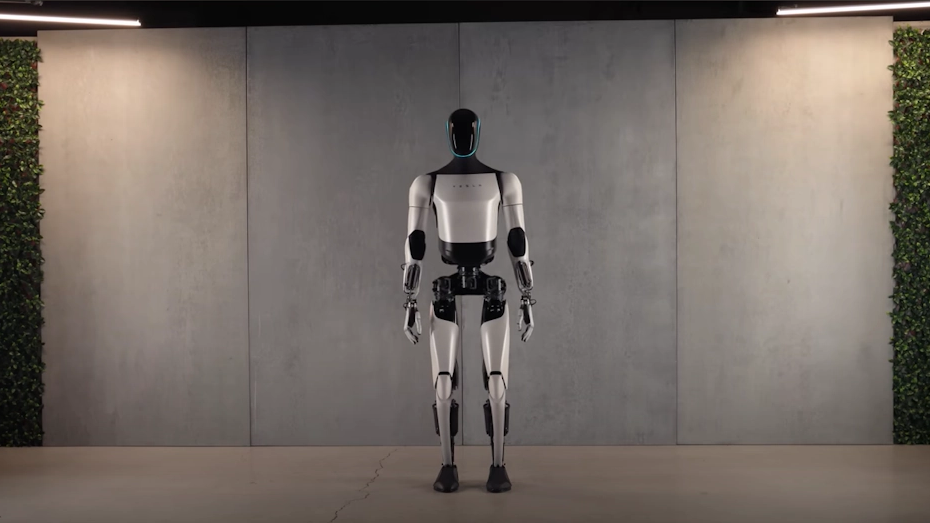
Tesla Bot Gen 3 Major Design & 5 Upgrades Inside! Cooking & Clean: The future of humanoid robotics is arriving faster than ever, with artificial intelligence transforming machines from simple industrial tools into intelligent systems capable of performing complex physical tasks. Among the companies leading this technological revolution, Tesla is developing its Optimus humanoid robot, also known as the Tesla Bot, with the long-term goal of creating a versatile robot that can assist people in factories, businesses, and homes.
The anticipated Tesla Bot Gen 3 represents an important stage in this vision. With potential improvements in robotic hands, onboard AI, movement, energy efficiency, and visual perception, the next generation of Optimus could move beyond basic factory operations toward more advanced activities, including cooking, cleaning, organizing, and everyday household assistance.
Although many of these capabilities remain development goals rather than confirmed consumer features, the engineering challenges reveal how humanoid robots could transform daily life.
Tesla Bot Gen 3: A Major Step Toward General-Purpose Robotics
Tesla’s Optimus project aims to develop a general-purpose humanoid robot capable of performing physical tasks originally designed for people. Unlike traditional industrial robots that operate within fixed workspaces and follow predetermined movements, a humanoid robot must adapt to changing environments.
For example, a robot working in a kitchen must recognize objects, open drawers, pick up utensils, avoid obstacles, and respond when someone moves an ingredient. These activities require more than mechanical strength. They demand sophisticated artificial intelligence, real-time perception, and precise motor control.
Earlier Optimus prototypes demonstrated the foundations of walking, balancing, and manipulating objects. Future generations are expected to build on these capabilities by improving coordination between software, sensors, and mechanical systems.
The ultimate objective is to create a robot that can operate safely in environments designed for humans without requiring extensive modifications to buildings or equipment.
5 Major Upgrades Expected in Tesla Bot Gen 3
1. Advanced Robotic Hands for Human-Like Dexterity
One of the biggest challenges in humanoid robotics is reproducing the versatility of the human hand. A robot may be capable of lifting heavy objects but still struggle with delicate tasks such as holding an egg, using a spoon, folding clothes, or handling glassware.
The next generation of Optimus could benefit from more articulated fingers, improved tactile sensors, and more precise actuators. These technologies would help the robot regulate gripping force and manipulate objects with greater accuracy.
Advanced tactile feedback would be especially important when handling fragile items. Instead of relying exclusively on camera images, the robot could use touch information to determine whether an object is slipping or whether it is applying too much pressure.
Such improvements could eventually support household activities like washing dishes, preparing ingredients, arranging utensils, and handling laundry.
However, reliable human-like dexterity requires extensive testing. Successfully completing a task once does not guarantee that a robot can perform it consistently across different objects and environments.
2. More Powerful Onboard AI and Neural Processing
Mechanical improvements alone cannot make a robot intelligent. Optimus must also understand its surroundings, interpret instructions, and determine which actions are necessary to complete a task.
Advanced onboard AI could allow future Optimus models to recognize objects, understand spatial relationships, and coordinate multiple movements. Drawing on approaches used in autonomous driving, neural networks can help robots interpret visual information and make decisions in changing environments.
Imagine asking a household robot to clean a kitchen counter. It would need to identify the objects on the surface, determine which items can be moved, select an appropriate cleaning tool, and avoid damaging nearby appliances.
These activities involve a sequence of interconnected decisions rather than a single programmed movement.
Local AI processing could also reduce dependence on continuous cloud communication, potentially improving responsiveness. Nevertheless, the exact hardware configuration and capabilities of a future Gen 3 model should not be assumed without official confirmation.
The long-term goal is adaptive robot intelligence that enables machines to learn new tasks and respond appropriately to unfamiliar situations.
3. Lightweight Actuators and Improved Movement
A humanoid robot needs sufficient strength to lift objects while remaining lightweight and energy-efficient. Heavy components increase power consumption and can make movement more difficult, especially when the robot must walk, bend, or maintain balance.
Tesla’s vertically integrated engineering approach emphasizes the development of specialized robotic components. Future Optimus generations could incorporate more compact rotary and linear actuators, improved gearing, and better mechanical integration.
These improvements could provide greater torque without unnecessarily increasing the robot’s weight.
More efficient actuators may also support smoother movements, helping the robot reach shelves, carry containers, move between rooms, and perform repetitive physical tasks.
For household use, movement quality is particularly important. A robot must navigate narrow hallways, work around furniture, and avoid people and pets without making sudden or unpredictable movements.
Combining mechanical efficiency, balance control, and intelligent motion planning will be essential to making humanoid robots practical in everyday environments.
4. Better Thermal Management and Battery Efficiency
Humanoid robots rely on multiple electronic systems, motors, sensors, and AI processors. Operating these components simultaneously can generate significant heat and consume substantial amounts of energy.
A robot designed for extended household or commercial work therefore needs an efficient power-distribution system and effective thermal management.
Future Optimus designs could improve how heat is transferred away from high-power electronics and how energy is distributed among motors and computing components.
Improved energy efficiency could extend operating time between charging sessions while supporting demanding physical activities.
Battery endurance is particularly important for commercial deployments. A robot that must stop frequently to recharge may provide limited value in warehouses, factories, or cleaning operations.
Thermal management also affects reliability. Excessive heat can reduce computing performance, accelerate component wear, and require protective shutdowns.
By optimizing energy use, cooling, and actuator performance, Tesla could make future robots more productive throughout a working day. Actual runtime, charging time, and battery specifications will depend on the final production design.
5. Enhanced Vision and Environmental Awareness
A general-purpose robot must understand the world around it. Computer vision and spatial perception allow a machine to identify objects, estimate distances, recognize obstacles, and determine how its body should move through an environment.
Tesla’s autonomous-driving development provides relevant experience in camera-based perception and neural-network processing. Similar principles could help Optimus interpret indoor spaces and coordinate its movements.
An improved perception system could help a robot distinguish a kitchen counter from a sink, identify cleaning supplies, locate objects on shelves, and detect people walking nearby.
Reliable perception is essential when working around children, pets, furniture, and fragile household objects.
Future systems may also combine camera information with other sensors to improve awareness in challenging lighting conditions or partially obstructed spaces.
The objective is safer autonomous navigation that allows the robot to respond to unexpected obstacles rather than blindly following a fixed route.
How Tesla Bot Gen 3 Could Transform Cooking and Cleaning
Kitchen Assistance and Meal Preparation
Cooking involves numerous small tasks that require coordination, judgment, and careful object handling. A capable humanoid robot could eventually retrieve ingredients, wash produce, organize kitchen tools, operate selected appliances, and assist with food preparation.
With advanced hands and AI-based task planning, Optimus could potentially perform some of these activities with limited supervision.
However, cooking introduces important safety challenges. Hot surfaces, sharp knives, liquids, and food hygiene require reliable handling and carefully designed safeguards.
Fully autonomous meal preparation remains a demanding goal rather than a universally established capability.
Automated Cleaning and Home Organization
Cleaning is another promising application for humanoid robotics. Future robots could potentially collect scattered items, wipe surfaces, move lightweight objects, vacuum floors, and help organize rooms.
Unlike specialized cleaning machines, a humanoid robot could use existing household tools and navigate spaces designed for people.
Home automation through humanoid robots could eventually reduce the time people spend on repetitive chores, although performance would depend on the task, environment, and level of human supervision required.
Commercial and Industrial Applications
Factories and warehouses offer a more controlled environment for early deployment. Optimus could potentially support inventory handling, material movement, repetitive assembly tasks, and other physically demanding workflows.
Businesses could benefit from machines capable of performing repetitive work while helping reduce workers’ exposure to physically strenuous or hazardous activities.
Successful deployment would require dependable operation, effective maintenance, appropriate safety systems, and a convincing economic case.
Tesla Bot Gen 3: Manufacturing, Cost, and Future Prospects
Developing a capable humanoid robot is only one part of the challenge. Tesla must also demonstrate that its machines can be manufactured economically, maintained reliably, and deployed safely at scale.
The company’s automotive manufacturing experience could provide advantages in automation, component integration, supply-chain management, and high-volume production.
However, scaling humanoid robots presents different challenges from producing electric vehicles. Robots must manipulate a wide variety of objects and handle situations that cannot always be predicted in advance.
Reliability will be particularly important for household adoption. Consumers will expect a robot to operate safely around family members, protect valuable possessions, and complete routine tasks without constant intervention.
Production costs, battery life, repair requirements, software improvements, and the availability of useful applications will all influence commercial success.
Tesla has not established that every envisioned Gen 3 capability is already available, so specific release dates, prices, and performance figures should be treated cautiously unless confirmed through official announcements.
Conclusion
The Tesla Bot Gen 3 concept highlights the growing convergence of artificial intelligence, robotics, and advanced manufacturing. Improvements in robotic hands, neural processing, actuator efficiency, thermal management, and environmental perception could help Optimus progress toward more versatile physical work.
From factory assistance to potential household applications such as cooking, cleaning, and organizing, humanoid robots could eventually change how people approach repetitive tasks.
Nevertheless, substantial engineering challenges remain, particularly in safety, reliability, autonomy, and production economics.
If Tesla successfully addresses these challenges, Optimus could become an important platform in the future of general-purpose robotics. Its ultimate impact will depend not simply on how impressive the technology looks, but on how consistently and safely it performs useful work in the real world.
FAQs
1. What is the Tesla Bot Gen 3?
The Tesla Bot Gen 3 refers to an anticipated next-generation version of Tesla’s Optimus humanoid robot. It is expected to build on earlier designs with potential improvements in artificial intelligence, robotic hands, movement, and task automation.
2. What are the major upgrades expected in Tesla Bot Gen 3?
Potential upgrades include advanced robotic hands, improved onboard AI, lightweight actuators, better thermal management, and enhanced visual perception. These improvements could help Optimus perform more complex physical tasks.
3. Can Tesla Bot Gen 3 cook food?
Future versions of Optimus could potentially assist with food preparation, ingredient handling, and selected kitchen tasks. However, fully autonomous cooking requires reliable object manipulation, appliance operation, and safety controls.
4. Can Tesla Bot Gen 3 clean an entire house?
A future Optimus robot could potentially help with vacuuming, wiping surfaces, collecting objects, and organizing rooms. Its ability to clean an entire house independently would depend on its final capabilities and reliability.
5. How does Tesla Bot Gen 3 use artificial intelligence?
Artificial intelligence (AI) helps a humanoid robot interpret visual information, recognize objects, understand instructions, and plan movements. Advanced neural networks could allow Optimus to adapt to changing environments and perform multistep tasks.
6. What makes Tesla Bot Gen 3’s robotic hands important?
Advanced robotic hands could provide improved finger movement, tactile feedback, and grip control. These capabilities are essential for handling delicate objects, operating tools, folding clothes, and completing other precision tasks.
7. Will Tesla Bot Gen 3 use the same AI technology as Tesla vehicles?
Optimus and Tesla’s autonomous vehicles can share broad approaches to neural networks, computer vision, and AI computing. However, their hardware configurations and software systems may differ because robots must control physical movements rather than vehicles alone.
8. How could Tesla Bot Gen 3 improve energy efficiency?
Potential improvements in actuator design, battery management, and electronic power distribution could reduce energy consumption. Greater efficiency could help the robot perform useful work for longer periods between charging sessions.
9. What role do actuators play in Tesla Bot Gen 3?
Actuators convert electrical energy into mechanical movement. They allow Optimus to walk, bend, lift objects, and move its arms and fingers. More efficient actuators could improve strength, precision, and movement quality.
10. How will Tesla Bot Gen 3 recognize objects and avoid obstacles?
The robot is expected to rely on computer vision and AI-based perception to identify objects, estimate distances, and navigate its surroundings. Additional sensing and safety systems may help it operate around people, pets, and furniture.
11. Can Tesla Bot Gen 3 work in factories and warehouses?
Humanoid robots are being developed for applications such as material handling, inventory management, and repetitive industrial tasks. These controlled environments may offer practical early applications for Optimus before more complex household deployment.
12. Will Tesla Bot Gen 3 replace human workers?
Optimus could automate certain repetitive or physically demanding tasks, but the extent of its impact on employment remains uncertain. Its adoption may change job responsibilities while creating demand for robot maintenance, supervision, and related technical skills.
13. How will Tesla Bot Gen 3 handle safety around children and pets?
Safe operation requires reliable obstacle detection, controlled movement, appropriate force limits, and protective software. Before widespread household use, humanoid robots will need extensive testing to demonstrate that they can respond safely to unpredictable situations.
14. When will Tesla Bot Gen 3 be available to consumers?
A confirmed consumer release date for a specific Gen 3 configuration should be verified through official Tesla announcements. Development schedules can change as the company works to improve performance, safety, manufacturing, and reliability.
15. How much will Tesla Bot Gen 3 cost?
The final price of a specific Gen 3 model has not been established here. Its eventual cost will depend on manufacturing scale, hardware complexity, software capabilities, maintenance requirements, and production efficiency.
16. What is the future of Tesla Bot Gen 3 and humanoid robotics?
The future of Optimus depends on its ability to perform useful tasks reliably and affordably. If Tesla overcomes the challenges of dexterity, autonomy, safety, and mass production, humanoid robots could become valuable assistants in homes, factories, warehouses, and commercial workplaces.
Read More:
- Tesla’s Cybercab fleet jumped 8x in a month, with Dallas up next
- How Tesla Became Such a Big Company: The Journey of Innovation, Risk, and Vision
- Where To Buy Tesla Pi Pad 2026: Your Complete Guide
- SpaceX Starship Shocked NASA with Giant Leap towards Artemis Program
- A New Upgraded Tesla Semi 2.0 Just LEAKED From Elon Musk’s Factory