
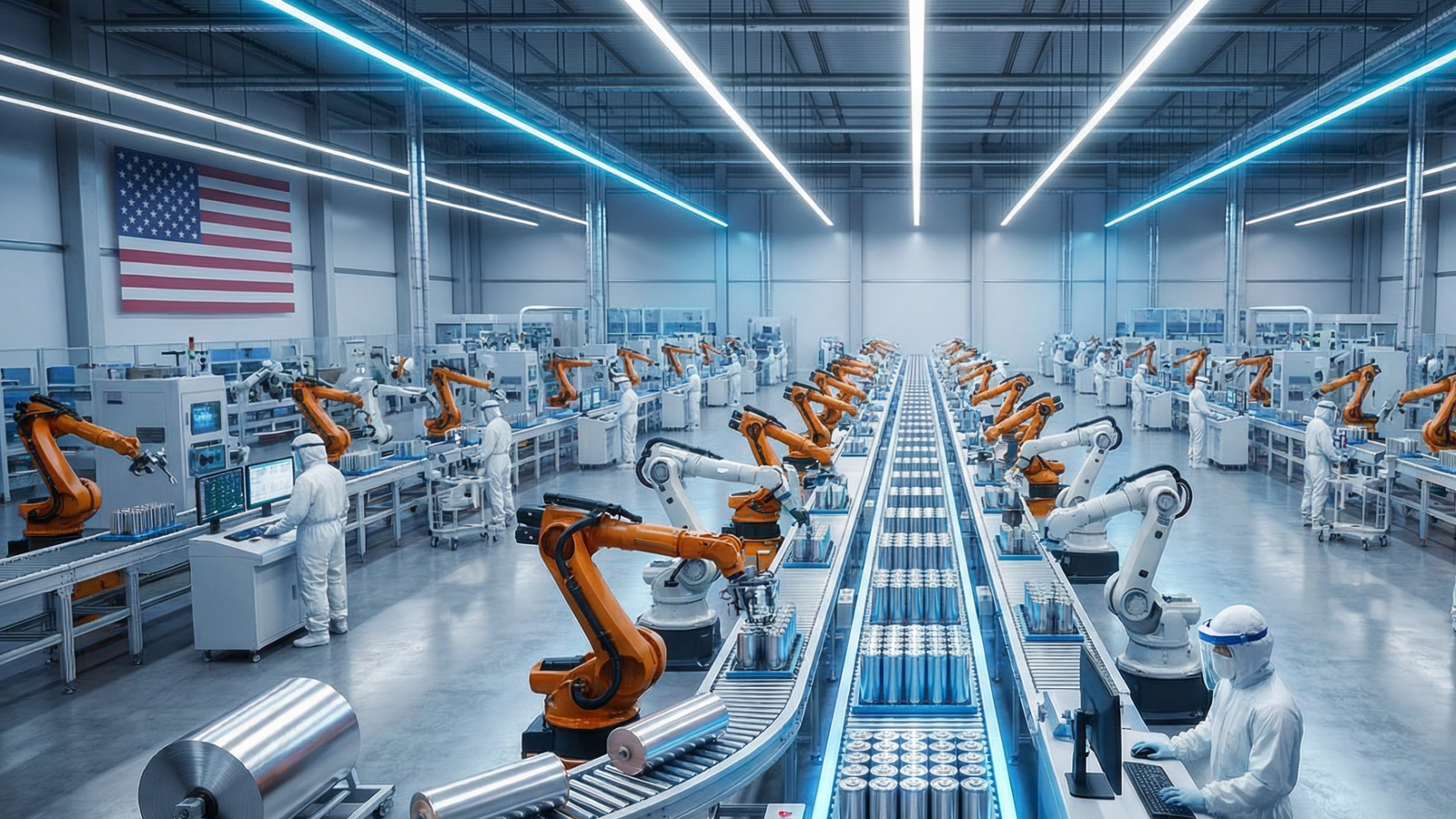
$119B Elon Musk’s Terafab Amazing Inside New Update: The future of artificial intelligence, semiconductor manufacturing, and electric transportation is entering a revolutionary era. Elon Musk’s ambitious projects, including the proposed Terrafab semiconductor manufacturing complex and the rapidly expanding Tesla Semi electric truck program, highlight a broader strategy focused on controlling critical technologies and reducing supply chain dependence.
With a reported potential investment of $119 billion, Terrafab aims to address the growing demand for advanced AI chips, while the Tesla Semi seeks to transform long-distance freight transportation through improved battery technology, ultra-fast charging, and lower operating costs.
Together, these projects demonstrate how vertical integration, automation, and large-scale manufacturing could reshape industries ranging from robotics to global logistics.
What Is Terrafab? Elon Musk’s $119 Billion Semiconductor Ambition
Terrafab is a proposed semiconductor manufacturing initiative associated with Elon Musk’s technology ecosystem. The project has been described as a massive complex in Grimes County, Texas, potentially covering approximately 100 million square feet and requiring investment on an extraordinary scale.
The primary objective is to secure the computing hardware needed for Tesla’s autonomous vehicles, humanoid robots, and other AI-intensive applications, alongside SpaceX’s growing space-based infrastructure.
Unlike companies that depend entirely on outside chip suppliers, Tesla and SpaceX could benefit from greater control over the production of specialized semiconductors.
Why Does Elon Musk Need Terrafab?
Artificial intelligence requires enormous computing resources. As autonomous systems become more advanced, the demand for high-performance processors, memory, and efficient chip packaging continues to increase.
Terrafab’s proposed role would be to strengthen the semiconductor supply chain supporting several major technologies.
- Tesla Optimus Robots: Humanoid robots require powerful processors to interpret their surroundings, recognize objects, and perform complex physical tasks.
- Autonomous Cybercabs: Self-driving vehicles need advanced onboard computing to process camera images, identify obstacles, and make driving decisions.
- SpaceX and Starlink: Satellites and spacecraft require specialized processors designed to operate reliably in demanding environments.
- AI Infrastructure: Future AI systems may require increasingly powerful computing hardware to support training, inference, and autonomous operations.
By bringing chip manufacturing closer to the companies that design and use the processors, Terrafab could help reduce dependence on external semiconductor suppliers.
However, the proposed facility’s investment, production capacity, and construction schedule should be treated as targets or reported plans unless independently confirmed.
How Terrafab Could Transform Semiconductor Manufacturing
Advanced Logic Chips and AI5 and AI6 Processors
Modern AI hardware depends on advanced logic chips capable of handling complicated calculations with high energy efficiency.
Tesla’s AI processor development is central to its ambitions in autonomous driving and robotics. Future processors, including the AI5 and AI6 generations discussed in the company’s technology roadmap, could support increasingly sophisticated neural networks.
A dedicated manufacturing ecosystem could potentially improve coordination between chip design, fabrication, advanced packaging, and testing.
This integration may also allow engineers to optimize processors for specific workloads rather than relying exclusively on commercially available components.
The Intel and TSMC Connection
Building a semiconductor fabrication facility is an exceptionally difficult engineering challenge. Chip factories require specialized equipment, highly controlled environments, advanced manufacturing processes, and experienced technical teams.
Industry expertise is therefore essential to any ambitious semiconductor project.
Intel has extensive experience in semiconductor fabrication and process development, while TSMC is one of the world’s leading contract chip manufacturers. Collaboration with experienced industry participants could help a new manufacturing initiative overcome technical challenges and improve production yields.
Nevertheless, specific partnerships, manufacturing agreements, and process-node commitments should not be considered finalized without official confirmation.
Powering a Massive Semiconductor Complex
Semiconductor fabrication requires a continuous and stable supply of electricity. Even brief power disruptions can affect sensitive manufacturing equipment and potentially damage valuable production batches.
Terrafab’s proposed energy strategy has been described as combining on-site natural gas generation with large-scale battery storage.
Such a system could help provide reliable electricity and manage fluctuations in demand.
If a facility eventually approached gigawatt-scale power requirements, its energy infrastructure would become one of its most important engineering components. Actual requirements would depend on the number of production lines, manufacturing processes, and supporting systems installed.
Tesla Semi: The Electric Truck Revolution
While Terrafab focuses on computing hardware, the Tesla Semi targets one of the world’s most important industrial sectors: heavy-duty freight transportation.
Diesel trucks remain essential to global supply chains, but fuel costs, maintenance requirements, and emissions create opportunities for electric alternatives.
Tesla’s Class 8 electric truck is designed to combine long-distance capability with rapid charging and reduced operating expenses.
Tesla Semi Production and Manufacturing Expansion
Tesla has been developing dedicated manufacturing capacity for the Semi, with Nevada serving as a key location for its production plans.
The reported factory design targets capacity of up to 50,000 trucks annually at full scale. Reaching that level would require substantial manufacturing investment, reliable battery supplies, and sufficient demand from commercial fleet operators.
The transition from limited production to high-volume manufacturing is particularly important because fleet customers need dependable delivery schedules, consistent quality, and accessible charging infrastructure.
4680 Battery Technology and Driving Range
Tesla’s 4680 battery cells are designed to support improvements in manufacturing efficiency, packaging, and vehicle performance.
For the Semi, battery integration is especially important because heavy battery packs affect payload capacity and operating efficiency.
The vehicle has been promoted with a target of up to 500 miles of range under specified operating conditions, making it relevant to long-haul routes where charging stops must be carefully planned.
Real-world range depends on several factors, including cargo weight, speed, weather, terrain, and driving style.
Improved battery manufacturing could eventually help lower costs and increase production capacity, although the overall economics will depend on cell availability and pack design.
Megawatt Charging for Commercial Fleets
Charging speed is one of the most important considerations for electric freight operators.
Tesla has developed its Megacharger concept to provide high-power charging for the Semi. The system is intended to replenish substantial battery capacity during scheduled driver breaks.
Charging at power levels approaching or exceeding one megawatt could significantly reduce downtime, provided the charging station, truck, and electrical infrastructure support the required power.
The reported capability to recover approximately 60% of battery capacity in around 30 minutes depends on charging conditions and should not be interpreted as a universal result for every journey.
Reliable depot charging and strategically located highway stations will be essential to widespread adoption.
Tesla Semi Economics: Can Electric Trucks Beat Diesel?
The purchase price is only one part of the cost of operating a commercial truck. Fleet managers also evaluate fuel or electricity, maintenance, insurance, vehicle utilization, and downtime.
Electric trucks could offer significant savings because electric motors generally require fewer routine service items than diesel powertrains.
Lower Energy Costs and Annual Savings
The Tesla Semi’s energy consumption has been discussed at approximately 1.7 kWh per mile under particular operating conditions.
At that consumption rate, a truck traveling 100,000 miles annually would use approximately 170,000 kWh of electricity.
If electricity costs less per mile than diesel, the difference can generate substantial savings over time. For example, an estimated $0.47 per mile advantage would translate into approximately $47,000 in annual energy savings across 100,000 miles.
These figures are illustrative rather than guaranteed. Actual savings depend on local electricity prices, diesel costs, charging losses, payload, and vehicle efficiency.
Powertrain and Thermal Management
The Tesla Semi features a multi-motor electric powertrain designed to deliver strong acceleration and hauling performance.
Electric power delivery can be particularly useful on steep roads, where consistent torque helps move heavy loads.
Advanced thermal management is also important. Heat-pump technology and integrated thermal systems can help regulate battery and cabin temperatures, improving efficiency under suitable conditions.
For logistics companies, the ultimate objective is straightforward: maximize vehicle uptime while minimizing total cost of ownership.
Tesla Semi Expansion Into Europe
European freight operators represent another potential market for electric heavy-duty trucks.
A European version of the Tesla Semi would need to accommodate regional vehicle regulations, charging standards, road configurations, and operational requirements.
Features such as camera-based mirror systems, compatible charging infrastructure, and efficient battery management could help the truck compete with established European manufacturers.
Germany, France, the United Kingdom, and Poland are among the important markets for commercial transportation electrification.
However, export plans, customer demonstrations, and delivery schedules should be verified through official Tesla announcements before being treated as confirmed milestones.
How Terrafab and Tesla Semi Fit Into Musk’s Bigger Vision
Terrafab and the Tesla Semi operate in different industries, but both reflect the same underlying philosophy: controlling critical technologies can create advantages in cost, reliability, and production scale.
Terrafab could help secure the semiconductor supply required for AI and autonomous systems, while the Tesla Semi could reduce the operating costs of freight transportation.
The broader ecosystem also includes Optimus humanoid robots, autonomous vehicles, battery storage, and SpaceX’s satellite network.
If these projects reach their intended scale, their combined influence could extend beyond individual products to the infrastructure supporting modern manufacturing and transportation.
Conclusion
The proposed $119 billion Terrafab initiative and the expanding Tesla Semi program illustrate Elon Musk’s ambitions in semiconductor manufacturing, artificial intelligence, and electric freight.
Terrafab could address important computing supply challenges, while the Tesla Semi offers a potential alternative to diesel trucks through advanced batteries, high-power charging, and lower energy costs.
Both projects face substantial challenges, including capital requirements, manufacturing complexity, infrastructure development, and execution risk.
Ultimately, their success will depend on whether ambitious engineering plans translate into reliable products, competitive costs, and sustainable high-volume production. If that happens, AI chips and electric heavy-duty transportation could become two important pillars of the next industrial transformation.
FAQs
1. What is Elon Musk’s Terrafab project?
Terrafab is a proposed large-scale semiconductor manufacturing initiative intended to support the growing computing needs of Tesla, SpaceX, and their AI-related technologies. Its goals include improving access to advanced chips for robotics, autonomous vehicles, and space-based systems.
2. Why is Terrafab estimated to cost $119 billion?
The reported $119 billion investment reflects the potential scale of an advanced semiconductor manufacturing complex. Building such a facility could require expensive fabrication equipment, cleanrooms, energy infrastructure, advanced packaging systems, and specialized engineering teams. The figure should be treated as a reported estimate rather than a confirmed final budget.
3. Where is Elon Musk’s Terrafab expected to be located?
The proposed Terrafab project has been associated with Grimes County, Texas. Its potential location could provide access to industrial infrastructure, energy resources, and the broader technology ecosystem in Texas. Specific construction and operational details require official confirmation.
4. What is the main purpose of Terrafab?
The main objective of Terrafab is to strengthen the semiconductor supply chain for AI computing, autonomous driving, humanoid robotics, and space technology. Producing specialized chips closer to the companies that need them could help reduce supply constraints and improve coordination between chip design and manufacturing.
5. How could Terrafab support Tesla Optimus robots?
Tesla’s Optimus humanoid robots require advanced processors to interpret visual information, understand their surroundings, and control physical movements. A dedicated semiconductor manufacturing ecosystem could help provide the computing hardware needed to support future robotics development and potential increases in production.
6. What are Tesla AI5 and AI6 chips?
AI5 and AI6 refer to generations of AI processors associated with Tesla’s computing roadmap. These processors are intended to support demanding workloads such as autonomous driving and AI inference. Their ultimate performance will depend on chip architecture, manufacturing technology, software optimization, and production availability.
7. Could Intel and TSMC help Terrafab succeed?
Intel and TSMC have extensive experience in semiconductor manufacturing. Their expertise could be valuable in developing advanced fabrication processes, improving production yields, and managing complex manufacturing operations. However, specific partnerships or commitments involving Terrafab should not be considered finalized without reliable official confirmation.
8. How much electricity could Terrafab require?
A massive semiconductor complex could require substantial, continuous electricity to operate manufacturing equipment, cleanrooms, cooling systems, and supporting infrastructure. Reports have discussed potential gigawatt-scale power generation, but the facility’s actual electricity requirements will depend on its final size, equipment, and production capacity.
9. What is the Tesla Semi?
The Tesla Semi is a battery-electric Class 8 heavy-duty truck designed for commercial freight transportation. It aims to provide long-distance driving capability, strong performance, and lower operating costs through electric propulsion, regenerative braking, and high-power charging.
10. What is the maximum range of the Tesla Semi?
Tesla has promoted a 500-mile range for the Semi under specified operating conditions. Actual driving range can vary depending on cargo weight, road conditions, speed, temperature, terrain, and driving habits. Fleet operators should evaluate real-world performance on their intended routes.
11. What are the benefits of Tesla’s 4680 battery cells?
Tesla’s 4680 battery cells are designed to improve battery manufacturing efficiency and vehicle integration. Potential benefits include more efficient packaging, reduced production complexity, and improved cost management. The actual advantages depend on the specific battery pack design, manufacturing yields, and vehicle configuration.
12. How quickly can the Tesla Semi charge?
The Tesla Semi’s Megacharger system is designed for high-power commercial charging. Reported capabilities include replenishing approximately 60% of battery capacity in around 30 minutes under suitable conditions. Actual charging times depend on the truck’s battery state, temperature, charger output, and available electrical infrastructure.
13. How much money can the Tesla Semi save compared with diesel trucks?
Potential savings depend on electricity and diesel prices, annual mileage, maintenance expenses, and vehicle utilization. Using an illustrative energy-cost advantage of $0.47 per mile, a truck traveling 100,000 miles annually could save approximately $47,000 per year in energy costs. This is an estimate, not a guaranteed saving.
14. Is the Tesla Semi expected to expand into Europe?
The Tesla Semi could offer opportunities in European freight markets, where commercial transportation electrification is progressing. However, European deployment depends on regulatory compliance, charging infrastructure, manufacturing capacity, and customer demand. Specific export schedules and demonstrations should be verified through official announcements.
15. How are Terrafab and the Tesla Semi connected to Elon Musk’s long-term vision?
Both projects reflect a strategy focused on vertical integration, advanced technology, and manufacturing at scale. Terrafab aims to address computing supply requirements, while the Tesla Semi seeks to improve freight efficiency through electrification. Together with AI, robotics, and autonomous transportation, these initiatives represent an ambitious vision for future industrial development.
Read More:
- Tesla’s mirrorless Cybercab will give riders a visibility upgrade
- Elon Musk drops a Thanksgiving hint about Starship’s biggest test yet
- Why SpaceX’s 2027 Raptor 4 is the best Engine ever created
- Tesla Bot Gen 3 Major Design & 5 Upgrades Inside! Cooking & Clean
- Elon Musk’s 2026 Tesla Pi Phone Finally HERE: What Makes It a True iPhone KILLER?