
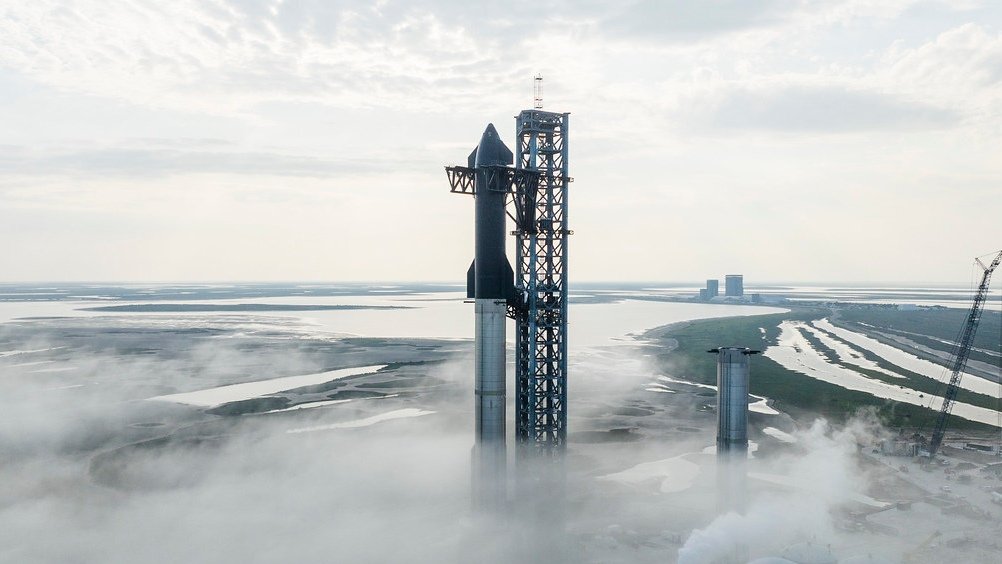
Starship Flight 15 is finally Making a Ship Catch Possible: The future of space exploration is moving closer to a new era as SpaceX continues developing Starship, its next-generation rocket system designed for rapid reusability and missions beyond Earth. Following the important milestones associated with Flight 14, attention has shifted toward Starship Flight 15 and the possibility of attempting something even more ambitious: catching the Starship upper stage with the launch tower’s giant mechanical arms.
Known as Mechazilla, this innovative recovery system is central to SpaceX’s long-term goal of recovering and reusing both stages of Starship. Although catching the Super Heavy booster has already demonstrated the potential of tower-based recovery, catching the much larger Starship upper stage introduces a new set of technical challenges.
If the necessary hardware, flight performance, and regulatory approvals align, Flight 15 could represent another significant step toward making fully reusable rockets a practical reality.
What Makes Starship Flight 15 So Important?
Starship is designed to transform space transportation through a combination of enormous payload capacity, powerful engines, and reusable hardware. Unlike conventional rockets that discard major components after launch, SpaceX aims to return both Starship and its Super Heavy booster to Earth for inspection, refurbishment, and subsequent flights.
The potential Starship ship catch attempt is particularly important because the upper stage must survive launch, spaceflight, and atmospheric reentry before returning to a designated recovery location.
A successful demonstration would provide valuable engineering data about the vehicle’s guidance systems, structural behavior, thermal protection, and interaction with the launch tower.
However, a ship catch should not be considered guaranteed simply because the previous mission achieved important milestones. SpaceX must evaluate flight data, vehicle readiness, weather conditions, and operational safety before committing to such a demanding recovery attempt.
Lessons Learned From Starship Flight 14
1. Successful Stage Separation
One of the essential milestones in a Starship mission is the separation of the upper stage from the Super Heavy booster.
During this phase, the two vehicles must disconnect at the correct moment while maintaining their intended flight paths. A clean separation allows Starship to continue its mission while the booster begins its return sequence.
Reliable stage separation technology is fundamental to every future Starship mission, especially those intended to demonstrate increasingly complex recovery procedures.
Engineers can use flight telemetry to evaluate vehicle movement, engine performance, separation timing, and the behavior of onboard control systems.
2. Super Heavy Booster Recovery
The Super Heavy booster is responsible for delivering Starship through the early stages of flight. After separation, it must execute carefully planned maneuvers to return toward its recovery zone.
These maneuvers involve engine relighting, trajectory adjustments, and precise control during atmospheric descent.
SpaceX’s tower-based booster recovery approach uses large mechanical arms to capture a returning vehicle near the launch structure. This method could reduce the need for conventional landing legs and simplify ground operations.
The experience gained from booster recovery testing provides valuable information for developing the more complicated Starship upper-stage catch system.
3. Turning Flight Data Into Improvements
SpaceX follows an iterative development strategy in which each test flight provides information for future engineering decisions.
Telemetry helps engineers identify unexpected vehicle behavior, evaluate component performance, and determine whether design changes are necessary.
For Starship Flight 15, the most important question is whether the available data supports an upper-stage catch attempt. Previous successes can increase confidence, but the final decision depends on the complete technical assessment.
How the Starship Ship Catch Could Work
Understanding the Mechazilla Tower
The launch tower’s mechanical arms are designed to interact with specially engineered sections of the returning vehicle. During a recovery attempt, the rocket must approach the tower along a tightly controlled trajectory.
The system requires coordination between onboard navigation, propulsion, flight-control software, ground infrastructure, and recovery operations.
Unlike a conventional runway landing, a tower catch requires the vehicle to position itself within a limited recovery area while accounting for changing atmospheric conditions.
Precision guidance and autonomous flight control are therefore essential to the concept.
Why Catching Starship Is More Difficult Than Catching Super Heavy
Although both vehicles belong to the same transportation system, their recovery profiles are different.
Starship must protect its heat shield during atmospheric reentry before maneuvering toward the recovery location. Its aerodynamic surfaces help control its orientation and trajectory as it moves through the atmosphere.
The vehicle must then transition into a suitable position for the tower to capture it.
This sequence creates several challenges involving aerodynamics, thermal protection, structural loads, and landing precision. A successful booster catch does not automatically prove that an upper-stage catch will work.
The Biggest Engineering Challenges Facing Flight 15
1. Thermal Protection System Integrity
Starship experiences intense heating during atmospheric reentry. Its thermal protection system, including heat-shield tiles, must withstand demanding temperatures and aerodynamic forces.
Damaged, missing, or displaced tiles could affect vehicle protection and increase the risks associated with recovery.
Engineers must examine heat-shield performance, attachment methods, and structural conditions to understand how well the vehicle survives the complete flight profile.
A reliable thermal protection system (TPS) is critical for repeated Starship missions, particularly those involving rapid turnaround.
2. Atmospheric Conditions and Wind
Wind speed, wind direction, atmospheric density, and high-altitude disturbances can influence the vehicle’s descent.
Even small deviations in the final approach may complicate the alignment between Starship and the recovery tower.
Flight-control systems must continuously adjust the vehicle’s trajectory to maintain a suitable approach while respecting operational limits.
Weather conditions could therefore affect whether a planned recovery attempt proceeds.
3. Structural Loads and Catch Precision
A tower catch requires careful management of the forces generated when the vehicle and recovery equipment interact.
The tower arms, vehicle attachment points, and supporting structures must be designed to accommodate the relevant loads without causing unacceptable damage.
The approach must also account for vehicle movement and the limited space available for capture.
Achieving reliable recovery will require extensive testing, detailed simulations, and careful analysis of real-world flight data.
Why Full Reusability Could Transform Space Travel
Lower Launch Costs
One of the principal objectives of Starship is to reduce the cost of transporting payloads into space.
Manufacturing a new rocket stage for every mission requires substantial materials, labor, testing, and production time. Reusing major components could reduce the need to build replacement hardware for each launch.
However, actual cost savings will depend on inspection requirements, refurbishment expenses, operational reliability, and launch frequency.
If both stages can be recovered and reused efficiently, Starship could help make access to space more economical.
Expanding Starlink Deployment
Reusable Starship vehicles could eventually support the deployment of larger satellite payloads, including future generations of Starlink satellites.
Greater payload capacity and more frequent launches could provide additional flexibility for building and upgrading satellite networks.
The extent of these benefits will depend on Starship’s demonstrated performance, operational readiness, and ability to achieve regular flights.
Supporting Moon and Mars Missions
Starship is also being developed for ambitious missions involving the Moon and Mars.
NASA’s Artemis program includes a Starship-based lunar lander architecture, while SpaceX’s broader vision includes transporting cargo and eventually people to Mars.
Repeated vehicle reuse could support the launch frequency and logistical capacity required for these objectives.
Nevertheless, lunar and Martian missions involve additional challenges, including orbital refueling, life-support systems, long-duration operations, and destination-specific infrastructure.
Could Starship Flight 15 Attempt a Ship Catch?
Flight 15’s potential role in upper-stage recovery depends on several factors, including the results of previous tests, vehicle readiness, and regulatory authorization.
A flight schedule or reported target date should not be treated as confirmation that a catch will take place. Aerospace development timelines can change as engineers evaluate hardware and prepare for new test objectives.
The most meaningful indicators will be official mission updates, verified launch preparations, and confirmation of the intended recovery profile.
Even if the upper stage is not caught during Flight 15, the mission could still provide valuable information for future recovery attempts.
Engineering progress is measured by verified performance and lessons learned, not simply by whether a single test achieves its most ambitious objective.
Conclusion: A New Milestone for Starship Reusability
Starship Flight 15 represents an important point in SpaceX’s continuing effort to develop a fully reusable launch system. The possibility of catching the Starship upper stage with the Mechazilla tower arms highlights the company’s ambition to move beyond conventional rocket recovery methods.
From heat-shield durability and aerodynamic control to autonomous guidance and structural precision, a successful ship catch would require numerous systems to work together.
If demonstrated safely and reliably, upper-stage recovery could help establish a foundation for more frequent launches, reusable spacecraft operations, and future missions to the Moon and Mars.
The outcome of Flight 15 remains dependent on technical readiness and the mission’s confirmed objectives. Regardless of whether a catch is attempted, the testing process will contribute to SpaceX’s broader goal of making reusable space transportation more reliable, economical, and capable of supporting humanity’s future beyond Earth.
FAQs
1. What is Starship Flight 15?
Starship Flight 15 is a test mission in SpaceX’s Starship development program. Its broader objectives involve evaluating rocket performance, flight systems, and technologies needed to achieve reliable and rapid reusability.
2. What is the Starship ship catch?
The Starship ship catch is a recovery concept in which SpaceX aims to catch the returning Starship upper stage using the mechanical arms of its launch tower instead of relying on conventional landing legs.
3. What is Mechazilla?
Mechazilla is the nickname for SpaceX’s launch tower and its large mechanical arms, which are designed to support rocket recovery operations and other launch-site activities.
4. Why is catching Starship important?
Catching Starship could help SpaceX recover its upper stage without requiring conventional landing legs. This approach may simplify recovery operations, reduce refurbishment requirements, and support the company’s goal of full rocket reusability.
5. Did SpaceX already demonstrate a Super Heavy booster catch?
Yes. SpaceX has demonstrated catching a returning Super Heavy booster with its launch tower arms. However, recovering Starship’s upper stage presents different aerodynamic, thermal, and guidance challenges.
6. Is a Starship upper-stage catch guaranteed on Flight 15?
No. A ship catch should be considered a potential test objective rather than a guaranteed outcome unless SpaceX officially confirms the plan. Technical readiness, weather, safety requirements, and regulatory approvals can influence the mission.
7. What lessons can SpaceX learn from Flight 14?
Flight testing can provide valuable information about stage separation, engine performance, flight control, booster recovery, and vehicle reliability. Engineers use this data to evaluate hardware and determine whether the next recovery objectives are achievable.
8. What are the biggest challenges of catching Starship?
The main challenges include thermal protection, aerodynamic stability, precise guidance, wind conditions, structural loads, and accurate alignment with the tower’s mechanical arms.
9. How does Starship’s thermal protection system work?
Starship’s thermal protection system (TPS) includes heat-shield tiles designed to protect the vehicle from extreme heating during atmospheric reentry. Maintaining tile integrity is essential for protecting the vehicle and supporting repeated flights.
10. How does weather affect a Starship ship catch?
Wind speed, wind direction, atmospheric conditions, and high-altitude gusts can influence Starship’s descent and final approach. Unfavorable conditions may lead to adjustments or delays to protect the vehicle, launch infrastructure, and surrounding areas.
11. How could a successful ship catch reduce launch costs?
Recovering and reusing the upper stage could reduce the need to manufacture replacement vehicles for every mission. Actual savings would depend on inspection, refurbishment, maintenance, and recovery costs, as well as how frequently Starship can fly.
12. What role could Starship reusability play in Starlink deployment?
A fully reusable Starship system could eventually support the deployment of large satellite payloads, including future Starlink satellites. Higher payload capacity and frequent launches could help SpaceX expand or upgrade its satellite network.
13. How could Starship Flight 15 support future Mars missions?
Flight 15 can contribute to the testing and development of technologies needed for a reusable transportation system. Reliable recovery and rapid turnaround would be valuable for future Mars cargo missions and crewed exploration, although additional capabilities would also be required.
14. Could Starship be used for NASA’s Artemis program?
Yes. NASA’s Artemis architecture includes a Starship-based lunar lander designed to support future astronaut landings on the Moon. However, lunar missions require additional systems and demonstrations, including orbital refueling, life-support capabilities, and lunar landing operations.
15. Can Starship Flight 15 be delayed?
Yes. Starship launch schedules can change because of technical inspections, vehicle testing, weather, safety assessments, or regulatory requirements. A reported target date is not the same as a confirmed launch date.
16. What would a successful Starship ship catch mean for space exploration?
A successful upper-stage catch would demonstrate an important new recovery capability. If SpaceX can make the process safe, reliable, and repeatable, it could help advance fully reusable rockets, more frequent launches, and future missions to the Moon and Mars.
Read More:
- Tesla’s mirrorless Cybercab will give riders a visibility upgrade
- Elon Musk drops a Thanksgiving hint about Starship’s biggest test yet
- Why SpaceX’s 2027 Raptor 4 is the best Engine ever created
- Tesla Bot Gen 3 Major Design & 5 Upgrades Inside! Cooking & Clean
- Elon Musk’s 2026 Tesla Pi Phone Finally HERE: What Makes It a True iPhone KILLER?