
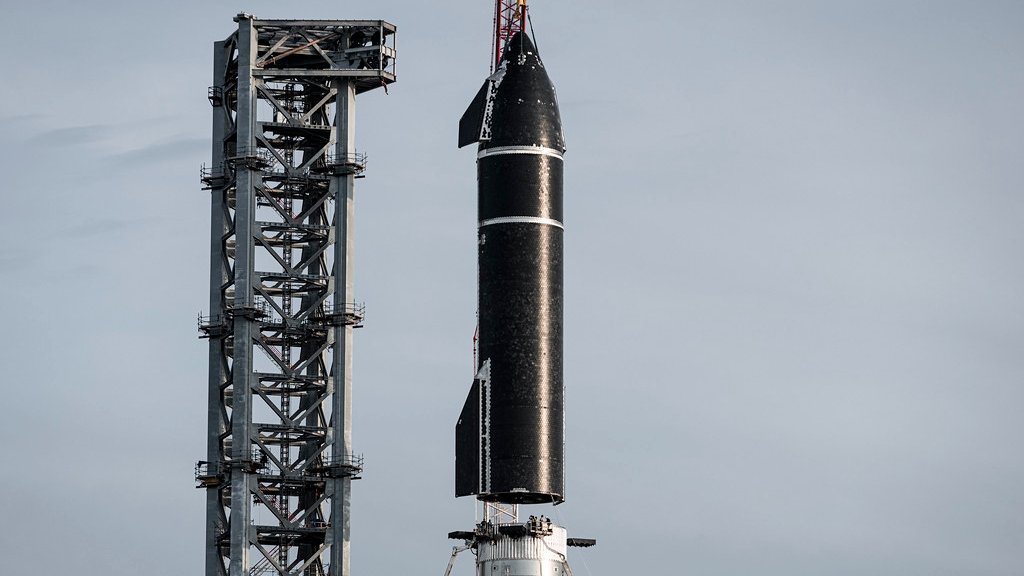
SpaceX Reveals “Florida to Starbase” Landing Plan Stunned the Industry: SpaceX is preparing to make a major transformation in the commercial spaceflight industry with its ambitious Starship Florida launch strategy. After years of relying heavily on Falcon 9 rockets for missions from Florida’s Space Coast, the company is now preparing to introduce its massive next-generation Starship launch system at Launch Complex 39A (LC39A).
However, the most interesting part of this development is not simply the arrival of Starship in Florida. SpaceX is reportedly evaluating an unprecedented “Florida to Starbase” mission profile, potentially allowing a spacecraft to launch from Florida, complete several orbits around Earth, and land at Starbase in Texas.
This approach could introduce a new era of multi-site Starship operations, making rocket transportation, recovery, and launch infrastructure more flexible than ever before.
SpaceX Prepares to Transform Launch Complex 39A
SpaceX is moving closer to bringing Starship operations to Florida. During a presentation at the Cocoa Village Playhouse, SpaceX Vice President of Launch Kiko Donchev discussed the company’s plans for preparing its East Coast launch infrastructure.
One of the biggest announcements involved a potential six-week pause in Falcon 9 launches from LC39A to complete the necessary preparations for Starship.
This temporary suspension would allow engineers to focus on ground infrastructure, propellant systems, launch procedures, vehicle integration, and recovery operations.
Although Falcon 9 remains one of the most successful operational rockets in the world, SpaceX is increasingly prioritizing Starship as its next major transportation platform.
Why SpaceX Needs to Pause Falcon 9 Operations
Preparing LC39A for Starship is a complicated engineering project. Unlike Falcon 9, Starship and its Super Heavy booster require significantly larger infrastructure and more powerful ground support systems.
The company needs to ensure that every component of the launch complex can safely support the enormous rocket.
Meanwhile, SpaceX has increasingly shifted Falcon 9 missions toward Space Launch Complex 40 (SLC-40) to help maintain launch operations while LC39A undergoes preparations.
This strategy could allow the company to modernize its Florida infrastructure without completely interrupting its existing launch schedule.
Starship’s Massive Florida Launch Infrastructure
The transformation of LC39A involves several major infrastructure projects designed specifically for Starship.
These systems are essential because Starship is significantly larger and more powerful than the Falcon 9 rocket.
1. Launch Tower and Mechazilla Arms
One of the most recognizable elements of the Starship launch system is Mechazilla, the enormous launch and catch tower equipped with mechanical arms.
These arms are designed to catch returning Super Heavy boosters and potentially Starship spacecraft during future recovery operations.
Bringing this technology to Florida would represent a major expansion of SpaceX’s reusable rocket infrastructure.
2. Orbital Launch Mount and Flame Trench
Starship’s Super Heavy booster is powered by 33 Raptor engines, producing enormous amounts of thrust during liftoff.
The orbital launch mount and associated flame-management infrastructure must withstand extreme temperatures, pressure, and acoustic forces.
Engineers must ensure that the launch pad can safely handle repeated launches without requiring extensive reconstruction after every mission.
3. Florida Gigabay Manufacturing Facility
Another important development is the construction of the Gigabay, a major facility intended to support Starship manufacturing and assembly activities in Florida.
Local manufacturing capabilities could reduce dependence on transporting complete vehicles and large components across the country.
If successfully developed, Florida could eventually become more than a launch location. It could become an important manufacturing, integration, and operational center for SpaceX.
The Incredible Florida to Starbase Landing Plan
The most fascinating aspect of SpaceX’s proposed East Coast strategy is the possibility of a cross-country Starship mission.
Instead of launching from Florida and immediately attempting to land the upper-stage spacecraft at the same location, SpaceX is evaluating a different operational approach.
The proposed mission would connect Florida’s LC39A launch complex with Starbase in Texas.
Step 1: Starship Launches From Florida
The mission would begin at Launch Complex 39A, where the Super Heavy booster would propel Starship into space.
The booster could potentially attempt a recovery using the Mechazilla tower at the Florida launch site.
This would provide SpaceX with an opportunity to validate its East Coast booster recovery systems.
Step 2: Starship Completes Six Orbits Around Earth
After separating from Super Heavy, Starship would continue its journey into space.
According to the proposed mission concept, the spacecraft could complete approximately six orbits around Earth, potentially spending around 8 to 9 hours in space.
During this period, Starship could demonstrate important orbital operations, including spacecraft control, payload deployment, and mission management.
This extended flight would provide valuable information about the vehicle’s ability to operate beyond the immediate launch environment.
Step 3: Starship Returns and Lands at Starbase
Instead of returning to Florida, Starship would perform atmospheric re-entry and travel toward Starbase, Texas.
The spacecraft would then attempt a landing at SpaceX’s Texas facility.
This would create an extraordinary operational connection between two major SpaceX locations.
However, the proposed trajectory should be understood as a mission concept rather than a confirmed completed flight or finalized operational schedule.
Why the Multi-Site Starship Network Matters
The Florida-to-Starbase concept could have major implications for the future of commercial space transportation.
Historically, transporting large rocket hardware between manufacturing and launch locations has required complicated logistics, including specialized road vehicles, ships, and other transportation systems.
A reusable spacecraft capable of traveling between operational facilities could eventually provide another transportation option.
1. Greater Operational Flexibility
Operating Starship from multiple launch complexes could help SpaceX reduce dependence on a single facility.
Weather conditions, maintenance requirements, technical problems, and launch scheduling conflicts can affect operations at any individual location.
Multiple operational sites could provide additional flexibility and help increase launch opportunities.
2. Starbase Could Focus on Research and Development
Starbase in Texas has become a central location for Starship manufacturing, testing, and rapid engineering development.
Meanwhile, Florida could gradually take on a larger role in operational launches and mission deployment.
This division could help SpaceX separate experimental development activities from more routine launch operations.
3. Supporting NASA’s Artemis Lunar Program
One of the biggest reasons Starship matters is its potential role in NASA’s Artemis program.
SpaceX is developing a Starship-based Human Landing System (HLS) designed to transport astronauts between lunar orbit and the Moon’s surface.
Future lunar missions will require substantial orbital infrastructure, including multiple launches, spacecraft docking, and propellant transfer operations.
A high-cadence launch network could help support these demanding mission requirements.
4. Increasing Competition in the Space Industry
SpaceX is also operating in an increasingly competitive commercial spaceflight market.
Companies such as Blue Origin and United Launch Alliance (ULA) are developing and operating their own launch systems.
Starship’s combination of massive payload capacity, potential full reusability, and high launch frequency could challenge traditional launch economics.
If SpaceX achieves its long-term objectives, the company could significantly change how commercial satellites, scientific payloads, and deep-space missions reach orbit.
Major Challenges SpaceX Must Overcome
Despite the exciting possibilities, establishing routine Starship operations in Florida will not be easy.
Several major engineering and regulatory challenges remain.
1. Heat Shield Durability
One of Starship’s most important technologies is its thermal protection system.
During atmospheric re-entry, the spacecraft experiences extreme temperatures and aerodynamic forces.
The heat shield must protect the vehicle while allowing it to return for repeated flights with minimal refurbishment.
Improving heat-shield durability is essential for achieving the rapid reusability SpaceX ultimately wants.
2. Raptor Engine Reliability
Starship depends on its powerful Raptor engines, which use liquid methane and liquid oxygen.
The Super Heavy booster requires 33 engines working together during launch.
Maintaining consistent performance, reliable engine starts, and safe shutdown procedures will remain essential as SpaceX increases its launch frequency.
3. Regulatory and Environmental Approvals
Frequent Starship launches from Florida will require extensive coordination with federal regulators and relevant authorities.
Launch licenses, environmental reviews, safety procedures, and flight-path approvals will all play important roles.
SpaceX must also demonstrate that its operations can comply with applicable restrictions involving surrounding communities and protected environments.
4. Managing Texas and Florida Operations
Running major Starship facilities across two states will require complex logistical coordination.
Engineers must manage vehicle transportation, component manufacturing, workforce deployment, maintenance, and launch scheduling.
A successful multi-site network will depend on efficient communication and reliable supply chains.
What Comes Next for SpaceX Starship?
SpaceX’s plans for LC39A could represent an important milestone in the evolution of its Starship program.
The transition from Falcon 9-focused operations toward a broader Starship infrastructure network would give the company additional opportunities to expand its launch capabilities.
The potential Florida to Starbase mission is particularly interesting because it demonstrates how SpaceX could eventually use Starship for more than traditional orbital launches.
A reusable spacecraft that can launch from one facility and land at another could open new possibilities for transporting cargo, supporting orbital infrastructure, and preparing for future deep-space exploration.
However, achieving this vision will require successful testing, regulatory approvals, reliable recovery systems, and significant improvements in vehicle turnaround times.
Conclusion
SpaceX is approaching a potentially historic period in commercial spaceflight. Preparing Launch Complex 39A for Starship, temporarily shifting Falcon 9 operations, and developing a broader East Coast infrastructure network could transform the company’s launch strategy.
The proposed Florida to Starbase landing plan is especially significant because it points toward a future in which reusable spacecraft could operate between multiple facilities.
If SpaceX successfully develops this capability, it could create a more flexible and scalable space transportation system.
From Florida’s Space Coast to Starbase, Texas, Starship could become the foundation of a new generation of reusable spaceflight, supporting everything from commercial satellite deployments to NASA’s lunar ambitions and eventually missions to Mars.
FAQs
1. What is SpaceX’s Florida to Starbase landing plan?
SpaceX’s proposed Florida to Starbase landing plan involves launching Starship from Launch Complex 39A (LC39A) in Florida, completing approximately six orbits around Earth, and attempting to land at Starbase in Texas.
2. Why is SpaceX preparing Launch Complex 39A for Starship?
SpaceX is upgrading LC39A to support Starship launches, including larger ground systems, propellant infrastructure, launch operations, and booster recovery technology.
3. Will SpaceX temporarily pause Falcon 9 launches from LC39A?
According to the provided source, SpaceX is prepared to pause Falcon 9 launches for up to six weeks to complete Starship-related preparations at LC39A.
4. Why is SpaceX moving Falcon 9 launches to SLC-40?
SpaceX is increasingly using Space Launch Complex 40 (SLC-40) to maintain Falcon 9 launch operations while LC39A undergoes modifications for Starship.
5. What is Mechazilla, and why is it important for Starship Florida launches?
Mechazilla is SpaceX’s massive launch tower equipped with mechanical catching arms designed to recover Starship and Super Heavy vehicles. It is an important part of the company’s reusable rocket strategy.
6. How many Raptor engines power the Super Heavy booster?
The Super Heavy booster is designed with 33 Raptor engines that generate enormous thrust to propel Starship away from Earth.
7. How many orbits could Starship complete during the Florida to Starbase mission?
Under the proposed mission profile, Starship could complete approximately six orbits around Earth before returning toward Starbase in Texas.
8. How long could the Florida to Starbase Starship mission last?
The proposed mission could last approximately 8 to 9 hours, depending on the final orbital trajectory and mission operations.
9. Why would Starship launch from Florida and land in Texas?
This approach could allow SpaceX to test Florida’s launch and Super Heavy booster recovery infrastructure without requiring an immediate Starship landing at the same launch site.
10. What is the purpose of the Starship Gigabay in Florida?
The planned Gigabay is intended to support Starship manufacturing, assembly, and integration activities, potentially helping SpaceX expand its Florida operations.
11. How could the Florida Starship launch facility benefit SpaceX?
Florida operations could provide greater launch flexibility, reduce dependence on a single launch location, and help SpaceX manage increasing mission demand.
12. Will Starbase remain important after Starship launches begin in Florida?
Yes. Starbase in Texas is expected to remain an important center for Starship manufacturing, testing, engineering development, and vehicle operations.
13. How could Starship Florida launches support NASA’s Artemis program?
Starship is being developed as NASA’s Human Landing System (HLS). More launch capacity could eventually support orbital refueling, lunar transportation, and future Artemis missions.
14. What are the biggest challenges facing Starship’s Florida operations?
Major challenges include heat-shield durability, Raptor engine reliability, regulatory approvals, environmental requirements, and multi-site logistical coordination.
15. How could Starship change the commercial spaceflight industry?
With its planned full reusability, massive payload capacity, and high launch frequency, Starship could potentially reduce launch costs and expand access to space for commercial and scientific missions.
16. When could SpaceX begin regular Starship launches from Florida?
The timeline depends on completing LC39A infrastructure, vehicle testing, regulatory approvals, and recovery system validation. A confirmed date for routine Starship operations has not been established in the provided information.
Read More:
- Amazing Tesla Cybercab Ramp Up, Massive Fleet & Delivery Soon
- Verizon, AT&T and T-Mobile are trying to shut Starlink out before FCC vote
- Tesla’s Roadster appearance at SpaceX has merger watchers talking
- FCC green lights SpaceX’s move to a showdown with Verizon and AT&T
- There’s a New-Gen Raptor Version to Replace Raptor 3 – Starship Needs It
2 thoughts on “SpaceX Reveals “Florida to Starbase” Landing Plan Stunned the Industry”