
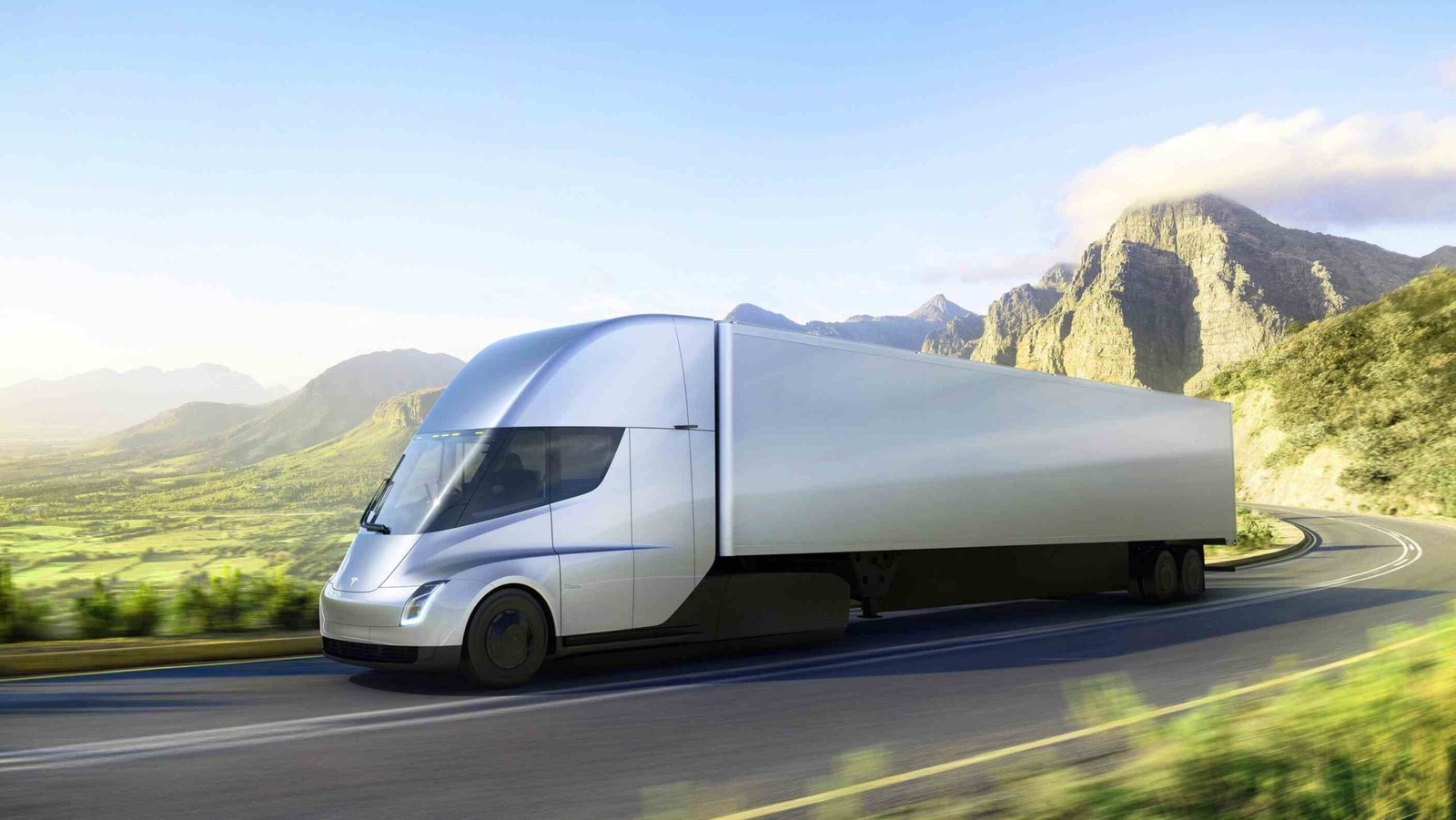
New Tesla Semi Factory 50K Capacity SHOCKING Inside: Nearly a decade after Tesla first introduced the Semi concept, the company is approaching a major milestone in the electric trucking industry. Tesla has scheduled the grand opening of its dedicated Semi factory in Sparks, Nevada, for September 24, 2026, marking an important step toward large-scale commercial EV production.
The facility is designed to eventually produce up to 50,000 Class 8 electric trucks per year. If Tesla reaches that target, the factory could dramatically change the economics and availability of electric heavy-duty trucks in North America.
Tesla Semi Factory: A Major Production Milestone
The new Tesla Semi factory is more than another manufacturing expansion. It represents Tesla’s effort to move the Semi from relatively limited fleet deployments into high-volume commercial production.
Tesla began ramping production earlier in 2026, with the first vehicle reportedly rolling off the dedicated high-volume line on April 29, 2026. That makes the September grand opening particularly interesting because production will already be underway.
Why Is Tesla Holding the Grand Opening Later?
Tesla has previously used a strategy of beginning production and refining manufacturing operations before holding major public events. This approach allows the company to demonstrate a more mature production line rather than showcasing a factory that is still being prepared.
The September event could therefore provide investors, fleet customers and media representatives with a closer look at Tesla’s commercial truck manufacturing capabilities.
More importantly, factory tours and customer demonstrations could offer clues about how quickly Tesla expects Semi production to scale.
Inside Tesla’s 1.7 Million Square-Foot Semi Factory
The new facility reportedly covers approximately 1.7 million square feet and is located beside Tesla’s existing Gigafactory Nevada operations.
That location provides a significant strategic advantage. Tesla can potentially take advantage of an established workforce, logistics infrastructure and nearby battery-related manufacturing capabilities.
Key Advantages of the Sparks Facility
- Battery integration: Proximity to Tesla’s battery operations could simplify logistics for large, heavy battery systems.
- Dedicated manufacturing: The factory is specifically designed for large Class 8 electric trucks rather than adapted from passenger-car production.
- Existing infrastructure: Tesla can leverage supply chains, transportation links and manufacturing expertise already established in Nevada.
- Future scalability: The facility has been designed with a long-term production goal of 50,000 trucks annually.
The expansion is connected to Tesla’s previously announced $3.6 billion Nevada investment, which included plans to expand battery-cell manufacturing and add dedicated vehicle production.
50,000 Tesla Semis Per Year: How Big Is That?
The headline production figure is perhaps the most striking part of the project.
A theoretical annual capacity of 50,000 Tesla Semis works out to approximately:
- 4,167 trucks per month
- Around 137 trucks per day if calculated across 365 days
- Roughly 959 trucks per week on an annualized basis
Of course, designed capacity does not mean Tesla will immediately produce trucks at that rate.
Capacity Is Not the Same as Actual Production
Manufacturing heavy-duty electric trucks presents challenges that differ from passenger vehicles. Battery packs are much larger, components are heavier, and commercial customers typically demand high reliability and predictable delivery schedules.
Tesla therefore needs to prove that the Sparks facility can move from initial production to consistent high-volume output.
Another challenge is transparency. Tesla has historically grouped the Semi with other vehicles in its “Other Models” reporting category, making it difficult to determine exactly how many Semis are being produced and delivered each quarter.
For investors and fleet operators, dedicated Tesla Semi production numbers would provide a much clearer picture of the company’s progress.
Tesla Semi Range, Performance and Price
Production capacity is only one part of the equation. The Tesla Semi also needs to make financial sense for trucking companies.
The vehicle is positioned around two major configurations, with reported ranges of approximately 325 miles for the Standard Range and 500 miles for the Long Range version.
Pricing has been reported at approximately $260,000 for the Standard Range and $290,000 for the Long Range configuration.
Powerful Three-Motor Electric Powertrain
The Tesla Semi’s performance is another major selling point.
The truck uses a three-motor powertrain capable of producing more than 1,000 horsepower, or approximately 800 kW. Instant electric torque can give the Semi strong acceleration, particularly when carrying heavy loads or climbing steep grades.
For fleet operators, however, acceleration is less important than total cost of ownership (TCO).
Electricity costs, maintenance, charging time, battery longevity and vehicle utilization will ultimately determine whether electric trucks can compete with modern diesel tractors.
Megachargers Could Make or Break Tesla Semi Adoption
One of the biggest challenges for electric trucking isn’t the truck itself. It’s the charging infrastructure.
Tesla has developed high-power Megacharging technology designed specifically for the Semi. Charging at megawatt-level power can dramatically reduce downtime compared with conventional EV charging.
Tesla has indicated that the Semi can recover a substantial portion of its battery capacity during a relatively short charging session under suitable conditions.
The Highway Charging Challenge
Early Tesla Semi deployments have focused heavily on return-to-base operations. Companies such as PepsiCo and other large fleets can install charging infrastructure at their own distribution centers and plan routes around those facilities.
Long-haul trucking is more complicated.
A nationwide electric freight network would require reliable, high-power charging stations along major interstate corridors. Without enough strategically located charging sites, fleet operators may be reluctant to use electric trucks on unpredictable long-distance routes.
This makes the development of Megacharger corridors almost as important as the production of the Semi itself.
What to Watch at the September 2026 Grand Opening
The September 24 event could provide several important clues about Tesla’s strategy.
1. Semi Ordering and Delivery Availability
If Tesla expands ordering availability and provides clearer delivery timelines, it could indicate growing confidence in production capacity.
2. Factory Automation
A factory tour could reveal how automated the production process has become and whether Tesla has solved some of the manufacturing bottlenecks associated with heavy-duty vehicles.
3. Production Numbers
Perhaps the most important signal will be whether Tesla begins providing standalone Semi production and delivery figures.
Investors need more than a 50,000-unit theoretical target. They need evidence that Tesla can translate factory capacity into actual trucks operating on the road.
The Bigger Picture for Electric Trucking
The Tesla Semi factory could become one of the most important facilities in the company’s commercial vehicle strategy.
A dedicated 1.7-million-square-foot manufacturing plant gives Tesla the physical infrastructure necessary to pursue much greater production volumes. But the real test begins after the cameras leave Sparks.
Tesla must demonstrate that it can manufacture Semis consistently, supply batteries at scale, build sufficient charging infrastructure and convince fleet operators that electric trucks deliver compelling economics.
If the company eventually approaches its 50,000-unit annual capacity, the impact could extend well beyond Tesla.
It could accelerate competition among electric truck manufacturers, encourage more investment in charging infrastructure and push fleet operators toward broader electrification.
Final Thoughts
The September 24, 2026 opening of Tesla’s dedicated Semi factory is a significant moment for both Tesla and the commercial EV industry.
The 50,000-truck annual capacity is certainly ambitious, but the number itself is only the beginning. The real measure of success will be Tesla’s ability to turn that theoretical capacity into reliable, high-volume production.
If Tesla succeeds, the Sparks facility could transform the Semi from a limited fleet experiment into a serious mass-market electric trucking platform. The next few years will reveal whether the company’s ambitious production target becomes reality.
FAQs
1. When will the new Tesla Semi factory open?
Tesla has scheduled the grand opening of its dedicated Semi factory in Sparks, Nevada, for September 24, 2026.
2. Where is the Tesla Semi factory located?
The dedicated Tesla Semi factory is located in Sparks, Nevada, next to Tesla’s existing Gigafactory Nevada operations.
3. How large is the Tesla Semi factory?
The facility covers approximately 1.7 million square feet, providing substantial space for high-volume electric truck manufacturing.
4. How many Tesla Semis can the factory produce?
The factory is designed to eventually reach a maximum production capacity of 50,000 Class 8 electric trucks per year.
5. When did Tesla Semi production begin at the new factory?
Tesla’s first production vehicle from the dedicated high-volume line reportedly rolled off the production line on April 29, 2026, following a production ramp that began earlier in the year.
6. Why is Tesla holding a grand opening after production started?
The event is expected to showcase a more mature manufacturing operation. Tesla has previously introduced products publicly after initial production and operational refinement had already begun.
7. What is the Tesla Semi’s driving range?
The Tesla Semi is offered in configurations with reported ranges of approximately 325 miles for the Standard Range and 500 miles for the Long Range version.
8. How much does the Tesla Semi cost?
Reported pricing is approximately $260,000 for the Standard Range and $290,000 for the Long Range model, although pricing and availability can change.
9. How powerful is the Tesla Semi?
The Tesla Semi uses a three-motor electric powertrain capable of producing more than 1,000 horsepower, giving it strong acceleration and hill-climbing performance when carrying heavy loads.
10. What is a Tesla Megacharger?
A Megacharger is a high-power charging system designed for the Tesla Semi. It is intended to provide charging at megawatt-level power, helping reduce charging downtime for commercial fleets.
11. How quickly can a Tesla Semi charge?
Under suitable conditions, Tesla has indicated that the Semi can recover a substantial portion of its battery capacity during a short charging session. Charging performance depends on factors such as battery state, charger capability and operating conditions.
12. Which companies have tested or used the Tesla Semi?
Early commercial users and testers have included major fleet operators such as PepsiCo, Frito-Lay, Sysco and Martin Brower, particularly on routes where charging can be installed at dedicated facilities.
13. Why is the Tesla Semi factory important for electric trucking?
The facility is important because it gives Tesla the infrastructure needed to move beyond low-volume electric truck production toward potentially large-scale commercial manufacturing.
14. What are the biggest challenges facing Tesla Semi adoption?
Major challenges include battery production, charging infrastructure, vehicle cost, production scalability and long-distance route coverage. Expanding high-power charging networks will be particularly important for long-haul freight operations.
15. Will Tesla actually produce 50,000 Semis per year?
The 50,000-unit figure represents the factory’s designed maximum capacity, not necessarily its immediate production rate. Tesla will need to demonstrate sustained manufacturing output, supply-chain reliability and fleet demand before reaching that level.
Read More:
- County vote hands Elon Musk’s Vegas tunnel network a huge new target
- Tesla Cybertruck AWD is a steal at $60k, is it still at $75k? Full Review
- SpaceX Completed Biggest Land Acquisition to Turn Starship Program Up A Notch
- Elon Musk JUST UPDATED Cybercab! New Specs SPOTTED Before NEXT WEEK’s Event!
- Tesla Semi factory is getting a celebration nobody expected
1 thought on “New Tesla Semi Factory 50K Capacity SHOCKING Inside”