
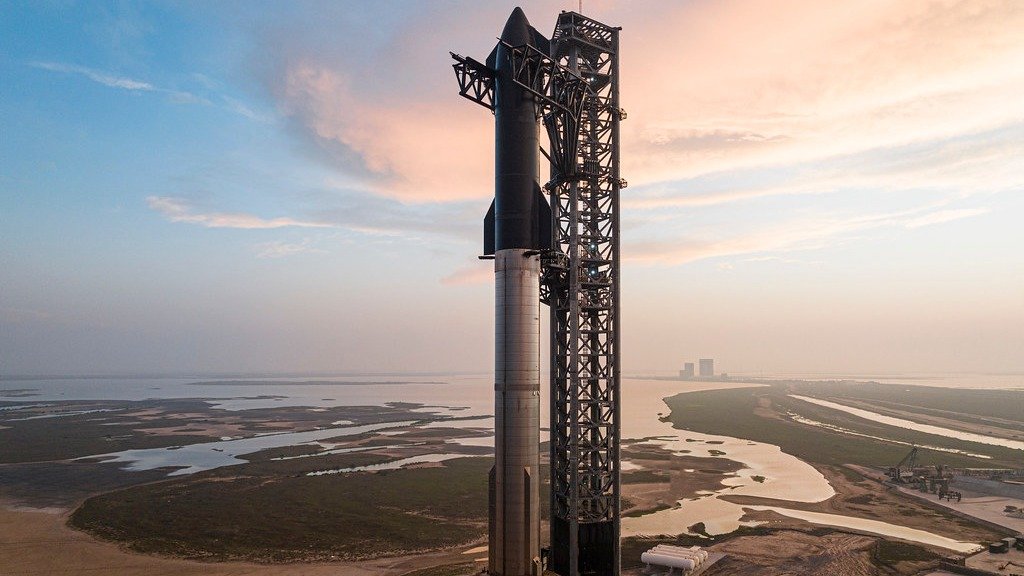
SpaceX Completed Biggest Land Acquisition to Turn Starship Program Up A Notch: SpaceX is preparing for a major expansion of its Starship ambitions with a reported 136,000-acre land acquisition on Pecan Island in Vermilion Parish, Louisiana. The enormous property could provide the company with room to develop a next-generation aerospace complex capable of supporting Starship manufacturing, launch operations, propellant production, testing, and long-term expansion.
If developed as envisioned, the Louisiana project could become one of the largest aerospace industrial footprints in the United States. More importantly, it highlights SpaceX’s broader strategy: building enough infrastructure to support a future where Starship launches occur at a dramatically higher cadence.
SpaceX’s Massive Louisiana Land Acquisition
The reported 136,000-acre Pecan Island acquisition is enormous compared with SpaceX’s existing Starbase footprint in Boca Chica, Texas. The scale suggests that the property is intended to serve as more than simply another launch site.
For comparison, the core operational area at Starbase has been described as roughly 150 acres. A proposed expansion could reach around 1,100 acres, while a longer-term master plan has been discussed at approximately 8,000 acres.
At 136,000 acres, the Pecan Island property would therefore be roughly 906 times the size of the 150-acre Starbase core, around 123 times the size of a 1,100-acre expansion, and approximately 17 times the size of an 8,000-acre long-term footprint.
However, this does not mean SpaceX would cover all 136,000 acres with buildings and launch infrastructure.
Why Does SpaceX Need So Much Land?
A large aerospace complex requires significant separation between operational areas. Launch safety zones, acoustic buffers, environmental conservation areas, roads, utility corridors, storage facilities, and restricted-access areas can consume substantial amounts of land.
This means the huge acreage could provide SpaceX with something extremely valuable: room to expand without immediately facing the same physical constraints found at smaller launch facilities.
A Potential Starship Mega-Complex
The most important advantage of the Louisiana property could be its ability to support high-cadence Starship operations.
Starship is designed as a fully reusable transportation system, and achieving its long-term potential depends not only on rocket technology but also on infrastructure. A vehicle capable of frequent launches needs factories, testing facilities, launch pads, fuel systems, recovery infrastructure, maintenance areas, and supply chains operating together.
Multiple Starship Production Lines
A site of this magnitude could theoretically accommodate multiple manufacturing halls and assembly facilities.
Instead of relying on one production line, SpaceX could potentially establish parallel production systems for Starship vehicles, Super Heavy boosters, tanks, engines, and other components.
This could help create a manufacturing ecosystem where rockets move continuously from production to testing, launch, recovery, refurbishment, and eventual reflight.
Multiple Launch Pads and Catch Towers
Another potential advantage is the ability to construct multiple launch complexes.
Starship’s launch architecture includes massive infrastructure such as launch towers and the Mechazilla catching system. Building several operational pads could provide redundancy and reduce the impact of maintenance, weather delays, or unexpected problems at individual launch sites.
For SpaceX, this is particularly important if Starship eventually needs to perform hundreds of launches per year.
A single launch pad cannot realistically support an extremely high flight rate indefinitely. Multiple pads and associated ground systems could transform the operation into something closer to an industrial transportation network.
Louisiana Could Strengthen SpaceX’s Gulf Coast Supply Chain
Pecan Island’s location also provides potential logistical advantages.
Louisiana sits along the Gulf Coast, between SpaceX’s operations in South Texas and its major launch infrastructure in Florida. That geographic position could make the state an important link in a larger Starship supply network.
Barge Transportation
Water transportation could be particularly valuable for oversized aerospace hardware.
Large rocket components, engines, tanks, raw materials, and industrial equipment can be difficult to move efficiently by road. Barge transportation could provide an alternative for moving large structures and materials between facilities around the Gulf Coast.
This could eventually connect manufacturing and launch operations across Texas, Louisiana, and Florida.
Access to Natural Gas Infrastructure
Louisiana also has extensive energy infrastructure, including natural gas pipelines and industrial processing facilities.
Starship uses liquid methane and liquid oxygen as propellants. Access to an established energy infrastructure could potentially support large-scale fuel production and storage closer to the launch site.
Localizing propellant production could reduce dependence on long-distance transportation and help SpaceX create a more integrated launch ecosystem.
The Engineering Challenge Will Be Enormous
Despite its potential advantages, developing a huge aerospace complex on coastal Louisiana terrain would be an extraordinary engineering undertaking.
Pecan Island and surrounding areas include low-lying coastal and wetland environments, creating challenges that are very different from those encountered at existing SpaceX facilities.
Soil Stabilization and Foundation Construction
Heavy launch infrastructure requires extremely strong and stable foundations.
Launch towers, propellant tanks, processing buildings, and industrial structures impose significant loads on the ground. In areas with soft or wet soils, SpaceX would potentially need extensive ground improvement, piling, drainage, fill, and foundation engineering.
The construction process alone could take years and require enormous quantities of materials.
Hurricanes, Storm Surge and Coastal Subsidence
Coastal Louisiana is also exposed to hurricanes, storm surge, flooding, erosion, and land subsidence.
Any major launch complex would therefore need carefully engineered elevation, drainage, flood protection, and hardened infrastructure.
Protecting critical rocket and propellant systems from extreme weather would be essential for reliable operations.
Environmental Regulations Could Shape the Project
The environmental dimension may be just as important as the engineering challenge.
Large portions of coastal Louisiana contain wetlands and sensitive ecosystems. Development of a major aerospace facility would therefore likely involve extensive environmental reviews, permitting, wetlands mitigation, wildlife assessments, and regulatory oversight.
SpaceX would need to balance its expansion plans with federal, state, and local environmental requirements.
Rather than developing every acre, the company could potentially use large portions of the property as conservation areas, safety buffers, environmental mitigation zones, and infrastructure corridors.
That could explain why a potential aerospace complex requires such a surprisingly large overall land footprint.
Texas and Florida Will Still Matter
The Louisiana expansion would not make SpaceX’s existing facilities obsolete.
Starbase in Texas remains central to Starship development, testing, and flight operations. Meanwhile, Florida is becoming increasingly important as SpaceX develops Starship infrastructure around the Kennedy Space Center and Cape Canaveral region.
Existing facilities can continue supporting near-term missions while a massive Louisiana project is developed over a much longer timeframe.
Building for the Next Decade
SpaceX’s immediate challenge is continuing to improve Starship reliability, increase flight frequency, develop launch infrastructure, and support future missions.
At the same time, a Louisiana mega-complex could represent a bet on the 2030s and beyond.
The company’s long-term plans involving lunar missions, NASA’s Artemis program, satellite deployment, and eventual Mars missions would require a transportation system capable of moving enormous quantities of hardware and supplies.
That creates a fundamental infrastructure question: Where will all those rockets be manufactured, fueled, tested, launched, recovered, and maintained?
A huge Louisiana complex could provide one potential answer.
What the Pecan Island Expansion Could Mean for Starship
The reported acquisition is significant because it demonstrates how SpaceX’s ambitions extend beyond simply building a bigger rocket.
The Starship program is increasingly an infrastructure challenge. Producing vehicles at high volume requires factories. Flying them frequently requires multiple launch pads. Supporting reusable operations requires recovery and refurbishment systems. Lunar and Mars missions require enormous quantities of propellant and payload capacity.
A sufficiently large site could bring many of these functions together.
A New Era of High-Cadence Spaceflight
If SpaceX successfully develops the Louisiana property, it could eventually become a major component of a much larger Gulf Coast aerospace network.
The combination of massive land availability, industrial infrastructure, Gulf Coast transportation, energy resources, and proximity to existing SpaceX operations gives the location considerable strategic potential.
However, transforming 136,000 acres into an operational aerospace complex would be a multi-year engineering, regulatory, and construction project. The acquisition itself would be only the beginning.
Conclusion: SpaceX Is Building for a Much Bigger Future
The reported 136,000-acre Pecan Island acquisition represents a potentially transformative step for SpaceX’s Starship strategy.
While the entire property will not become a launchpad or factory, its enormous size could give SpaceX the flexibility to build multiple production lines, launch pads, testing facilities, propellant systems, logistics networks, safety zones, and conservation areas.
The real significance is not simply the amount of land. It is what that land could enable.
If SpaceX can overcome Louisiana’s challenging terrain, environmental requirements, coastal risks, and infrastructure demands, Pecan Island could become a critical piece of the company’s vision for rapid, reusable, high-cadence space transportation.
For Starship, the next major leap may therefore come not only from better rockets, but from building an industrial infrastructure large enough to launch them at an entirely different scale.
FAQs
1. How much land has SpaceX reportedly acquired in Louisiana?
SpaceX is reportedly associated with an acquisition of approximately 136,000 acres on Pecan Island in Vermilion Parish, Louisiana. The enormous footprint could support future Starship manufacturing, launch infrastructure, logistics, and safety zones.
2. Why does SpaceX need 136,000 acres?
The entire property would not necessarily be developed. Large areas could be used for safety buffers, conservation, acoustic zones, roads, utilities, and infrastructure corridors, while selected areas could host aerospace facilities.
3. Where is the proposed SpaceX Pecan Island complex?
The reported site is located on Pecan Island in Vermilion Parish, Louisiana, along the Gulf Coast. Its location could provide logistical connections with SpaceX facilities in Texas and Florida.
4. How does Pecan Island compare with Starbase?
The reported 136,000-acre footprint is dramatically larger than SpaceX’s existing Starbase core operations in Boca Chica, Texas. Based on the figures provided, it could be roughly 906 times larger than a 150-acre Starbase core area.
5. Could SpaceX build multiple Starship launch pads in Louisiana?
A property of this size could potentially accommodate multiple launch pads, towers, testing areas, and supporting infrastructure. Multiple pads would be important if SpaceX aims for a much higher Starship launch cadence.
6. Could Pecan Island become a Starship manufacturing center?
Potentially, yes. The available land could support large Starship and Super Heavy production facilities, assembly buildings, testing infrastructure, storage areas, and other industrial operations.
7. Why is Louisiana strategically important to SpaceX?
Louisiana’s Gulf Coast location and industrial infrastructure could make it a useful link between SpaceX’s operations in South Texas and Florida. The region could also support large-scale transportation and energy requirements.
8. Could SpaceX transport rockets by barge?
Barge transportation could be useful for moving oversized rocket components, equipment, raw materials, and other heavy industrial cargo along the Gulf Coast. Water transportation can be advantageous for loads that are difficult to move by road.
9. Could Louisiana supply Starship propellant?
Louisiana has extensive energy and natural gas infrastructure, which could potentially support future fuel-processing operations. Starship uses liquid methane and liquid oxygen, making reliable propellant production and storage a critical part of high-cadence operations.
10. What are the biggest engineering challenges at Pecan Island?
The project could face significant challenges involving wetland terrain, soft soils, flooding, coastal erosion, subsidence, hurricanes, and storm surge. Heavy launch infrastructure would require specialized foundations and ground stabilization.
11. Would SpaceX have to deal with environmental regulations?
Yes. Development in coastal and wetland environments can involve extensive federal, state, and local environmental reviews and permitting requirements. Wetlands mitigation and conservation measures could also influence how the property is developed.
12. Will all 136,000 acres be covered with buildings?
Probably not. A large portion of such a property could remain undeveloped and serve as environmental conservation areas, safety zones, acoustic buffers, drainage areas, and infrastructure corridors.
13. Will SpaceX abandon Starbase in Texas?
No. Starbase remains an important part of SpaceX’s Starship development and launch strategy. A Louisiana complex would more likely complement existing facilities rather than replace them.
14. What role will Florida play in SpaceX’s Starship plans?
Florida is expected to remain strategically important for SpaceX’s launch operations. Infrastructure around Kennedy Space Center and Cape Canaveral could provide additional launch capacity and geographic redundancy for future Starship missions.
15. Could the Louisiana site support Mars missions?
If developed at the scale envisioned, the facility could potentially support the large manufacturing, propellant, testing, and launch infrastructure needed for future lunar and Mars missions. However, the site’s actual role in Mars missions will depend on SpaceX’s future development plans and regulatory approvals.
16. What could the Pecan Island acquisition mean for the future of Starship?
The reported acquisition could signal SpaceX’s intention to build the industrial infrastructure needed for high-cadence Starship operations. If the project progresses, it could eventually support large-scale manufacturing, multiple launch complexes, propellant production, logistics, and long-term expansion—potentially making Louisiana an important part of SpaceX’s next-generation spaceflight network.
Read More:
- Tesla Semi factory is getting a celebration nobody expected
- Tesla just made Cybertruck more expensive
- SpaceX announces new Starbase for ‘thousands of Starship launches annually’
- Tesla Bot Gen 3 SPECIAL Edition LEARNS 500 INSANELY COMPLEX Tasks – Best of 2027
- Tesla Giga Press 4.0 Mold Never Seen Before! Massive Casting Ever