
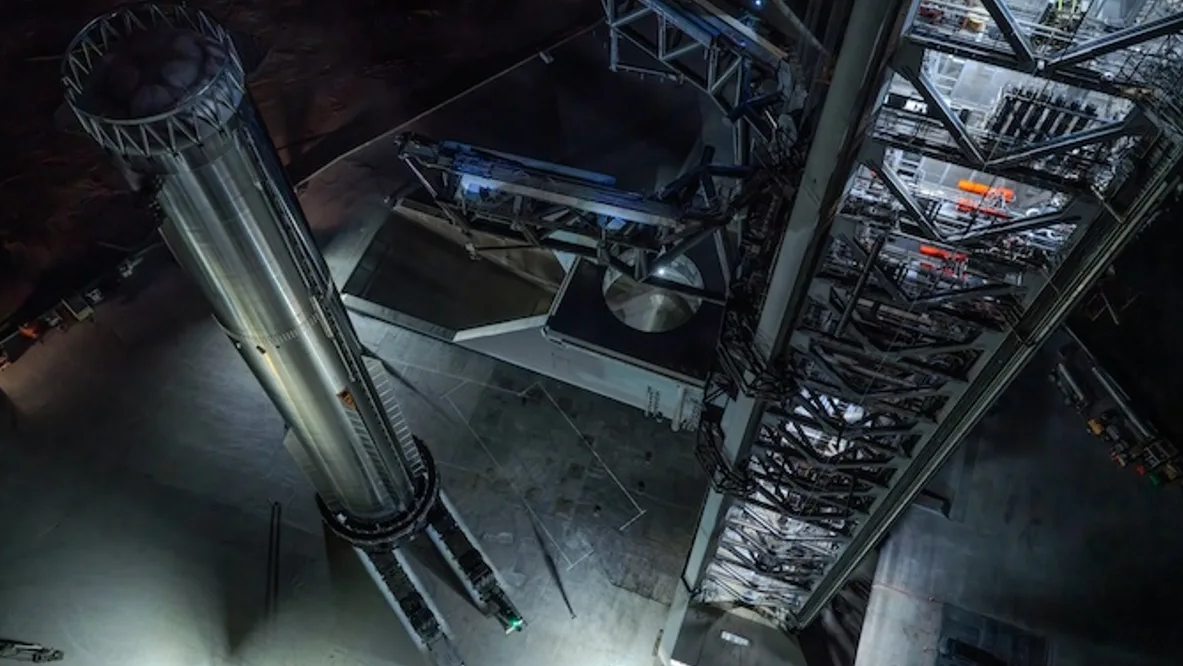
SpaceX Starship Shocked NASA with Giant Leap towards Artemis Program: The future of human space exploration is entering an extraordinary new era, and SpaceX Starship is playing a major role in transforming how humanity could travel beyond Earth.
For decades, reaching the Moon and exploring distant worlds required expensive rockets, complex mission planning, and hardware that was often discarded after a single use. However, SpaceX is pursuing a different approach based on massive payload capacity, rapid reusability, and advanced rocket technology.
As NASA advances its Artemis program, which aims to return astronauts to the lunar surface and establish a sustainable human presence on the Moon, Starship has become a crucial part of its long-term lunar exploration strategy. Through integrated flight tests, engineering improvements, and rapid hardware development at Starbase in Texas, SpaceX is working to turn ambitious space exploration goals into practical missions.
SpaceX Starship Is Changing NASA’s Artemis Program
NASA’s Artemis program represents a significant step toward expanding human exploration beyond low Earth orbit. Unlike the Apollo missions of the 1960s and 1970s, Artemis aims to establish the foundations for repeated lunar missions and eventually support future crewed expeditions to Mars.
Achieving these objectives requires a spacecraft capable of transporting astronauts, scientific equipment, cargo, and essential infrastructure to the lunar surface.
Traditional rockets can deliver substantial payloads into space, but maintaining a long-term lunar presence requires more than simply launching a spacecraft. Mission planners must consider transportation costs, propellant requirements, cargo capacity, and the logistics of supporting astronauts far from Earth.
This is where SpaceX Starship offers a potentially transformative solution.
Designed as a fully reusable, two-stage transportation system, Starship consists of the Super Heavy booster and the Starship upper stage. Its development emphasizes the ability to transport large payloads into orbit while reducing the cost and complexity of repeated launches.
NASA selected a specialized version called the Starship Human Landing System (HLS) for Artemis lunar landing missions. The vehicle is intended to transport astronauts between lunar orbit and the Moon’s surface, supporting scientific exploration and future infrastructure development.
Starship’s Massive Payload Capacity and Reusability
One of the most important features of Starship is its enormous size and planned cargo capacity. Standing approximately 400 feet tall when fully assembled, the system is designed to carry substantial payloads into space.
Its large internal volume could accommodate equipment and supplies that would be difficult to transport using smaller spacecraft.
Why Full Reusability Matters
Traditional expendable rockets discard major components during flight. Manufacturing replacements for every mission can significantly increase launch costs and limit how frequently missions can occur.
SpaceX is working toward recovering and reusing both stages of Starship.
The Super Heavy booster is designed to return to its launch site, where mechanical arms on the launch tower can potentially catch it. The upper stage is being developed to survive atmospheric reentry and return for recovery and refurbishment.
If SpaceX achieves reliable, rapid reuse at scale, the approach could reduce the cost of transporting cargo into orbit and make more ambitious space missions economically practical.
However, achieving routine, fully reusable operations requires additional testing, engineering improvements, and operational validation.
Starbase Flight Tests Are Accelerating Development
SpaceX follows an iterative development strategy in which engineers build hardware, conduct tests, analyze performance, and apply lessons to subsequent vehicles.
This approach allows the company to collect real-world engineering data and identify problems that simulations alone cannot fully reproduce.
Hot Staging Technology
One major Starship feature is hot staging, a technique in which the upper stage begins firing its engines shortly before the booster fully separates.
This approach is intended to improve staging efficiency and maximize the vehicle’s performance. However, it also creates demanding thermal and structural conditions that require careful engineering.
Flight testing helps SpaceX evaluate how the vehicle performs during this complex transition.
Advanced Heat Shield Protection
Returning from orbital speeds exposes Starship to extreme heating. Its thermal protection system (TPS) uses heat-resistant tiles designed to protect the vehicle during atmospheric reentry.
Engineers must address tile durability, attachment methods, thermal expansion, and the effects of repeated flights.
Improving heat-shield reliability is essential because a reusable spacecraft must survive demanding conditions without requiring extensive replacement of its protective systems after every mission.
The Mechazilla Catch System
SpaceX’s launch tower, widely known as Mechazilla, incorporates large mechanical arms designed to catch returning Super Heavy boosters.
Recovering the booster directly at the launch site could reduce the need for landing legs and simplify turnaround operations.
Although routine recovery and reuse remain important development goals, the catch architecture demonstrates SpaceX’s ambition to rethink conventional rocket operations.
The Biggest Challenge: Refueling Starship in Orbit
Reaching the Moon requires considerably more energy than reaching low Earth orbit. Starship’s lunar mission architecture therefore depends on a complex system of propellant storage, transfer, and spacecraft coordination.
How Orbital Refueling Works
Starship uses liquid oxygen and liquid methane as rocket propellants. These cryogenic liquids must be maintained at extremely low temperatures to remain usable.
For lunar missions, SpaceX plans to develop orbital refueling capabilities that allow multiple tanker flights to deliver propellant to a depot spacecraft in low Earth orbit.
After receiving sufficient propellant, the lunar lander can depart Earth orbit and travel toward the Moon.
This strategy could allow Starship to carry the fuel required for demanding lunar operations without needing to launch the entire mission’s propellant in a single flight.
Nevertheless, orbital propellant transfer is a major technical challenge. SpaceX must demonstrate reliable docking, cryogenic storage, fluid transfer, and repeated tanker operations before the complete mission architecture can be considered operational.
How Starship HLS Will Land Astronauts on the Moon
The lunar environment creates unique engineering challenges. Unlike Earth, the Moon has virtually no atmosphere, so a spacecraft cannot rely on aerodynamic surfaces or parachutes to slow its descent.
Instead, the Starship HLS vehicle must use rocket propulsion to control its descent and land safely.
Protecting the Lunar Surface During Landing
Lunar soil, known as regolith, contains fine, abrasive particles that can be thrown into the surrounding environment by rocket exhaust.
These particles could damage equipment, interfere with scientific instruments, and create hazards for nearby astronauts.
The Starship HLS design incorporates high-mounted landing thrusters intended to reduce the direct impact of exhaust on the lunar surface during the final descent.
Careful engine control, landing-site selection, and vehicle stability will also be essential for safe touchdown.
Supporting Future Lunar Infrastructure
A large lunar lander could transport substantial cargo, scientific equipment, and supplies to the Moon.
These capabilities could support experiments, surface exploration, and the gradual development of infrastructure needed for longer missions.
NASA’s Artemis objectives include exploring the lunar south pole, where permanently shadowed regions may contain water ice. Understanding and potentially using lunar resources could become important for future exploration, although practical resource extraction remains a substantial challenge.
From Artemis to Mars: SpaceX’s Bigger Vision
Although NASA’s immediate priority is returning astronauts to the Moon, SpaceX has a broader ambition: making humanity a multiplanetary species.
The company envisions Starship as a transportation system that could eventually carry people and cargo to Mars.
Many of the technologies required for lunar exploration would also be valuable for interplanetary missions.
These include reusable rocket stages, high-performance Raptor engines, orbital refueling, reliable thermal protection, and the ability to transport large quantities of equipment.
Why the Moon Is an Important Testing Ground
The Moon offers a nearby destination where space agencies can develop and test technologies needed for more distant missions.
Lunar missions could help engineers improve surface operations, habitation systems, resource utilization, and long-duration mission planning.
Mars presents additional challenges, including a much longer journey, communication delays, radiation exposure, and the need for extensive life-support systems.
Starship’s long-term potential depends on overcoming these challenges, demonstrating reliable operations, and establishing a sustainable mission architecture.
Conclusion: Starship Could Redefine the Future of Spaceflight
The development of SpaceX Starship represents a major shift in the way engineers approach heavy-lift rockets and deep-space transportation. Its enormous payload capacity, reusable design, and potential orbital refueling capabilities could help make ambitious lunar missions more practical.
For NASA, Starship HLS is an important component of the Artemis lunar landing architecture. For SpaceX, it is also a step toward the company’s larger goal of enabling human exploration of Mars.
Significant challenges remain, particularly in orbital refueling, heat-shield durability, reliable vehicle recovery, and safe lunar landing operations. These capabilities must be demonstrated before Starship can routinely support crewed lunar missions.
Nevertheless, the combination of NASA’s Artemis program and SpaceX’s Starship development could open new possibilities for scientific discovery, lunar infrastructure, and future interplanetary exploration. If its key technologies mature successfully, Starship could help transform human spaceflight from occasional exploration missions into a more sustainable transportation system for the solar system.
FAQs
1. What is SpaceX Starship?
SpaceX Starship is a fully reusable rocket and spacecraft system designed to transport astronauts, cargo, and equipment into orbit and potentially to the Moon and Mars. It consists of the Super Heavy booster and the Starship upper stage.
2. Why is SpaceX Starship important to NASA’s Artemis program?
Starship is important because NASA selected its specialized Human Landing System (HLS) to transport astronauts between lunar orbit and the Moon’s surface for planned Artemis missions.
3. What is the NASA Artemis program?
NASA’s Artemis program aims to return humans to the Moon, conduct scientific research, and establish the foundations for a sustained human presence while preparing for future exploration of Mars.
4. How tall is SpaceX Starship?
The fully assembled Starship and Super Heavy system stands approximately 400 feet (122 meters) tall, although its dimensions may change as the design evolves.
5. How much payload can Starship carry?
SpaceX has designed Starship for a payload capacity exceeding 100 metric tons to orbit, with a long-term target of more than 150 metric tons in fully reusable configurations. Actual capacity depends on the vehicle configuration and mission requirements.
6. What is the Starship Human Landing System (HLS)?
The Starship HLS is a lunar lander variant developed for NASA’s Artemis program. It is designed to transport astronauts from lunar orbit to the Moon’s surface and return them to lunar orbit.
7. What is orbital refueling, and why does Starship need it?
Orbital refueling involves transferring propellant between spacecraft in orbit. Starship’s lunar mission architecture depends on this capability because reaching the Moon and conducting landing operations requires more propellant than a single Earth launch can practically deliver alongside the vehicle.
8. What fuel does SpaceX Starship use?
Starship uses liquid methane and liquid oxygen to power its Raptor engines. Both propellants must be stored at extremely low temperatures, making cryogenic storage and transfer essential technologies.
9. What is hot staging in Starship?
Hot staging is a separation technique in which the upper stage ignites its engines shortly before fully separating from the booster. This approach is intended to improve staging performance and support efficient vehicle operation.
10. What is the Starship heat shield made for?
Starship’s thermal protection system (TPS) is designed to protect the spacecraft from the extreme temperatures experienced during atmospheric reentry. Heat-resistant tiles help prevent the vehicle’s structure from overheating.
11. What is SpaceX’s Mechazilla system?
Mechazilla is the launch tower and mechanical arm system developed to support Starship operations. Its arms are designed to catch returning Super Heavy boosters and potentially enable faster recovery and reuse.
12. How will Starship land on the Moon without an atmosphere?
Starship HLS must use rocket engines to control its descent because the Moon lacks a substantial atmosphere for aerodynamic braking or parachutes. Its specialized landing design also aims to reduce the effects of engine exhaust on lunar soil.
13. Why is lunar regolith a challenge for Starship?
Lunar regolith is the layer of loose dust and rock covering the Moon’s surface. Rocket exhaust can throw these particles into the surrounding environment, potentially damaging equipment and creating hazards during landing operations.
14. What challenges must SpaceX overcome before Starship can land astronauts on the Moon?
Major challenges include demonstrating reliable orbital refueling, improving heat-shield durability, validating reusable launch operations, completing lunar landing systems, and conducting the necessary crew-safety testing.
15. How could Starship help establish a permanent lunar base?
Starship could transport large quantities of cargo, scientific equipment, supplies, and infrastructure to the lunar surface. These deliveries could support extended exploration and help NASA develop the capabilities needed for a sustained lunar presence.
16. Could SpaceX Starship eventually travel to Mars?
Yes. SpaceX is developing Starship with the long-term goal of transporting people and cargo to Mars. Achieving crewed missions will require additional advances in life support, radiation protection, in-space refueling, and long-duration spaceflight operations.
17. Will SpaceX Starship make space exploration cheaper?
Starship is designed to reduce launch costs through reusability, high payload capacity, and rapid turnaround. If SpaceX can achieve reliable, frequent operations and reuse both stages efficiently, the system could make large-scale space exploration more affordable. However, the actual cost savings will depend on operational performance and mission requirements.
Read More:
- A New Upgraded Tesla Semi 2.0 Just LEAKED From Elon Musk’s Factory
- Elon Musk roasts India’s billionaire Mukesh Ambani as Starlink fight heats up
- Elon Musk’s $179 Tesla Wheelchair: Features, Specs, and Everything You Need to Know
- The $20,000 Tesla Motorhome: 400 Miles, Solar Power, and Self-Driving Innovation
- SpaceX’s new Starship Flight 15 Launch date DELAY to Do Something Impossible