
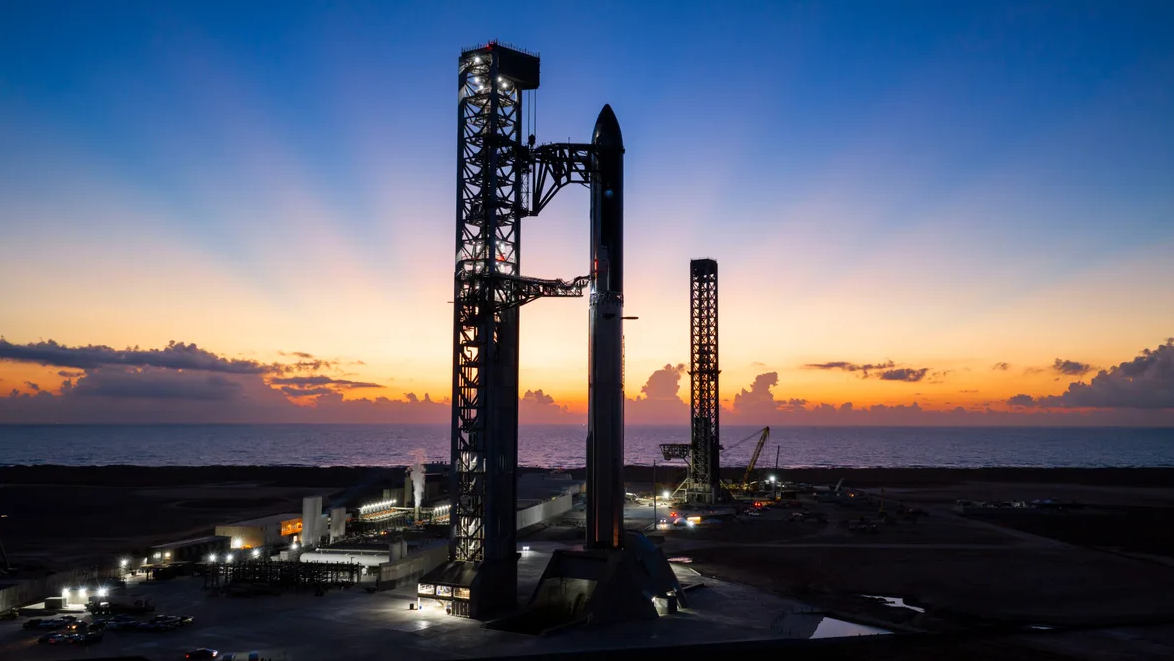
SpaceX’s new Starship Flight 15 Launch date DELAY to Do Something Impossible: SpaceX is pushing the boundaries of modern aerospace engineering as it prepares for the next major milestone in its ambitious Starship development program. The highly anticipated Starship Flight 15 mission has reportedly shifted its target launch date to November 8, highlighting the complex engineering challenges involved in developing a fully reusable super-heavy launch system. While launch delays can create uncertainty, they also provide valuable time for testing, analysis, and hardware improvements.
From the readiness of Ship 42 and Booster 22 to preparations for Starship Flight 16, potential launches from Florida, and the expansion of Starlink Mobile, SpaceX is working across several technological frontiers. At the same time, growing concerns about orbital debris and satellite collisions remind the industry that expanding humanity’s presence in space requires both innovation and responsible operations.
Why Starship Flight 15 Could Be a Critical Mission
The development of Starship represents one of the most ambitious projects in the history of space exploration. Designed to transport large payloads, satellites, and eventually people, the fully reusable system could transform the economics of reaching Earth orbit and beyond.
The reported shift of Starship Flight 15 to November 8 highlights the importance of completing technical preparations before attempting another integrated flight test. Launch schedules can change because of hardware readiness, testing results, regulatory approvals, weather conditions, or other operational requirements.
Rather than focusing only on the calendar, engineers must ensure that the rocket’s major systems function together under demanding conditions.
Testing Every Critical System
Before launch, SpaceX must evaluate numerous systems, including:
- Avionics and flight computers: These systems monitor vehicle performance, guide flight operations, and coordinate critical events.
- Stage separation mechanisms: Reliable separation is essential for the booster and spacecraft to perform their respective flight phases.
- Propellant systems: Tanks, valves, plumbing, and pressurization equipment must operate within their required limits.
- Thermal protection systems: The spacecraft’s heat shield must withstand the intense heating associated with atmospheric re-entry.
- Flight software: Guidance, navigation, control, and safety systems must work together throughout the mission.
Every test provides engineers with information that can improve the design and reliability of future Starship vehicles.
Ship 42 and Booster 22: Preparing for the Next Challenge
Two important pieces of hardware associated with the Flight 15 discussion are Ship 42 and Booster 22. Their readiness depends on manufacturing progress, subsystem integration, engine testing, and completion of required inspections.
SpaceX follows an iterative development approach in which test results inform subsequent engineering changes. This strategy can accelerate progress, but it also requires detailed validation whenever hardware or operating procedures change.
Raptor Engine Reliability
The Raptor engine is central to Starship’s performance. It uses a full-flow staged-combustion cycle and burns liquid methane with liquid oxygen.
The Super Heavy booster is designed to use a cluster of up to 33 Raptor engines, while the Starship upper stage is designed around six engines in its full configuration. Operating these engines together requires precise control of ignition, thrust, propellant flow, and engine shutdown sequences.
Engine testing helps engineers identify potential problems before flight. Reliable performance is particularly important during liftoff, when the vehicle must generate enormous thrust while remaining stable and controllable.
Thermal Protection System Improvements
Another major challenge is the spacecraft’s thermal protection system (TPS). During atmospheric re-entry, Starship encounters extreme heating that can damage exposed structures if protection is insufficient.
Heat-shield development involves evaluating ceramic tiles, attachment methods, gaps, surface damage, and the performance of underlying structures. Data collected during earlier flights can guide improvements to tile placement and bonding techniques.
A more resilient heat shield would be an important step toward rapid spacecraft reuse, reducing the inspection and repair work required between missions.
Static Fire Testing and Ground Preparations
Before an integrated launch, engine and vehicle testing helps validate important subsystems. A static fire test involves igniting engines while the vehicle remains secured to its test infrastructure.
These tests can provide valuable information about ignition timing, engine response, propellant delivery, and control systems. Engineers also conduct inspections and other checks to verify that the vehicle and launch pad are ready for operations.
The exact testing schedule and readiness status of Ship 42 and Booster 22 should be confirmed through official SpaceX updates rather than assumed from preliminary reports.
Starship Flight 16 and the Florida Launch Strategy
While Flight 15 preparations focus attention on Starbase in Boca Chica, Texas, the broader Starship program also involves future missions and launch infrastructure.
Starship Flight 16 has been associated with a potential target around December 10 in the supplied schedule. However, this should be treated as a tentative date rather than a confirmed launch commitment. Future schedules depend on the results of preceding flights, vehicle availability, infrastructure readiness, and regulatory requirements.
Why Launch Complex 39A Matters
Kennedy Space Center’s Launch Complex 39A in Florida is an important part of SpaceX’s broader launch operations. The historic site already supports Falcon rocket missions and human spaceflight activities.
Developing Starship operations in Florida could eventually provide additional launch capacity and reduce reliance on a single launch location. It could also support a wider range of commercial and government missions.
Potential benefits include:
- Higher launch cadence: Additional operational infrastructure could create more opportunities for missions.
- Greater operational flexibility: Multiple launch locations could help accommodate different mission requirements.
- Commercial payload opportunities: Starship’s large payload capacity could support future satellite deployment plans.
- Lunar exploration: Starship development is connected to NASA’s Artemis program, including its planned role in lunar landing operations.
However, expanding Starship operations to Florida requires substantial construction, environmental review, safety planning, and regulatory authorization. A second launch site does not automatically guarantee a higher launch rate; vehicle production, ground systems, and mission approvals must also keep pace.
Starlink Mobile and SpaceX’s Telecommunications Ambitions
SpaceX is pursuing opportunities beyond rocket launches through its Starlink satellite internet network. One area attracting considerable attention is direct-to-cell connectivity, which aims to connect compatible ordinary smartphones to satellites in areas with limited terrestrial coverage.
Traditional cellular networks depend heavily on ground-based towers. Remote regions, oceans, mountainous terrain, and disaster zones can be difficult or expensive to serve with conventional infrastructure.
How Direct-to-Cell Technology Works
Direct-to-cell systems use specially equipped satellites to communicate with compatible mobile devices. Depending on the service, regulatory approvals, device compatibility, and network arrangements, supported features may include messaging, data services, or other cellular functions.
Spectrum agreements can play a major role in making these connections possible. Access to suitable radio frequencies and cooperation with mobile network operators can help satellite services complement existing terrestrial networks.
Potential applications include:
- Emergency communications in areas affected by natural disasters.
- Connectivity in remote communities with limited cellular coverage.
- Support for travelers and outdoor workers beyond conventional network footprints.
- Additional network resilience when terrestrial infrastructure becomes unavailable.
Nevertheless, satellite connectivity does not mean every phone will receive uninterrupted high-speed service everywhere. Capacity, terrain, spectrum availability, device support, and local regulations will continue to influence performance.
The Growing Problem of Orbital Debris
The expansion of satellite networks and commercial launch activity also raises concerns about orbital debris. Earth orbit contains operational satellites, inactive spacecraft, discarded rocket components, and fragments produced by collisions or breakups.
Even small fragments can pose serious risks because orbital objects travel at extremely high relative velocities.
Understanding the Kessler Syndrome
The term Kessler Syndrome describes a potential chain reaction in which collisions generate debris that increases the likelihood of further collisions. If such a process becomes sufficiently severe, certain orbital regions could become more hazardous and expensive to use.
Preventing this outcome requires cooperation among satellite operators, governments, researchers, and international organizations.
Strategies for Safer Space Operations
Several approaches can help reduce the risks:
1. Active debris removal: Specialized spacecraft could capture selected pieces of dangerous debris and guide them toward atmospheric re-entry or another disposal method.
2. Responsible satellite disposal: Satellites can be designed to leave valuable orbital regions at the end of their operational lives through controlled deorbiting or other approved disposal strategies.
3. Improved space traffic management: Better tracking data and coordination can help operators assess collision risks and perform avoidance maneuvers when necessary.
4. Collision-resistant mission planning: Responsible satellite deployment, reliable propulsion systems, and careful orbital selection can reduce avoidable risks.
As mega-constellations expand, space sustainability will become increasingly important to the long-term success of commercial spaceflight.
Conclusion
The reported November 8 target for Starship Flight 15 illustrates the complexity of developing a reusable launch system capable of supporting future missions to Earth orbit, the Moon, and potentially Mars. Preparations involving Ship 42 and Booster 22, the possible progression toward Flight 16, and the development of Florida launch infrastructure all demonstrate the scale of the engineering and operational challenges.
Meanwhile, Starlink Mobile and direct-to-cell technology could expand communications coverage, while growing orbital debris concerns highlight the importance of responsible space operations.
Ultimately, SpaceX’s progress will depend on more than ambitious schedules. It will require reliable hardware, rigorous testing, regulatory coordination, sustainable satellite operations, and continuous engineering improvements. Each successful test can contribute valuable knowledge toward a future in which space transportation and connectivity become more capable and accessible.
FAQs
1. When is SpaceX Starship Flight 15 expected to launch?
Starship Flight 15 has a reported target launch date of November 8. However, the date remains subject to testing progress, weather conditions, regulatory approvals, and vehicle readiness.
2. Why was Starship Flight 15 delayed?
The reported delay may provide additional time for hardware inspections, engine testing, software validation, and safety checks. The specific reason should be confirmed through official SpaceX announcements.
3. What are Ship 42 and Booster 22?
Ship 42 refers to a Starship upper-stage vehicle, while Booster 22 refers to a Super Heavy booster. Both represent important hardware in the development of SpaceX’s fully reusable launch system.
4. How many Raptor engines does Starship use?
The Super Heavy booster is designed to use up to 33 Raptor engines, while the Starship upper stage is designed to use six engines. These engines burn liquid methane and liquid oxygen.
5. Why is Raptor engine reliability important for Flight 15?
Raptor engine reliability is essential because Starship depends on coordinated engine performance during liftoff, ascent, and other critical flight operations. Testing helps engineers identify potential problems before launch.
6. What is Starship’s thermal protection system?
The thermal protection system (TPS) consists of protective materials, including heat-shield tiles, designed to protect Starship from the extreme temperatures experienced during atmospheric re-entry.
7. What is a static fire test?
A static fire test involves igniting rocket engines while the vehicle remains secured to ground infrastructure. It allows engineers to evaluate engine performance, propellant systems, ignition sequences, and other critical functions.
8. When could SpaceX launch Starship Flight 16?
The supplied schedule identifies approximately December 10 as a potential target for Starship Flight 16. This date should be considered tentative until SpaceX confirms the launch schedule.
9. Why does SpaceX want to launch Starship from Florida?
Launching Starship from Kennedy Space Center’s Launch Complex 39A could expand operational capacity, provide another launch location, and support future commercial and government missions.
10. How could Starship support NASA’s Artemis program?
Starship development includes a lunar lander concept intended to support NASA’s Artemis missions. The lunar lander is designed to help transport astronauts between lunar orbit and the Moon’s surface, subject to mission requirements and certification.
11. What is Starlink Mobile?
Starlink Mobile generally refers to satellite-based mobile connectivity initiatives associated with SpaceX’s Starlink network. Direct-to-cell technology aims to connect compatible smartphones to satellites in areas with limited terrestrial coverage.
12. Can ordinary smartphones connect directly to Starlink satellites?
Compatible smartphones can connect to supported direct-to-cell services without a specialized satellite phone. Availability and features depend on device compatibility, mobile operator agreements, satellite coverage, spectrum access, and local regulations.
13. What are the main benefits of direct-to-cell satellite connectivity?
Direct-to-cell connectivity could help provide messaging and other supported services in remote regions, disaster-affected areas, and locations without reliable cellular tower coverage.
14. What is orbital debris, and why is it dangerous?
Orbital debris includes inactive satellites, discarded rocket components, and fragments from spacecraft breakups. Because objects in orbit travel at extremely high speeds, even small pieces can damage operational spacecraft.
15. What is the Kessler Syndrome?
The Kessler Syndrome is a theoretical scenario in which collisions between objects in orbit generate additional debris, increasing the probability of further collisions and potentially making some orbital regions more hazardous to use.
16. How could SpaceX help make spaceflight more sustainable?
SpaceX and other space operators can contribute to space sustainability through responsible satellite disposal, collision avoidance, improved orbital tracking, reliable spacecraft design, and participation in coordinated debris-reduction efforts. Continued progress in these areas will be important as commercial space activity expands.
Read More:
- Trump presents Elon Musk with National Medal of Science, calls him “modern-day Thomas Edison”
- It’s official: SpaceX takes aim at Verizon, AT&T, and T-Mobile
- Elon Musk’s surprise addition to the X Takeover lineup has fans talking
- SpaceX’s First Starship Launch in Florida This Year finally Coming
- 5 Reasons Tesla Cybercab Is A GAME CHANGER! Shocking Details REVEALED