
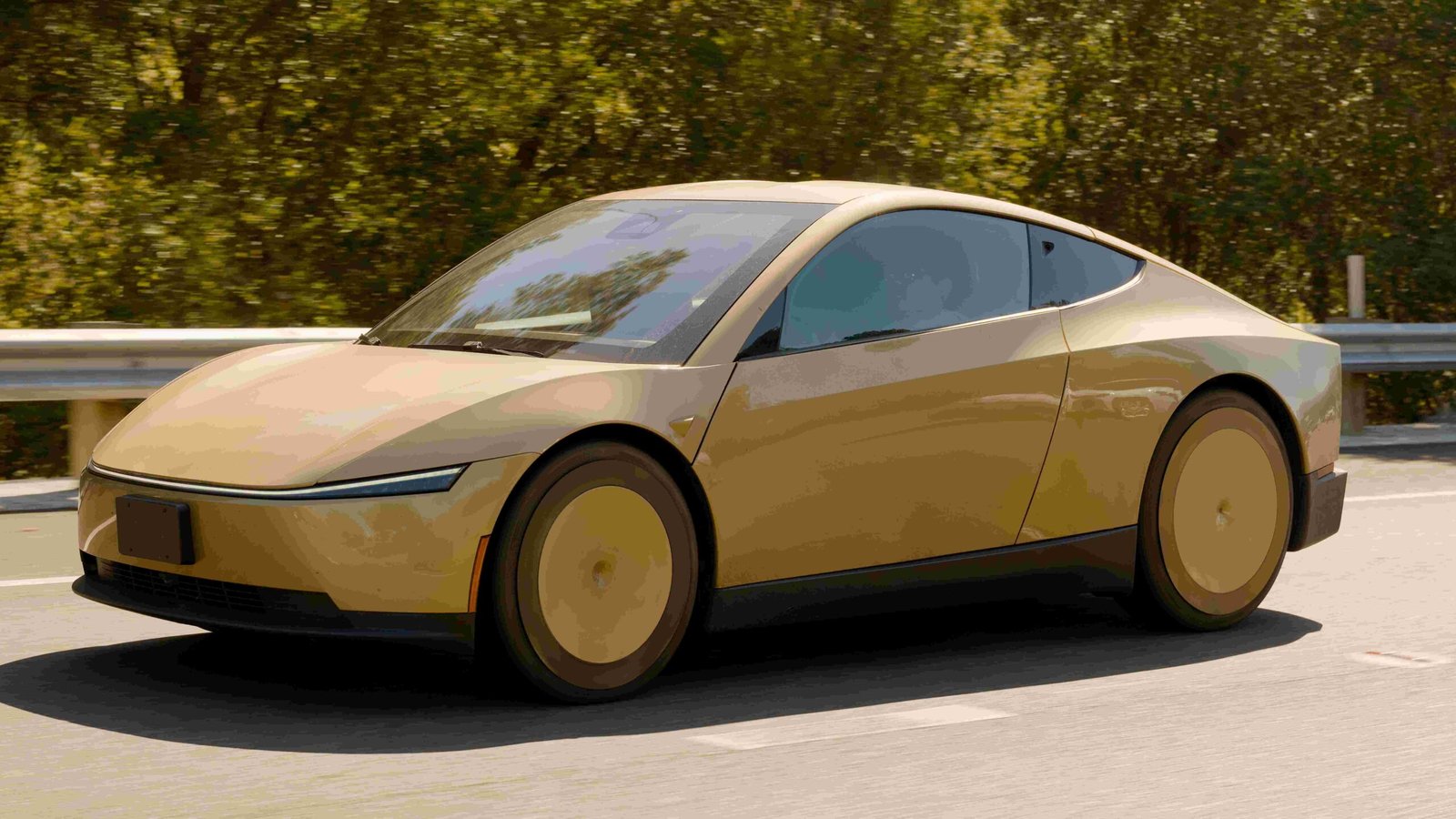
Amazing Tesla Cybercab Ramp Up, Massive Fleet & Delivery Soon: The future of autonomous transportation is arriving faster than many industry observers expected. Tesla’s Cybercab, an ambitious steering-wheel-free electric vehicle developed specifically for autonomous ride-hailing, is moving closer to large-scale production and customer deliveries. Originally surrounded by expectations of a later launch, Tesla is now reportedly preparing to make the Cybercab available before the end of 2026, with a highly competitive target price of approximately $30,000.
Led by Elon Musk, this project represents a major step toward transforming urban transportation. With rapidly expanding manufacturing operations in Texas, growing robotaxi registrations, and a completely different approach to vehicle assembly, Tesla is attempting to establish a new category of affordable autonomous vehicles.
The Cybercab is not simply another electric car. It is designed around a transportation model in which passengers can travel without a human driver, potentially reducing operating expenses and changing the economics of ride-hailing.
Tesla Cybercab Production Is Accelerating in Texas
One of the most interesting developments surrounding the Cybercab is the speed at which Tesla is preparing its manufacturing operations. During a factory tour featuring engineering chief Lars Moravy, shared through Monroe Live, the company’s production strategy attracted significant attention.
According to the supplied factory-tour information, Tesla’s Cybercab production line is progressing so quickly that manufacturing capacity is beginning to outpace the company’s ability to deploy completed vehicles into active service.
This is an unusual challenge for an automotive manufacturer. Traditional factories often struggle with production bottlenecks, supply shortages, and complicated assembly processes during their initial manufacturing ramp-up.
Tesla is attempting to approach the problem differently.
Modular Manufacturing Changes Traditional Assembly
Instead of constructing the entire vehicle through one continuous assembly line, Tesla uses a modular manufacturing approach. Different sections of the Cybercab are manufactured simultaneously before being brought together during final assembly.
The major production advantages include:
- Parallel Assembly: Front-end sections, rear structures, body sides, battery packs, and seats are manufactured in separate production areas.
- Inline Quality Control: Individual modules receive inspections before final assembly, allowing manufacturing problems to be identified earlier.
- Simplified Final Assembly: The final production process reportedly requires approximately 25 automated stations, significantly fewer than conventional vehicle assembly lines.
- Reduced Factory Complexity: Tesla eliminates the traditional paint shop by using exterior plastic panels that receive their color during manufacturing.
The structural side modules still receive e-coating for corrosion protection, while the colored exterior panels reduce the need for conventional painting operations.
125,000 Vehicles Per Year Production Capacity
This manufacturing philosophy could significantly reduce the factory space and labor required for each vehicle.
According to the supplied information, Tesla’s Texas Cybercab production facility has an installed capacity exceeding 125,000 vehicles annually.
If production reaches that level, Tesla could manufacture a substantial number of autonomous vehicles without requiring the enormous factory footprint associated with conventional automotive manufacturing.
This approach could also make future production expansion easier as demand increases.
Tesla Cybercab Robotaxi Fleet Surpasses Model Y
Tesla’s manufacturing progress is also reflected in the growing number of Cybercabs appearing in vehicle registration data.
According to the figures provided by industry analysts, Cybercab registrations in Texas have surpassed registered Model Y robotaxis.
The reported numbers are particularly interesting:
- 544 Cybercabs registered in Texas.
- 507 Model Y robotaxis registered in Texas.
- 1,051 total registered robotaxis across both vehicle types.
These figures suggest that Tesla is steadily increasing the number of dedicated Cybercab vehicles entering its autonomous transportation program.
Nearly 200 Cybercabs Added in One Week
Another significant development is the reported addition of nearly 200 Cybercabs in a single week.
However, registration does not necessarily mean that every vehicle is already transporting commercial passengers. Some vehicles may still be undergoing safety inspections, operational testing, or deployment preparations.
Nevertheless, the growing registration numbers highlight the potential scale of Tesla’s manufacturing and fleet expansion strategy.
Dallas Expansion Expected in November 2026
Austin has served as an important starting point for Tesla’s robotaxi operations, but the company is reportedly preparing to expand into additional markets.
During its Q3 earnings call, Tesla outlined a target to expand robotaxi operations into Dallas by November 2026, initially covering a downtown service area of approximately 31 square miles.
Meanwhile, Cybercab sightings in Houston and Miami suggest that preparations for broader geographic expansion may also be underway.
Tesla’s reported accumulation of more than 3.1 million miles of driverless operational data provides another important foundation for developing its autonomous transportation network.
Tesla Cybercab Specifications: Range, Battery and Performance
Unlike traditional passenger vehicles, the Cybercab is designed primarily for autonomous transportation and urban commuting.
Its two-seat configuration, simplified interior, and efficiency-focused powertrain reflect Tesla’s goal of maximizing passenger utility while minimizing unnecessary complexity.
Dimensions and Passenger Space
The Cybercab reportedly measures approximately 55.4 inches in height and 69 inches in width.
Its low ground clearance of around 5.8 inches contributes to its compact urban-oriented design.
The interior includes two passenger seats and a rear cargo compartment offering approximately 20.22 cubic feet (572 liters) of storage.
This space is designed to accommodate luggage, including two checked bags and two carry-on bags, with a reported combined luggage weight of up to 220 pounds.
Interestingly, Tesla removes the traditional front trunk, or frunk, to prioritize passenger and storage packaging.
48 kWh Battery and 293-Mile Range
The Cybercab’s reported powertrain specifications emphasize efficiency rather than maximum performance.
It features a single front-mounted electric motor producing approximately 219 horsepower. The motor is also described as using a design that avoids rare-earth magnets.
Its reported specifications include:
- Battery Capacity: 48 kWh.
- Battery Technology: Tesla 4680 cells.
- Estimated Driving Range: 293 miles (472 km).
- Aerodynamic Drag Coefficient: 0.20.
- Energy Consumption: 165 watt-hours per mile.
- Motor Output: Approximately 219 horsepower.
The combination of a relatively compact battery, aerodynamic body, and efficient electric motor could make the Cybercab particularly suitable for frequent urban journeys.
Designed for 500,000 Miles of Service
One of the most important aspects of the Cybercab is its intended commercial durability.
Traditional personal vehicles are generally designed around individual ownership patterns. Robotaxis, however, may operate for significantly longer periods and accumulate mileage much faster.
Tesla’s reported engineering target is a structural service life of at least 500,000 miles (805,000 km).
Achieving this target could help fleet operators reduce vehicle replacement expenses and improve long-term profitability.
Advanced Safety Technology Inside the Driverless Cybercab
Removing the steering wheel and human driver creates a completely different set of engineering requirements.
Tesla must ensure that passengers remain protected throughout journeys, including situations involving unexpected stops, emergencies, or unusual passenger behavior.
The Cybercab reportedly incorporates several safety technologies to address these requirements.
Advanced Cabin Monitoring and Radar
The vehicle features comprehensive camera monitoring and an advanced in-cabin radar system.
This technology is designed to distinguish between different passenger situations, including empty seats, adults, and children in safety seats.
Such information can help determine appropriate airbag deployment strategies.
The reported safety equipment includes:
- Front airbags.
- Knee airbags.
- Side airbags.
- Curtain airbags.
- In-cabin passenger monitoring.
- Advanced radar-based occupant detection.
Another important feature is the mechanical emergency door release.
Unlike an electronic-only door mechanism, this system provides a way for passengers to exit the vehicle during a complete electrical power failure.
For a vehicle without a human driver, emergency passenger access is especially important.
Tesla Cybercab Price and Delivery Timeline
Perhaps the most attention-grabbing aspect of the Cybercab is its expected price.
Tesla is targeting an approximate starting price of $30,000, potentially making it one of the company’s most affordable vehicles.
If this pricing target becomes reality, the Cybercab could appeal to both private buyers and commercial fleet operators.
Tesla is reportedly preparing to make the vehicle available to customers before the end of 2026.
However, actual availability will depend on production readiness, regulatory approvals, delivery arrangements, and the final specifications of the customer version.
The steering-wheel-free design also introduces an important distinction between buying the vehicle and being legally permitted to operate it autonomously. Regulations governing driverless transportation may differ between states and countries.
How Tesla Cybercab Could Transform Ride-Hailing Economics
Elon Musk’s broader vision for the Cybercab revolves around reducing the cost of transportation.
The reported operating-cost target is approximately $0.20 per mile, while total service costs could fall within a range of $0.30 to $0.40 per mile.
These figures represent ambitious economic targets rather than guaranteed costs.
If Tesla can approach them, autonomous transportation could become increasingly competitive with conventional ride-hailing services.
For fleet operators, the potential advantages include:
- Lower Labor Expenses: Autonomous operation could reduce dependence on human drivers where regulations permit.
- Higher Vehicle Utilization: Robotaxis could serve multiple passengers throughout the day.
- Reduced Energy Consumption: Efficient electric powertrains could lower charging expenses.
- Longer Vehicle Lifetimes: A 500,000-mile durability target could improve fleet economics.
- Simplified Manufacturing: Modular assembly could help reduce production complexity.
However, insurance, maintenance, charging infrastructure, cleaning, depreciation, and autonomous system expenses will also influence the final operating cost.
The Future of Tesla Cybercab and Autonomous Transportation
Tesla’s Cybercab program represents an ambitious attempt to combine affordable electric vehicle manufacturing with large-scale autonomous mobility.
The company’s modular production strategy, reported Texas manufacturing capacity, expanding robotaxi registrations, and targeted customer availability before the end of 2026 all point toward a major development in its transportation strategy.
The most important question is no longer simply whether Tesla can manufacture a steering-wheel-free vehicle. It is whether the company can deploy it safely, obtain the necessary regulatory approvals, and operate a commercially sustainable autonomous fleet across multiple cities.
With a reported $30,000 target price, a 293-mile estimated range, and a manufacturing capacity exceeding 125,000 vehicles annually, the Cybercab has the potential to become an important part of Tesla’s future.
If these targets are achieved, the Cybercab could reshape expectations for electric transportation, autonomous ride-hailing, and the economics of urban mobility.
FAQs
1. What is the Tesla Cybercab?
The Tesla Cybercab is a fully autonomous electric vehicle designed specifically for driverless transportation and robotaxi services. It features a steering-wheel-free design, two passenger seats, advanced cameras, and autonomous driving technology.
2. When will Tesla Cybercab be available to customers?
Tesla is reportedly preparing to make the Cybercab available before the end of 2026. The actual delivery timeline will depend on production readiness, regulatory approvals, and market availability.
3. What will be the expected price of Tesla Cybercab?
The expected target price of the Tesla Cybercab is approximately $30,000, potentially making it one of Tesla’s most affordable vehicles.
4. Where is Tesla manufacturing the Cybercab?
Tesla is developing Cybercab production capabilities in Texas, using a modular manufacturing approach designed to simplify assembly and increase production efficiency.
5. What is the annual production capacity of Tesla Cybercab?
According to the supplied information, Tesla’s Texas manufacturing facility has an installed production capacity exceeding 125,000 Cybercabs per year.
6. How many Tesla Cybercabs are registered in Texas?
The reported Texas registration figures show 544 Cybercabs, compared with 507 Model Y robotaxis, bringing the combined registered robotaxi fleet to 1,051 vehicles.
7. What is the driving range of Tesla Cybercab?
The Cybercab has a reported estimated driving range of approximately 293 miles (472 kilometers) on a single charge.
8. What battery does Tesla Cybercab use?
The Cybercab reportedly uses a 48 kWh battery pack featuring Tesla’s 4680 battery cell technology, designed to deliver efficient energy consumption.
9. How many passengers can Tesla Cybercab accommodate?
The Tesla Cybercab is designed with a two-seat passenger configuration, making it particularly suitable for individual commuters and couples.
10. Does Tesla Cybercab have a steering wheel?
No. The Cybercab features a steering-wheel-free design because it is intended to operate autonomously without a human driver. Its operation will depend on applicable autonomous driving regulations.
11. How much horsepower does Tesla Cybercab produce?
The Cybercab reportedly features a single front-mounted electric motor producing approximately 219 horsepower, with a motor design that avoids rare-earth magnets.
12. How much cargo space does Tesla Cybercab offer?
The Cybercab reportedly provides approximately 20.22 cubic feet (572 liters) of rear cargo capacity, offering space for luggage and everyday passenger belongings.
13. How long is Tesla Cybercab designed to last?
Tesla’s reported engineering target is a structural service life of approximately 500,000 miles (805,000 kilometers), supporting the demanding requirements of commercial robotaxi operations.
14. What is the expected operating cost of Tesla Cybercab?
Tesla’s reported target is approximately $0.20 per mile in operating costs, while total service costs could range between $0.30 and $0.40 per mile.
15. How could Tesla Cybercab change the future of transportation?
The Tesla Cybercab could transform urban transportation by combining autonomous driving, electric efficiency, lower operating costs, and simplified manufacturing. If Tesla achieves its production and regulatory targets, the vehicle could make driverless ride-hailing more accessible and reshape the traditional transportation industry.
Read More:
- Verizon, AT&T and T-Mobile are trying to shut Starlink out before FCC vote
- Tesla’s Roadster appearance at SpaceX has merger watchers talking
- FCC green lights SpaceX’s move to a showdown with Verizon and AT&T
- There’s a New-Gen Raptor Version to Replace Raptor 3 – Starship Needs It
- New Tesla Roadster UPDATE, Full 3-Version Details Is Here
3 thoughts on “Amazing Tesla Cybercab Ramp Up, Massive Fleet & Delivery Soon”