
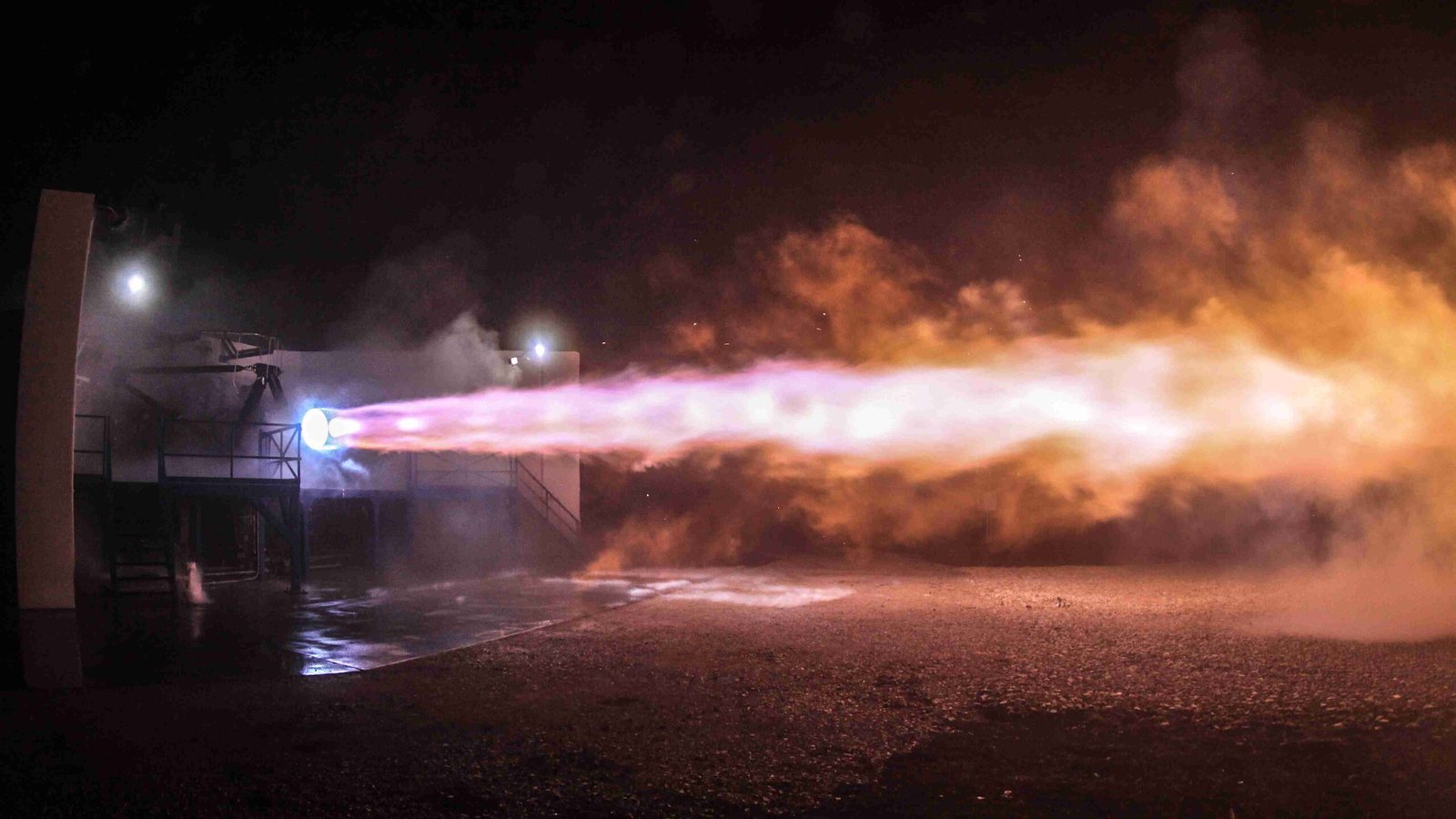
There’s a New-Gen Raptor Version to Replace Raptor 3 – Starship Needs It: SpaceX is pushing the boundaries of rocket engineering once again with the development of Raptor 4, the next-generation engine expected to take Starship’s performance to an entirely new level. Following the major improvements introduced with Raptor 3, Elon Musk has outlined an ambitious vision for an engine capable of delivering approximately 300 metric tons of sea-level thrust while maintaining a mass similar to its predecessor.
As Starship moves into its V3 development era in 2026, propulsion technology remains one of the most important factors determining the program’s future. From increasing launch power to improving payload capacity and supporting reusable missions to the Moon and Mars, Raptor 4 could become a critical part of SpaceX’s long-term strategy.
However, achieving higher thrust is only one part of the challenge. Reliability, thermal management, manufacturing efficiency, and reusability will determine whether this next-generation engine can deliver on its ambitious targets.
Why SpaceX Needs a New-Generation Raptor Engine
SpaceX has built its Starship program around rapid development, repeated testing, and continuous engineering improvements. Every new version aims to address the limitations of earlier hardware while making the launch system more powerful and easier to operate.
From Starship V1 to V3
The evolution of Starship has progressed through multiple development stages. Earlier versions established the vehicle’s basic architecture, while subsequent iterations introduced improvements to structural design, propulsion systems, and flight operations.
The arrival of Raptor 3 represented a significant step forward. SpaceX redesigned the engine to eliminate unnecessary external components, integrate more hardware directly into the engine structure, and reduce dependence on separate heat shields.
These changes were intended to lower engine mass, simplify manufacturing, and make large-scale production more practical.
The improvements are important because Starship requires dozens of powerful engines to operate together. Even relatively small reductions in component count, manufacturing time, or engine weight can create substantial benefits across the entire launch system.
Lessons From Recent Flight Tests
Flight testing has also highlighted the difficulty of operating advanced rocket engines under real-world conditions. According to the supplied source, some Starship test flights experienced isolated engine shutdowns during booster ascent and anomalies involving vacuum-optimized engines.
Some reported issues were associated with software and control systems rather than fundamental engine design.
Nevertheless, these challenges demonstrate why engine reliability is just as important as maximum thrust. A rocket engine must ignite consistently, respond accurately to commands, withstand extreme temperatures, and perform reliably throughout demanding flight sequences.
For Starship to achieve routine reusability, SpaceX must continue improving both propulsion hardware and the software responsible for controlling it.
Raptor 3’s Current Performance and Its Limitations
One of the most important details in the supplied report concerns the difference between Raptor 3’s original performance target and the thrust reportedly available with consistent reliability.
The source attributes a statement to Elon Musk indicating that Raptor 3 can reliably produce approximately 230 metric tons of force under the conditions discussed.
That figure is lower than the engine’s initially announced design target of approximately 280 metric tons of sea-level thrust.
The distinction matters because an engine’s theoretical capability does not automatically translate into dependable performance during operational flights.
Why Reliable Thrust Matters More Than Peak Numbers
Rocket engines operate under extraordinary pressures, temperatures, and mechanical loads. Pushing an engine toward its maximum output can introduce additional challenges involving combustion stability, cooling, material durability, and component fatigue.
An engine that produces slightly less thrust but performs consistently may be more valuable than one that reaches a higher number only under ideal test conditions.
For SpaceX, the objective is therefore not simply to build a powerful engine. It is to develop an engine that can deliver high performance repeatedly while remaining safe, maintainable, and suitable for reuse.
The Super Heavy Booster Multiplier Effect
The Super Heavy booster uses a cluster of 33 Raptor engines, meaning that even a modest improvement in individual engine performance can significantly increase total launch thrust.
| Raptor Engine Performance | Approximate Combined Thrust |
|---|---|
| 230 metric tons per engine | 7,590 metric tons |
| 280 metric tons per engine | 9,240 metric tons |
| 300 metric tons per engine | 9,900 metric tons |
These figures represent simplified calculations using the stated individual engine targets multiplied by 33. Actual vehicle performance depends on operating conditions, engine configuration, and other engineering factors.
The comparison illustrates why SpaceX is working to increase dependable engine output. Higher thrust could improve the launch system’s overall performance and provide engineers with additional flexibility when designing future Starship missions.
Raptor 4 Targets an Impressive 300 Metric Tons of Thrust
The proposed Raptor 4 engine aims to move beyond the performance limits associated with the current generation.
According to the supplied report, the main targets are approximately 300 metric tons of sea-level thrust and an engine mass broadly comparable to Raptor 3.
If achieved, these goals would represent a substantial improvement in thrust relative to the reported 230-ton reliable operating figure for Raptor 3.
A Major Improvement in the Thrust-to-Weight Ratio
The potential performance increase becomes especially interesting when engine mass remains approximately unchanged.
Higher thrust without a corresponding increase in weight improves the engine’s thrust-to-weight ratio, an important consideration in rocket design.
A better ratio could help Starship engineers manage vehicle mass, accommodate structural requirements, and optimize payload and propellant capacity.
However, these advantages would depend on the final engine design and the performance demonstrated during qualification and flight testing.
Bringing Super Heavy Close to 10,000 Tons of Thrust
If a Super Heavy booster were equipped with 33 engines each producing 300 metric tons of sea-level thrust, its combined nominal thrust would reach approximately 9,900 metric tons.
That would bring the booster close to the symbolic 10,000-ton thrust milestone.
Such a configuration could provide a significant increase in launch capability, although the actual performance of an operational vehicle would depend on its final engine configuration, flight profile, and other system limitations.
For a launch vehicle designed to carry massive payloads and support orbital refueling, every improvement in propulsion efficiency and reliability can make a meaningful difference.
The Biggest Engineering Challenges Facing Raptor 4
Despite its ambitious targets, Raptor 4 must overcome several demanding engineering challenges before it can become a dependable operational engine.
1. Ignition and Restart Reliability
Starship depends on multiple engines working together throughout ascent, separation, orbital operations, and landing.
Each engine must start correctly and respond predictably when commanded. Failures during critical flight phases can complicate vehicle control and affect mission outcomes.
SpaceX must therefore validate ignition sequences, engine synchronization, shutdown behavior, and restart capability under a range of operating conditions.
2. Extreme Temperatures and Thermal Management
Rocket engines must manage enormous thermal loads while maintaining stable combustion and protecting critical components.
Increasing thrust can make cooling systems, seals, and high-temperature materials even more demanding. Engineers must ensure that components withstand repeated exposure to extreme conditions without excessive wear.
Thermal durability will be essential for rapid reuse, particularly if SpaceX wants to operate Starship with airline-like turnaround ambitions.
3. Manufacturing, Inspection, and Maintenance
A powerful engine is only practical if it can be manufactured efficiently and maintained between flights.
Raptor 3’s simplified architecture offers a foundation for reducing component complexity. Raptor 4 must build on that progress while ensuring that critical parts remain accessible for inspection, diagnosis, and refurbishment.
SpaceX’s long-term goal is to manufacture engines at the scale required for frequent Starship launches. Improvements in production speed and repeatability could be just as important as higher thrust.
How Raptor 4 Could Transform Starship V3
Starship’s future ambitions extend far beyond launching satellites. SpaceX envisions a fully reusable transportation system capable of carrying substantial payloads to orbit and eventually supporting missions to the Moon and Mars.
The supplied source discusses future Starship configurations targeting payload capacities exceeding 200 metric tons to orbit in a fully reusable arrangement. Such capabilities remain dependent on the final vehicle design and demonstrated operational performance.
Supporting Lunar Missions and Mars Exploration
Higher-performing, dependable engines could help Starship transport cargo, deploy satellites, and support the orbital refueling operations needed for more demanding missions.
For lunar exploration, Starship is intended to serve as a human landing system within NASA’s Artemis program. Longer term, SpaceX aims to develop the technology required for crewed missions to Mars.
These objectives require more than raw engine power. They also depend on life-support systems, heat shields, orbital refueling, landing technology, and dependable vehicle recovery.
Nevertheless, Raptor 4 could become an important building block in the propulsion architecture supporting these ambitious plans.
Conclusion: Raptor 4 Could Be the Next Big Leap for SpaceX
SpaceX’s proposed Raptor 4 engine represents another step in the company’s strategy of improving rocket performance through rapid iteration.
With a target of approximately 300 metric tons of sea-level thrust and a mass similar to Raptor 3, the engine could substantially improve the Super Heavy booster’s theoretical total thrust while strengthening Starship’s future capabilities.
Yet the real breakthrough will depend on whether SpaceX can achieve those numbers without sacrificing reliability, manufacturing efficiency, or reusability.
As Starship advances through its V3 development program, the transition from Raptor 3 to Raptor 4 could prove crucial to the vehicle’s long-term evolution. If the new engine delivers on its targets and performs consistently in testing, it could help SpaceX move closer to its goal of making heavy-lift space transportation more reusable, economical, and accessible.
The future of Starship will depend not only on how much thrust its engines produce, but also on how reliably they can deliver it flight after flight.
FAQs
1. What is SpaceX Raptor 4?
Raptor 4 is the proposed next-generation rocket engine expected to improve Starship’s propulsion performance. It aims to deliver higher thrust while maintaining a mass similar to Raptor 3, potentially improving the overall efficiency of SpaceX’s launch system.
2. How much thrust will the Raptor 4 engine produce?
According to the provided source, Raptor 4 targets approximately 300 metric tons of sea-level thrust per engine. This is an ambitious performance target, and its achievement will depend on further engineering development and testing.
3. Why does SpaceX need Raptor 4 to replace Raptor 3?
SpaceX is pursuing Raptor 4 to increase engine thrust, improve the thrust-to-weight ratio, and support Starship’s future performance requirements. The next-generation engine could also help address the challenges of reliability, manufacturing efficiency, and rapid reusability.
4. How much thrust can Raptor 3 reliably produce?
The supplied report attributes a statement to Elon Musk indicating that Raptor 3 can reliably produce approximately 230 metric tons of force under the conditions discussed. This is below its previously stated design target of around 280 metric tons.
5. What is the difference between Raptor 3 and Raptor 4?
The main expected difference is thrust performance. Raptor 3’s reported reliable output is approximately 230 metric tons, while Raptor 4 targets 300 metric tons. Raptor 4 is also expected to maintain a similar engine mass, potentially improving its thrust-to-weight ratio.
6. How much thrust could Super Heavy generate with 33 Raptor 4 engines?
If all 33 engines produce 300 metric tons of sea-level thrust, the Super Heavy booster would have approximately 9,900 metric tons of combined nominal thrust. This is a theoretical calculation based on the target performance of each engine.
7. Could Raptor 4 help SpaceX reach 10,000 tons of thrust?
Yes, potentially. With 33 engines delivering 300 metric tons each, Super Heavy would reach approximately 9,900 metric tons of combined nominal sea-level thrust, bringing it close to the 10,000-ton milestone.
8. How much more powerful is Raptor 4 than Raptor 3?
Compared with the reported reliable output of 230 metric tons for Raptor 3, Raptor 4’s 300-ton target represents an increase of approximately 30.4%. Compared with Raptor 3’s original 280-ton design target, the increase would be approximately 7.1%.
9. Will Raptor 4 be heavier than Raptor 3?
The supplied report indicates that SpaceX is targeting a Raptor 4 engine mass broadly similar to Raptor 3. If achieved, this would allow the engine to deliver more thrust without a corresponding increase in engine weight.
10. What is the thrust-to-weight ratio, and why is it important?
The thrust-to-weight ratio compares an engine’s thrust with its weight. A higher ratio can improve propulsion performance and give rocket designers greater flexibility when managing vehicle mass, structural requirements, and payload capacity.
11. What engineering challenges must Raptor 4 overcome?
Raptor 4 must address several challenges, including reliable ignition and restart, extreme thermal loads, combustion stability, durable materials, and efficient manufacturing. SpaceX must also ensure that the engine can be inspected and refurbished efficiently between flights.
12. How does Raptor 4 support Starship V3?
Raptor 4 could provide additional propulsion performance for future Starship configurations. Higher thrust and improved engine efficiency may help SpaceX pursue heavier payloads, reusable launch operations, and more demanding orbital missions.
13. Will Raptor 4 improve Starship’s reusability?
Potentially. Higher performance alone does not guarantee reusability, but improvements in engine durability, reliability, maintenance, and manufacturing could support more frequent flights and shorter turnaround times.
14. Could Raptor 4 help SpaceX reach the Moon and Mars?
Raptor 4 could support SpaceX’s lunar and Mars ambitions by contributing to the propulsion system needed for future Starship missions. However, these missions also depend on orbital refueling, life-support systems, heat shields, landing technology, and other critical capabilities.
15. How many Raptor engines does the Starship launch system use?
The configuration described in the supplied source includes 33 engines on the Super Heavy booster and nine engines on the Starship vehicle, for a total of 42 engines. Engine configurations may change as SpaceX develops and tests future Starship versions.
16. When will SpaceX introduce Raptor 4 for operational Starship flights?
The exact timeline for Raptor 4’s operational introduction cannot be confirmed from the supplied information. Before entering regular flight service, the engine would need to demonstrate its performance, reliability, thermal durability, and suitability for SpaceX’s reusable launch system.
Read More:
- Tesla’s Cybercab battery design could make robotaxis even cheaper
- Tesla’s ‘Emergency Drive Away’ function gets its first use in the real world
- Tesla Semi catches fire in California: what we know
- NASA announced Huge New Starship HLS mission in Artemis with So Advanced CABIN
- Tesla’s NEW Motor Is a BOMBSHELL! EV Rivals completely OUTCLASSED