
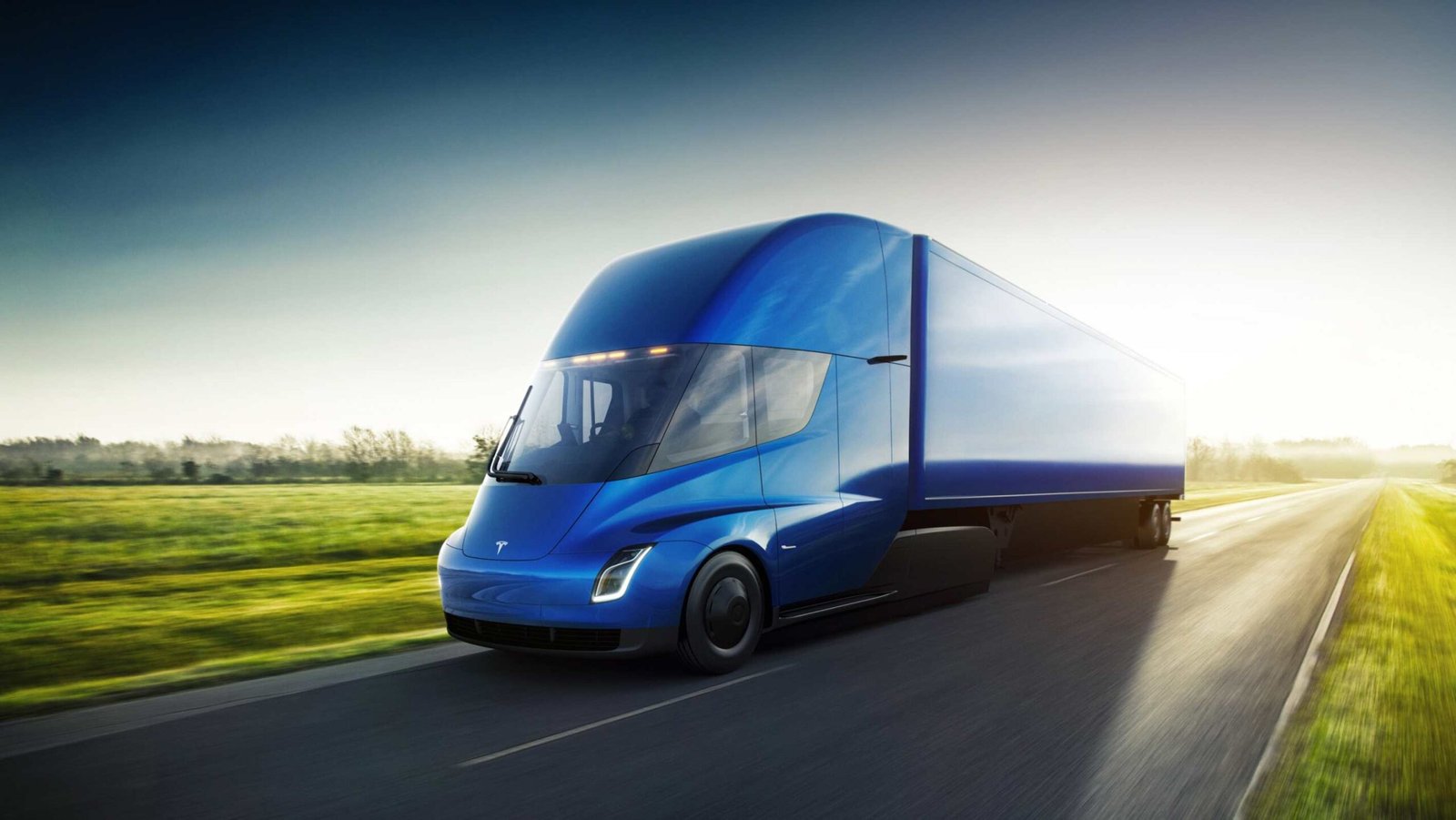
Elon Musk SHOCKED New Tesla Semi Caught FIRE, Closes Freeway For 10 Hours: The dream of zero-emission commercial trucking has faced a major challenge after a Tesla Semi caught fire on Interstate 880 near Hayward, California. The dramatic incident destroyed much of the truck’s cab, shut down a major freeway for approximately 10 hours, and prompted authorities to issue shelter-in-place warnings because of potentially hazardous smoke.
The incident has reignited debate about Tesla Semi fire safety, electric truck battery technology, lithium-ion battery risks, and emergency response procedures. As Tesla works toward expanding its electric trucking operations, the fire raises important questions about the challenges of transitioning from diesel-powered freight to heavy-duty electric vehicles.
Tesla Semi Fire in California Causes Major Highway Disruption
The incident reportedly began around 5:35 p.m. on Interstate 880 near State Route 92 in the Hayward area. The truck, recognizable by its red and orange cab, belonged to the early commercial fleet operated by PepsiCo, which began receiving Tesla Semi trucks in late 2022.
Why Did Interstate 880 Close for 10 Hours?
Unlike conventional diesel trucks, electric trucks use large battery packs that can present complex firefighting challenges. The Tesla Semi involved in the incident was reported to have an approximately 800-kWh lithium-ion battery system.
When lithium-ion batteries experience severe damage or overheating, they can undergo a process known as thermal runaway. This occurs when heat triggers further chemical reactions, potentially causing a battery fire to spread from one cell to another.
Firefighters faced several challenges:
- Extreme temperatures: The battery system reportedly reached temperatures approaching 1,000°F.
- Prolonged firefighting: Continuous water application was needed to cool the battery and reduce the risk of reignition.
- Traffic disruption: California Highway Patrol officers closed both directions of Interstate 880 during the emergency.
- Extended closure: Northbound lanes reopened earlier, while southbound lanes remained closed until approximately 3:30 a.m.
- Community safety: Authorities issued shelter-in-place warnings because of concerns about smoke and potentially hazardous emissions.
Fortunately, the truck driver reportedly escaped without injuries, and nearby passenger vehicles were not involved in the fire.
However, the incident disrupted commuter traffic and commercial transportation across the San Francisco Bay Area, demonstrating how a single heavy-duty vehicle fire can affect a major logistics corridor.
What Caused the Tesla Semi to Catch Fire?
The exact cause of the Tesla Semi fire in Hayward remains subject to investigation. According to the supplied incident account, the driver reported that the cab caught fire without a preceding collision.
This detail has attracted attention because vehicle fires can originate from several sources, including battery faults, electrical failures, damaged wiring, and overheating mechanical components.
Understanding Tesla Semi Battery Technology
The Tesla Semi’s battery architecture is central to discussions about its safety and performance.
Early trucks delivered to commercial customers reportedly used cylindrical 2170 lithium-ion battery cells, while Tesla has also developed its larger 4680 battery cell technology for other vehicle applications and future manufacturing strategies.
The two battery formats differ in size, design, and potential integration into a vehicle’s structure.
2170 battery cells: These cylindrical cells have been used in several Tesla passenger vehicles. Integrating thousands of cells into a heavy-duty electric truck requires sophisticated electrical connections, cooling systems, and battery management.
4680 battery cells: These larger-format cells are designed to support improvements in manufacturing efficiency and vehicle integration. Their use in structural battery designs can potentially reduce component complexity and improve packaging efficiency.
However, it would be inaccurate to conclude that either battery format caused this particular fire without verified investigative findings.
Could a Battery Failure Have Triggered the Blaze?
Several possibilities could explain an electric truck fire, including an internal battery short circuit, a high-voltage electrical fault, or a mechanical problem that generated excessive heat.
Investigators must examine the battery pack, wiring, thermal management systems, vehicle components, and available electronic data to determine the cause.
Until the findings are released, the cause of the Tesla Semi fire should be considered unconfirmed.
Tesla Semi Fire vs. Diesel Truck Fires: What Is the Difference?
Electric truck fires often receive significant media attention because lithium-ion battery fires can be difficult to extinguish and may reignite after appearing to be under control.
However, diesel trucks also experience fires caused by mechanical failures, electrical faults, fuel leaks, collisions, and overheating components.
According to the figures cited in the supplied report, U.S. fire departments respond to approximately 15,000 large truck fires annually. These figures illustrate that commercial vehicle fires are not exclusive to electric transportation, although comparisons require consistent data.
Why Electric Truck Fires Are Challenging
1. Thermal runaway
A damaged battery cell can release heat that triggers neighboring cells, creating a chain reaction that makes extinguishing the fire more complicated.
2. High water requirements
Firefighters may need substantial amounts of water to cool a large battery pack. Even after visible flames disappear, the battery can remain hot enough to reignite.
3. Toxic smoke and gases
Burning battery materials can release hazardous gases and particulates. Emergency responders must assess air quality and determine whether nearby communities need protective instructions.
4. Chemical runoff
Water used during firefighting can carry battery-related contaminants. Proper containment and environmental monitoring may therefore be necessary.
These challenges highlight why electric truck fire safety protocols must evolve alongside the development of larger battery-powered commercial vehicles.
Are Electric Trucks More Dangerous Than Diesel Trucks?
One incident alone cannot establish whether electric trucks are more or less dangerous than diesel trucks.
A meaningful comparison requires information about vehicle numbers, total miles traveled, fire frequency, fire severity, injuries, and the circumstances surrounding each incident.
Because the Tesla Semi fleet has been much smaller than the established diesel truck fleet, its limited incident history cannot provide a definitive statistical conclusion.
Tesla Semi Performance and the Future of Electric Trucking
Despite the challenges, heavy-duty electric trucks remain an important part of efforts to reduce emissions from freight transportation.
Tesla promotes the Semi as an alternative to diesel-powered long-haul trucks, with a stated range target of up to 500 miles on a full charge, depending on the configuration and operating conditions.
Electric trucks can also offer potential advantages, including reduced tailpipe emissions, lower routine maintenance requirements, and improved energy efficiency.
Can Electric Trucks Transform Commercial Transportation?
The future of electric trucking depends on more than vehicle range. Businesses must also consider charging infrastructure, electricity costs, payload capacity, vehicle availability, battery durability, and charging time.
Tesla’s planned manufacturing expansion and dedicated charging infrastructure could help support wider adoption if production and deployment targets are achieved.
However, battery reliability and emergency preparedness will remain essential as more electric trucks enter commercial service.
Fleet operators need clear procedures for responding to battery emergencies, while firefighters require appropriate training and equipment for managing high-voltage vehicles and potential thermal runaway events.
Manufacturers must also continue improving battery monitoring, thermal management, fault detection, and post-crash safety systems.
What Happens Next After the Tesla Semi Fire?
The Hayward incident serves as a reminder that the transition to electric freight transportation involves both opportunities and engineering challenges.
Investigators will need to establish what triggered the fire and determine whether any vehicle components or operating conditions contributed to the event.
The findings could help manufacturers, emergency services, fleet operators, and regulators strengthen safety procedures for heavy-duty electric vehicles.
For Tesla, the incident also highlights the importance of demonstrating that its electric trucks can deliver dependable performance under demanding commercial conditions.
The bigger question is not simply whether electric trucks can replace diesel vehicles, but whether they can do so safely, reliably, and economically at scale.
Final Thoughts
The Tesla Semi fire on Interstate 880 has brought renewed attention to the safety challenges associated with large lithium-ion battery systems. The approximately 10-hour freeway disruption, emergency response requirements, and shelter-in-place warnings illustrate the potential consequences of a serious electric truck fire.
Nevertheless, the incident should not be treated as proof that electric trucks are inherently unsafe. Determining the actual risk requires reliable investigation results and comparisons based on comprehensive fleet data.
As the commercial trucking industry moves toward cleaner transportation, continued investment in battery safety, firefighting preparedness, charging infrastructure, and rigorous vehicle testing will be critical.
The lessons learned from incidents like this could help shape the future of electric freight and determine how quickly zero-emission trucking becomes a practical solution for businesses worldwide.
FAQs
1. What happened when the Tesla Semi caught fire on Interstate 880?
A Tesla Semi reportedly caught fire on Interstate 880 near Hayward, California. The incident destroyed much of the truck’s cab, disrupted traffic, and led to a prolonged highway closure while emergency crews worked to control the fire.
2. Why was Interstate 880 closed for approximately 10 hours?
The freeway closure was reportedly necessary to allow firefighters to manage the vehicle fire safely, cool the battery system, and address potential hazards from smoke and battery-related chemicals.
3. What caused the Tesla Semi to catch fire?
The exact cause of the Tesla Semi fire has not been confirmed in the supplied report. Potential causes include a battery malfunction, an electrical fault, or a mechanical problem, but an official investigation would be needed to determine what happened.
4. Was anyone injured in the Tesla Semi fire?
According to the incident details provided, the truck driver escaped without injury. No injuries involving nearby passenger vehicles were reported in the account.
5. Why are Tesla Semi battery fires difficult to extinguish?
Tesla Semi trucks use large lithium-ion battery systems. If battery cells experience thermal runaway, heat can spread between cells and cause the fire to continue or reignite, making firefighting more challenging.
6. What is thermal runaway in an electric truck battery?
Thermal runaway is a dangerous process in which excessive heat triggers chemical reactions inside a battery cell, generating additional heat. In severe cases, the reaction can spread to neighboring cells and lead to an intense, prolonged fire.
7. How large is the Tesla Semi battery pack?
The Tesla Semi is associated with a large battery system designed for heavy-duty transportation. The incident account estimates the battery capacity at approximately 800 kWh, although the exact specification of the truck involved should be independently verified.
8. Can an electric truck fire release toxic gases?
Yes. Burning lithium-ion battery materials can release hazardous gases, smoke, and particulates. Depending on the materials involved and the conditions of the fire, these emissions may pose risks to firefighters and nearby communities.
9. Why were nearby residents told to shelter in place?
Authorities reportedly issued shelter-in-place warnings because of concerns about potentially hazardous smoke and gases. Such instructions typically advise residents to remain indoors and close doors and windows while emergency officials assess the situation.
10. Are electric truck fires more dangerous than diesel truck fires?
Electric and diesel truck fires present different hazards. Lithium-ion battery fires can involve thermal runaway and reignition, while diesel truck fires may involve fuel, engine components, and other combustible materials. Determining which presents the greater overall risk requires reliable comparative safety data.
11. What is the difference between Tesla’s 2170 and 4680 battery cells?
The 2170 battery cell is a cylindrical lithium-ion design used in several Tesla vehicles. The larger 4680 battery cell is designed to support improvements in battery packaging and manufacturing. Their performance and safety depend on the complete battery system, including its cooling, monitoring, and protection mechanisms.
12. Can a Tesla Semi battery fire reignite after the flames are extinguished?
Yes. A damaged lithium-ion battery can remain hot internally even after visible flames disappear. This creates a risk of renewed thermal runaway, which is why firefighters may need to monitor the vehicle and battery pack for an extended period.
13. How far can a Tesla Semi travel on a single charge?
Tesla has promoted a range of up to 500 miles for the Semi under specified operating conditions. Actual range depends on factors such as payload, speed, terrain, weather, driving behavior, and energy consumption.
14. Will the Tesla Semi fire affect the future of electric trucking?
The incident could increase scrutiny of battery safety, emergency response procedures, and electric truck reliability. However, one fire does not establish the overall safety of electric trucking. Further investigation, improved safety measures, and reliable fleet data will help determine the industry’s future direction.
15. Are electric trucks still a good alternative to diesel trucks?
Electric trucks can offer benefits such as zero tailpipe emissions, improved energy efficiency, and potentially lower maintenance costs. Their suitability depends on factors including purchase price, charging infrastructure, driving range, payload requirements, and battery performance. Safety improvements and reliable charging networks will be important for wider adoption.
Read More:
- SpaceX President to gift Trump Accounts her SpaceX stock
- FAA Just Delayed Starship Flight 15 despite Tests Completed, Why? No Launch Until
- 2027 Tesla Bot Gen 3 LEARNS 500 INSANE Tasks! AMAZING Upgrade
- Tesla made napping in a Robotaxi easier with its latest update
- Tesla Full Self-Driving becomes main pillar of new Referral Program
2 thoughts on “Elon Musk SHOCKED New Tesla Semi Caught FIRE, Closes Freeway For 10 Hours”