
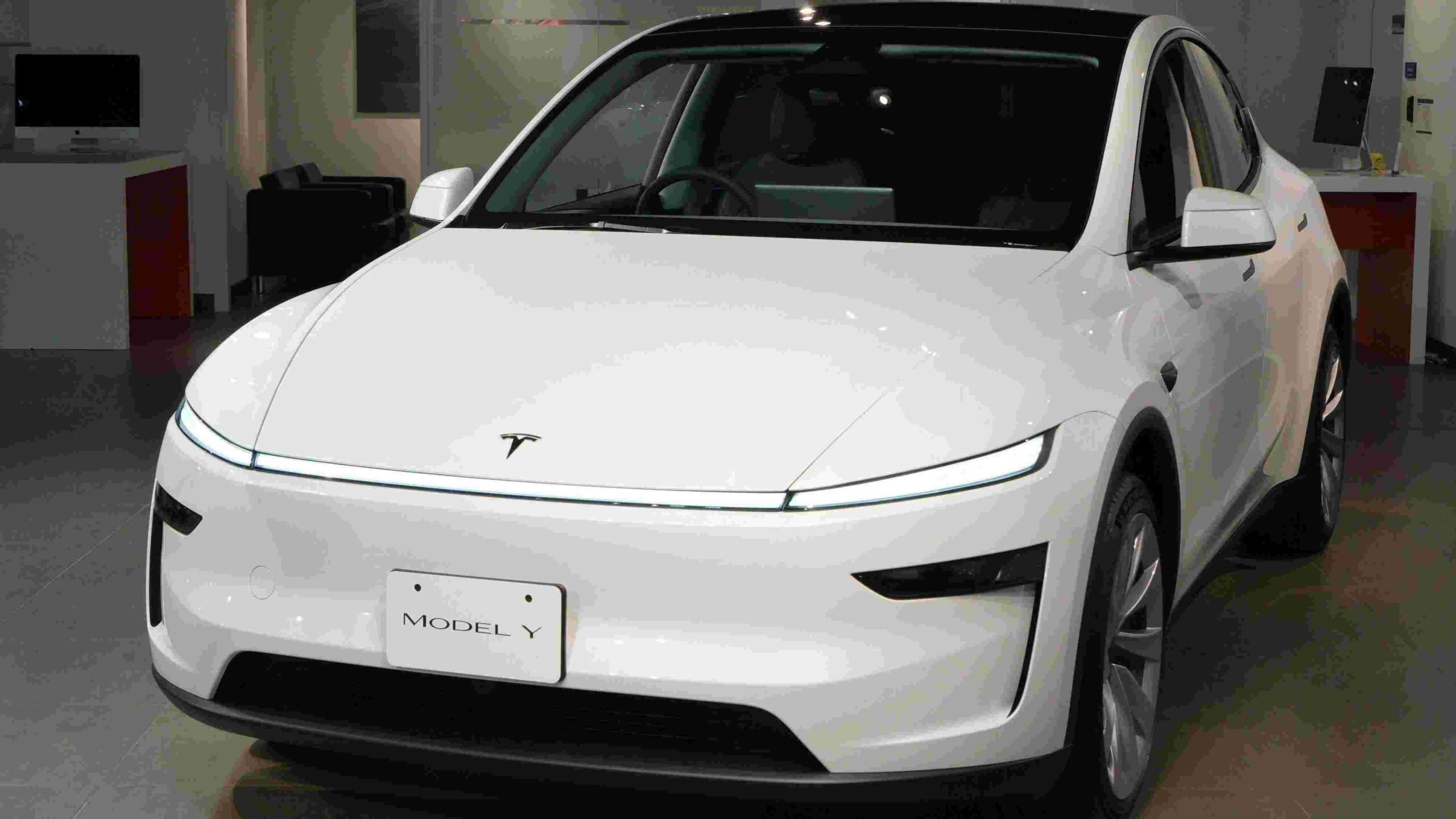
The world of autonomous vehicles has just reached a monumental milestone. Tesla has officially unveiled the first car specifically built for unsupervised full self-driving as a robo taxi, and it’s called the Cyber Cab. With Elon Musk at the helm, Tesla is redefining urban transportation, leaving competitors like Waymo struggling to keep pace.
In this article, we explore everything you need to know about Tesla’s robo taxi Cyber Cab, its groundbreaking technology, real-world testing, and the bold vision Musk has for the future of autonomous mobility.
What Makes the Tesla Cyber Cab Different?
Tesla’s Cyber Cab isn’t just another electric vehicle. It’s a revolutionary robo taxi designed from the ground up for unsupervised full self-driving. While other companies rely heavily on pre-mapped routes, high-definition sensors, and a constant internet connection, Tesla is taking a real-world data-driven approach.
Real-World AI Training vs. Simulation
According to Elon Musk, Tesla’s AI trains on billions of miles of real-world driving. This allows the system to handle chaotic and unpredictable traffic conditions. In contrast, Waymo’s reliance on rigid rules and map-based navigation can create instability during unexpected events.
A recent incident in San Francisco perfectly illustrates this: during a power outage that disabled traffic lights, Waymo robo taxis completely shut down, becoming inoperable. Meanwhile, Tesla’s Cyber Cabs continued moving safely and efficiently, treating the situation as a minor inconvenience rather than a crisis.
Tesla vs. Waymo: The Autonomous Vehicle Battle
Tesla and Waymo are the two primary players in the U.S. autonomous vehicle market, but their approaches are fundamentally different.
Waymo’s Limitations
- Heavy reliance on HD maps: Makes the system rigid and less adaptable to unexpected scenarios.
- Internet dependency: Taxis may fail if network connectivity drops.
- Simulation-based AI training: Can’t fully account for real-world chaos.
Tesla’s Advantages
- Vision-only approach: No lidar or unnecessary sensors.
- Unsupervised full self-driving: Capable of navigating real-world environments independently.
- Real-world data collection: Millions of miles of real driving improve AI decision-making.
This real-world approach gives Tesla a decisive edge in handling urban chaos and delivering a truly autonomous experience.
Cyber Cab Rollout and Real-World Testing
Tesla’s unsupervised robo taxi program is already underway. The company has deployed vehicles in multiple cities and is preparing for a full-scale launch in April 2026.
Cities Already Testing Cyber Cab
- Austin, Texas: Nearly 2,000 unsupervised trips completed.
- Bay Area, California: Including Palo Alto and Fremont.
- Florida Cities: Miami, Tampa, and Claremont.
- New York: Brooklyn.
- Planned Expansion: Las Vegas, Phoenix, Tempe, Gilbert, Scottsdale, Dallas, Houston, and more.
Tesla’s fleet size in the San Francisco Bay Area alone jumped from 28 to 1,655 vehicles in a matter of months, signaling rapid growth ahead of the mass deployment.
Cyber Cab Design and Features
Tesla has reimagined urban transportation with the Cyber Cab, focusing on efficiency, safety, and passenger comfort.
Interior and Passenger Experience
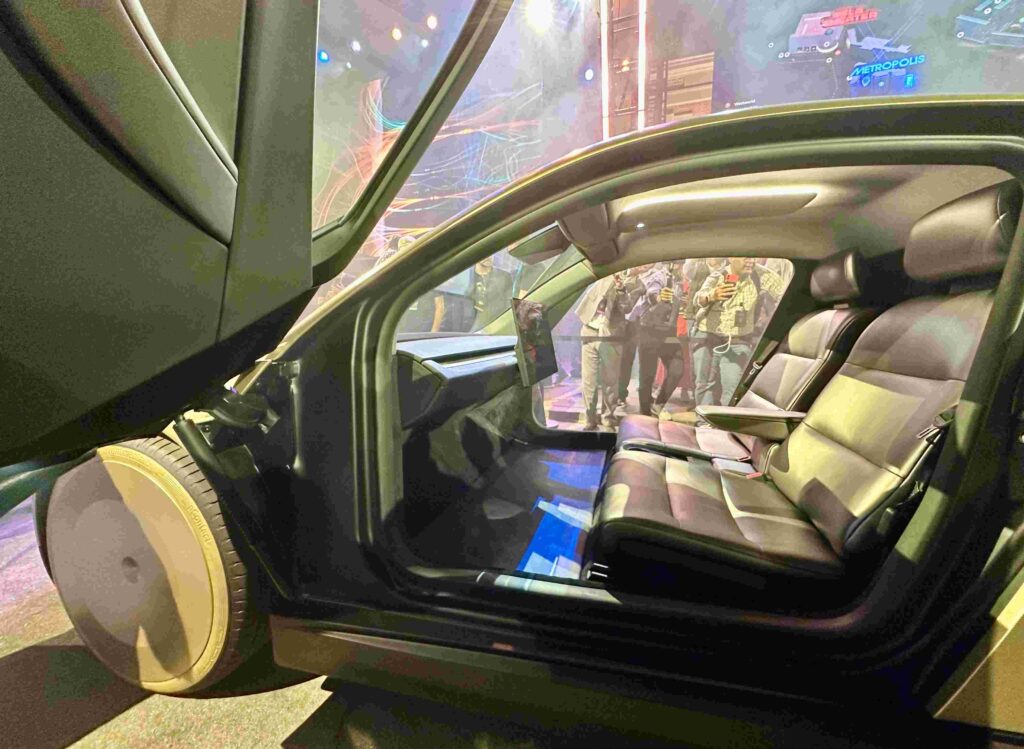
- Two-seat layout with most rear space dedicated to luggage.
- No steering wheel or pedals, emphasizing full autonomy.
- Butterfly-style doors that open upward automatically for passenger convenience.
- Durable materials, including stainless steel, ensuring long-term operation.
Tesla prioritizes comfort in shared mobility while streamlining the vehicle for maximum efficiency in urban environments.
Battery and Charging
- Battery capacity: Around 50 kWh, sufficient for 200–250 miles of urban driving.
- Autonomous charging: Capable of self-parking at charging stations or wireless pads.
- Fast charging technology: Can fully charge in 10–15 minutes, ensuring quick turnaround for ride-hailing operations.
This combination of range, efficiency, and autonomous charging is tailored for the continuous demands of city taxi service.
Safety and Reliability
Tesla has demonstrated exceptional safety standards with Cyber Cab prototypes, leveraging both hardware and software innovations.
Advanced Sensor Suite
- External cameras and ultrasonic sensors provide comprehensive situational awareness.
- Radar systems aid in navigating complex traffic.
- Neural networks process data in real-time, allowing the vehicle to respond safely to emergencies.
Emergency Handling
In critical scenarios, the Cyber Cab can:
- Pull over autonomously.
- Alert emergency services.
- Protect passengers without human intervention.
Over-the-air updates ensure that safety improvements are continuous, making Tesla robo taxis safer than traditional taxis.
Operational Efficiency and Cost Advantages
One of the most compelling benefits of Tesla’s robo taxis is lower operating costs.
Reduced Cost of Ownership
- Energy costs: 3–5 cents per mile versus 12 cents per mile for gasoline taxis.
- Labor savings: Eliminating drivers cuts expenses dramatically.
- Subscription-based pricing: Users could pay a flat monthly fee (~$200) for unlimited rides.
AI-Driven Fleet Management
Tesla’s system optimizes routing and vehicle distribution in real time, targeting utilization rates as high as 90%. Ride pooling and suburban service expansion further enhance efficiency.
Tesla Cyber Cab vs. Waymo: The Key Distinction
While Waymo may boast impressive safety statistics and city-focused operations, Tesla’s approach is designed for scale, versatility, and affordability.
- Tesla manufactures its own vehicles, ensuring end-to-end integration.
- Waymo relies on multiple automakers’ fleets, creating complexity.
- Tesla focuses on vision-based AI, whereas Waymo relies on lidar and pre-mapped environments.
This distinction positions Tesla to dominate the autonomous ride-hailing market, especially once safety supervisors are fully removed from the equation.
What’s Next for Tesla Robo Taxis?
Elon Musk has ambitious plans for the Cyber Cab, including:
- Large-scale deployment across multiple U.S. cities by 2026.
- Private Tesla owners joining the robo taxi network, earning 70% of revenue while Tesla takes 30%.
- Integration with Tesla’s AI-driven logistics to ensure seamless urban mobility.
The ultimate goal is a fully autonomous, city-wide transportation network capable of continuous operation with minimal human intervention.
Design Innovations Worth Highlighting
Tesla’s Cyber Cab is designed to stand out visually and functionally:
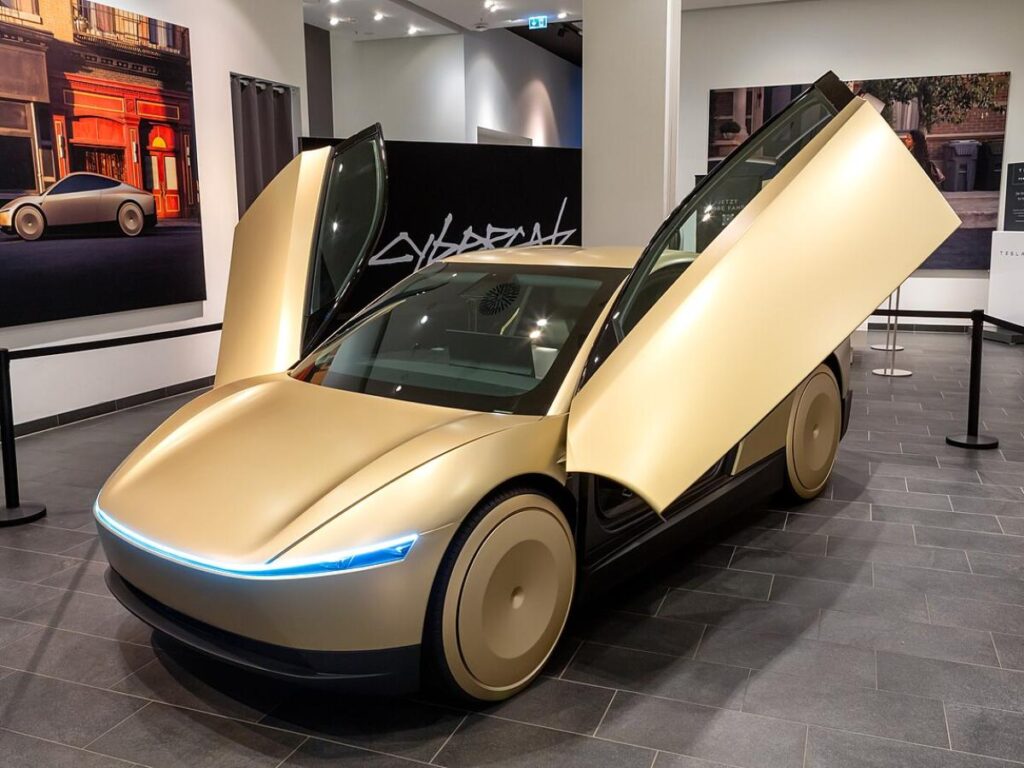
- Hybrid aesthetic: Combines elements of Model 3 and Cybertruck.
- Bright yellow exterior for visibility and identity.
- Larger rear wheels for improved stability and traction.
- Aerodynamic, compact design optimized for urban environments.
Every design decision is made with efficiency, safety, and urban mobility in mind.
The Future of Autonomous Transportation
The Tesla Cyber Cab represents a turning point in urban transportation:
- Lower fares than current ride-hailing services (est. 18 cents per mile).
- Round-the-clock operation without driver fatigue.
- Subscription and sharing models enhance accessibility.
- AI optimization reduces traffic congestion and improves ride efficiency.
Tesla is proving that electric, autonomous vehicles can deliver both performance and affordability, even in the most complex urban environments.
FAQs About Tesla Robo Taxi Cyber Cab
Can I trust a car with no steering wheel in city traffic?
Yes. Tesla’s Cyber Cab leverages advanced AI and sensors to navigate complex traffic safely, with emergency protocols built in for all scenarios.
How long can the Cyber Cab operate without charging?
With a 50 kWh battery, the vehicle can cover 200–250 miles, sufficient for urban routes. Fast charging and wireless charging options ensure quick turnarounds.
Will Tesla allow private owners to join the robo taxi network?
Yes. Tesla plans to allow owners to earn revenue by sharing their vehicles, with the company taking a small commission.
Conclusion: Tesla Robo Taxis Are the Future
The Tesla Cyber Cab is more than just a car—it’s a complete mobility solution. With unsupervised full self-driving capabilities, cost efficiency, safety features, and real-world operational experience, Tesla is setting a new standard for urban transportation.
As cities become more congested and ride-hailing demand increases, Tesla’s robo taxis promise to deliver affordable, reliable, and futuristic mobility to millions.
Elon Musk’s vision is clear: the era of human-driven taxis is coming to an end, and the Tesla Cyber Cab is leading the charge.
FAQs
1. Can I trust a car with no steering wheel in city traffic?
Yes. Tesla’s Cyber Cab leverages advanced AI and sensors to navigate complex traffic safely, with emergency protocols built in for all scenarios.
2. How long can the Cyber Cab operate without charging?
With a 50 kWh battery, the vehicle can cover 200–250 miles, sufficient for urban routes. Fast charging and wireless charging options ensure quick turnarounds.
3. Will Tesla allow private owners to join the robo taxi network?
Yes. Tesla plans to allow owners to earn revenue by sharing their vehicles, with the company taking a small commission.
4. How fast can the Cyber Cab charge?
Tesla’s advanced ultra-fast charging technology allows the Cyber Cab to recharge in 10–15 minutes, enabling quick redeployment for urban rides.
5. Does the Cyber Cab have a steering wheel or pedals?
No. The Cyber Cab is designed for full autonomy, removing traditional driving controls entirely.
6. How many passengers can the Cyber Cab carry?
The vehicle is optimized for two passengers with ample luggage space, ideal for urban pick-up and drop-off services.
7. What kind of doors does the Cyber Cab use?
It features butterfly-style doors that open upward automatically when passengers enter, enhancing convenience and futuristic appeal.
8. Is the Cyber Cab safe in emergencies?
Yes. In emergencies, it can autonomously pull over, alert authorities, and protect passengers without human intervention.
9. What sensors does the Cyber Cab use?
It utilizes external cameras, ultrasonic sensors, and radar, all feeding into Tesla’s neural networks for precise autonomous navigation.
10. How does Tesla handle fleet management?
Tesla uses AI-driven fleet management to optimize routing, vehicle distribution, and utilization in real time, targeting up to 90% efficiency.
11. Can the Cyber Cab operate continuously without human drivers?
Yes. The vehicle is designed for 24/7 autonomous operation, making it ideal for continuous urban ride-hailing.
12. How does the Cyber Cab compare to traditional taxis?
It is significantly cheaper (estimated 18 cents per mile), more efficient, and safer due to AI-driven navigation and lack of human error.
13. Can the Cyber Cab operate in areas with power outages?
Yes. Unlike some competitors, Tesla’s real-world AI can navigate urban chaos, including traffic light failures or power outages.
14. What is the maximum speed of the Cyber Cab?
Tesla limits the top speed to ensure safety and compliance with city traffic regulations while maintaining efficient urban transport.
15. How durable is the Cyber Cab?
It is built with stainless steel or similarly robust materials, designed to operate continuously with minimal maintenance.
16. Will the Cyber Cab support ride pooling?
Yes. Tesla plans to group passengers with similar routes, improving efficiency, reducing congestion, and offering more affordable fares.
Read More:
- SpaceX finally Catching Both Starship and Booster in mid-air! Flight 13 will be Crazy
- Tesla analyst breaks down delivery report: ‘A step in the right direction’
- Tesla Q4 delivery numbers are better than they initially look: analyst
- Tesla CEO Elon Musk drops massive bomb about Cybercab
- Elon Musk’s $99,999 Electric Plane 2026: The Future of Aviation Is Here
- BOXABL! New Tiny House 2026 Inside Too Amazing! $0 Tax & Tesla Rumors Producing
4 thoughts on “Elon Musk Finally LAUNCH 2,000 Tesla Robotaxi CyberCab Rides! Unsupervised AI SHOCKED Waymo”