
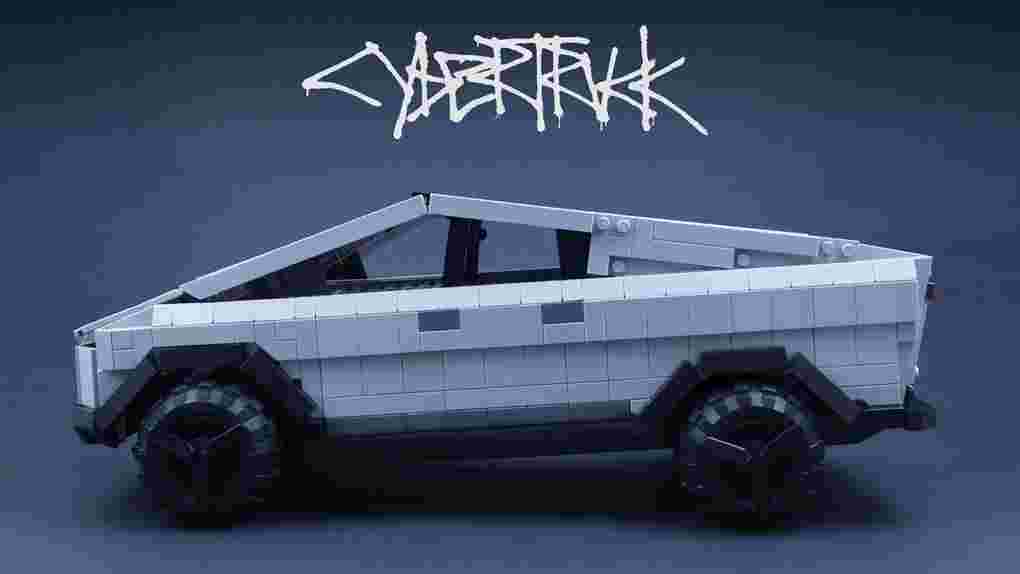
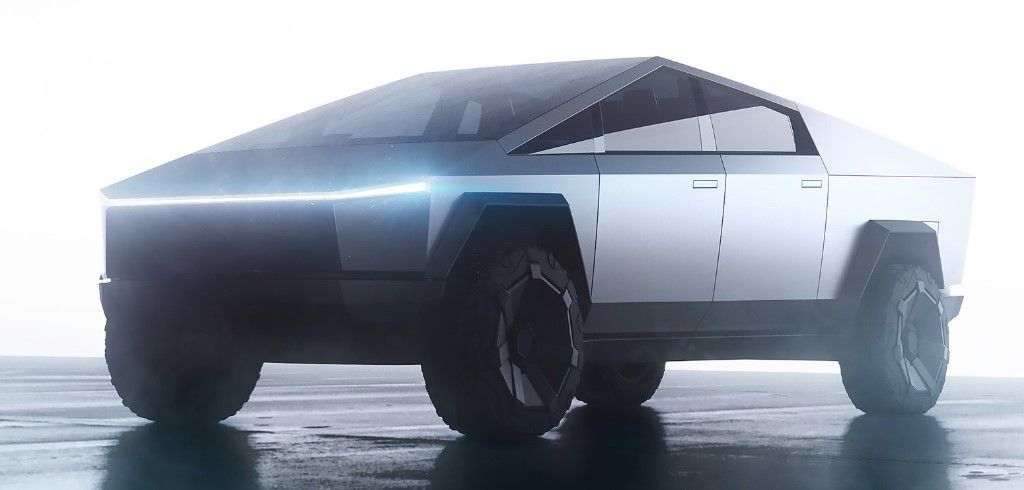
The Tesla Cybertruck has never been a normal vehicle—and that’s exactly why it continues to dominate headlines in 2026. From its angular stainless-steel exoskeleton to its steer-by-wire and Full Self-Driving (FSD) technology, the Cybertruck represents one of the boldest automotive experiments ever brought to mass production.
Yet with bold innovation comes equally bold controversy. While Tesla has rolled out major performance upgrades, range improvements, and AI-driven driving features, the Cybertruck has also faced design flaws, safety debates, recalls, and shifting sales momentum.
So where does the Cybertruck really stand in 2026? Is it a future-ready electric pickup, or a high-risk purchase buyers should think twice about? Let’s break it all down.
Tesla Cybertruck 2026: What’s New and What’s Changed
Tesla’s 2026 Cybertruck update focuses heavily on driving technology, performance, and manufacturing efficiency. At the heart of the experience is a radical shift in how drivers interact with the vehicle.
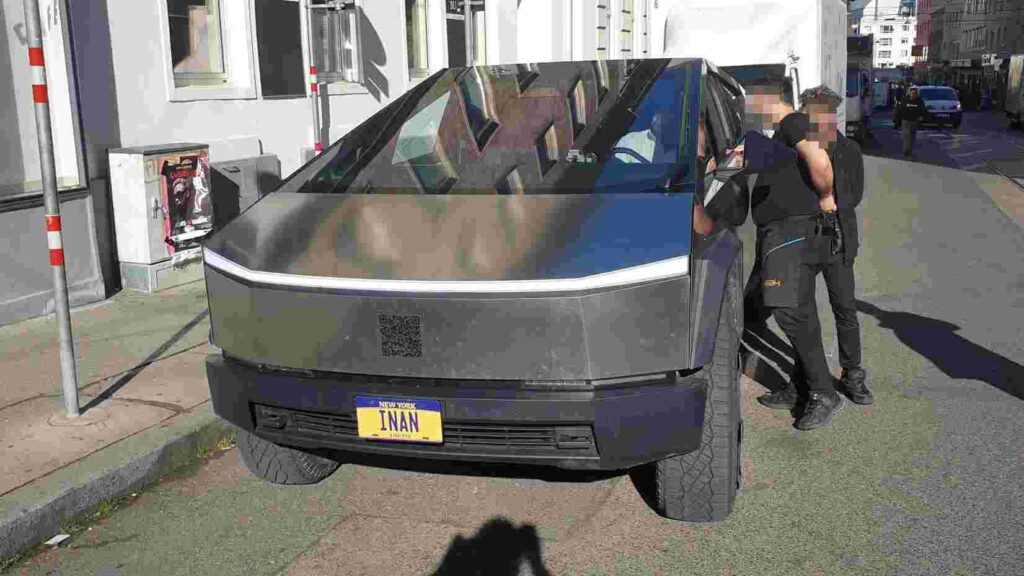
Electronic Steering and Four-Wheel Steering
One of the most impressive upgrades is the electronic steer-by-wire system paired with four-wheel steering.
Key benefits include:
- Sedan-like turning radius, despite the truck’s massive size
- Improved low-speed maneuverability in urban environments
- Greater stability at highway speeds
This technology fundamentally changes how a pickup truck feels, making the Cybertruck far easier to handle than traditional full-size trucks.
Improved Range, Speed, and Aerodynamics
Tesla engineers have refined the Cybertruck’s aerodynamics, resulting in measurable performance gains.
Performance Highlights
- Driving range increased to over 340 miles, with some AWD configurations approaching 350+ miles
- Top speed boosted to 112 mph
- Reduced drag thanks to subtle exterior refinements
These improvements help position the Cybertruck competitively against rivals like the Ford F-150 Lightning, Rivian R1T, and GMC Hummer EV.
Design Flaws and Recalls: The Growing Concern
Despite the technological leaps, the Cybertruck’s quality and safety issues remain a major talking point.
Major Recalls Explained
Since customer deliveries began in late 2023, the Cybertruck has accumulated more than a dozen NHTSA recalls, affecting nearly 80% of produced vehicles.
Notable recall issues include:
- K-rail stainless trim panels detaching due to weak adhesive bonding
- Sticking accelerator pedals, posing serious safety risks
- Wiper motor failures
- Faulty tire pressure monitoring sensors
- Power contactor failures, leading to sudden loss of propulsion
- Excessively bright front parking lights
Perhaps most troubling were reports of visible corrosion appearing within weeks of delivery, contradicting Tesla’s “nearly indestructible” narrative.
Safety Debate: Is the Cybertruck Too Rigid?
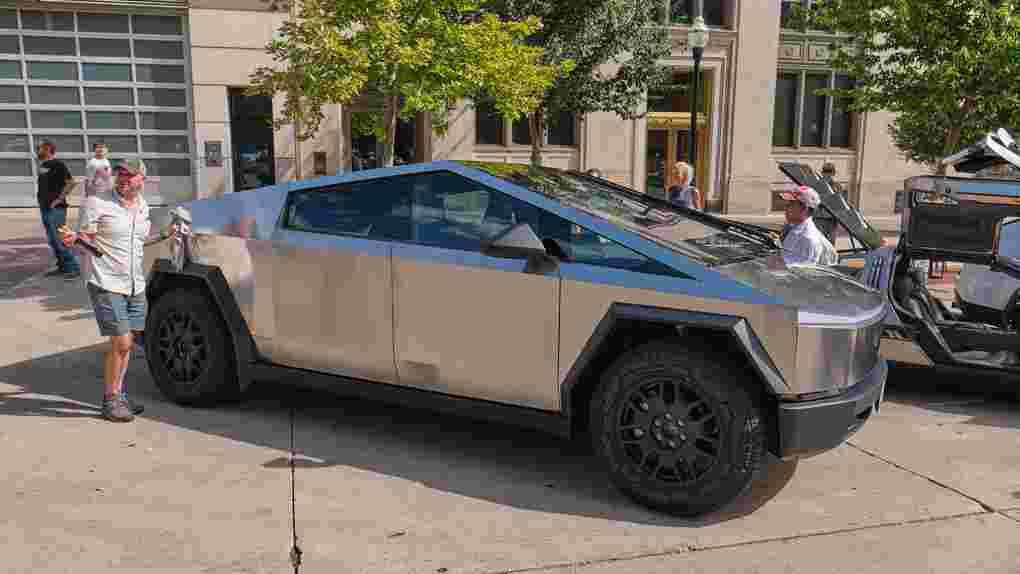
At the center of the controversy lies the Cybertruck’s stainless-steel exoskeleton, constructed from 1.4 mm thick 30X cold-rolled stainless steel.
The Crumple Zone Problem
Traditional vehicles rely on engineered crumple zones to absorb impact energy. The Cybertruck, however, resists deformation.
Safety experts warn that:
- Rigid body panels may transfer more force to pedestrians and cyclists
- The flat front fascia offers minimal energy absorption
- Independent crash analysis suggests higher predicted head injury metrics
Former IIHS President Adrien Lund has publicly raised concerns, especially regarding compliance with European pedestrian safety standards, which prohibit sharp, rigid exterior edges.
Inside the Cabin: A Camera-Centric Driving Experience
The Cybertruck flips traditional truck design on its head.
Limited Visibility by Design
Direct visibility from the cabin is extremely limited. Instead, Tesla relies almost entirely on external cameras.
While initially uncomfortable, this design supports Tesla’s vision of a fully autonomous future, where cameras—not human sight—are the primary source of perception.
Full Self-Driving (FSD) and Grok AI Integration
Tesla’s FSD system is where the Cybertruck truly separates itself from the competition.
What Makes Tesla FSD Stand Out
- Integrated Grok AI, enabling natural voice communication
- Intelligent route planning based on real-time conditions
- Automatic camera switching during turns
- Confident handling of complex intersections
- Strong performance in heavy rain, slick roads, and poor visibility
Drivers can choose between Chill, Standard, and Hurry modes, each adjusting how assertively the truck behaves in traffic.
Over time, users report a growing sense of trust, shifting from hands-on vigilance to calm supervision.
Parking, Visualization, and Real-World Usability
The Cybertruck’s real-time visualization system is one of its strongest features.
Drivers can see:
- Nearby vehicles and pedestrians
- Lane markings and obstacles
- Full traffic context rendered in real-time
The system even handles automatic parking, often prioritizing spaces near store entrances. While not flawless, it represents a significant leap beyond highway-only autonomy.
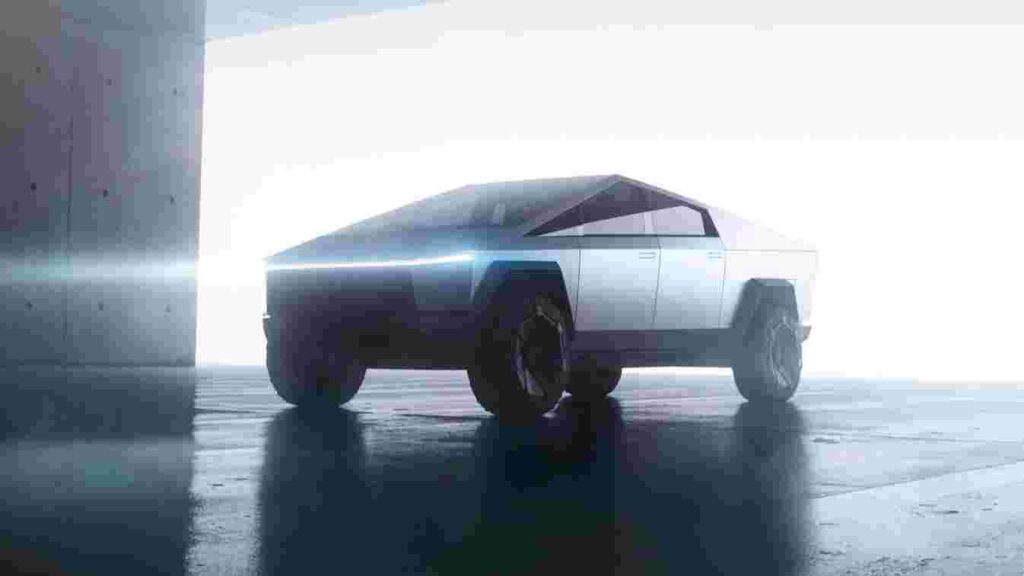
Manufacturing at Giga Texas: A Major Turning Point
Tesla’s Giga Texas facility reached full production stride in early 2026.
Production Milestones
- Weekly output exceeding 12,000 Cybertrucks
- Automated 4680 battery cell integration
- Battery costs reduced by 40%
- Energy density increased to 300 Wh/kg
- Structural packs enabling 350-mile EPA-rated range
Tesla’s AI-optimized robotics now assemble a Cybertruck in under 30 hours, far faster than legacy competitors.
Sales Performance: Hype vs. Reality
Before launch, Tesla reportedly received over 1 million reservations. However, rising costs pushed prices far above the promised $39,900 starting point.
Current Pricing Reality
- Long Range RWD: ~$69,990
- Cyberbeast Tri-Motor: ~$99,990
- Compact version in development: ~$49,990
This repositioned the Cybertruck as a premium electric pickup, dampening demand among buyers expecting an affordable work truck.
2026 Sales and Market Impact
Despite early struggles, 2025 and early 2026 tell a different story.
Key figures:
- 180,000 units sold in 2025
- 15% of the U.S. pickup market
- 25,000 deliveries in the first three weeks of January 2026
- Inventory turnover of just 15 days
The Cybertruck now accounts for 25% of Tesla’s total output, outselling Rivian’s R1T by a wide margin.
Fleet Adoption and Owner Satisfaction
Real-world adoption has surged.
Who’s Buying the Cybertruck?
JD Power’s 2026 APEAL Study ranked the Cybertruck #1 in owner satisfaction, scoring 850/1000, far above the Ford F-150.
Cybertruck 2026 Updates That Matter
Tesla has quietly addressed many early issues.
Recent improvements include:
- Adaptive air suspension with 17 inches of ground clearance
- Matrix LED lighting producing 50,000 lumens
- Level 3 autonomy on 95% of U.S. highways
- 123 kWh structural battery pack
- Ultra-fast 350 kW charging (10–80% in 18 minutes)
Over-the-air updates resolved early accelerator and wiper issues, with zero recalls reported in 2026 so far.
Environmental and Economic Impact
Compared to gas-powered trucks, the Cybertruck delivers:
- 80 tons of lifetime carbon savings per vehicle
- $10,000 lower total ownership cost over 5 years
- Support for U.S. energy independence via domestic lithium refining
Is the Tesla Cybertruck Worth Buying in 2026?
The Cybertruck is not a conventional truck—and never tried to be.
Pros
- Industry-leading autonomy and AI integration
- Exceptional performance and efficiency
- Rapid manufacturing scale and OTA updates
- Strong owner satisfaction
Cons
- Past recalls and quality concerns
- Safety debates around rigid exoskeleton design
- Limited direct visibility
- Premium pricing
Final Verdict: Buyer Beware—or Buyer Ahead of the Curve?
The Tesla Cybertruck in 2026 stands at the crossroads of innovation and controversy. It has evolved into one of the most technologically advanced vehicles on the road, yet its radical design choices continue to spark debate.
For buyers willing to embrace camera-based driving, AI autonomy, and unconventional design, the Cybertruck offers a future-ready experience unlike anything else. For traditionalists seeking proven safety norms and classic ergonomics, caution may still be warranted.
FAQs
1. What is new in the Tesla Cybertruck 2026 model?
The 2026 Tesla Cybertruck introduces major upgrades including four-wheel steering, steer-by-wire technology, improved aerodynamics, a range exceeding 340 miles, enhanced Full Self-Driving (FSD) with Grok AI integration, and manufacturing improvements at Giga Texas.
2. What is the driving range of the 2026 Tesla Cybertruck?
The 2026 Cybertruck offers an EPA-estimated range of 340–350 miles, depending on the configuration, with some AWD variants approaching even higher real-world efficiency.
3. Why has the Tesla Cybertruck faced multiple recalls?
The Cybertruck has experienced recalls due to stainless steel trim detachment, accelerator pedal sticking, wiper motor failures, power contactor issues, and tire pressure sensor faults, largely stemming from early production challenges.
4. Are the Cybertruck design flaws serious?
Some design flaws raised legitimate concerns, particularly regarding safety, build quality, and corrosion reports. However, many of these issues were addressed through over-the-air updates and mobile service repairs at no cost to owners.
5. Is the Tesla Cybertruck safe for pedestrians?
Safety experts have expressed concern over the Cybertruck’s rigid stainless-steel exoskeleton, which lacks traditional crumple zones. Critics argue this could increase injury risk for pedestrians and cyclists compared to conventional vehicles.
6. How does Tesla Full Self-Driving perform in the Cybertruck?
Tesla’s FSD system in the Cybertruck is among the most advanced available, capable of navigating busy intersections, adverse weather, lane changes, and parking, while continuously improving through real-world data learning.
7. What is Grok AI and how does it work in the Cybertruck?
Grok AI allows drivers to communicate with the Cybertruck using natural voice commands, enabling destination input, route optimization, and contextual driving assistance for a more intuitive user experience.
8. Why does the Cybertruck rely so heavily on cameras?
Tesla designed the Cybertruck as a camera-centric vehicle to support autonomous driving. Direct visibility is limited by design, with external cameras providing real-time awareness essential for FSD functionality.
9. What are the different Cybertruck driving modes?
Tesla FSD offers Chill, Standard, and Hurry modes, allowing drivers to choose between relaxed, balanced, or more aggressive driving behavior depending on traffic conditions and personal preference.
10. How fast is the Tesla Cybertruck?
The high-performance Cyberbeast tri-motor variant accelerates from 0–60 mph in approximately 2.6 seconds, making it one of the fastest pickup trucks ever produced.
11. How much does the Tesla Cybertruck cost in 2026?
Pricing varies by configuration:
- Long Range RWD: around $69,990
- AWD models: higher depending on options
- Cyberbeast: up to $99,990
Tesla is also developing a compact version priced near $49,990.
12. Has Cybertruck sales performance improved?
Yes. After a slow start, Cybertruck sales surged in 2025 and early 2026, reaching 180,000 units sold in 2025 and capturing 15% of the U.S. pickup market.
13. Is the Cybertruck good for fleet and commercial use?
Many police departments, logistics companies, and corporate fleets have adopted the Cybertruck, citing low operating costs, durability, long range, and high uptime.
14. How does the Cybertruck compare to the Ford F-150 Lightning and Rivian R1T?
The Cybertruck stands out with longer range, faster acceleration, advanced autonomy, and unique design, but competitors may offer more traditional styling and established safety norms.
15. Should buyers be worried about purchasing a Cybertruck in 2026?
While early buyers faced issues, 2026 models benefit from resolved recalls, improved manufacturing quality, and mature software updates. Buyers should weigh innovation vs. unconventional design and safety debates before purchasing.
Read More:
- Tesla automotive will be forgotten, but not in a bad way: investor
- Tesla Robotaxi’s biggest rival sends latest statement with big expansion
- Tesla CEO Elon Musk trolls budget airline after it refuses Starlink on its planes
- Tesla Full Self-Driving gets outrageous insurance offer with insanely cheap rates
- Tesla reveals awesome Model 3 and Model Y incentive, but it’s ending soon
1 thought on “Elon Musk’s Tesla Cybertruck Faces NEW Design Problems at Giga Texas! Buyer Beware?”