
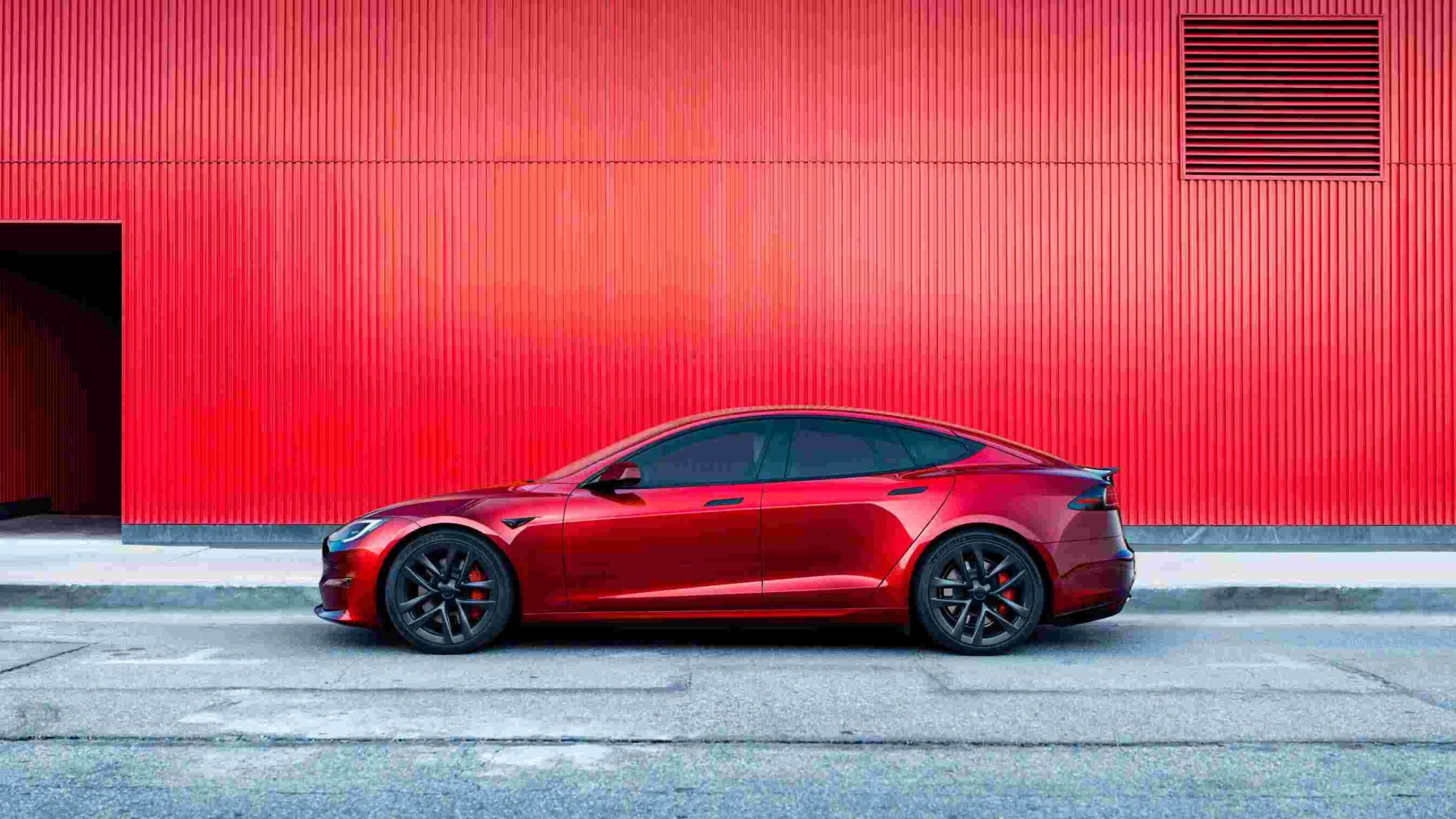
The Tesla Model 2 is already generating buzz—and not because of a single groundbreaking feature. Instead, what grabs attention is a number that keeps popping up before anything else: a price tag between $15,000 and $20,000. That’s the figure analysts, supply chain insiders, and leaked internal sources keep repeating.
But this isn’t a marketing gimmick. According to multiple reports, that price isn’t just a goal—it’s a hard limit that shapes the entire vehicle. Tesla isn’t building the Model 2 the way it builds other cars. This time, the project begins with the price, and every decision is forced to fit within it.
Let’s dive into what that means for the car, the market, and the future of electric vehicles.
The Price That Became a “Law of Physics”
When people hear $15k–$20k, the instinct is to picture a stripped-down, barebones vehicle. But leaks suggest something very different.
Tesla isn’t cutting visible features. Instead, it’s eliminating hidden complexity—the parts of modern cars that drive up long-term costs. That includes:
- Fewer electronic modules
- Fewer trim variations
- Less redundancy
- Simpler assembly
These changes don’t look flashy on a spec sheet. But they show up where it counts: maintenance, repairs, and insurance over years of ownership.
The Domino Effect of Electric Car Costs
In electric cars, every “extra” feature triggers a chain reaction of hidden costs:
- More range → bigger battery
- Bigger battery → more weight
- More weight → stronger brakes and suspension
- More weight → higher insurance
- More weight → faster tire wear
The Model 2 is reportedly designed to break that domino chain. Instead of competing on extreme range or acceleration, Tesla appears to be building a car optimized for real-world use—one that stays affordable long after the purchase.
The Model 2 Isn’t About Wow—It’s About Staying Smart
The Model 2’s mission seems to be:
Not to impress on day one… but to make sense after 3, 5, or 7 years.
This is a mindset shift in a market obsessed with hype. Tesla is betting that predictable ownership costs will attract buyers who normally avoid EVs.
The Real Challenge Isn’t Launch Price—It’s Long-Term Cost
Anonymous engineers have said the biggest challenge isn’t making the car cheap at launch—it’s making it cheap over time.
That means Tesla is reducing variables that lead to expensive failures and unpredictable repairs. In other words, the Model 2 is designed to age more predictably, which is rare in both EVs and gas cars.
Battery Strategy: 53–55 kWh for the Win
The most consistent leaks point to a battery between 53 and 55 kWh. That may sound modest compared to premium models, but it’s actually the sweet spot for urban and suburban use.
Experts agree this range balances:
- Cost
- Weight
- Range
And because the Model 2 is expected to be lightweight, the real-world range could reach 250–310 miles per charge.
That’s not “small”—it’s practical, and that changes everything.
Lightweight = Big Savings
Reducing battery size has cascading benefits:
- Less weight → less strain on motor
- Less weight → less tire wear
- Less weight → smaller brakes
- Less weight → simpler suspension
- Less weight → lower cooling costs
Every gram saved avoids expensive reinforcement elsewhere.
This reverse domino effect turns a “limited” battery into a smart cost-saving strategy.
Maintenance, Insurance, and Real Ownership Costs
Tires, Brakes, and Regenerative Efficiency
Heavy EVs wear tires faster because of instant torque. The Model 2’s lower weight should mean:
- smoother ride
- fewer tire replacements
- better regenerative braking
In urban driving, regenerative braking could recover up to 15% of energy thanks to Tesla’s braking control patents.
Battery Replacement Is Cheaper
Smaller batteries mean lower replacement costs. Leaks estimate:
$7,000–$7,500 for battery replacement
That’s a major advantage compared to $15,000+ for larger packs.
This makes the Model 2 a more realistic long-term investment—especially for 5–10 year ownership.
Smaller Batteries Degrade Less
Smaller battery packs experience less stress under moderate use. Since the Model 2 is optimized for short and medium trips, the battery might degrade slower than expected.
That directly affects:
- resale value
- owner confidence
- used car demand
Insurance Costs Could Be Lower Than You Think
Many buyers are shocked to learn EV insurance is often higher than gas cars. Why?
Because EV electronics and batteries are expensive to repair or replace.
But if the Model 2 is simpler, lighter, and has a smaller battery, insurers see lower risk.
Some analysts speculate Model 2 insurance could be:
- similar to compact hatchbacks
- even cheaper over time
Less complexity also means fewer expensive accidents. If a sensor fails in a modern car, repair bills can skyrocket.
Tesla’s rumored minimal electronic redundancy could reduce:
- part costs
- repair time
- downtime
For daily drivers, that’s a huge advantage.
Simpler Design = Fewer Surprises
One of the biggest issues with modern cars is hidden maintenance. EVs don’t need oil changes or exhaust work, but they still require upkeep.
However, with lighter weight and regenerative braking, Model 2 owners may avoid surprise maintenance every 6 months.
Predictability Is Tesla’s Secret Weapon
Traditional gas cars can fail from dozens of sources. EVs have fewer variables, and the Model 2 may have even fewer.
That means fewer:
- surprise breakdowns
- expensive diagnostic processes
- repair escalation
A car that doesn’t become a financial lottery is rare today.
Serviceability and Repair Costs
A simplified design means fewer sensors, fewer parallel systems, and fewer specialized components.
That opens up:
- servicing at smaller workshops
- lower labor costs
- faster repairs
This is a huge advantage outside major cities, where specialized EV mechanics are rare.
Less Complexity = Fewer Parts, Fewer Failures
In leaks, the most notable detail isn’t luxury features. It’s the reduced number of parts inside the Model 2.
Modern cars often fail because of:
- malfunctioning sensors
- frozen controls
- electronic glitches
Tesla seems to be betting that fewer parts = fewer problems.
Fewer Trim Variations = Better Quality Control
Tesla reportedly plans the fewest trim and customization options in its history.
This reduces:
- assembly errors
- batch inconsistencies
- production delays
The result? A car that leaves the factory more uniformly built—less chance of early problems.
Unboxed Assembly + Giga Casting: The Manufacturing Revolution
One of the most exciting rumors is Tesla’s unboxed assembly concept. If true, it could completely change how cars are built.
Instead of dozens of steps, Tesla may use a streamlined process with:
- fewer hands
- fewer errors
- faster assembly
Giga Casting Goes Even Bigger
Giga casting already exists in the Model Y, but Model 2 may push it further.
The idea is simple:
Replace many stamped and welded parts with one cast aluminum block
This eliminates:
- materials
- screws
- alignment time
- welding checks
Industry sources estimate this could cut 20–30% of structural labor in that area alone.
Better Structure, Lower Repair Risk
Large cast structures mean fewer joints, fewer stress points, and less variation.
That translates into:
- less noise
- fewer misalignments
- fewer structural failures
It also makes repairs easier and less expensive.
Why This Could Change the EV Market
Tesla isn’t trying to impress with a single standout feature. Instead, the Model 2 may be revolutionary in how it was built, not just what it offers.
Stable Production = Stable Prices
Lean manufacturing means costs become more predictable. That allows Tesla to keep prices low without relying on:
- incentives
- promotions
- temporary discounts
And that stability is rare in an industry where input costs fluctuate constantly.
Scale Without Sacrificing Quality
A simplified production process makes scaling easier.
Not just faster production—but consistent quality.
That’s a massive competitive advantage.
Final Thoughts: The Model 2 Might Be Tesla’s Quiet Revolution
The Tesla Model 2 isn’t just a cheaper EV—it’s a different philosophy.
Instead of maximizing specs and performance, Tesla may be focusing on:
- affordability
- predictability
- simplicity
- real-world ownership
That could be far more transformative than any flashy acceleration or extreme range figure.
If the rumors are true, the Model 2 may not be the most exciting car at first glance. But over years of use, it could be the most practical, reliable, and affordable electric vehicle ever produced.
And that might be the most dangerous innovation of all—for competitors who rely on hype instead of reality.
FAQs
1. What is the expected price of the Tesla Model 2?
The Tesla Model 2 is rumored to cost between $15,000 and $20,000 when it launches in 2026.
2. Will the Model 2 be a stripped-down version of a Tesla?
Not exactly. Leaks suggest Tesla is removing hidden complexity, not just visible features, making the car simpler and cheaper to own long-term.
3. What makes the Model 2 so affordable?
The car’s low price is driven by a design philosophy focused on cost reduction, including fewer electronic modules, fewer trim options, and a simpler assembly process.
4. How far will the Model 2 go on a single charge?
Rumors indicate a 53–55 kWh battery, which could deliver 250–310 miles of real-world range in a lightweight vehicle.
5. Will the Model 2 have a large battery?
No, it’s expected to have a mid-size battery (around 53–55 kWh) to balance cost, weight, and range.
6. Why does a smaller battery matter?
Smaller batteries reduce weight, which leads to less tire wear, lower brake strain, and lower overall maintenance costs.
7. Will the Model 2 be cheaper to insure?
Possibly. A simpler, lighter car with a smaller battery may be seen as less risky by insurers, potentially lowering premiums.
8. How much will battery replacement cost?
Leaked estimates suggest a replacement cost of around $7,000–$7,500, far lower than larger EV batteries.
9. Does the Model 2 focus on performance or practicality?
The Model 2 appears to prioritize practicality and long-term value over extreme performance or luxury features.
10. What is “unboxed assembly”?
Unboxed assembly is a rumored manufacturing method that simplifies the assembly process, using fewer steps and fewer workers to reduce errors and costs.
11. What is Giga casting and why does it matter?
Giga casting replaces multiple welded parts with a single cast aluminum block, reducing assembly time, labor, and structural failures.
12. Will the Model 2 be easier to repair?
Yes. With fewer electronic components and simpler design, the Model 2 is expected to have lower repair costs and faster service.
13. Will the Model 2 have fewer trim options?
Yes, reports suggest Tesla may offer fewer trim and customization options, which improves manufacturing consistency and quality control.
14. Will the Model 2 be built for urban drivers?
Yes. The Model 2 is designed for urban and suburban use, prioritizing efficiency and predictability over long-distance performance.
15. Why is the Model 2 considered a “game changer”?
Because it may be the first EV designed to be affordable not only at purchase but throughout ownership, including maintenance, insurance, and resale value.
Read More:
- Tesla launches new affordable Model Y configuration in the U.S.
- Tesla’s global fleet surpasses 9 million vehicles worldwide
- Tesla-inspired door handles prohibited under China’s new safety standard
- Elon Musk and xAI donate generators to TN amid historic power outages
- Tesla bull sees odds rising of Tesla merger after Musk confirms SpaceX-xAI deal
1 thought on “New Tesla Model 2 Senior Edition ALUMINUM-ION $15-20K! Giga Casting + Unboxed Assembly”