
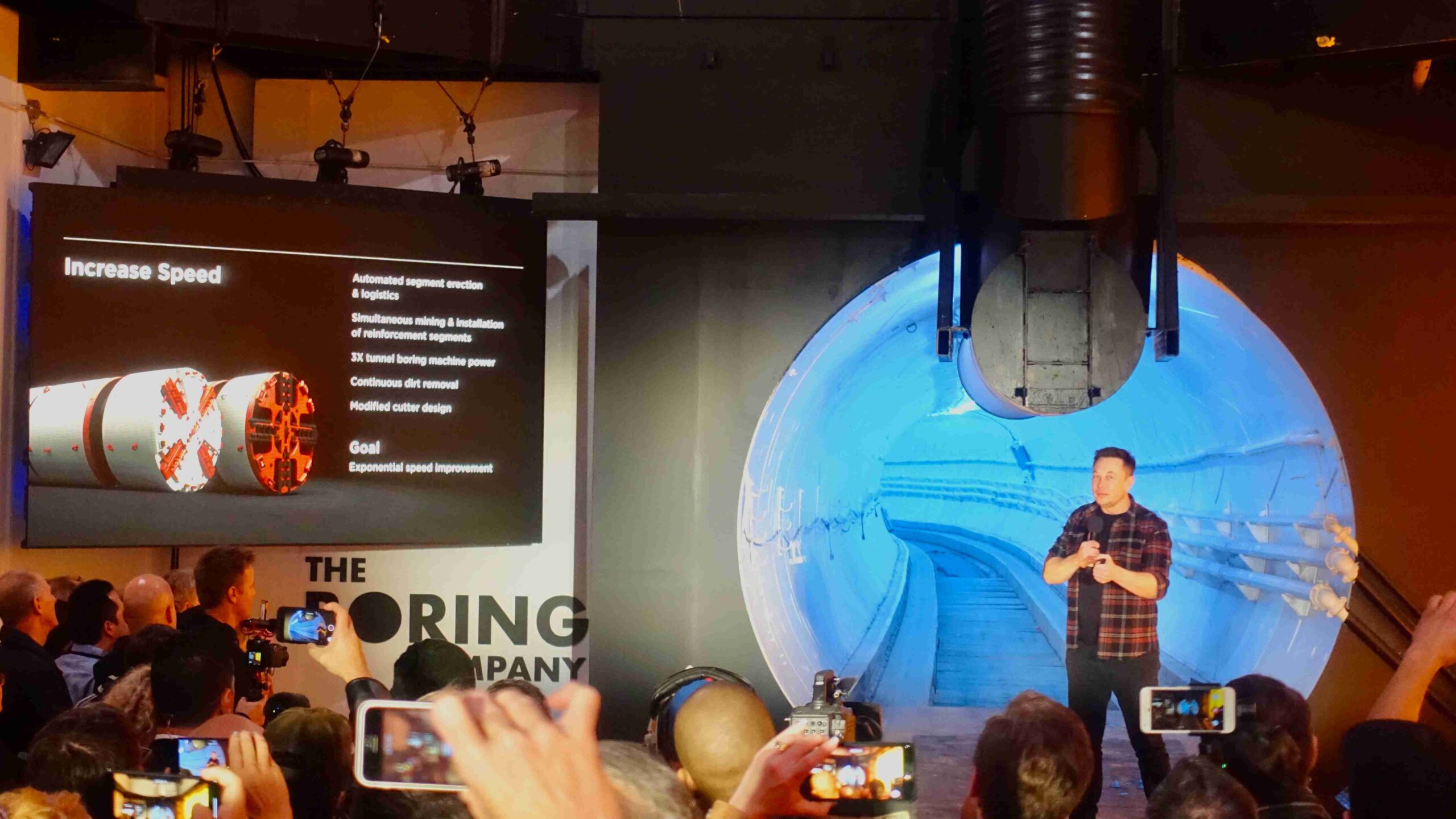
In a week packed with ambitious announcements, Elon Musk reveals a major new Boring Company update that could reshape urban transportation in one of America’s busiest tourist destinations. At the same time, Starlink surpasses 10 million active users worldwide, and Musk doubles down on his bold philosophy that safety should be embedded into engineering — not delegated to a separate department.
From underground tunnels in Florida to satellite constellations in orbit and reusable rockets launching astronauts, Musk’s ecosystem of companies continues to move forward at remarkable speed. Let’s break down the biggest developments and what they mean for the future of transportation, connectivity, and safety.
The Boring Company’s Most Ambitious Urban Loop Yet
The biggest headline this week centers on The Boring Company and its proposed Universal Orlando Loop — a private underground transit system that could connect major resort destinations in Orlando, Florida.
Universal Orlando Loop: What We Know So Far
After bidding documents were released following February 11th, the Shingle Creek Transit and Utility Community Development District ranked The Boring Company as the top bidder for the project. The company competed against V2R Transportation and Sunshine Connection Partners and ultimately won based on:
- Alignment with long-term goals
- Workforce strategy
- Relevant infrastructure experience
If approved, the proposed loop would connect Universal’s north campus — including theme parks, CityWalk, and hotels — to its new south campus at Epic Universe.
Today, guests rely on buses that operate on surface roads. Even with dedicated lanes, traffic congestion limits throughput during peak hours. An underground loop would bypass traffic entirely.
How the Universal Orlando Loop Would Work
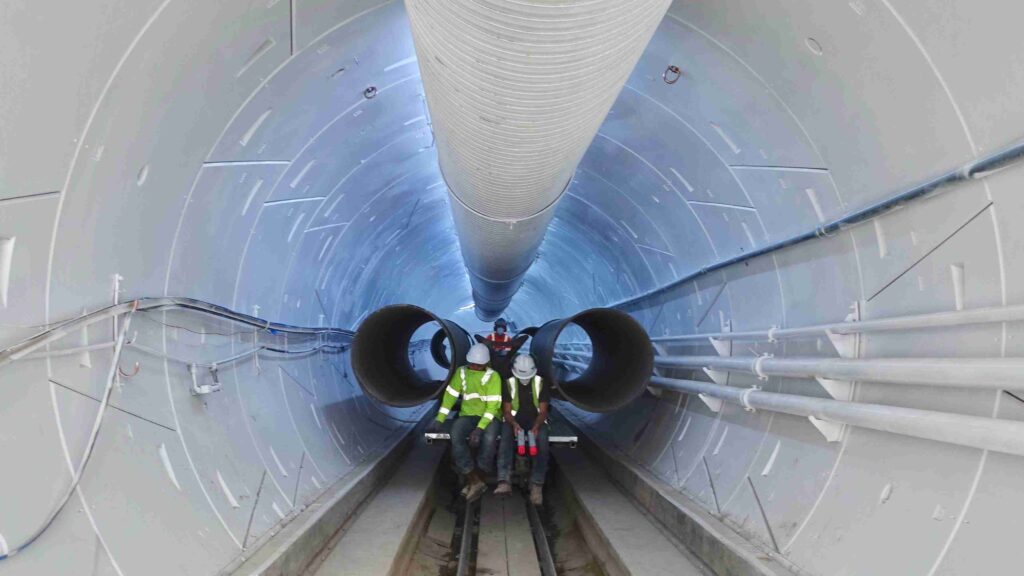
The proposal outlines a twin-tunnel configuration — one tunnel in each direction — similar to systems already underway elsewhere.
Stations could be:
- Fully underground
- Surface-level with ramp access
The system would operate on-demand and express, meaning passengers could request a vehicle and travel directly to their destination with minimal waiting and no intermediate stops.
Although capacity numbers haven’t been released, the project references the Vegas Loop as a benchmark. That system currently operates with roughly 130 vehicles and already moves more than 6,600 passengers per hour — and it’s still expanding.
If Orlando mirrors or exceeds that capacity, the Universal Loop could dramatically reduce travel times across the resort.
Engineering for Florida’s Challenging Terrain
Orlando presents unique geological challenges. The region is known for:
- High water tables
- Limestone formations
- Sinkhole risks
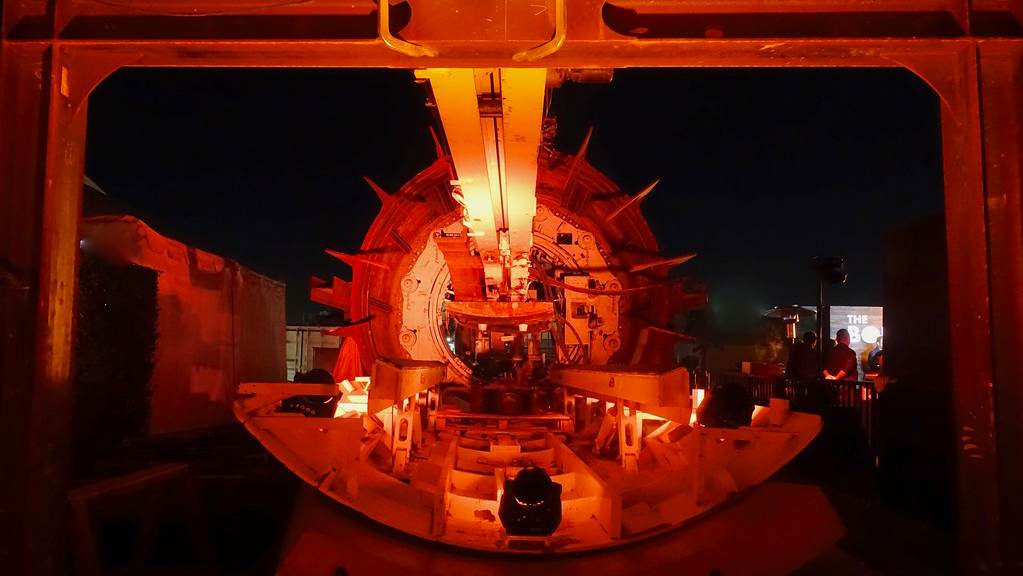
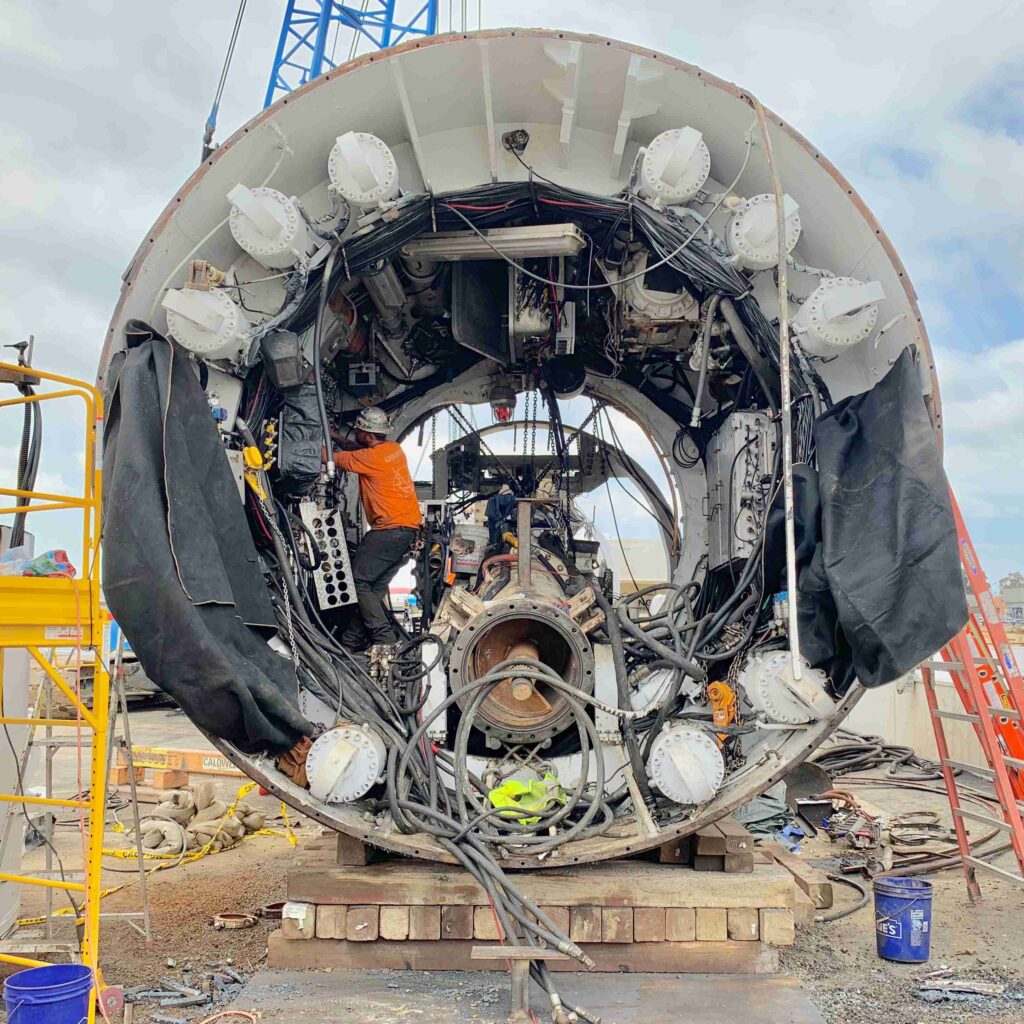
To address this, The Boring Company plans to deploy multiple Proof Rock tunnel boring machines simultaneously — a strategy already used in Las Vegas since 2023.
An Orlando-based geotechnical firm will evaluate soil conditions before construction begins. Once approvals are secured, permitting, design, and construction are expected to take approximately 18 months.
Tesla Vehicles Inside the Tunnels
Just like in Las Vegas, the Orlando system would use Tesla vehicles.
Expected initial fleet:
However, bidding documents reference two future possibilities:
- Cybercab
- Tesla’s upcoming Robo Van
This is especially significant.
Theme parks aren’t typical commuter corridors — they serve families, tour groups, and large clusters of visitors. A high-capacity, configurable vehicle like the Robo Van could:
- Move entire families together
- Reduce station congestion
- Improve peak throughput
- Shorten wait times
In many ways, this project represents a mature execution of ideas The Boring Company has discussed for years.
Reusable Tunneling: SpaceX Philosophy Underground
One of the most innovative aspects of The Boring Company is its reusable tunneling technology.
Traditional tunnel boring machines are often abandoned underground due to high retrieval costs. The Boring Company’s Proof Rock machine is designed to:
- Begin tunneling within 24 hours of arrival
- Surface itself after project completion
- Be upgraded and reused
This mirrors the reusable rocket strategy pioneered by SpaceX with the Falcon 9.
Critics once argued reusable rockets would never be economically viable. Today, Falcon 9 boosters land routinely and relaunch multiple times, transforming launch economics.
Reusable boring machines could do the same for underground infrastructure.
The Boring Company’s Expanding Global Footprint
The Universal Orlando Loop joins a growing list of projects:
- Vegas Loop (expanding)
- Music City Loop (underway)
- Dubai Loop (in development)
The company is steadily evolving from an experimental concept into a repeatable infrastructure provider.
Starlink Reaches 10 Million Active Users Worldwide
While tunnels reshape cities underground, satellites are transforming connectivity above.
This week, Starlink surpassed 10 million active users worldwide — up from 9 million in December 2025 and 8 million in November.
The network now operates in more than 155 countries and territories.
Where Starlink Is Making an Impact
Starlink serves areas traditional infrastructure never reached:
- Remote villages
- Maritime shipping lanes
- Aviation routes
- Disaster zones
In a post on X, Elon Musk hinted at the next phase:
“Starlink is awesome. Great bandwidth and low latency anywhere on Earth and soon off Earth.”
Starlink Beyond Earth
SpaceX plans include:
- Uncrewed Starship missions
- Tesla Cybertrucks on lunar missions
- Optimus robots
- A permanent lunar presence
Musk has described a long-term vision involving:
- A lunar mass driver
- AI satellites launched into deep space
- A self-sustaining lunar city
- Eventually, Mars colonization
Starlink would likely serve as the communications backbone for all of it.
Production Constraints, Not Demand Constraints
Some critics have suggested subscriber growth is slowing. However, SpaceX engineer John Edwards clarified that growth is currently constrained by how fast user terminals can be manufactured.
According to supplier ST Micro Electronics, SpaceX is already producing more than 20,000 user terminals per day.
As manufacturing ramps up, subscriber growth could accelerate significantly.
Revenue Outlook
Estimates suggest Starlink revenue in 2026 could range between:
- $15 billion and $18 billion
Musk has stated NASA contracts will account for only about 5% of SpaceX revenue — meaning Starlink is becoming the financial backbone of the company.
Safety as a Design Principle, Not a Department
Across all of Musk’s companies, one recurring theme stands out: Safety is everyone’s job.
Musk recently stated:
“Tesla has no safety team and is the safest car. SpaceX has no safety team and has the safest rocket. Dragon is what NASA trusts most to fly astronauts because everyone’s job is safety.”
This philosophy emphasizes engineering-led safety rather than separate oversight departments.
Tesla’s Safety Record
Tesla vehicles consistently earn top ratings from regulators.
The National Highway Traffic Safety Administration has awarded multiple Tesla models five-star overall safety ratings.
Highlights include:
- Model S roof crush strength exceeding four times its weight
- Model X five-star ratings in every category
- Model 3 lowest probability of injury recorded under NHTSA protocol
- Model Y five-star ratings across all categories
- Cybertruck five-star overall rating in 2025
Beyond NHTSA, Tesla frequently earns Top Safety Pick Plus honors from the Insurance Institute for Highway Safety.
Why Tesla Vehicles Score So Highly
Key design advantages include:
- Low center of gravity from battery placement
- Large crumple zones without engine blocks
- Structural battery pack integration
- Advanced driver assistance systems
Tesla’s Full Self-Driving (Supervised) system further reduces accident rates compared to national averages by minimizing human error — the leading cause of crashes.
SpaceX’s Human Spaceflight Record
Safety extends to spaceflight.
This week, Crew-12 launched successfully aboard a Falcon 9 from Kennedy Space Center, carrying astronauts to the International Space Station.
Since 2020, SpaceX’s Crew Dragon missions have operated without a major safety incident.
In 2025, SpaceX safely returned NASA astronauts Butch Wilmore and Suni Williams after extended delays tied to Boeing’s Starliner spacecraft — reinforcing NASA’s confidence in Crew Dragon.
Reused Falcon 9 boosters continue to perform reliably, proving that reusability and safety are not mutually exclusive.
A Unified Vision: Infrastructure, Connectivity, and Safety
From tunnels in Orlando to satellites in orbit, Musk’s companies share several defining principles:
- Reusability lowers cost
- Engineering drives safety
- Vertical integration increases speed
- Scaling manufacturing unlocks growth
The Universal Orlando Loop could become a high-visibility proof point for private underground transit systems. Starlink’s 10 million user milestone shows satellite broadband is no longer experimental — it’s mainstream. And Tesla and SpaceX continue to anchor their reputations on measurable safety performance.
What Comes Next?
If approved, the Universal Orlando Loop could begin construction within 18 months. Starlink may accelerate beyond 10 million users as production ramps. And SpaceX continues pushing toward lunar and Martian infrastructure.
One thing is clear: the pace is not slowing down.
As Elon Musk reveals major new Boring Company update, we are witnessing not just isolated announcements — but the steady buildout of an integrated ecosystem spanning underground, Earth orbit, and beyond.
The coming years will determine how far this vision can scale. But based on the trajectory so far, it’s already reshaping multiple industries at once.
FAQs
1. What is the major new update from The Boring Company?
The biggest update is that The Boring Company has been ranked as the top bidder to develop the proposed Universal Orlando Loop, a private underground transit system connecting major resort destinations in Orlando, Florida.
2. What is the Universal Orlando Loop?
The Universal Orlando Loop is a proposed underground tunnel system designed to connect Universal’s north campus (theme parks, hotels, and CityWalk) with its new south campus, including Epic Universe, reducing congestion and travel time.
3. How will the Universal Loop improve transportation?
By operating underground, the system avoids surface traffic congestion. It will offer on-demand, point-to-point travel, allowing passengers to go directly to their destination without intermediate stops.
4. How does this compare to the Vegas Loop?
The Universal project references the Vegas Loop as a benchmark. The Vegas Loop already transports over 6,600 passengers per hour with approximately 130 vehicles and continues expanding.
5. What vehicles will operate inside the tunnels?
The loop is expected to use Tesla vehicles such as the Model 3 and Model Y initially. Future possibilities include the Cybercab and Tesla’s high-capacity Robo Van.
6. Why is the Robo Van significant for theme parks?
Theme parks serve families and large groups. A high-capacity Robo Van could transport entire groups in one trip, reducing wait times and improving throughput during peak hours.
7. How long will construction take?
Once approvals are secured, permitting, design, and construction are estimated to take approximately 18 months.
8. What makes The Boring Company’s tunnel machines unique?
The company’s “Proof Rock” tunnel boring machines are designed to be reusable. Unlike traditional machines that are abandoned underground, these can surface, be upgraded, and redeployed.
9. How is this similar to SpaceX’s rocket strategy?
Just as SpaceX revolutionized space travel with reusable Falcon 9 boosters, The Boring Company aims to reduce infrastructure costs through reusable tunneling machines.
10. How many users does Starlink currently have?
Starlink has surpassed 10 million active users worldwide and operates in over 155 countries and territories.
11. Is Starlink’s growth slowing down?
No. Growth is currently limited by how fast user terminals can be manufactured, not by demand. Production continues to ramp up.
12. How much revenue could Starlink generate?
Estimates suggest Starlink could generate between $15 billion and $18 billion in revenue in 2026, making it a major contributor to SpaceX’s overall earnings.
13. What did Elon Musk mean by “soon off Earth” for Starlink?
Elon Musk hinted that Starlink could eventually provide communications infrastructure for lunar missions, Mars exploration, and deep-space operations.
14. Why does Elon Musk say Tesla has no safety team?
Musk argues that safety is integrated into engineering at every level, rather than being handled by a separate department. Every engineer is responsible for safety outcomes.
15. How safe are Tesla vehicles?
Tesla vehicles consistently earn five-star ratings from the National Highway Traffic Safety Administration and frequently receive Top Safety Pick Plus awards from the Insurance Institute for Highway Safety.
16. Has SpaceX demonstrated safety in human spaceflight?
Yes. Since 2020, Crew Dragon missions by SpaceX have successfully transported astronauts to and from the International Space Station without a major safety incident.
17. What is the bigger vision connecting all these projects?
The common theme across The Boring Company, Tesla, SpaceX, and Starlink is scalable, reusable technology designed for safety, efficiency, and long-term cost reduction — spanning underground transit, electric vehicles, satellite internet, and interplanetary infrastructure.
Read More:
- Elon Musk’s Insane Starship Moon Plan Shocked NASA Skip Mars Starship Landing Moon in 2027
- Tesla Model Y L six-seater approved for Australia ahead of launch
- Elon Musk reiterates rapid Starship V3 timeline with next launch in sight
- Tesla Model Y wins 2026 Drive Car of the Year award in Australia
- Texas township wants The Boring Company to build it a Loop system
- SpaceX secures FAA approval for 44 annual Starship launches in Florida